
Custom Wooden Wine Gift Box Single Bottle with Acrylic Sliding Lid
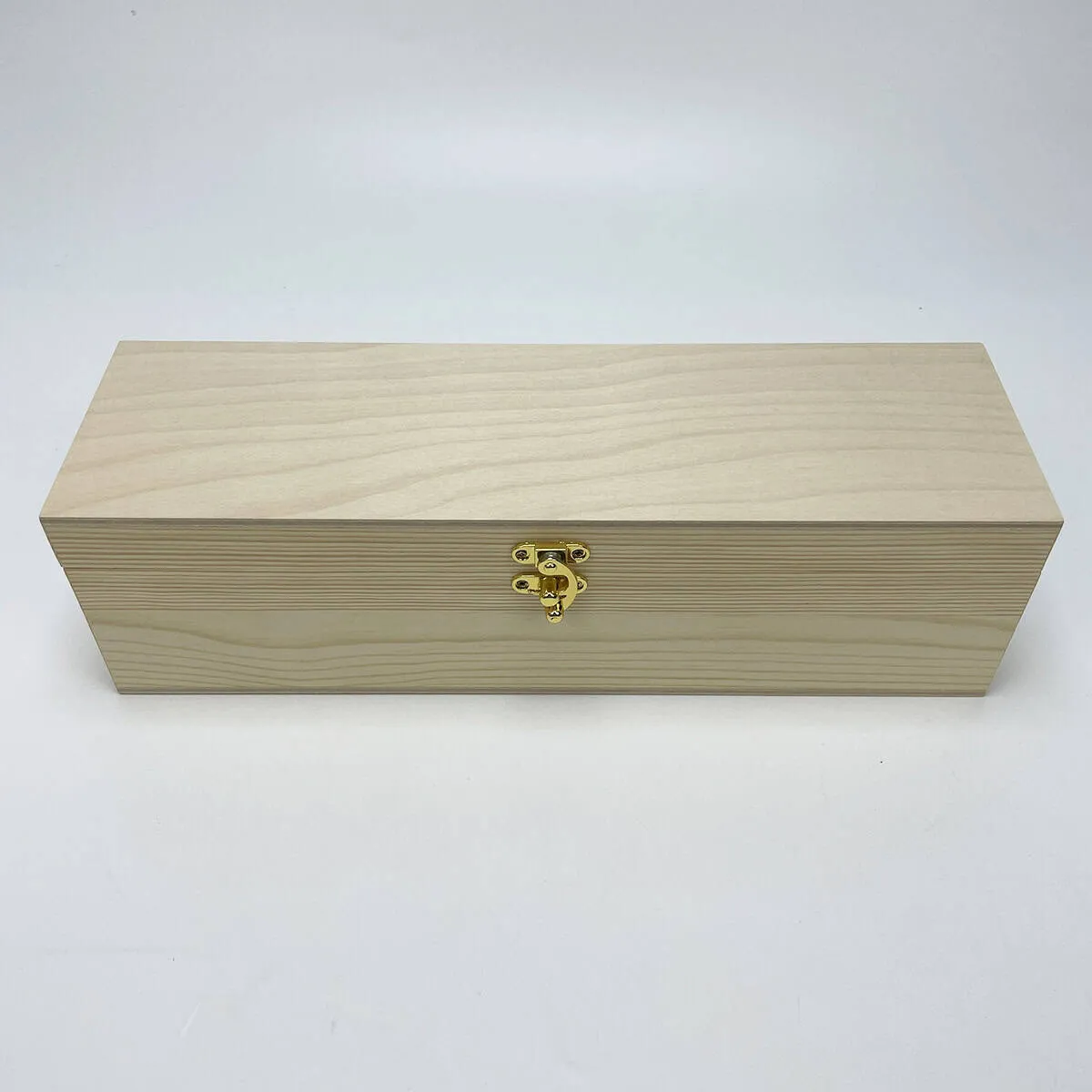
Wholesale custom single-bottle wooden wine gift box with clear acrylic sliding lid, built for retail display where product visibility drives purchase decisions.
Key Features
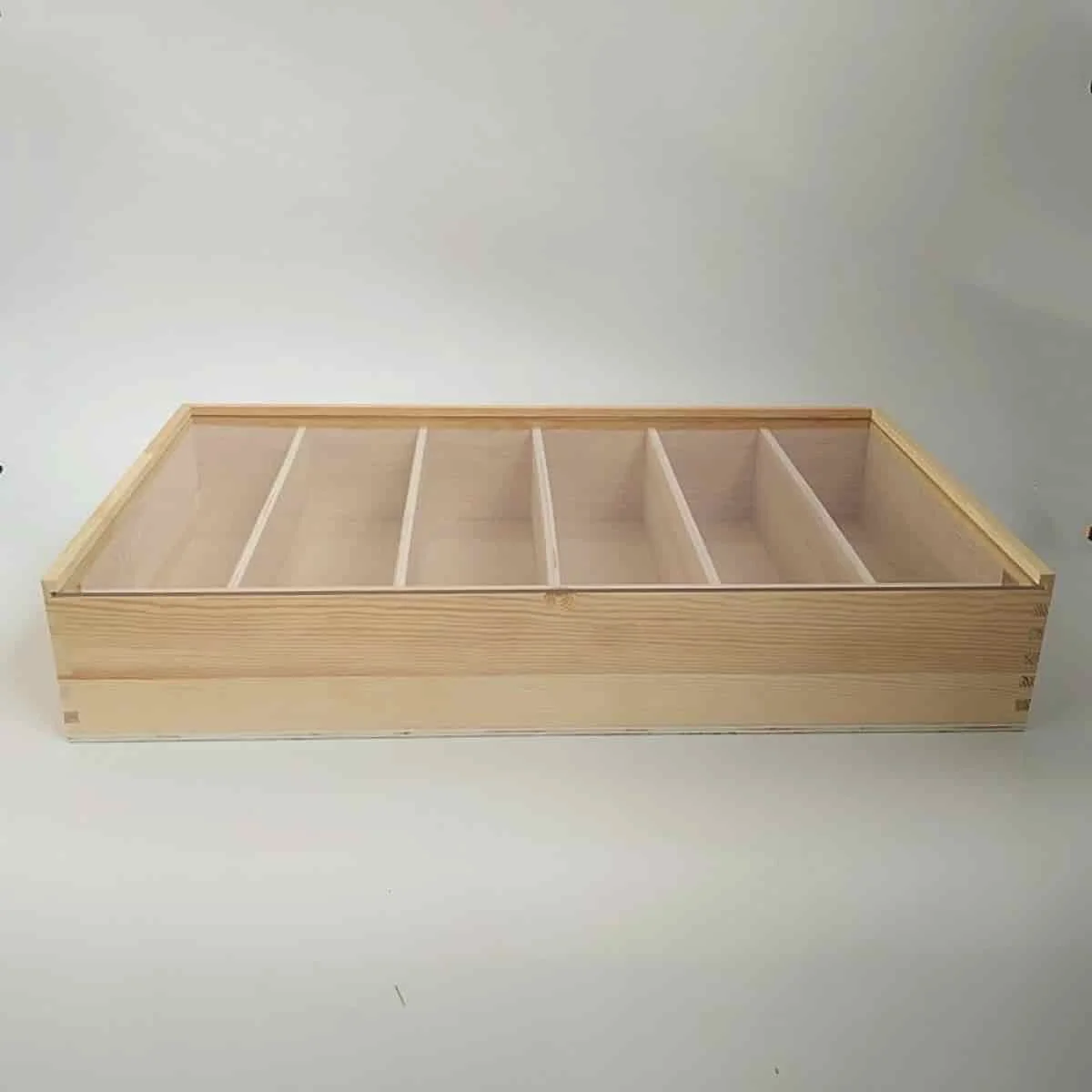
- Clear acrylic sliding lid — the bottle is fully visible without opening the box, the label sells the wine while the box protects it
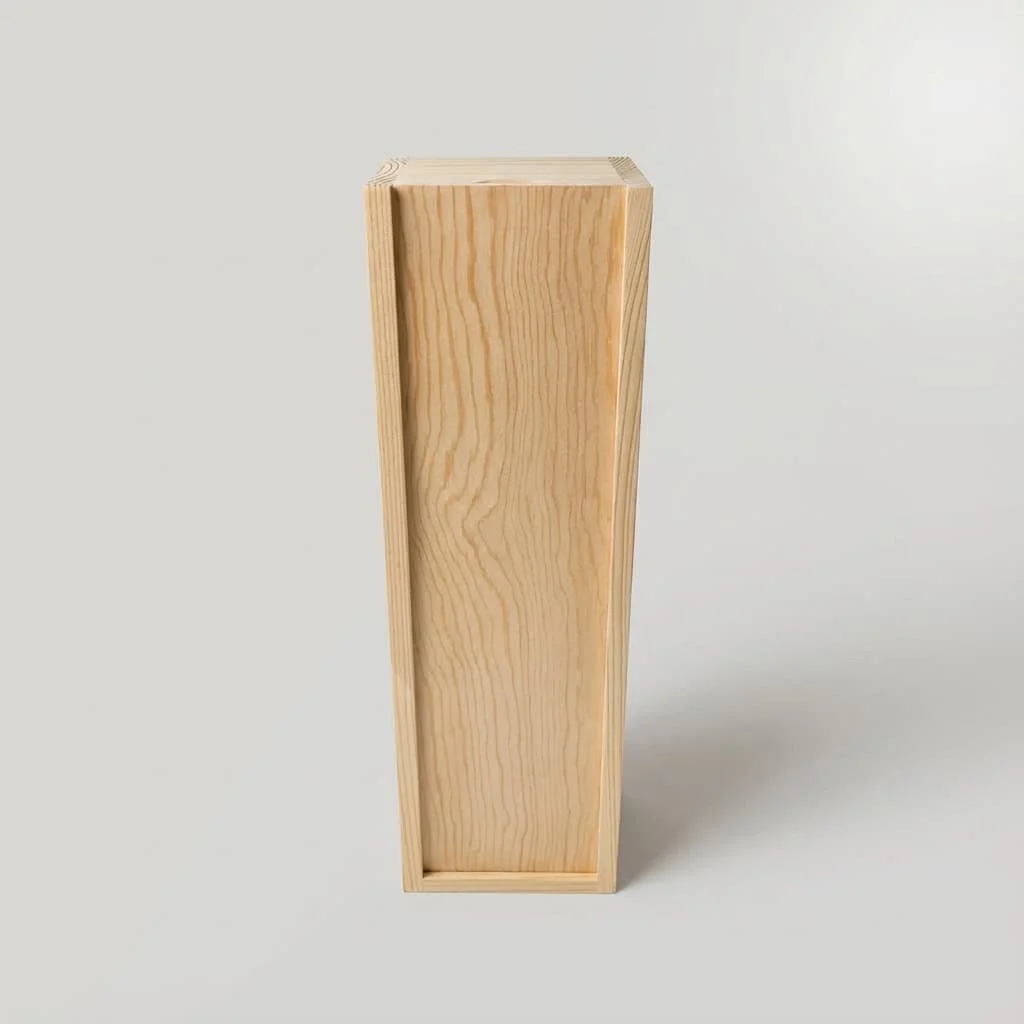
- Solid pine body with routed track grooves — the acrylic panel slides in machined channels, no metal runners or plastic tracks to break or misalign
- Sized for one standard 750ml wine bottle — custom dimensions available for Champagne, Burgundy, or custom bottle profiles
- Natural sanded pine finish — clean, light wood frames the bottle without competing for visual attention
- Sliding lid operation — no hinges, no latches, no metal hardware on the exterior; the lid lifts out completely for bottle access
$1.80 - $8.00 / piece
Prices vary based on order quantity, dimensions, material selection, and logo printing method. Send an inquiry.
Specifications
- Material (sides)
- Pine wood
- Material (lid)
- Acrylic
- Capacity
- 1 x 750ml standard wine bottle
- Dimension
- Custom (as per buyer’s requirements)
- Surface Finish
- Natural/unfinished (sanded smooth)
- Color
- Natural wood
- Usage
- Wine packaging, gift box, retail display
- Customization
- Available for material, size, finish, and logo printing
Applications
Retail shelf display — the see-through seller
The wine label is visible without the customer touching the box. On a retail shelf, the acrylic lid lets the bottle do the selling — the label, the vintage, the producer are all visible at a glance. Staff don't need to open boxes for curious customers. The pine body frames the bottle like a picture frame frames artwork.
Corporate gifts where the wine label is part of the message
A custom-labeled corporate gift wine — the recipient sees the personalized label through the lid before opening. The acrylic preserves the reveal of the label while the wood body elevates the presentation beyond a naked bottle or a cardboard carrier.
Tasting room merchandise display
Winery merchandise walls need products that look good behind glass while being easy to restock. The acrylic lid box sits on a shelf looking finished and intentional — not like a shipping box that's missing its top. Staff can slide the lid open and closed quickly for purchases.
Customization Options
Acrylic Lid. Standard is 3mm clear acrylic — durable enough for retail handling, light enough not to bind in the wood tracks. 5mm acrylic available for heavier-use environments at the cost of added weight and thicker tracks. Frosted acrylic available for a translucent effect — the bottle is visible but diffused. Tinted acrylic (smoke, bronze) for a specific color-matched presentation. The acrylic panel is cut to size and edge-polished — no sharp corners or rough edges.
Wood Species — Body. Pine is standard — cost-effective, easy to machine the track grooves cleanly. Paulownia for lighter weight. Hardwood (oak, walnut) for premium positioning — but note that harder woods are more difficult to route clean track grooves in and may require slower feed rates and sharper tooling, which increases production cost beyond just the material difference.
Finish — Body. Natural sanded is standard — light, clean, doesn't compete with the bottle. Stained in any color. Painted for opaque brand colors. Clear coat (matte, satin, gloss) to seal the pine. Note: the acrylic lid remains clear regardless of body finish — a dark stained body with a clear acrylic lid creates a high-contrast frame that draws the eye to the bottle inside.
Dimensions. Standard fits one 750ml Bordeaux bottle. Adjustable for Champagne (taller, wider), Burgundy (wider), or custom bottle profiles. The interior cavity must leave at least 3–5mm clearance around the bottle for insertion and removal without scraping — tighter than a hinged box because the bottle slides in from the top rather than being placed in from above.
Branding — Body. Laser engraving on the front panel or lid frame: permanent, subtle. Screen printing: wider color range, applied to the pine body. Hot foil stamping for metallic branding.
Branding — Acrylic Lid. Three process options depending on your logo design. Laser engraving is our recommended default for acrylic lids — it creates a permanent, subtle frosted mark that never fades or scratches off, glows elegantly when backlit, and uses no inks or chemicals. For full-color or photo-quality logos, UV printing with back-print (printed on the underside) gives a glossy glass-like finish. Silk screen printing works for single-color logos at high production volumes. Most buyers brand the wood body and let the clear lid do its job — showing the bottle. If you need the acrylic lid branded, laser engraving delivers the best durability and matches the natural material language of the wood box. Laser engraving & UV printing methods →
Interior. Standard is raw pine — bottle rests directly on wood. Felt-lined cavity available to cushion the bottle and add a premium unboxing detail — the felt covers the bottom and lower walls. Foam insert available for maximum bottle protection — adds cost and changes the aesthetic from natural to technical.
Ready to get a recommendation?
Send us your requirements — we'll respond with material and production recommendations within 24–48 hours.
Why This Design Works
The acrylic lid solves the fundamental retail problem: the customer can't see what they're buying. Opaque wooden boxes require the customer to open the box — or imagine what's inside based on a photo or description. On a retail shelf, that friction costs sales. The acrylic lid eliminates the barrier between the customer and the product. The bottle label, the vintage year, the producer name — all visible at a glance. The pine body provides the warmth and quality signal of wood; the acrylic lid provides the visibility of a display case. Neither material alone would achieve both goals.
The sliding lid mechanism is the right choice for retail — no hinges, no latches, no moving parts to fail. Hinged lids need clearance behind the box to open fully — on a crowded retail shelf, that space doesn't exist. A sliding lid lifts straight up or slides out horizontally, requiring zero additional clearance. The track grooves are machined directly into the pine side panels — there are no separate runners, no plastic tracks, no metal slides. The mechanism is the wood itself. This simplicity means fewer failure points and a cleaner aesthetic — nothing breaks because there's nothing extra to break.
The natural pine finish is intentionally recessive — the box frames the bottle, not the other way around. A heavily decorated box competes with the wine label for attention. The natural sanded pine provides warmth and texture without demanding focus — the eye goes to the bottle through the clear lid, not to the box. This is the right design for wineries and retailers where the wine is the hero product and the packaging is the supporting cast. If your brand identity requires the box to carry more visual weight, dark stain or paint creates a bolder frame — but the acrylic lid ensures the bottle remains visible regardless of body color.
See our full range of single-bottle wooden wine gift boxes — acrylic sliding lid, all-wood sliding lid, and hinged lid designs for winery retail and corporate gifting.
Manufacturing Considerations
Acrylic scratching during production and shipping is the #1 quality issue on this product. Acrylic is softer than glass — it scratches from contact with wood dust, tool edges, and other acrylic panels. Every acrylic lid is protected with a peel-off film on both sides from the moment it's cut until final packaging. Assembly stations use clean, padded work surfaces — any wood dust or grit on the bench will scratch the acrylic during assembly. Finished boxes are individually poly-bagged with the peel film still on — the end customer removes the film to reveal a flawless surface. If the film is removed for final inspection (to check for internal scratches), it's re-applied before packaging. This handling discipline adds labor but prevents the most common customer complaint.
Track groove fit is the make-or-break tolerance on this box. The acrylic panel slides in grooves routed into the left and right side panels. If the groove is too tight, the acrylic binds — the lid won't slide smoothly, and forced operation can crack the acrylic or chip the wood track edge. If the groove is too loose, the lid rattles and can slide open during transport. The target clearance is 0.5mm per side — enough for smooth sliding, tight enough to stay put. This tolerance is checked on every batch: the lid must slide with light finger pressure but not move under its own weight when the box is tilted 30 degrees. Pine's dimensional stability is generally adequate for this tolerance range, but in high-humidity production seasons, the wood can swell and tighten the tracks — panels are acclimated in a controlled environment before groove cutting when ambient humidity exceeds 70%.
Acrylic static attracts dust inside the closed box. Acrylic builds static charge easily — a freshly peeled acrylic lid will attract airborne dust and wood particles from the box interior. The fix: the interior of the box is blown out with compressed air and wiped with an anti-static cloth before the lid is inserted for final packaging. The peel film is removed only at the very last step before sealing the poly bag. This is a small detail that makes the difference between a display-ready product and one that arrives with visible dust trapped inside the lid.
Watch out for wood track swelling that binds the acrylic lid in humid conditions. Pine tracks cut to 0.5mm clearance in dry conditions can swell tight in humid storage or shipping. If your destination market has high humidity (Southeast Asia, coastal regions, tropical climates), we recommend specifying the track clearance at 0.7–0.8mm to allow for wood expansion, and pre-conditioning the acrylic to reduce static. For air-conditioned retail environments, the standard 0.5mm clearance is sufficient.
Have a technical concern about your use case? Our team can walk you through how we'd handle it for your project.
Start with pine body, 3mm clear acrylic lid, natural sanded finish, and laser engraving on the front panel for branding. This configuration maximizes what this design does best: the clear lid lets the wine label sell the product, the natural pine frame provides warmth without competing for attention, and the laser-engraved brand mark on the front panel identifies the source without cluttering the visual field. The one upgrade worth paying for: a dark stained body. A dark brown or black walnut stain transforms the pine frame into a high-contrast border that makes the bottle inside look brighter and more vivid — it's the same optical principle as a dark mat in a picture frame. Skip felt lining unless your price point supports luxury gifting — the raw pine interior is clean and appropriate for retail display. Skip upgrading to thicker acrylic (5mm) unless the boxes will be handled heavily — 3mm is durable enough for normal retail use, and the lighter weight keeps the sliding action smooth.
Start Your Project
Send us your design or reference images — we'll return with a pre-production sample for your approval.
Frequently Asked Questions
Q: Is the acrylic lid durable enough to survive international shipping?
Q: Will the acrylic scratch with regular retail handling?
Q: Can the acrylic lid be replaced if it gets damaged?
Q: How does the sliding lid stay closed during transport — won't it slide open?
Q: Can I get branding or a logo on the acrylic lid itself?
Q: How is this different from the hinged lid single-bottle pine box?
Send Us Your Requirements
Send your design, reference images, or product sample. We don't just quote a price — we respond with material recommendations, a feasibility assessment, and professional suggestions grounded in over 20 years of manufacturing experience. Expect a detailed response within 24–48 hours.
- Professional recommendations included
- Small MOQ & trial orders supported
- Worldwide shipping with export documentation