
6 Bottle Wooden Wine Packaging Box with Acrylic Sliding Lid and Finger Joint Structure
Wholesale 6-bottle wooden wine packaging box with clear acrylic sliding lid and exposed finger joint construction, built for premium retail display and wine club subscription fulfillment.
Key Features
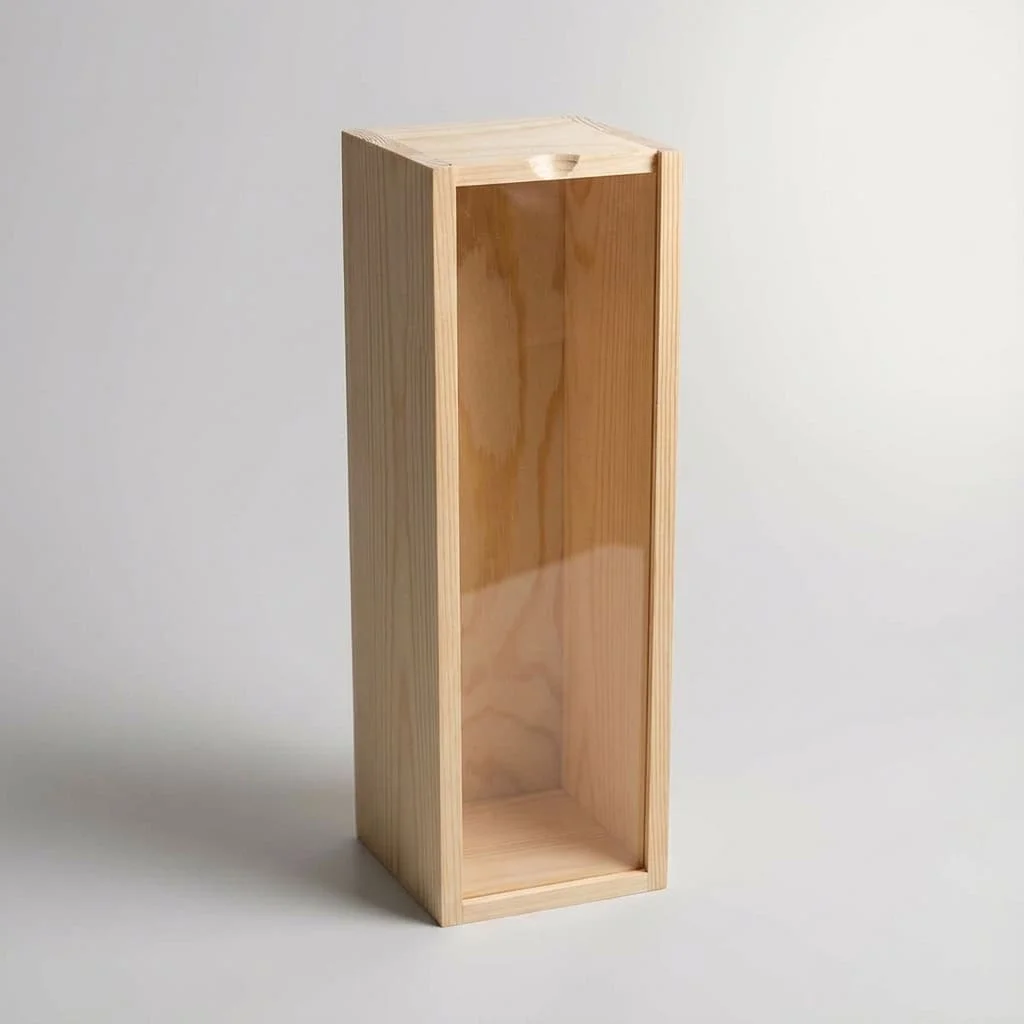
- Clear acrylic sliding lid — all six bottles visible without opening, the full wine selection displayed at once for retail impact
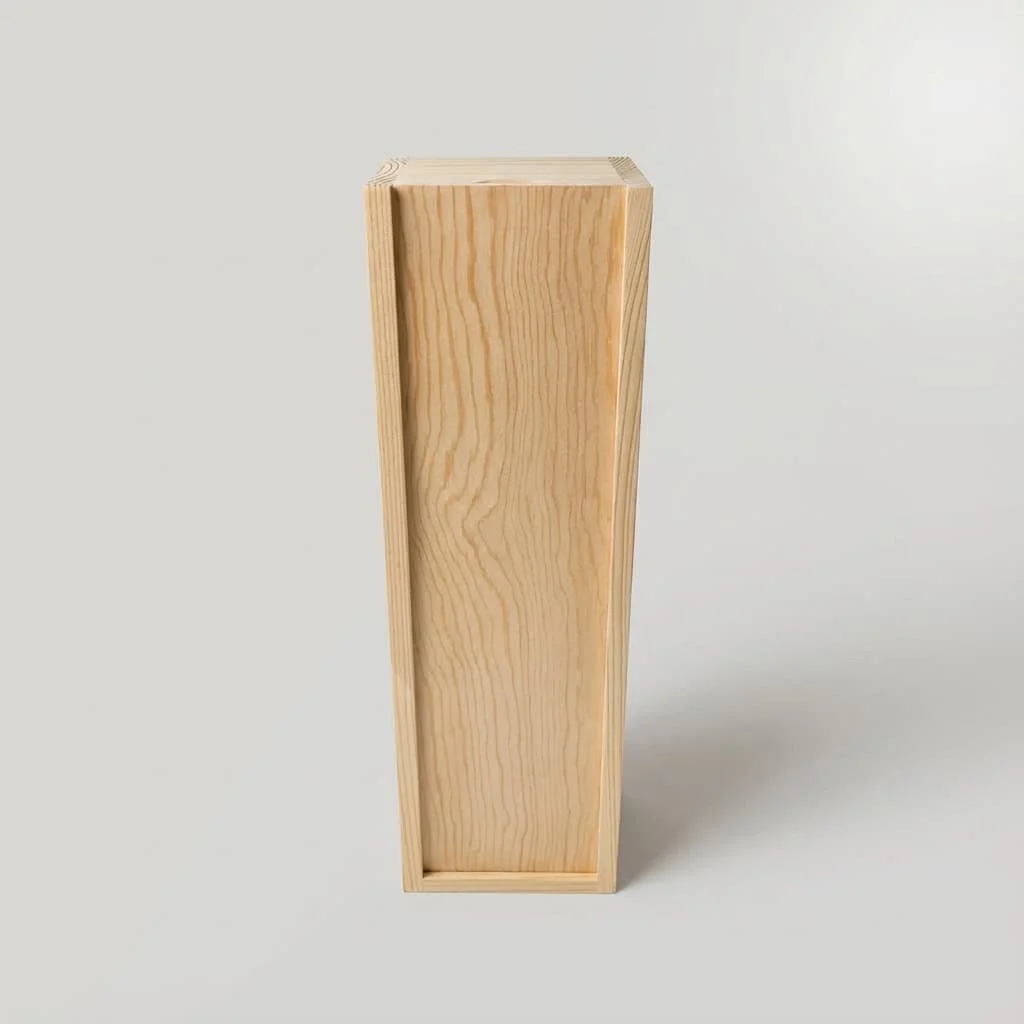
- Exposed finger joint corners — structural interlocking joinery left visible as a design feature, the alternating wood grain pattern signals craftsmanship at first glance
- Internal wooden divider grid — six separate bottle compartments, each bottle isolated from its neighbors during transport
- Pine body with pine plywood bottom — solid wood structure with a stable plywood base panel
- Natural sanded finish — light, clean wood frames the wine bottles without competing for attention; the acrylic lid does the visual work
$2.40 - $5.50 / piece
Prices vary based on order quantity, dimensions, material selection, and logo printing method. Send an inquiry.
Specifications
- Material
- Pine wood (sides), high-grade pine plywood (bottom), acrylic (lid)
- Capacity
- 6 x 750ml standard wine bottles
- Construction
- Finger joint structure with internal dividers
- Surface Finish
- Natural/unfinished (sanded smooth)
- Dimensions
- Custom (as per buyer’s requirements)
Applications
Wine retail display — the full-collection showcase
Six bottles displayed together behind clear acrylic — a mini wine shop in a box. Customers see the entire set at once: the labels, the vintages, the variety. The finger joint construction reads as quality craftsmanship from across the store. For wine shops and tasting rooms selling curated six-packs, this is the display case and the carry-out packaging in one.
Wine club curated selection presentation
A wine club's monthly selection arrives in a box where every bottle is visible on arrival — the unboxing is instant recognition of each label. The acrylic lid preserves the reveal while the finger-jointed pine body elevates the presentation above a cardboard shipper. Members keep the box for cellar storage.
Corporate gift — multi-bottle curated set
Six curated wines presented as a single gift in a display-quality wooden case. The acrylic lid turns the gift into a showcase — the recipient sees the full selection without opening. The finger joint corners add a handcrafted feel that machined butt joints or mitered corners don't communicate.
Customization Options
Acrylic Lid. Standard is 3mm clear acrylic — the full lid slides in routed grooves. 5mm for heavier-use environments. Frosted acrylic for a translucent effect — the bottles are visible but diffused. Tinted acrylic for color-matched presentation. The acrylic panel is edge-polished and ships with protective peel film on both sides.
Wood Species — Body. Pine is standard — cost-effective, machines clean finger joints and track grooves. Paulownia for lighter weight. Hardwood (oak, walnut) for premium positioning — note that hardwood finger joints require slower feed rates and sharper tooling, which increases production cost beyond the material cost difference.
Finish. Natural sanded is standard — light, clean, lets the finger joints and the wine bottles be the visual focus. Stained in any color — dark stain creates a dramatic frame that makes the wine labels inside appear brighter by contrast. Clear coat for sheen and protection. The track grooves are left unfinished to prevent friction on the acrylic.
Dimensions. Standard fits six 750ml Bordeaux bottles in a 3×2 grid. Adjustable for Champagne, Burgundy, or mixed bottle formats. The box footprint is larger than a hinged-lid box because the lid must slide completely clear of the bottle tops — total box length is approximately bottle height × 2 plus lid travel clearance.
Branding. Laser engraving on the front panel or side panels: permanent, visible regardless of lid position. Screen printing on the pine body. Hot foil stamping for metallic branding. Branding on the acrylic lid itself: laser engraving is our recommended default — permanent frosted mark that never fades, glows when backlit, zero inks or chemicals. UV printing (full-color, back-print for a glass-like scratch-resistant finish) for color-rich logos. Silk screen printing for single-color logos at production volume. Most buyers brand the wood body and let the clear lid show the wine. If you need the acrylic lid branded, laser engraving delivers the best durability and matches the natural material language of the wood box. Laser engraving & branding methods →
Finger Joint Spacing. Standard is 8–10mm finger spacing — provides strong glue surface area and a balanced visual rhythm. Wider spacing (12–15mm) for a bolder, more rustic look with fewer fingers. Narrower spacing (5–7mm) for a finer, more refined look — increases machining time and cost. The finger joint is structural first, aesthetic second — the spacing you choose affects both.
Interior. Standard is raw pine with fixed wooden dividers. Felt-lined cavity available for a softer bottle contact. Removable dividers available — converts to a general storage case. The divider grid is cut from the same pine stock as the body for consistent moisture content and no differential swelling.
Ready to get a recommendation?
Send us your requirements — we'll respond with material and production recommendations within 24–48 hours.
Why This Design Works
The acrylic sliding lid on a 6-bottle format solves a specific retail problem: how do you display a set without opening the box? A six-bottle wooden box with an opaque lid hides the contents — the customer doesn't know what's inside unless there's a label on the outside or they open it. On a retail shelf, that's friction. The acrylic lid eliminates it — six labels visible at a glance, the full selection apparent without touching the box. For wine shops, tasting rooms, and club pickup locations, the display IS the packaging. The customer sees the set, buys the set, and carries it home in the display case. One box serves both roles.
Finger joints are exposed for a reason — they're doing two jobs at once. Finger joints provide the highest glue surface area of any corner joint — critical for a box that holds six full bottles weighing approximately 17 pounds. But they're also the visual signature of the box. Exposed finger joints on a natural pine box read as intentional craftsmanship — the alternating end-grain and face-grain pattern along each corner is the decorative element. There's no trim, no molding, no applied decoration — the joinery is the ornament. This design philosophy reduces parts count and assembly steps while delivering a stronger visual identity than plain mitered or butt-jointed corners.
The natural pine finish with clear acrylic creates deliberate material contrast. The warm, textured, organic pine body against the smooth, transparent, technical acrylic lid — the materials speak different languages. The pine says handmade, natural, traditional. The acrylic says modern, clean, precise. Together they position the product as contemporary craft rather than either rustic handicraft or industrial packaging. For wine brands whose identity bridges tradition and modernity, this material combination aligns.
See our full range of 6-bottle wooden wine packaging boxes — acrylic sliding lid, hinged lid, and slatted crate designs for wine club fulfillment and retail display.
Manufacturing Considerations
Finger joint fit tolerance is the #1 structural QC priority on this box. Finger joints work by creating massive glue surface area — but only if the fingers fit tightly. A finger that's 0.2mm too narrow leaves a glue gap that reduces joint strength. A finger that's 0.2mm too wide won't seat fully without force, and forcing it can split the mating piece. The fingers are cut on a CNC router with the mating corners cut in sequence — the same bit, the same setup, the same calibration produces perfectly matched fingers. After cutting, a dry-fit assembly check confirms that all four corners seat fully without gaps or binding. One loose corner compromises the entire box's ability to carry 17 pounds of wine.
Acrylic scratching on a 6-bottle box is a larger concern than on single-bottle formats. The acrylic lid on a 6-bottle box is roughly 35–40cm long — more than twice the size of a single-bottle acrylic lid. Larger panels are harder to handle without flexing, and flexed acrylic is more prone to surface scratches. The protective peel film stays on through the entire assembly process — cutting, edge polishing, fitting into grooves, and final packaging. The film is only removed at the final quality inspection, and then the box is immediately poly-bagged. Any scratch visible at inspection means the lid is replaced — there's no buffing out acrylic scratches.
Track groove alignment over a 40cm span is demanding. The sliding lid travels in two parallel grooves cut into the left and right side panels. Over a 40cm span, maintaining perfect parallelism between the left and right grooves requires the side panels to be machined as a matched pair. Both panels are clamped together and cut in the same CNC pass — this guarantees the grooves are mirror-identical. If the panels were cut separately, tiny variations in workpiece positioning or tool wear would accumulate into binding. Matched-pair machining is the difference between a lid that slides smoothly and one that sticks halfway.
Watch out for the divider grid blocking the lid travel path. The acrylic lid must slide completely past the bottle tops to open fully. If the divider grid is too tall — if a divider projects above the bottle neck height — the lid catches on it during opening. The dividers are cut to sit exactly at or slightly below the bottle shoulder height, ensuring the lid passes over cleanly. After assembly, every box is cycle-tested: lid opened and closed three times to verify smooth travel with no interference. A catching lid is remeasured and the divider height is trimmed if needed.
Have a technical concern about your use case? Our team can walk you through how we'd handle it for your project.
Start with pine body, 3mm clear acrylic lid, natural sanded finish, 8–10mm finger joint spacing, and laser engraving on the front panel for branding. This configuration maximizes what the design does uniquely: the clear lid displays all six bottles at once, the exposed finger joints communicate quality at shelf distance, and the natural pine keeps the focus on the wine labels. The one upgrade worth paying for: a dark stained body. The dark brown or black walnut stain turns the pine frame into a high-contrast border that makes the wine labels inside look more vivid — the optical principle is the same as a dark mat in a picture frame, and with six bottles behind acrylic the effect is dramatic. Skip frosted or tinted acrylic unless your brand identity specifically requires it — the clear lid is the point of this design. Skip upgrading to hardwood unless the boxes will be used as permanent cellar furniture — pine's strength-to-weight ratio is better for a box this size, and the finger joints are equally strong in pine.
Start Your Project
Send us your design or reference images — we'll return with a pre-production sample for your approval.
Frequently Asked Questions
Q: How does the acrylic lid hold up during shipping with six bottles inside?
Q: Are finger joints strong enough to hold six full wine bottles?
Q: Can the acrylic lid be replaced if it gets scratched or cracked?
Q: How does this acrylic lid box compare to the hinged lid 6-bottle wooden case?
Q: Can the finger joint spacing be customized to match a specific design preference?
Q: Is the acrylic lid food-safe for direct contact with wine bottles?
Send Us Your Requirements
Send your design, reference images, or product sample. We don't just quote a price — we respond with material recommendations, a feasibility assessment, and professional suggestions grounded in over 20 years of manufacturing experience. Expect a detailed response within 24–48 hours.
- Professional recommendations included
- Small MOQ & trial orders supported
- Worldwide shipping with export documentation