
Wooden Combination Lock Box for Blind Box Packaging & Secure Storage
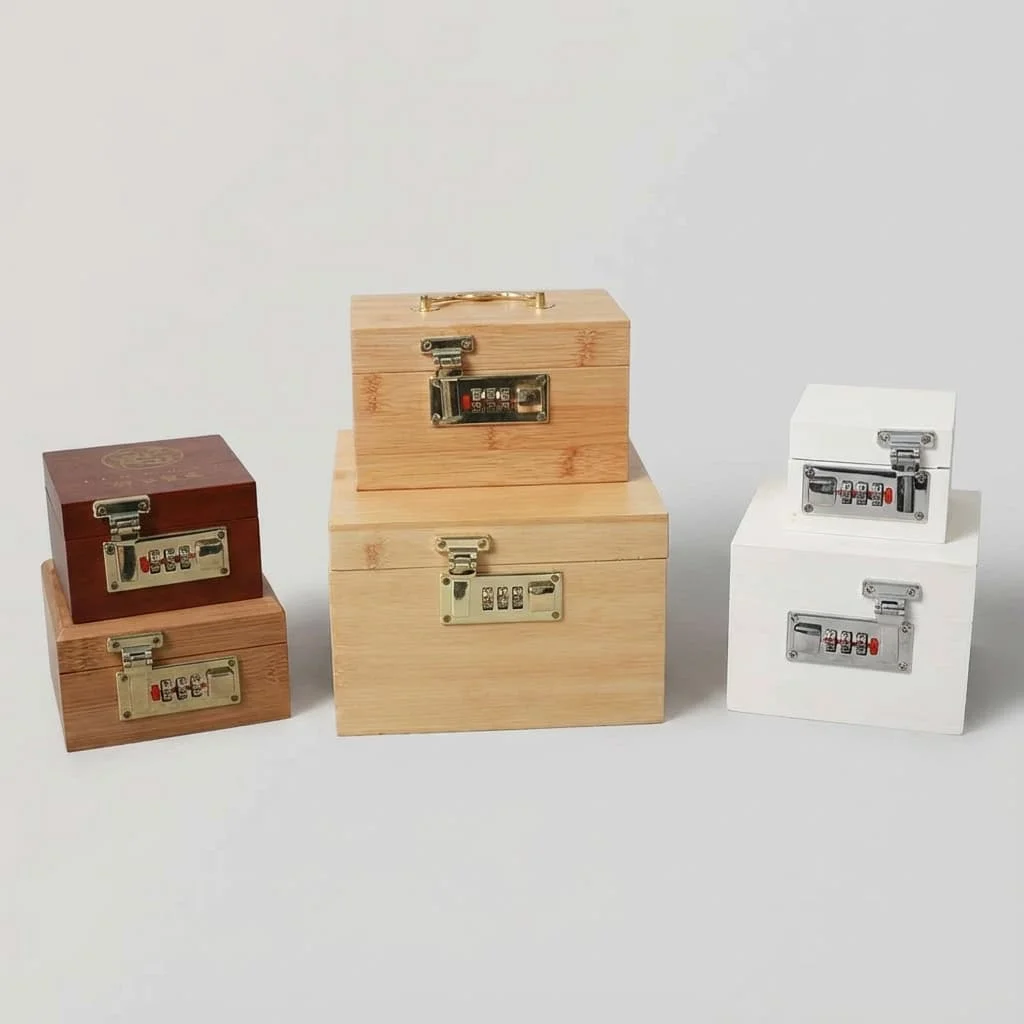
Square wooden storage box with flip-top hinged lid, metal clasp, and external combination padlock, suitable for blind box retail packaging and small business secure storage.
Key Features
- External combination padlock — removable 3-digit padlock that passes through a metal clasp on the front panel; the lock is independent of the box, so it can be replaced with any standard small padlock (keyed or combination) without modifying the box
- Flip-top hinged lid — the full lid swings open on metal hinges, providing complete interior access; the clasp-and-lock assembly sits on the front panel, creating a visible security statement that signals "contents are valuable" at a glance
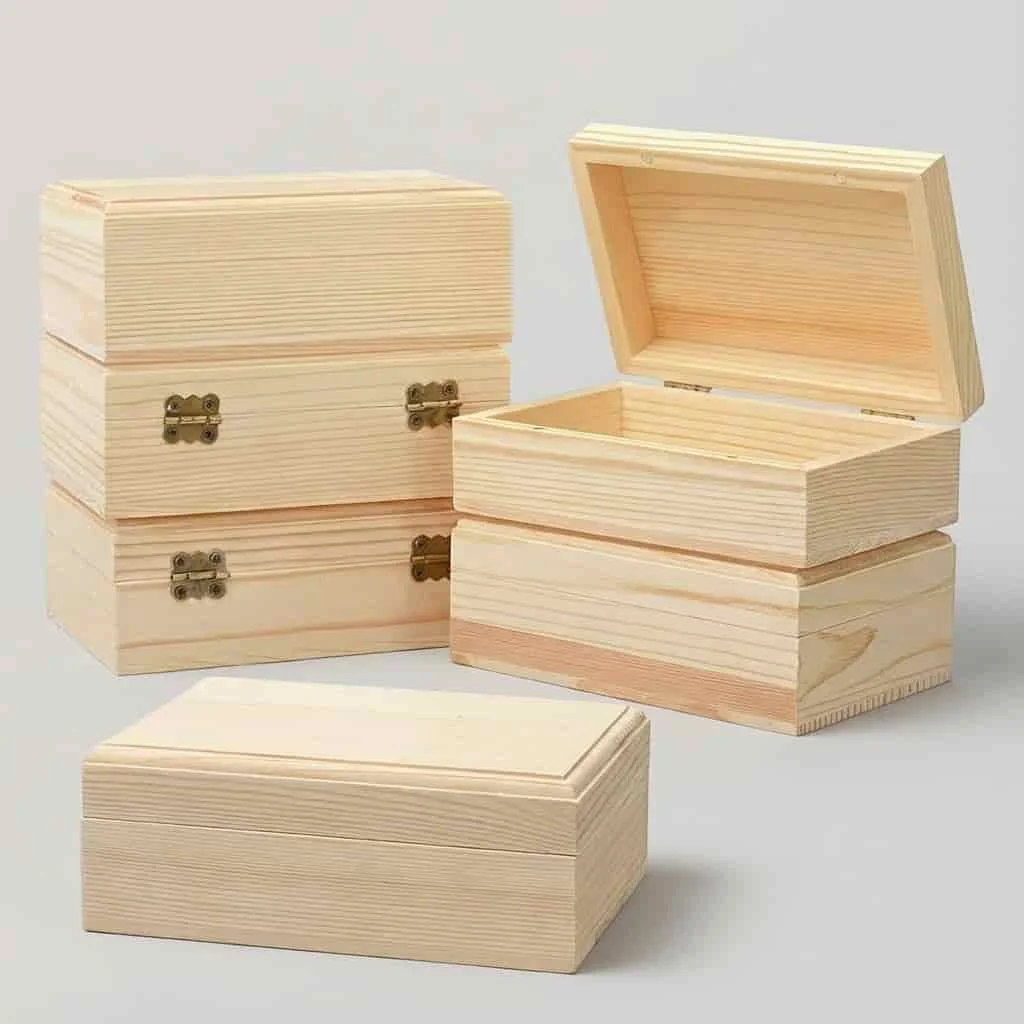
- Square format with equal-length sides — maximizes usable interior volume for a given footprint; standard sizes 15×15 cm and 20×20 cm; the square shape stacks cleanly on retail shelves with uniform gaps between units
- Pine or paulownia wood construction — pine for heavier-duty applications where box weight signals quality to the buyer; paulownia for lightweight shipping and cost-sensitive volume orders where freight cost per unit matters more than perceived heft
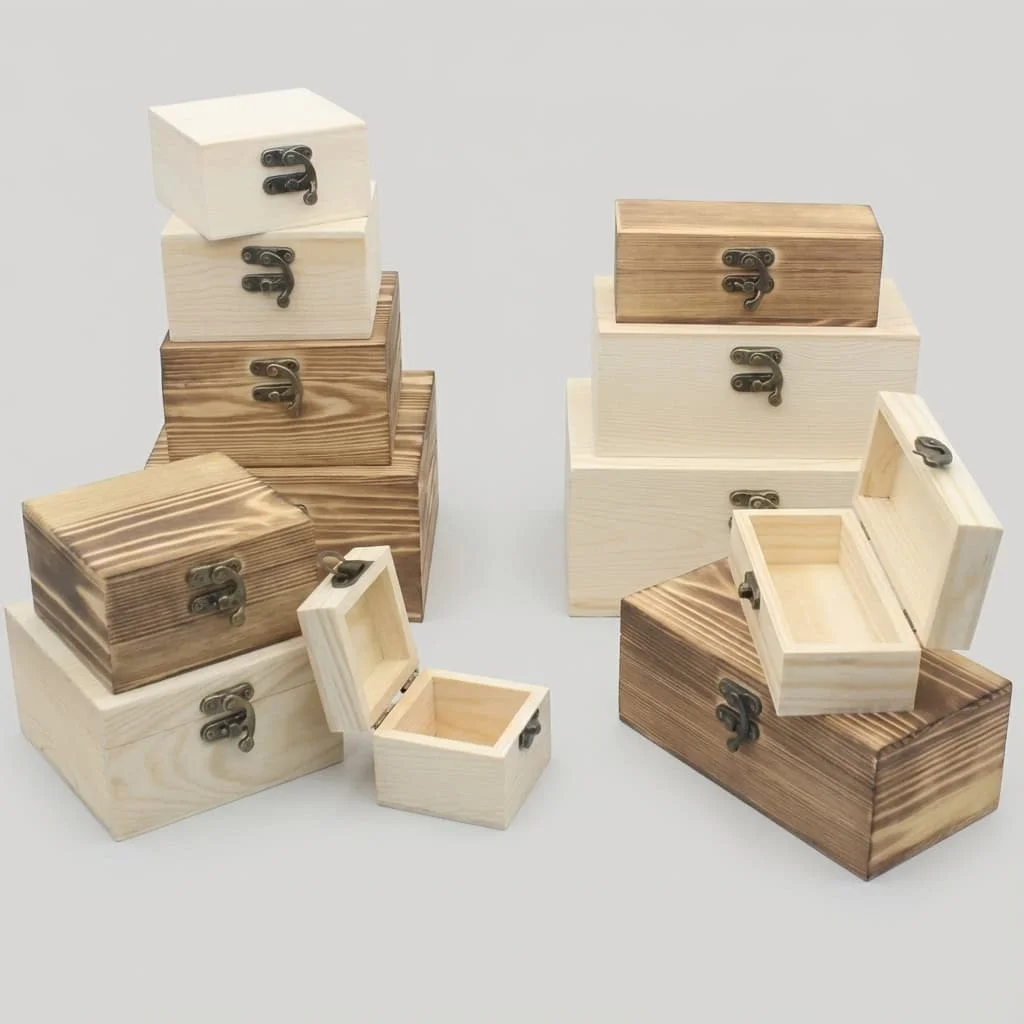
- Charred or natural finish — charred pine creates a dark, textured surface that reads as premium and enigmatic (most popular for blind-box applications); natural clear finish shows the wood grain for transparent, craft-forward branding
$1.80 - $7.00 / piece
Prices vary based on order quantity, dimensions, material selection, and logo printing method. Send an inquiry.
Specifications
- Materials
- Pine or paulownia wood
- Closure
- External combination padlock with metal clasp
- Lid Style
- Flip-top hinged
- Shape
- Square (15×15 cm or 20×20 cm standard)
- Finishes
- Charred, natural clear-coat, stained, painted
- Application
- Blind box retail, gift packaging, secure small-item storage
Applications
Blind box and mystery box retail
Where the external padlock is both security AND the sales hook — customers see the locked box on the shelf and immediately understand the blind-box concept without explanation; the wooden box signals a premium mystery experience compared to cardboard blind boxes, supporting a higher retail price point.
Gift packaging with a reveal mechanism
Where the recipient receives the combination code in a separate card, message, or puzzle — the external lock makes the reveal mechanism explicit and visible (unlike a hidden magnetic latch), turning the opening into a shared moment when the code is read aloud or the clue is solved.
Small business secure storage
Where basic deterrence is sufficient and a metal cash box would clash with the brand aesthetic — cash float boxes at artisan market stalls, key storage for vacation rental properties, tip boxes at events, or petty cash boxes in boutique retail settings where the container should match the store's crafted, natural aesthetic.
Customization Options
Lock type: Standard is a 3-digit combination padlock (000–999). The external padlock format means any standard small padlock with a shackle diameter under 5mm will fit the clasp — buyers can source their own locks, upgrade to 4-digit, or switch to keyed padlocks without any box modification. We can also supply the box without a lock for buyers who want to use their own branded padlocks.
Wood species: Pine (natural, stained, painted, charred) or paulownia (natural, painted, charred). Pine is denser and holds hinge screws more securely. Paulownia is lighter — roughly 40% less weight per box — which matters significantly for air freight on volume orders. For retail display where customers handle the box, pine's weight signals quality; for shipped blind boxes where the customer pays freight, paulownia's lower weight reduces total landed cost.
Finish: Charred pine is the bestseller for mystery box applications — the dark, textured surface creates a premium enigmatic look that photographs well for e-commerce. Natural clear-coat finish for gift applications where the wood grain adds warmth. Custom stain tones and Pantone-matched paint available for brand-aligned packaging.
Dimensions: Custom to buyer specification. Standard square sizes: 15×15×10 cm and 20×20×12 cm. The clasp and padlock add roughly 2–3 cm to the front profile, so factor that into shelf display planning. The flip-top lid opens fully (95°+), so overhead clearance is needed — the box cannot be opened inside a shelf cubby of exactly its height.
Branding: Laser engraving on the lid — the large flat surface of a square flip-top box is an excellent engraving canvas. Silk screen printing for multi-color logos. The combination code can be factory-set to a brand-significant number (e.g., brand founding year). Padlock body can be custom-printed with a logo or pattern.
Ready to get a recommendation?
Send us your requirements — we'll respond with material and production recommendations within 24–48 hours.
Why This Design Works
The external padlock turns a wooden box into a treasure chest — and that visual cue does marketing work before the box is even touched. A box with an integrated lock (where the mechanism is hidden in the latch plate) requires the buyer to inspect it closely to understand the security feature. An external padlock hanging from a metal clasp communicates "locked, valuable inside" from across the room. For blind-box retail, that visual cue is the selling mechanism — it tells the customer "something worth protecting is in here" before they read a single word of marketing copy. The padlock also makes the security replaceable: if a lock fails after two years, the buyer buys a $3 padlock, not a new box. An integrated lock failure means the box is unusable.
The flip-top lid on a square box maximizes both access and display flexibility. When the lid is open, the entire interior volume is accessible from above — no reaching past a half-open lid, no sliding a panel partway. For a blind-box retailer packing dozens of boxes with product and filler, full-top access speeds up fulfillment. For the end customer, flipping the lid open is more dramatic than sliding it off — it suits the treasure-chest aesthetic. The square format also stacks uniformly on retail shelves: a grid of 15×15 cm boxes creates clean, uniform sight lines with consistent gaps, which reads as orderly and intentional in a retail environment. Rectangular boxes create irregular stack patterns that look cluttered.
The clasp-and-padlock system is mechanically simpler than an integrated lock mechanism, which means fewer things can go wrong. An integrated combination lock has 3–4 moving internal components (dial, gate, spring, reset button). If any one fails, the box is stuck. The clasp-and-padlock system has two independent components: the clasp (a bent metal loop and a catch plate — essentially no moving parts) and the padlock (a self-contained mechanism). If the padlock fails, you replace the padlock. If the clasp bends (unlikely with proper metal thickness), you replace the clasp. Neither failure makes the box unusable. For B2B buyers ordering hundreds or thousands of units, this repairability translates to lower post-sale support costs — the most common issue (forgotten combination or jammed lock) is solved with bolt cutters and a new $3 padlock, not a replacement box.
Manufacturing Considerations
The #1 quality issue is clasp-to-lock alignment — if the clasp loop doesn't align with the padlock shackle path, the lock won't close. The clasp has two parts: a metal loop (mounted on the lid) and a catch plate with slot (mounted on the front panel). When the lid closes, the loop must pass through the slot in the catch plate with the loop hole centered in the slot — if it's off by more than 1mm, the padlock shackle won't pass through. We install both components using a single drilling template that references the front panel edge and the lid's closed position. After assembly, every box is tested: close the lid, check that the loop protrudes cleanly through the slot, insert and lock the padlock, then attempt to open the lid against the locked clasp. If the lid opens more than 2mm with the lock engaged, the clasp is repositioned.
Two separate metal mounting areas (hinges on top, clasp on front) within 5–8 cm of each other create overlapping screw stress zones in the wood. On a pine box, this is manageable — pine's density holds #4 wood screws well at 8mm+ spacing. On paulownia (which is softer and less dense), screws in close proximity can loosen over repeated lid cycles because the wood fibers between them compress. For paulownia boxes, we use slightly longer screws (#6 × 12mm instead of #4 × 8mm) for both hinge and clasp mounting, and we pre-drill and glue-fill each pilot hole before driving the screw — the glue reinforces the wood fiber around the thread. If the box is intended for daily use, we recommend pine over paulownia regardless of weight considerations.
The padlock hanging from the front panel is a shipping vulnerability — it bangs against the box during transit and can dent or scratch the finish. We ship each box with a thin foam pad between the lock body and the front panel, held in place by shrink wrap around the entire box. The foam pad can be removed at retail display. For large quantity shipments where individual wrapping is impractical, we pack boxes with the lock removed and bagged separately inside the box — the retailer installs the lock before display. This is a small extra step for the retailer but eliminates finish damage from lock-on-wood abrasion during freight.
Have a technical concern about your use case? Our team can walk you through how we'd handle it for your project.
Start with the 15×15×10 cm square format in charred pine with the standard 3-digit combination padlock. This configuration hits the value sweet spot for blind-box retail — the charred finish photographs dramatically for e-commerce listings, the 15 cm square footprint fits four across on a standard 60 cm retail shelf, and the pine construction provides enough weight that the box doesn't feel cheap when a customer picks it up. For pure gift packaging (where the box is opened once and displayed open on a shelf), the natural clear-coat pine reads warmer and more gift-appropriate — the wood grain signals "crafted" rather than "mysterious." Skip the paulownia option for orders under 500 units — pine's durability advantage outweighs the freight cost difference at that scale.
Start Your Project
Send us your design or reference images — we'll return with a pre-production sample for your approval.
Frequently Asked Questions
Q: Can the padlock be replaced with a different lock?
Q: Does the lock rattle against the box during shipping?
Q: How is this different from the built-in combination lock box?
Q: Can the clasp be latched closed without the padlock for display?
Q: Does the flip-top lid stay open or does it fall closed?
Send Us Your Requirements
Send your design, reference images, or product sample. We don't just quote a price — we respond with material recommendations, a feasibility assessment, and professional suggestions grounded in over 20 years of manufacturing experience. Expect a detailed response within 24–48 hours.
- Professional recommendations included
- Small MOQ & trial orders supported
- Worldwide shipping with export documentation