
Vintage Wooden Hinged Box for Gift Packaging & Storage
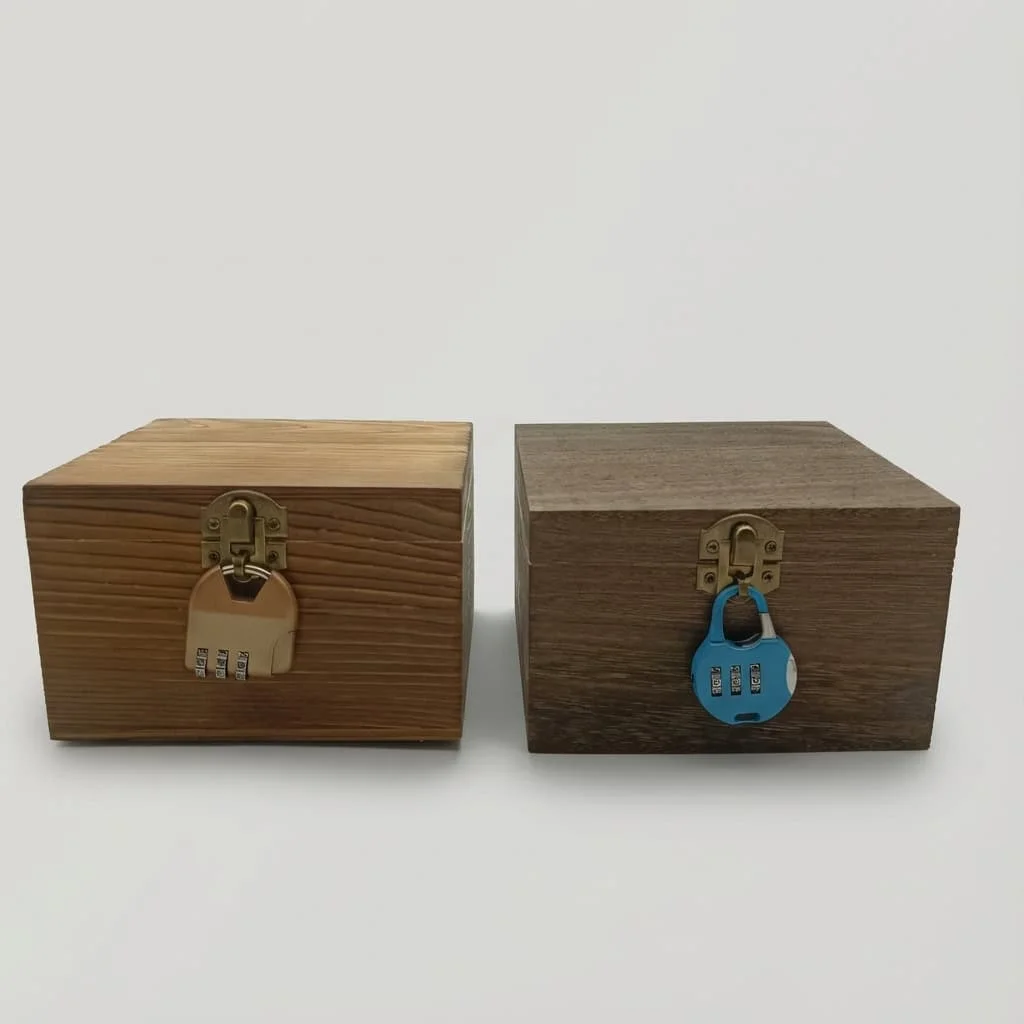
Solid pine hinged storage box with metal latch closure, available in natural sanded and charred burnt-wood finishes, suitable for rustic gift packaging and vintage-style product presentation.
Key Features
- Charred (shou sugi ban) finish option — the pine surface is flame-treated in a controlled burn that carbonizes the softer spring growth rings while leaving the harder summer growth rings raised; the result is a dark, textured surface with visible grain topography that stain can't produce
- Natural sanded finish option — for buyers who want the vintage box silhouette without the dark finish; the natural pine accepts custom stain, paint, or branding from the buyer
- Metal latch closure — hinged lid locks positively for secure storage; the latch hardware is finished in antique bronze to match the vintage aesthetic of both natural and charred versions
- Solid pine finger-joint construction — corners interlock for structural strength; the finger joints add to the rustic craft aesthetic, especially visible on the natural finish version
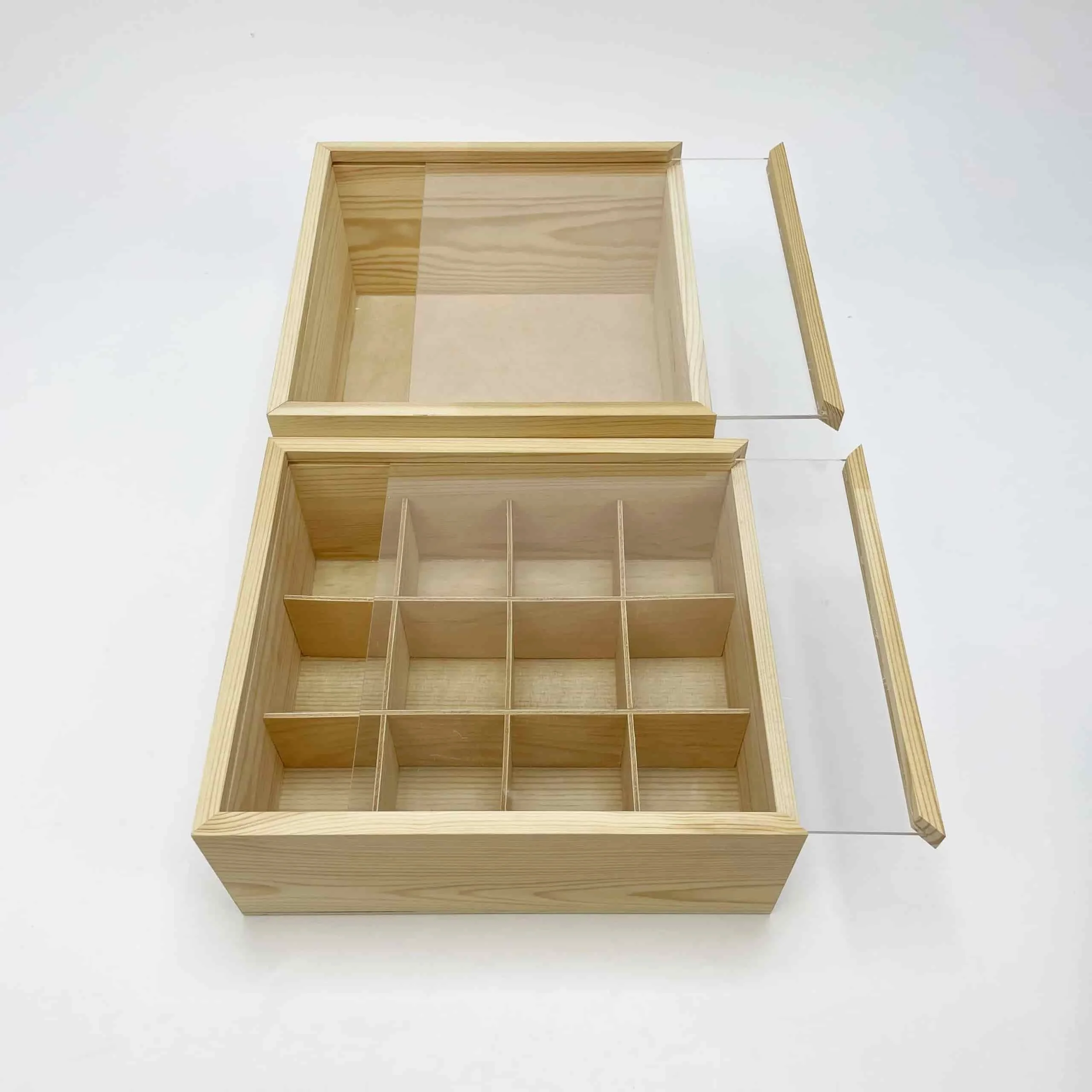
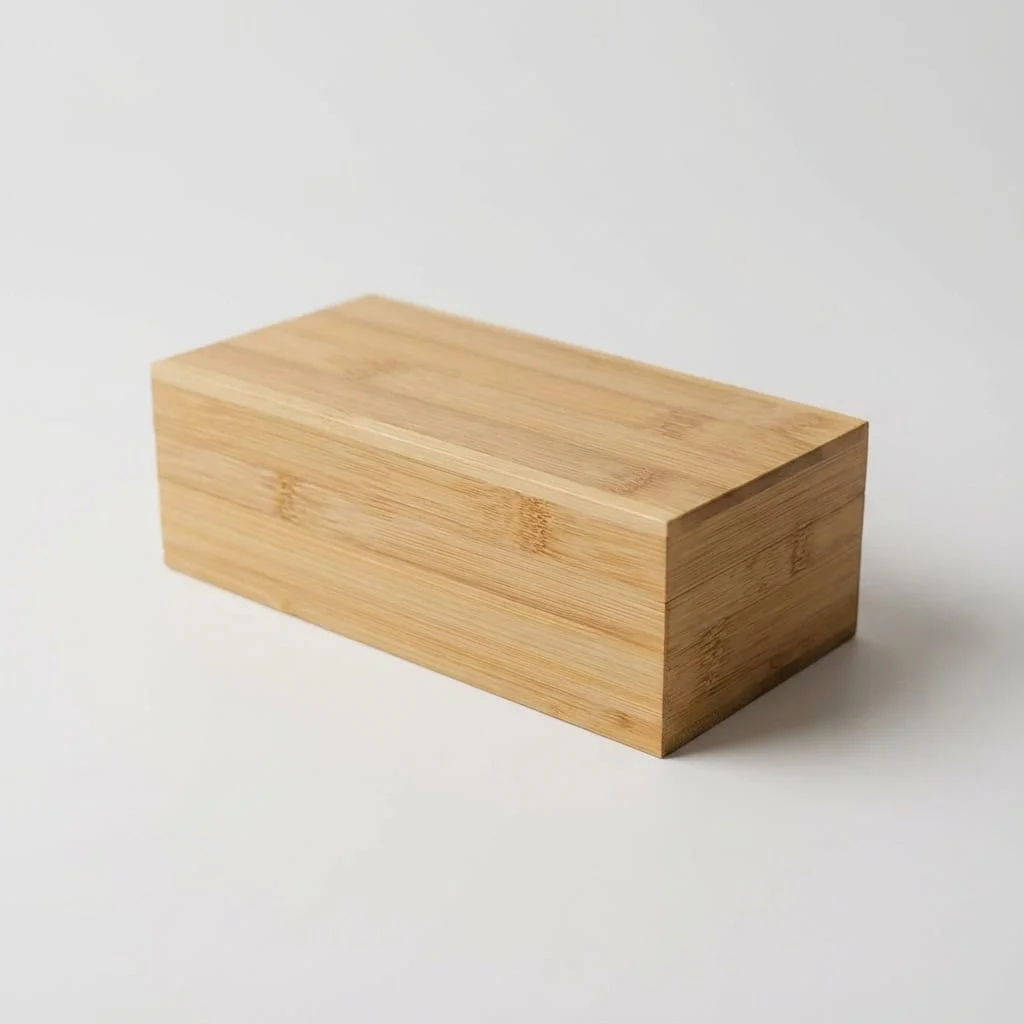
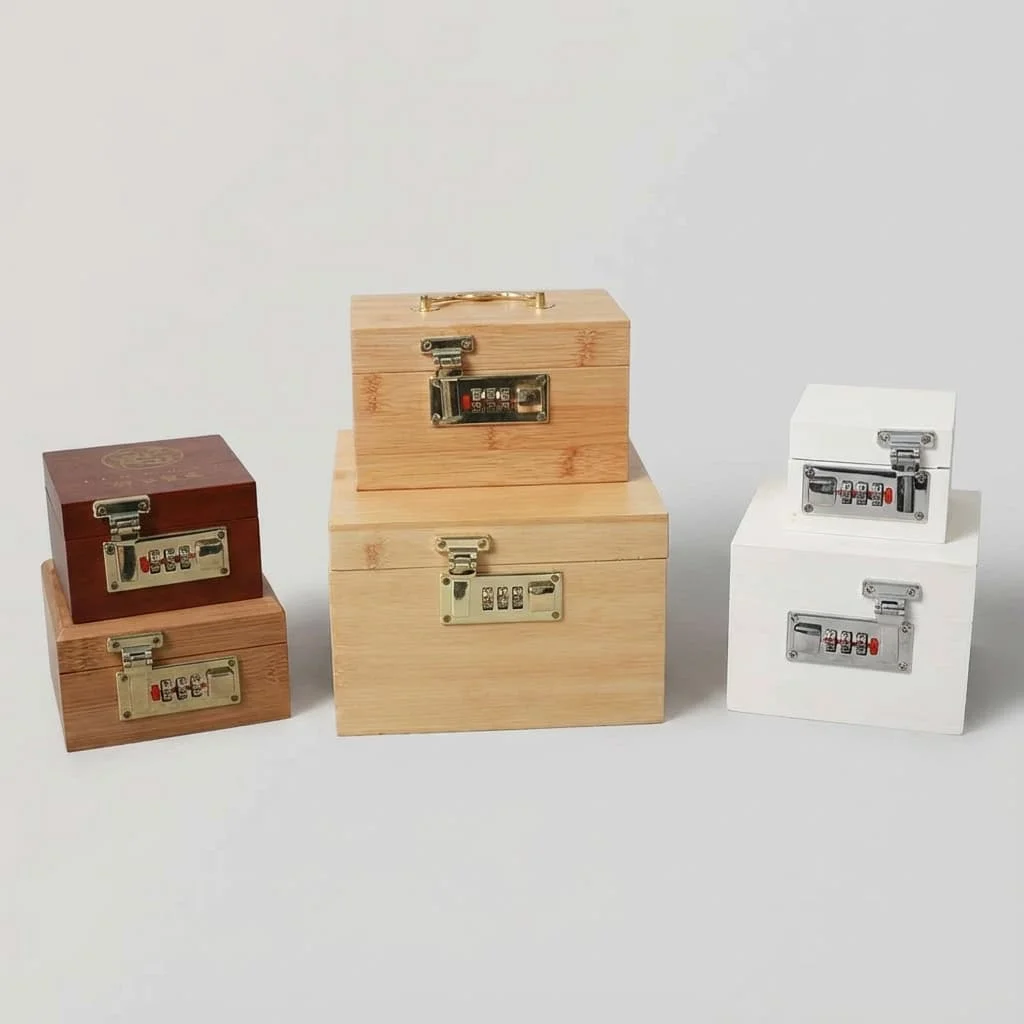
- Available in multiple sizes — rectangular and square formats from small trinket-box scale to large keepsake-box scale; custom dimensions supported
$1.20 - $4.50 / piece
Prices vary based on order quantity, dimensions, material selection, and logo printing method. Send an inquiry.
Specifications
- Wood Type
- Solid pine wood
- Construction
- Finger-joint corners
- Design
- Hinged lid with metal latch closure
- Surface Finish
- Natural sanded or charred (sealed with matte lacquer)
- Usage
- Gift packaging, home decor, wedding decor, rustic storage
- Customization
- Dimensions, finish intensity, wood species, hardware, and branding
Applications
Farmhouse and rustic home decor retail
Where the boxes are sold as decorative storage pieces — the charred finish matches the modern farmhouse, industrial, and wabi-sabi interior trends; displayed open on a shelf with dried flowers or closed as sculptural objects.
Premium gift packaging for craft brands
Where artisan food brands, candle makers, and craft spirit distillers package products in boxes that match their handmade brand positioning — the charred or natural pine reads as intentional craft, not industrial packaging.
Wedding and event decor supply
Where event planners and decor rental companies use the boxes as centerpiece risers, favor containers, or table-number holders — the vintage finish photographs well and coordinates across natural and charred versions.
Customization Options
Finish: Natural sanded and charred are the two standard options. Charred intensity is adjustable — light char (surface darkened, grain texture subtle), medium char (deep brown-black, pronounced grain texture), heavy char (alligator-skin surface cracking, fully black). The charred finish is sealed with a clear matte lacquer to prevent carbon transfer (no black residue on hands or contents).
Dimensions: Custom to buyer specification. Common retail sizes: small (12×8×6 cm), medium (18×12×8 cm), large (25×18×10 cm). The aspect ratio can be adjusted — square for decorative display, rectangular for functional storage. Custom sizes supported at standard MOQ.
Wood species: Pine is standard — the pronounced grain contrast between spring and summer growth rings is what makes the charred finish visually interesting. Paulownia for a lighter-weight version — charring produces a more uniform dark surface with less grain topography. Oak for maximum grain texture under charring — the deep grain becomes dramatically three-dimensional after burning.
Hardware: Antique bronze latch and hinges are standard. Blackened steel for an industrial look that matches the charred finish. Brass for a warmer contrast against dark charred wood. Hardware finish is matched across latch and hinges as a set.
Branding: Laser engraving on the charred surface — the laser burns through the char layer to reveal the lighter wood beneath, creating high-contrast branding. Hot foil stamping on natural pine. Branded interior — a logo engraved on the base panel, discovered on opening.
Ready to get a recommendation?
Send us your requirements — we'll respond with material and production recommendations within 24–48 hours.
Why This Design Works
The charred finish is a surface treatment that adds functional benefits beyond aesthetics. Controlled surface burning (derived from the Japanese shou sugi ban technique) does three things to pine: it carbonizes the surface layer, making it less appetizing to insects and more rot-resistant (the carbon layer is naturally antimicrobial); it hardens the surface, improving dent and scratch resistance versus raw pine; and it creates a textured, non-slip surface that's more forgiving of handling marks than a smooth lacquered finish. The clear matte sealer applied after charring locks in the carbon — unlike DIY charred wood projects that shed black dust, our production process produces a clean-to-touch surface. The charred finish is particularly effective on pine because the contrast between the soft spring growth (burns faster, deeper) and hard summer growth (burns slower, stands proud) creates a three-dimensional grain texture that's unique to each box.
The same box in two finish options serves two different retail channels from one production line. The natural sanded version goes to craft stores, DIY wedding suppliers, and brands that want to apply their own finish. The charred version goes to home decor boutiques, gift shops, and brands that want a distinctive finished product straight from the factory. The box body, joinery, hardware, and assembly process are identical — the only difference is the charring step (approximately 2–3 minutes per box at the finishing stage). This is efficient for both our production scheduling and the buyer's inventory management — one product development process, two market-ready SKUs.
The metal latch and visible hardware are essential to the vintage aesthetic, not an afterthought. A hidden magnetic closure or an invisible hinge would read as modern and would clash with the rustic charred surface. The antique bronze latch and exposed hinge leaves are part of the visual language — they signal that this is a traditional wooden box built with traditional hardware, even if it was produced on modern CNC equipment. The hardware is selected for how it ages — antique bronze develops a darker patina over time that complements the charred wood rather than contrasting with it. Polished brass or chrome hardware would look out of place and would read as new against the intentionally aged wood surface.
Manufacturing Considerations
The charring process must be controlled for consistency across production batches. Hand-charring with a torch produces beautiful results but unacceptable variation at commercial scale — one box is darker, the next is lighter, and a buyer receiving 500 units sees 500 different shades. Our charring uses an automated conveyor system that passes each panel under a calibrated gas burner array at a fixed speed and distance. Burner height, flame intensity, and conveyor speed are set per batch and verified on test panels before production. Each charred panel is compared to a master sample under standardized lighting — panels outside the approved shade range (±10% reflectance) are re-charred or rejected. For large orders split across multiple production days, a master sample from day one is retained and used as the reference for subsequent days.
The clear matte sealer over charred wood requires specific application to avoid peeling. The carbon layer on charred wood is slightly friable — if sealer is applied too thickly, it forms a film that can peel away taking carbon particles with it, leaving light-colored bare wood patches. We apply the sealer in multiple thin mist coats — the first coat soaks into the carbon layer rather than sitting on top, binding the carbon particles into a stable matrix. Subsequent coats build the protective film. Peel adhesion is tested on a sample from each batch by applying tape and pulling — no carbon transfer to the tape = passed.
The charred surface is slightly abrasive — interior protection is needed for delicate contents. The textured charred surface, even when sealed, has a fine sandpaper-like quality that can scuff polished surfaces. For boxes intended to hold jewelry, glass, or polished metal items, we recommend a felt or velvet interior lining. The lining is applied after charring and sealing, so the exterior has the full charred aesthetic while the interior is soft and protective. For boxes sold as decorative objects (not functional storage), unlined interiors are standard.
Have a technical concern about your use case? Our team can walk you through how we'd handle it for your project.
Order a 50/50 mix of charred and natural finishes in the medium size (18×12×8 cm) for your first order. The medium size is the most versatile — large enough for functional storage (desk supplies, accessory organization), small enough for decorative shelf display. The 50/50 split lets you test both markets without committing to one finish. The charred version typically commands a 20–30% retail premium over the natural version — price accordingly. Add laser-engraved branding on the charred version (high contrast, dramatic) and hot-stamp branding on the natural version (warm, traditional) if you're branding both. For a simple first order, skip branding and let the finish be the selling point.
Start Your Project
Send us your design or reference images — we'll return with a pre-production sample for your approval.
Frequently Asked Questions
Q: Does the charred finish leave black residue on hands or contents?
Q: Is the charred finish the same on every box?
Q: Does the charring weaken the wood structurally?
Q: Can the charred boxes be used outdoors?
Q: What's the difference between this charred box and your unfinished hinged pine box?
Send Us Your Requirements
Send your design, reference images, or product sample. We don't just quote a price — we respond with material recommendations, a feasibility assessment, and professional suggestions grounded in over 20 years of manufacturing experience. Expect a detailed response within 24–48 hours.
- Professional recommendations included
- Small MOQ & trial orders supported
- Worldwide shipping with export documentation