Wooden family puzzles have gradually developed into a stable and recognizable product category within the gift and home decor market. Unlike standard decorative items, these products combine natural wood materials with personalized elements, allowing each piece to represent specific family members, relationships, or emotional meanings. As a result, they are not only used as visual decorations but also serve as meaningful keepsakes.
For importers, wholesalers, and brand owners, this category offers a balanced combination of design flexibility, manageable production complexity, and strong consumer appeal across multiple sales channels. Whether sold through online platforms, gift stores, or seasonal campaigns, wooden family puzzles are able to maintain consistent demand due to their personalization value and emotional connection with end users.
What Are Wooden Family Puzzles?
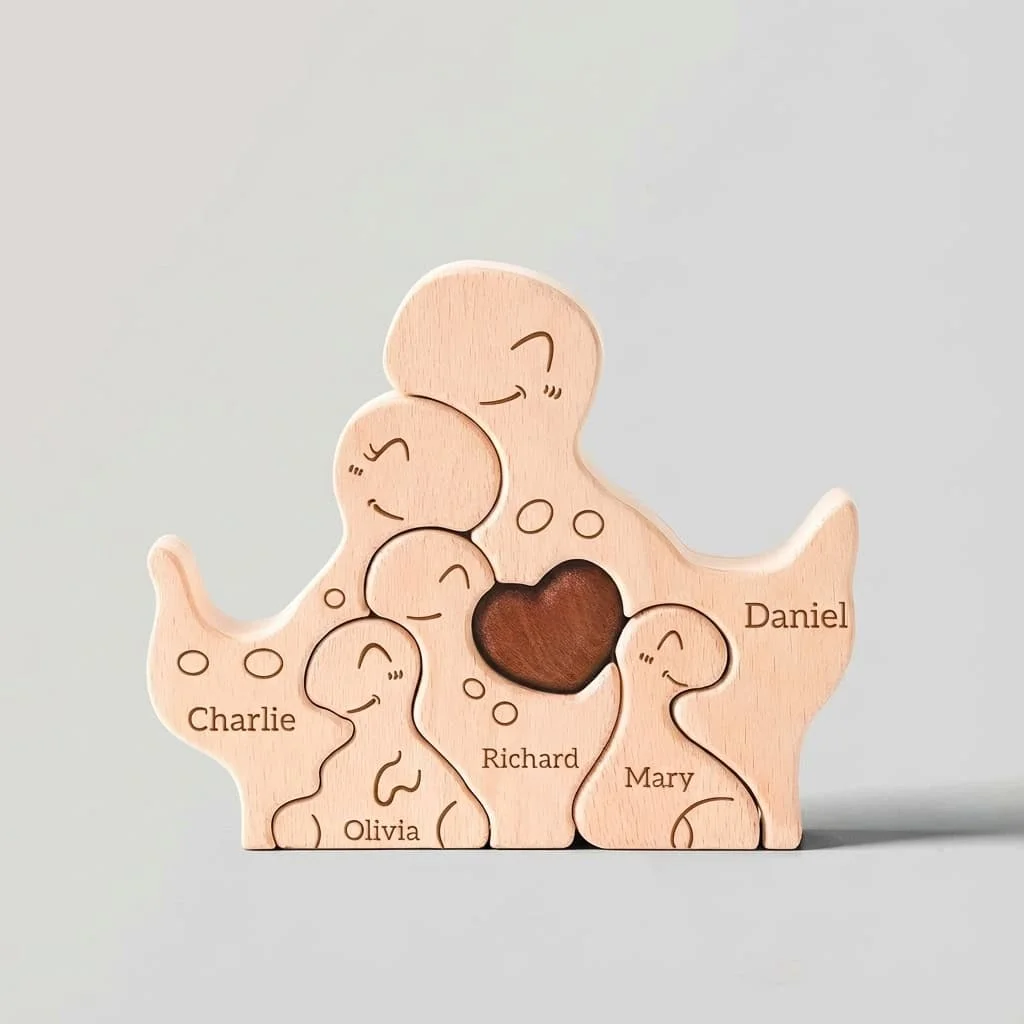
Wooden family puzzles refer to a type of wooden decorative product composed of multiple individual pieces, each symbolizing a family member, pet, or symbolic figure, which together form a complete display. These pieces are often designed to visually connect or physically interlock, creating a unified composition that represents a family unit.
Compared with traditional wooden ornaments, this category places greater emphasis on personalization and storytelling. Each figure can be customized with names, dates, or short messages, while the overall design remains simple and adaptable to different styles. This balance between standardized structure and flexible customization makes wooden family puzzles particularly suitable for scalable production while still meeting individual customer needs.
Common Product Types
In practical production and market applications, wooden family puzzles can be divided into several common types based on design structure and theme.
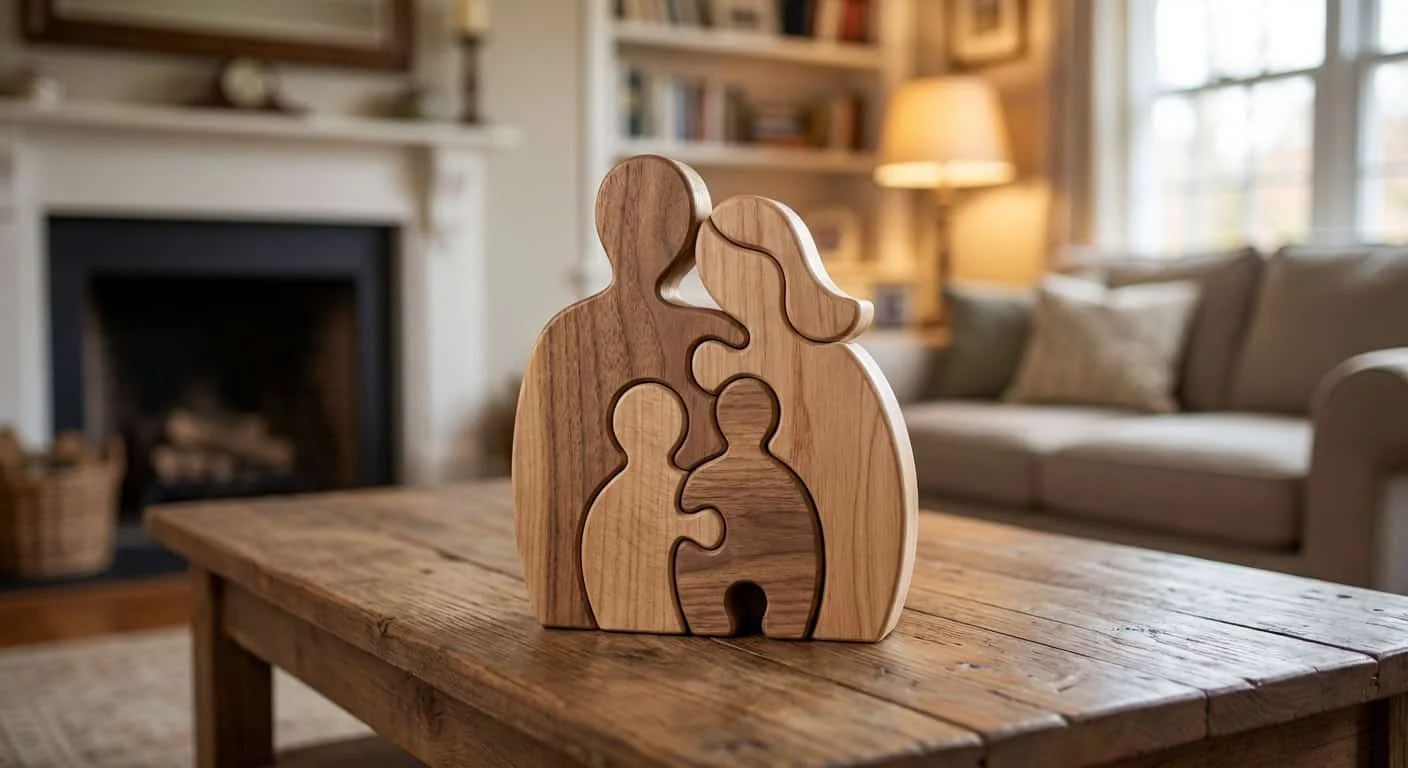
The most typical category is the family member puzzle set, where multiple figures represent parents, children, or extended family members. These sets usually differ in size or shape to reflect family roles, and they are often placed on a base or arranged as a standing display. Because of their clear structure and straightforward customization, they are widely used in both retail and wholesale markets.
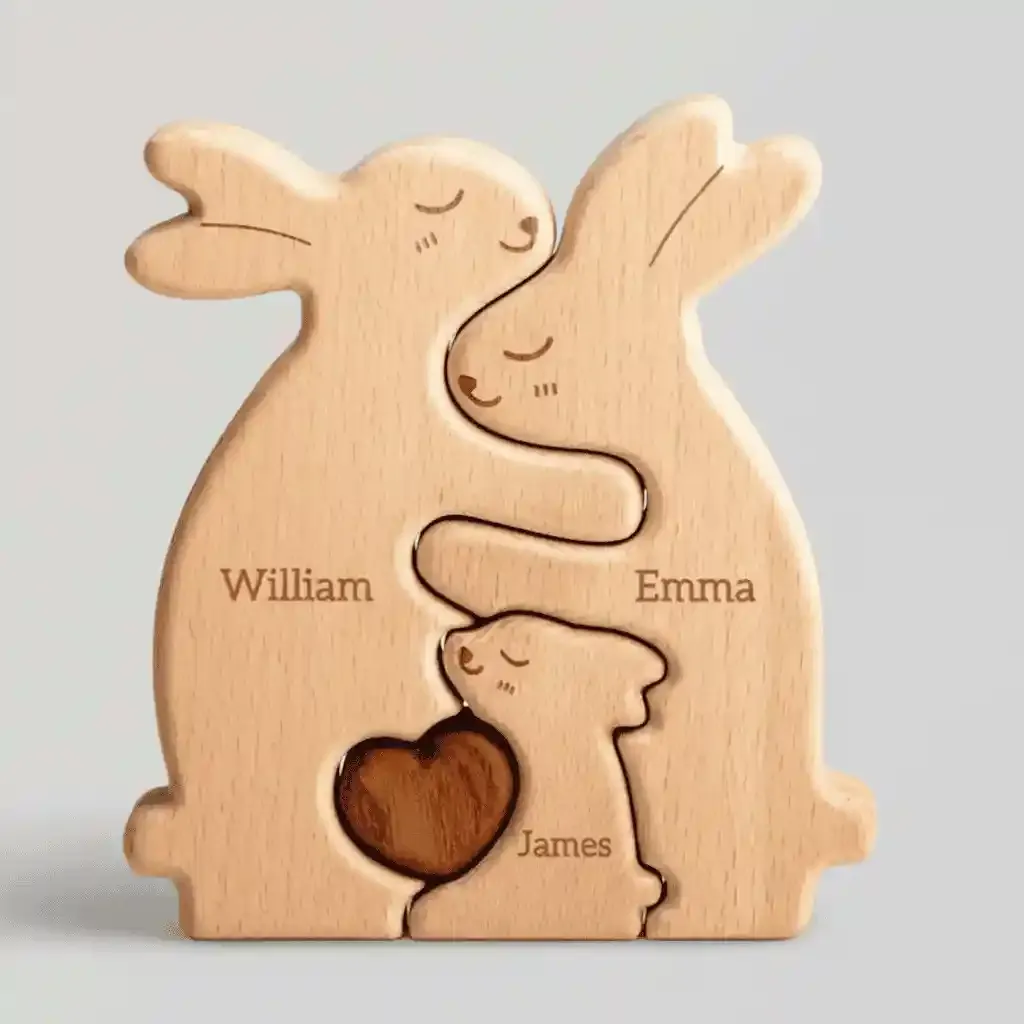
Another widely used category is the animal family puzzle design, which replaces human figures with animals such as cats, bears, rabbits, or dogs. These designs tend to have a softer visual style and are often used for seasonal promotions, children’s products, or pet-related product lines. In many markets, animal-themed designs can achieve broader appeal because they are less dependent on cultural differences.
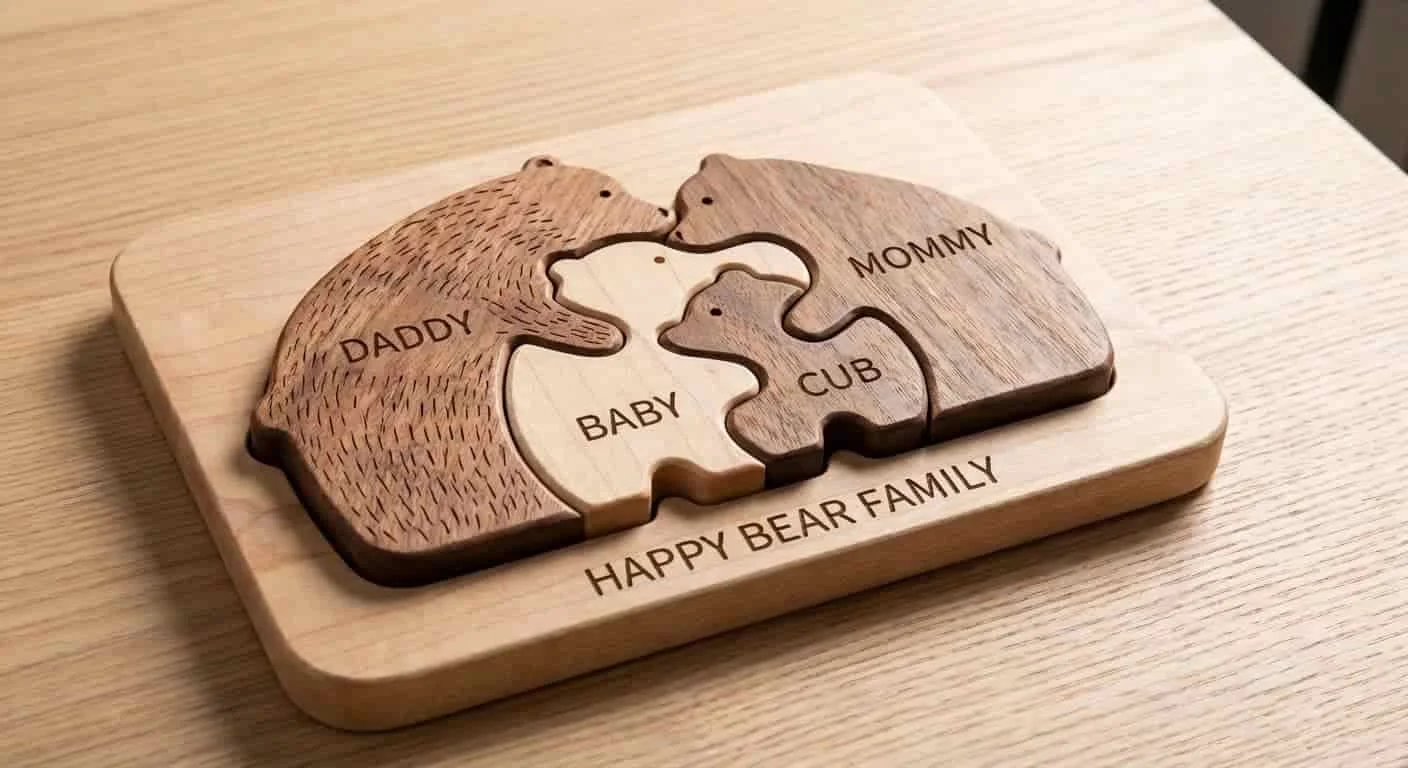
There are also symbol-based designs, such as hands forming a heart or figures integrated into a single outline. These products focus more on emotional expression and are commonly used for anniversaries, memorial gifts, or special occasions. Although the structure may appear simpler, the perceived value is often higher due to the symbolic meaning.
For more design ideas and available styles, you can visit our Wooden Family Puzzles page to explore different structures and customization options.
Wood Materials Used
Material selection plays an important role in both the appearance and cost structure of wooden family puzzles products. While the product size is generally small, the visual effect and surface quality directly influence customer perception.
Pine wood is one of the most commonly used materials because it offers a light color, relatively uniform texture, and good machinability. It is suitable for cost-sensitive projects and bulk production where consistency is required.
Beech wood, on the other hand, provides a denser structure and a more refined appearance, making it more suitable for products positioned in mid- to high-end markets. Its smooth grain also allows for cleaner engraving results.
Birch plywood is frequently used for layered or interlocking designs due to its structural stability. It performs well in laser cutting processes, producing clean edges and maintaining dimensional accuracy, which is especially important for puzzle-style products.
Customization Options of Wooden Family Puzzles
Customization is the core feature that differentiates wooden family puzzles decor from standard wooden products. Instead of producing identical items, manufacturers can adjust multiple elements within a controlled structure to meet different customer requirements.
Name engraving is the most basic and widely requested customization option. Each figure can include an individual name, while the base can feature a family name or a short message. This type of customization is typically achieved through laser engraving, which ensures consistency and efficiency.
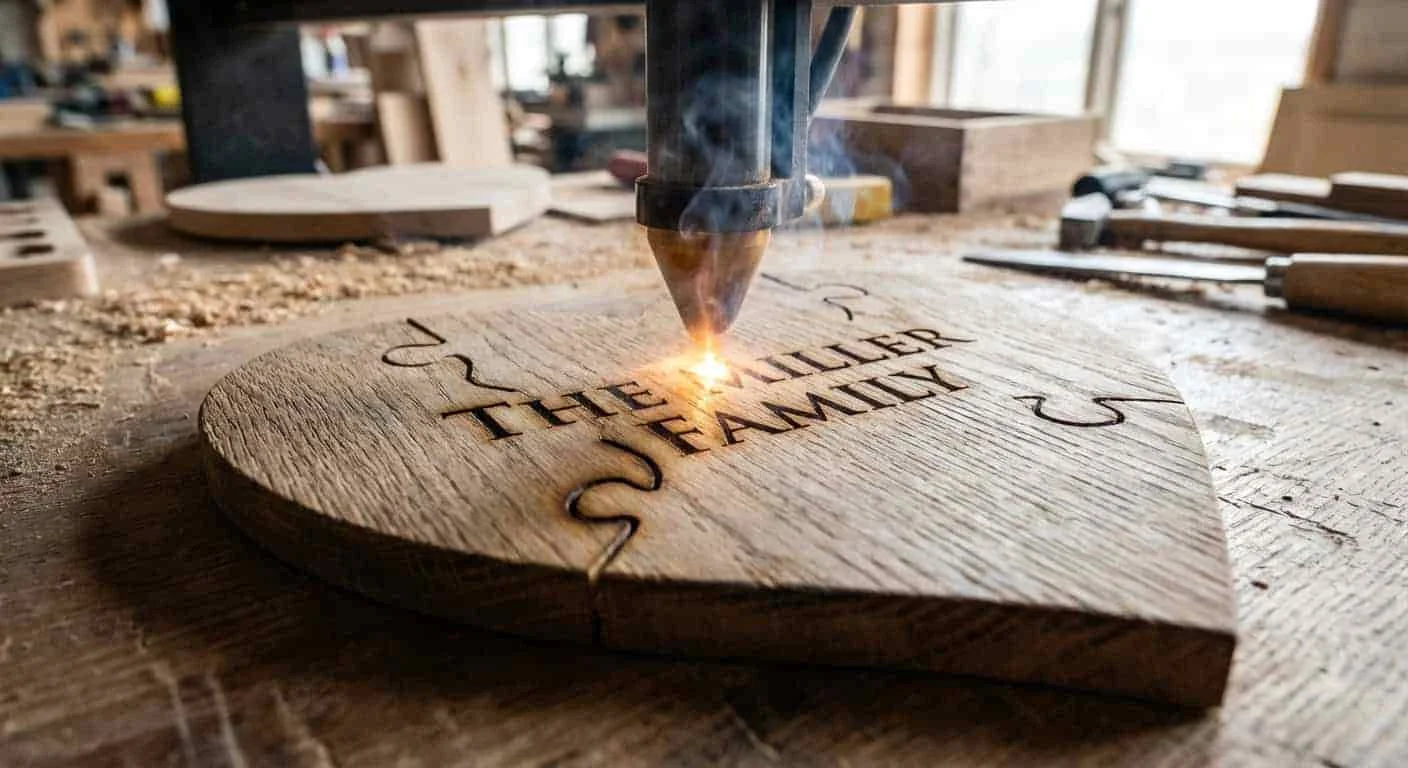
In addition to text, the product structure itself can also be customized. The number of figures can be adjusted according to family size, and additional elements such as pets can be included. Some projects may also require slight variations in shape or posture to match specific design preferences.
Surface finishing is another important aspect. While many products maintain a natural wood appearance, some designs include painted details, colored accents, or stained finishes to enhance visual contrast. The level of finishing is usually determined by the target market and price positioning.
Packaging can also be customized depending on the sales channel. For example, e-commerce products may require protective packaging with compact dimensions, while retail products may use gift boxes to improve presentation.
Manufacturing Process Overview
Although the final products appear simple, consistent production requires a structured manufacturing process to ensure quality and efficiency.
The process typically begins with material preparation, where wood boards are selected based on thickness, moisture content, and surface condition. Proper material selection is essential to avoid deformation or surface defects in later stages.
Cutting is usually carried out using CNC machines or laser cutting systems, depending on the design complexity and production volume. Precision at this stage directly affects how well the pieces fit together and the overall appearance of the product.
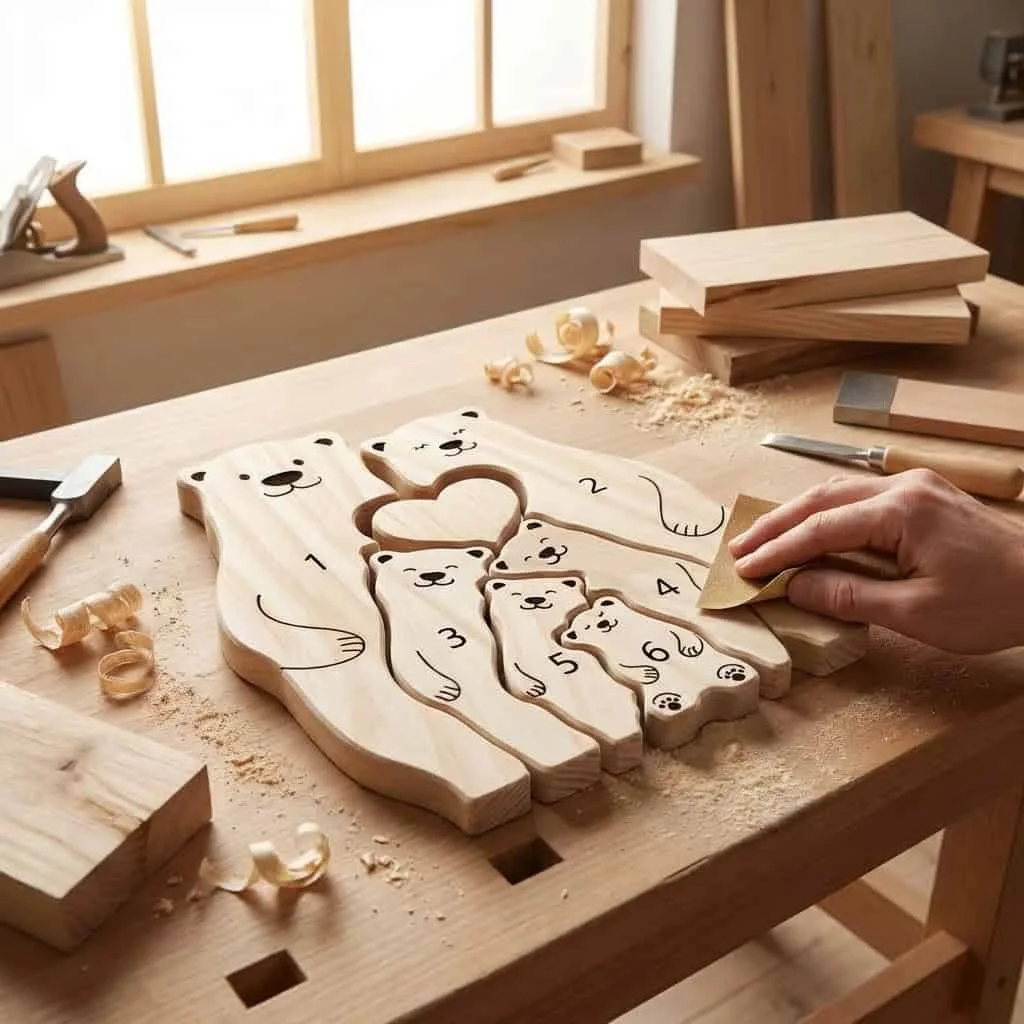
After cutting, the components go through sanding and surface treatment to achieve a smooth finish. This step is particularly important for products that will be handled frequently, as rough edges can affect user experience.
Engraving is then applied according to customization requirements, followed by assembly and final inspection. Quality control focuses on dimensional accuracy, engraving clarity, and surface consistency before the products are packed for shipment.
Why Wooden Family Puzzles Perform Well in the Market
From a commercial perspective, wooden family puzzles decor performs well because it combines emotional value with practical production advantages.
The emotional aspect plays a central role. These products are often purchased as gifts, and the ability to personalize them makes them more meaningful than standard decorative items. This increases perceived value without significantly increasing production cost.
At the same time, the product structure is relatively simple, which allows manufacturers to maintain stable production efficiency even when handling customized orders. This balance makes the category suitable for both small-batch personalized sales and larger wholesale projects.
In addition, the compact size and lightweight nature of these products make them easy to package and ship, which is particularly important for cross-border e-commerce and international distribution.
Application Scenarios
Wooden family puzzles are suitable for a wide range of applications, including gift shops, online marketplaces, home decor brands, and seasonal campaigns. It is commonly used for occasions such as Christmas, Mother’s Day, Father’s Day, and anniversaries, but it also maintains steady demand as an everyday gift product.
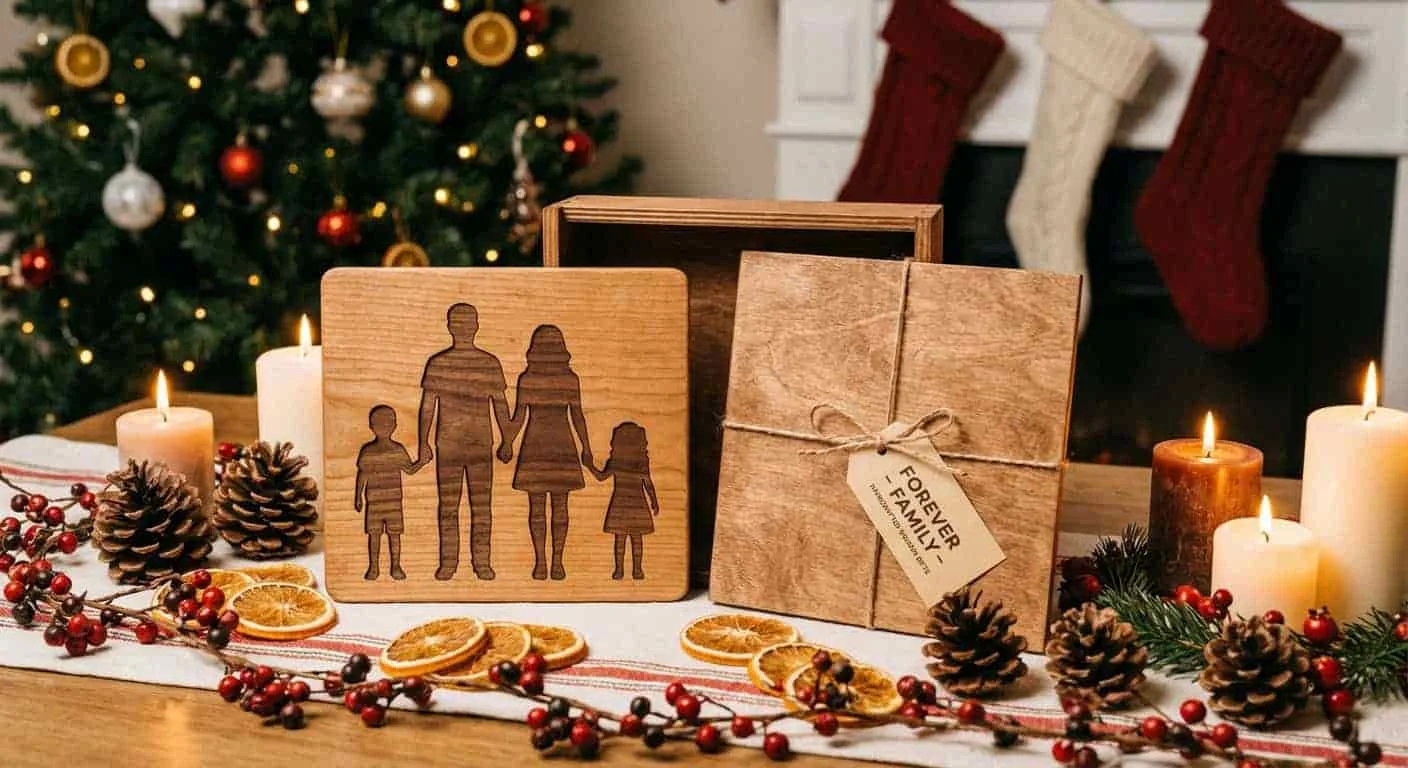
Because of its flexibility in design and customization, the same product concept can be adapted to different markets with minimal changes, making it a practical category for long-term product development.
Conclusion
Wooden family puzzles represent a product category that successfully combines natural materials, simple structures, and personalized design. Its ability to convey emotional meaning while remaining cost-effective to produce makes it attractive for both retailers and wholesalers.
For buyers and product developers, the key to success lies in balancing design clarity, material selection, and customization options while working with a manufacturer capable of maintaining consistent quality. With the right approach, this category can become a reliable part of a long-term product portfolio.
FAQ
What materials are most suitable for wooden family puzzles?
Pine, beech, and birch plywood are commonly used, depending on the required appearance and price level.
Can designs be fully customized?
Yes, including names, number of figures, shapes, and finishing details.
Are wooden family puzzles suitable for bulk orders?
Yes, the production process supports both small customized batches and larger wholesale quantities.
Is this product suitable for online sales?
Yes, due to its lightweight structure and strong personalization appeal.