
Custom Hinged 6 Bottle Wooden Wine Box with Metal Latches
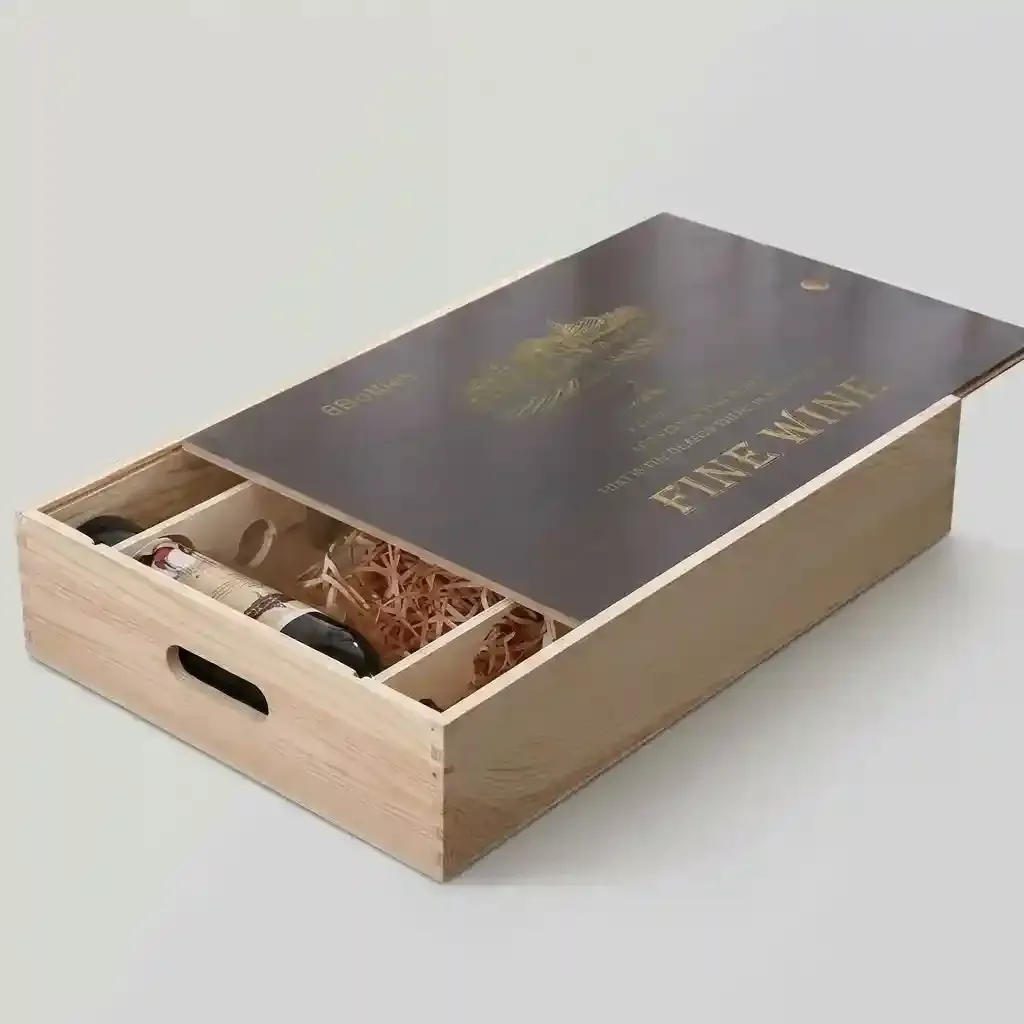
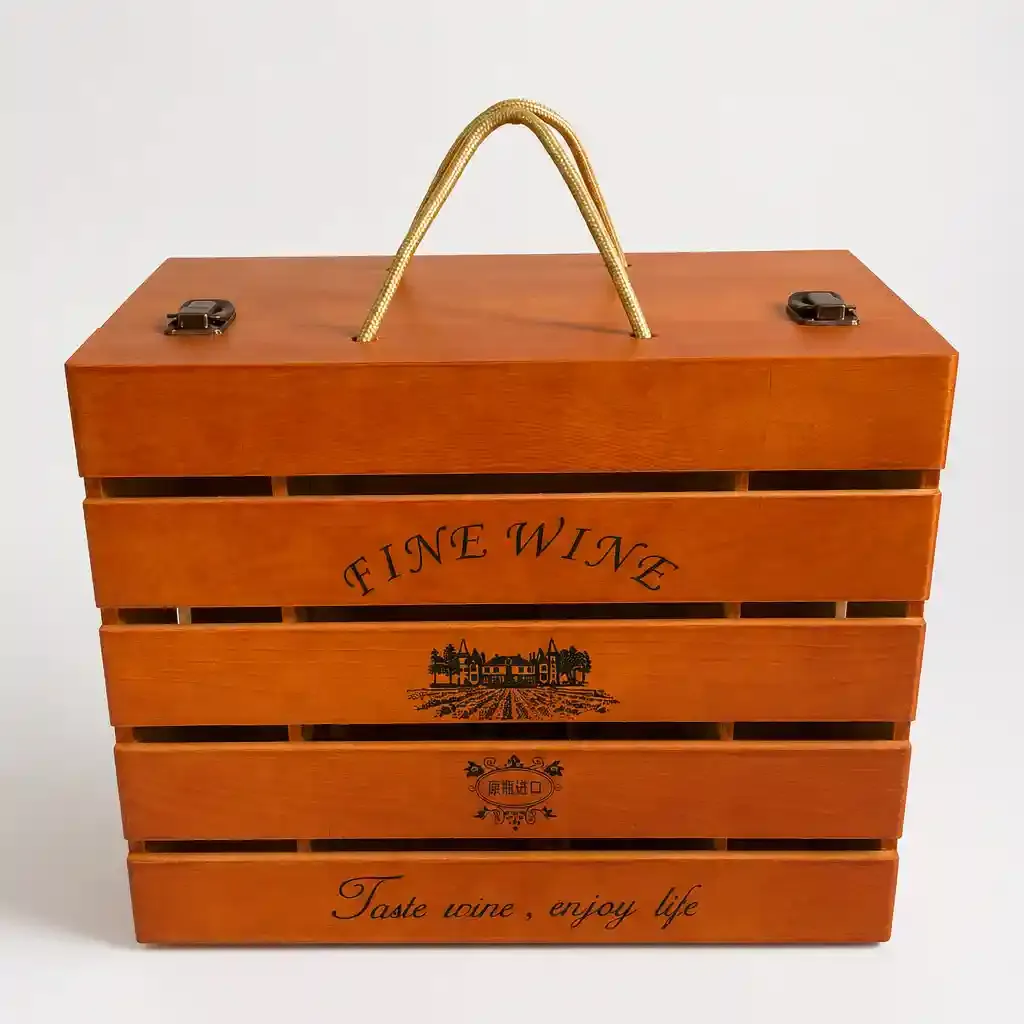
Custom hinged 6-bottle wooden wine box with dual metal latches and finger-joint construction, built for winery tasting rooms, corporate gifting, and premium retail display.
Key Features
- Sturdy hinged lid with dual vintage metal latches
- Built-in scalloped wooden dividers to secure six standard wine bottles
- Cutout side handles for easy and safe transportation
- Smooth sanded surface ideal for custom engraving or printing
- Classic finger joint corner construction for added durability
$2.30 - $5.80 / piece
Prices vary based on order quantity, dimensions, material selection, and logo printing method. Send an inquiry.
Specifications
- Material
- Natural light wood
- Capacity
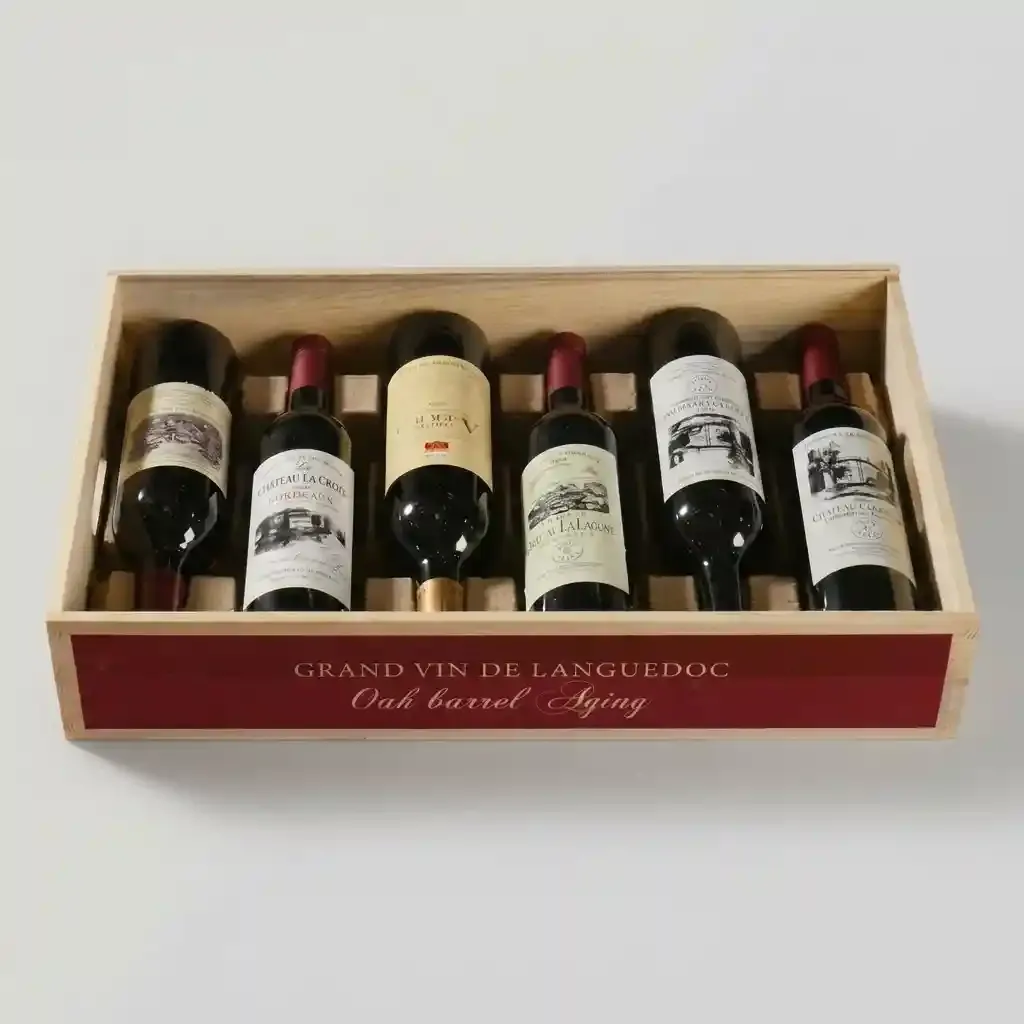
- Holds 6 standard 750ml wine bottles
- Hardware
- Antique bronze finish latches and hinges
- Customization
- Logo engraving, printing, and size adjustments available
- Application
- Corporate gifting, retail packaging, and wine storage
Applications
Winery tasting rooms and wine clubs
Hinged lid stands open at ~100° for all-day display. Dual latches and furniture-grade hardware make the box part of the presentation, not just packaging.
Corporate gifting at scale
Jig-based construction keeps lid alignment identical across 5,000+ units. Silk screen branding on the flat lid is the lowest per-unit cost for consistent logos.
Limited-edition wine releases
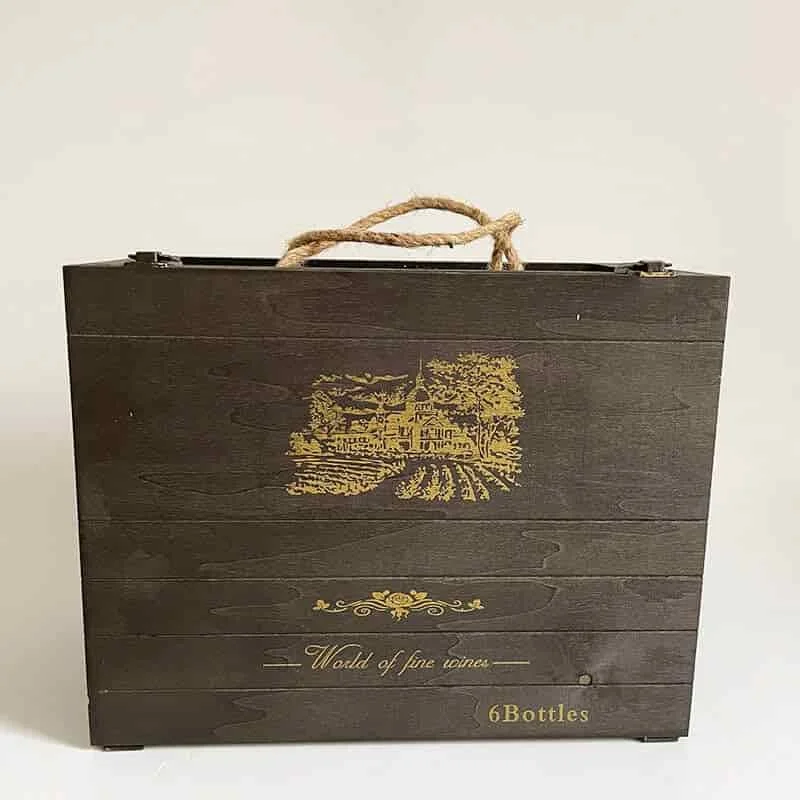
Laser engraving on stained pine with antique bronze hardware creates a box buyers keep — long after the bottle is gone, your vineyard's name stays visible.
Customization Options
Wood Species. Pine is standard — lightweight, takes stain well, finger joints cut cleanly. Paulownia is lighter but softer, requiring longer hinge screws for pull-out resistance. Birch plywood offers the best screw retention for the hinge panel. Solid oak or walnut for ultra-premium runs at 2–3× the material cost of pine.
Hardware Style & Finish. Antique bronze is standard — dark, low-luster, forgives surface wear. Alternatives: polished brass, nickel, matte black, or custom-finished to your brand palette. If you want a specific hardware set from a non-China supplier, share the spec early so we can adjust mortise dimensions and screw patterns. Browse hinge, latch & hardware options →
Finger Joint Configuration. Standard finger width 8–10mm for a balanced look. Wider (12–15mm) reads more rustic; narrower (5–7mm) reads more furniture-grade. Trade-off: narrower fingers mean more cuts per corner, longer machine time.
Stain & Finish. Full custom color matching from natural through any stain tone. Medium to dark stains with matte or satin clear coat are most popular — they complement antique hardware and hide handling marks. Distressed finishes available for an aged, found-object look.
Branding Method. Silk screen: lowest per-unit cost, crisp opaque graphics. Laser engraving: permanent textured mark that won't wear off. Hot branding: burns the mark into the wood for a dark, permanent impression.
Interior Layout. Six individual compartments with scalloped wooden dividers that cradle each bottle at the neck and base. Fixed dividers transfer load between bottles and strengthen the box against racking; removable dividers let the customer repurpose the box after the wine is gone — choose based on whether you want structural integrity or a second-life story for your packaging.
Lid Configuration. Standard hinged lid opens to ~100–110°. Lid stays add a few cents per unit and hold the lid at a set angle — worth it for retail display where the box stays open for hours, unnecessary for gift packaging that gets opened once.
Ready to get a recommendation?
Send us your requirements — we'll respond with material and production recommendations within 24–48 hours.
Why This Design Works
A hinged lid with metal latches makes a different promise than a sliding lid. The sliding lid says utilitarian. The hinged lid says ceremony — the tactile click of the latch, the weight of the lid pivoting on its hinges, the reveal. That experience is part of what the buyer is paying for, and it matters for corporate gifts, limited-edition releases, and retail presentation where unboxing is part of the value.
The finger joints are doing real structural work. Six 750ml bottles weigh 16–18 pounds. That load gets lifted by side handles, so the corner joints take both compression and tension. Finger joints multiply the glued surface area versus a butt joint, spreading stress across the full corner height. A butt joint fails at the glue line — there's almost no mechanical interlock. Finger joints interlock the two panels with alternating wood fingers, so load transfers through both the glued faces and the wood itself. They're faster to produce than dovetails, and the visible finger pattern reads as craft detail rather than cost-cutting.
Dual latches aren't a styling choice — they're engineering. A single center latch on a box this wide creates uneven pressure; the corners can lift by a millimeter or more. Two latches at one-third and two-thirds of the front width distribute closure force evenly, keeping the lid flush across the full span. Same principle as instrument cases and tool chests — consistent seal pressure, not redundancy.
See our full range of hinged-lid wooden wine boxes — from single-bottle gift packaging to multi-bottle crates with metal hardware.
Manufacturing Considerations
Hinge mortise depth is the #1 QC checkpoint. Each hinge leaf sits in a shallow mortise routed into the wood. If depth varies by more than 0.2–0.3mm between the two hinges, the shallower side holds the lid proud of the rim — multiplied across the lid width, you get a visible gap. We use a jig-based routing setup so both mortises are cut in one operation at the same depth. First thing checked on samples: repeated open-close cycles, watching for any change in how the lid seats.
Screw retention in pine is the #1 warranty issue with hinged boxes. Pine's low density (~400 kg/m³) means hinge screws carry all the lid's opening stress in a material with relatively low withdrawal resistance. Wood expands and contracts with seasonal humidity changes — each cycle microscopically works the screw threads, and over months of use the surrounding fiber can compress enough that the screw loses grip. Softwood screws backing out is common enough that we treat it as the default assumption, not a rare event. Our fix: longer screws with 2–3mm extra thread engagement, coarse-thread pattern for better fiber purchase, and pilot holes at 75–80% of screw minor diameter instead of the conventional 90%. For boxes that will see frequent opening — retail display, tasting rooms — birch plywood at the hinge panel eliminates the problem entirely. Cross-laminated plies hold screws regardless of humidity swings.
Latch catch alignment tolerance is tight — about 0.5mm. If one catch sits lower, that latch engages first and the lid torques, accelerating wear on the second latch. The fix: catches are mounted only after the lid is fully hinged and closing correctly, positioned for simultaneous engagement, then secured. Each latch is cycled repeatedly on QC inspection to verify consistent force and alignment.
Watch out for hardware damage during transit. Unlike flush sliding lids, surface-mounted latches and hinges are contact points. Two boxes packed face-to-face without protection will scratch each other. Each box gets a poly bag, then foam pads over latch and hinge areas before packing. Boxes are oriented so hardware faces inward toward dividers, never toward another box's surface.
Have a technical concern about your use case? Our team can walk you through how we'd handle it for your project.
Start with pine, finger joints, antique bronze hardware, medium-dark walnut stain, and silk screen branding. This configuration looks far more expensive than it costs — the hardware creates the premium impression, not the wood species. The one upgrade worth paying for is the hardware finish: moving to a custom-toned latch set creates a stronger brand signal than upgrading from pine to oak. People remember the metal they touched, not the wood grain they glanced at. For retail display or tasting room use, add lid stays — they're cheap insurance against the most common failure mode. Keep the interior simple — scalloped wood dividers do the job without adding cost or production complexity.
Start Your Project
Send us your design or reference images — we'll return with a pre-production sample for your approval.
Frequently Asked Questions
Q: How durable are the hinges and latches? Will they hold up to repeated use?
Q: Can you match the stain color to my existing brand packaging?
Q: How do you protect the hardware during international shipping?
Q: What if my bottles are a non-standard shape or size?
Q: How does the hinged design compare to a sliding lid for wine boxes?
Q: Can the boxes be stacked when full of bottles?
Send Us Your Requirements
Send your design, reference images, or product sample. We don't just quote a price — we respond with material recommendations, a feasibility assessment, and professional suggestions grounded in over 20 years of manufacturing experience. Expect a detailed response within 24–48 hours.
- Professional recommendations included
- Small MOQ & trial orders supported
- Worldwide shipping with export documentation