
6 Bottle Wooden Wine Packaging Box Vintage Style Wood Wine Gift Box
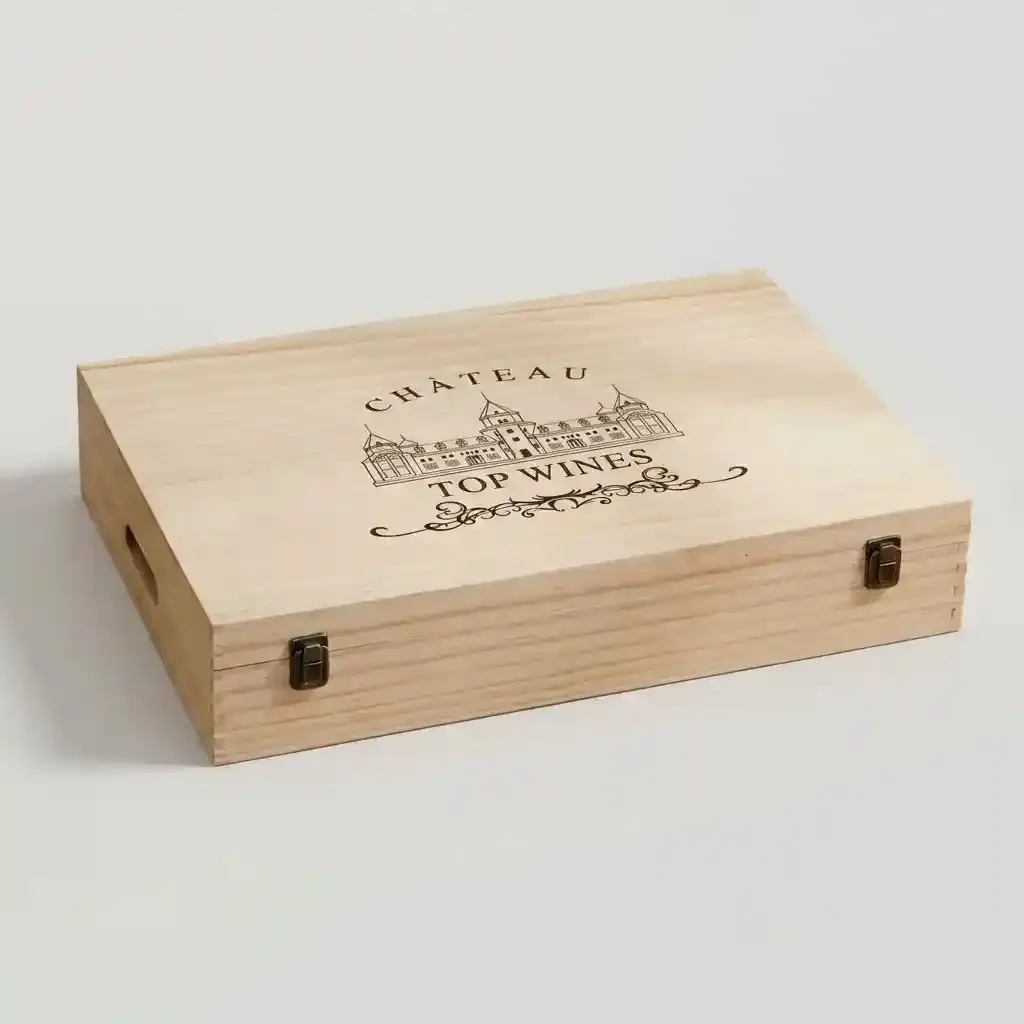
Wholesale 6-bottle wooden wine packaging box with dark MDF sliding lid and gold silk-screen print, built for vintage-style wine presentation and consistent branding across large production runs.
Key Features
- Dark-finished MDF sliding lid with gold silk-screen print — grain-free surface for crisp, consistent graphics across thousands of units
- Solid wood body with natural grain finish — structural strength where the load is carried
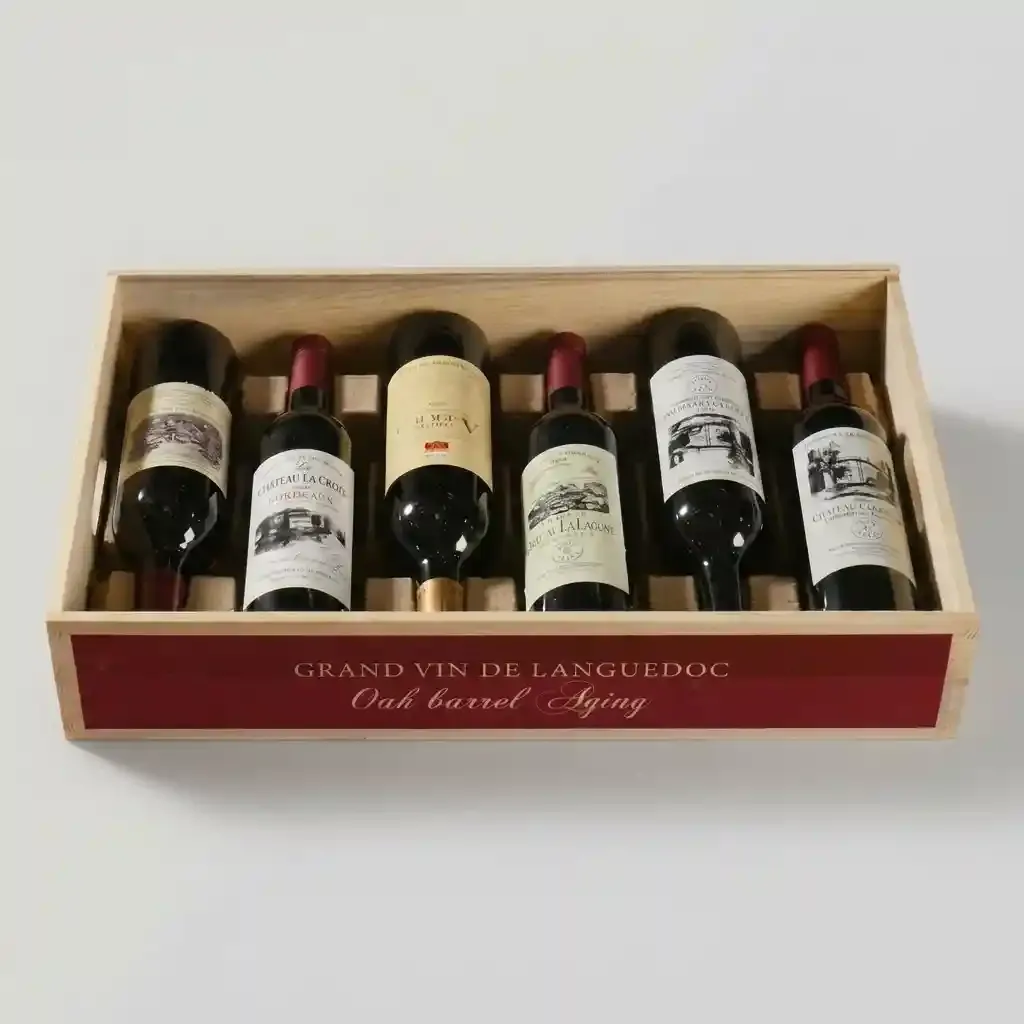
- Slotted removable wooden dividers — prevent bottle-to-bottle contact during transit, lift out clean for repurposing
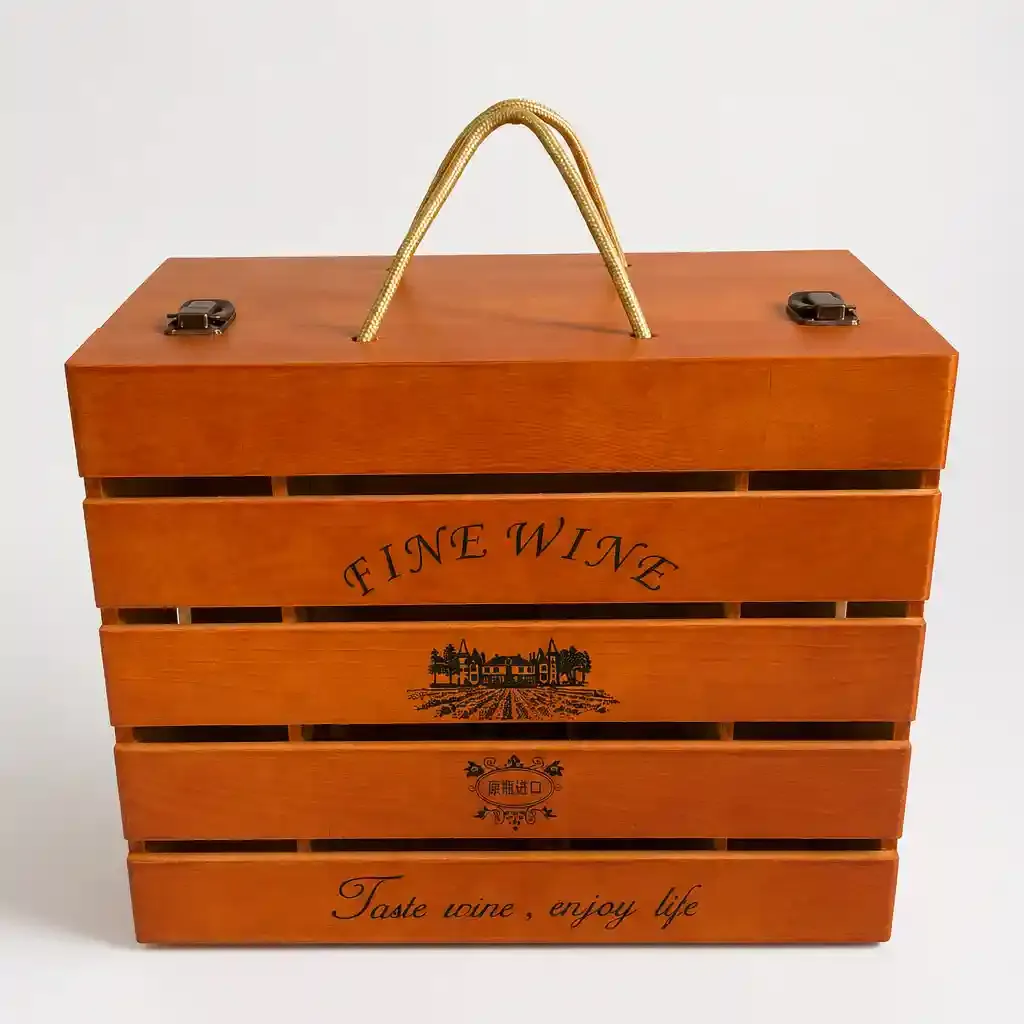
- Side cutout handles — carry a full 6-bottle load safely with two hands
- Fixed 51cm × 35cm × 10.5cm footprint — standardized for six standard Bordeaux bottles
$2.50 - $5.20 / piece
Prices vary based on order quantity, dimensions, material selection, and logo printing method. Send an inquiry.
Specifications
- Wood Type
- Solid wood body with MDF lid
- Capacity
- Holds 6 standard wine bottles
- Dimension
- 51cm x 35cm x 10.5cm
- Design
- Vintage style with sliding lid and side handles
- Usage
- Wine packaging, corporate gifting, retail display
- Customization
- Available for size, logo printing, and finish adjustments
Applications
Volume wine gift programs
MDF's grain-free surface means the gold silk-screen print looks identical from box 1 to box 5,000. Solid wood lids vary board to board — grain density shifts ink absorption. For brands shipping thousands of gift sets per season, MDF lids eliminate the variable that drives visual quality complaints.
Corporate gifting with a vintage aesthetic
Gold ink on dark MDF reads as heritage and quality — a different signal than full-color UV or bare stained wood. For financial services, law firms, and executive gifting, vintage says 'established' in a way that modern printing doesn't.
Wine retail and seasonal bundles
The dark MDF lid with gold print creates shelf contrast — the box catches the eye from across the aisle. Removable dividers let retail staff reconfigure the box for mixed bundles: three bottles plus glassware, or wine-and-gourmet pairings.
Customization Options
Lid Material & Print. Standard: dark-stained MDF with gold silk-screen print. Alternatives: MDF with UV full-color printing (photos, gradients), MDF with laser engraving (permanent but monochrome), or solid wood lid with silk screen (natural grain shows through). The trade-off: MDF gives you the most consistent print surface; solid wood gives you the most natural look but with visible grain variation under the ink. Silk screen, UV & engraving methods →
Wood Species (Body). Standard is pine — lightweight, sands smooth, interlocking corner joints cut cleanly. Paulownia for a lighter box at slightly higher material cost. Birch plywood for the most dimensionally stable body, recommended if the boxes will ship to high-humidity destinations.
Print Color & Design. Gold is standard for the vintage look. Any silk-screen ink color is available — silver, white, metallic, or matched to your brand palette. Full custom artwork: send your design, we produce the screen. Setup cost is one-time per design; per-unit cost applies across the run.
Dimensions. Standard is 51cm × 35cm × 10.5cm for six standard Bordeaux bottles. Adjustable for Burgundy (wider), Riesling (taller/narrower), or sparkling (larger all around). Custom dimensions change the material panel yield — we optimize for boxes per sheet to keep per-unit cost down.
Divider Configuration. Standard is six equal compartments. Adjustable for fewer bottles with wider compartments (for mixed bundles with glassware or gourmet items), or different internal layouts entirely. Dividers are slotted, not glued — lift them out to reconfigure or repurpose the box.
Stain & Finish (Body). Natural, light honey, medium walnut, or matched to your brand. For the vintage look, a lighter body stain creates the contrast that makes the dark MDF lid stand out. Clear matte or satin lacquer over the body for scuff resistance.
Ready to get a recommendation?
Send us your requirements — we'll respond with material and production recommendations within 24–48 hours.
Why This Design Works
The MDF lid is a print-perfection decision, not a cost-cutting shortcut. Solid wood grain telegraphs through every printing method — silk screen ink absorbs differently into earlywood and latewood, creating micro-variation that reads as quality inconsistency at scale. MDF is a uniform, grain-free surface. The gold silk-screen print sits identically on every unit because the substrate underneath is the same every time. For volume buyers shipping gift boxes by the container, that consistency is worth more than the material cost difference between solid wood and MDF. The dark stain on the MDF also creates a deeper, more uniform black-brown base than stained pine can achieve — no light grain lines showing through the background.
The solid wood body carries the structure. The MDF lid carries the print. Six filled 750ml bottles weigh 16–18 pounds. That load transfers through the side panels to the corner joints, through the bottom panel to whatever surface the box sits on — all of which is solid wood. The lid bears no structural load. It slides in its track, it displays the graphic, it closes the box. Using MDF for a non-load-bearing surface and solid wood for load-bearing panels is an engineering allocation, not a compromise. The sliding tracks are milled into the solid wood sides — MDF would wear faster under repeated sliding friction, but the solid wood track walls hold their profile.
Fixed dimensions keep per-unit cost predictable. At 51cm × 35cm × 10.5cm, this is a standardized product that fits six standard Bordeaux bottles. Standardization means the cutting list, the MDF lid blanks, the silk screen registration jig, and the divider slot spacing are all set once and reused. Custom dimensions require re-engineering the entire material workflow — new panel yields, new jigs, new registration setups. For buyers whose bottles fit this footprint, standardization is a cost advantage. For buyers with non-standard bottles, we adjust dimensions — but the cost goes up because the efficiency of repetition goes away.
See our full range of wholesale wine packaging boxes — from single-bottle gift boxes to multi-bottle crates with sliding or hinged lids.
Manufacturing Considerations
The MDF-to-solid-wood fit in the sliding tracks is the #1 QC checkpoint. MDF and solid wood move at different rates when humidity changes. Solid pine expands and contracts across the grain by 6–7% from dry to humid conditions. MDF expands less — but when it does, the expansion is permanent (the board swells irreversibly). The sliding track in the solid wood side panels must provide enough clearance for the MDF lid to glide freely in all conditions, but not so much that the lid rattles in dry air. We target 1.0–1.5mm of vertical clearance in the track at assembly — wider than an all-solid-wood box would need — and bevel the lid edges slightly to prevent binding at the entry point if the MDF picks up ambient moisture.
Silk screen registration on a dark surface is unforgiving. Gold ink on dark-stained MDF means there's almost no visible contrast between the ink and the background until light hits the metallic particles at the right angle. If registration is off by even 1mm, the print looks crooked — not because it is crooked, but because the ink-to-edge distance becomes visibly uneven on the dark surface. The fix: a physical registration jig with edge stops machined to the lid blank dimensions. The lid goes into the same position every time. First piece off the screen gets checked against a printed overlay template. Registration is re-verified at the start of each production shift and after every screen change.
Watch out for MDF edge absorption during finishing. The sliding lid edges are the only exposed MDF on the box — the top and bottom faces are sealed by the stain and print, but the edges are raw cut fiber. If those edges absorb moisture during finishing or from ambient humidity, they swell, and the lid tightens in its track. We seal all four lid edges with a clear coat after the print cures, then test-fit every lid in its box. Any lid that drags gets the edges re-sanded and re-sealed before packing.
Gold metallic ink durability depends on the clear coat. Metallic silk-screen inks — gold, silver, bronze — contain actual metal particles suspended in the ink binder. Without a protective clear coat, those particles can abrade off under repeated sliding contact with the track walls. The fix: a UV-cured clear coat over the entire printed lid surface locks the metallic particles in place and provides a slicker surface that slides with less friction than raw ink. Every lid gets this clear coat as standard.
Have a technical concern about your use case? Our team can walk you through how we'd handle it for your project.
Start with the standard configuration: solid wood body with natural or light honey stain, dark-stained MDF lid with gold silk-screen print, and six slotted wooden dividers. This combination delivers the vintage look at the strongest value — the dark MDF lid with gold ink creates a premium impression at a fraction of solid hardwood cost. The one upgrade worth paying for is switching the lid print from silk screen to UV full-color: if your brand identity uses color photography, gradients, or a multicolor logo, UV printing on MDF reproduces those with near-photographic quality. Skip upgrading the lid to solid wood — you lose the print consistency that MDF provides and gain nothing functional for a non-load-bearing panel. If sustainability positioning matters to your brand, add a note about the MDF being sourced from recycled wood fiber — which it typically is — and pair it with FSC-certified pine for the body.
Start Your Project
Send us your design or reference images — we'll return with a pre-production sample for your approval.
Frequently Asked Questions
Q: Why use MDF for the lid instead of solid wood?
Q: Will the MDF lid hold up in humid conditions or cold storage?
Q: Does the gold silk screen print wear off with repeated use?
Q: Can I get this box in different dimensions for my specific bottles?
Q: Can the internal divider configuration be changed for mixed bundles?
Q: How does the vintage print hold up during international container shipping?
Send Us Your Requirements
Send your design, reference images, or product sample. We don't just quote a price — we respond with material recommendations, a feasibility assessment, and professional suggestions grounded in over 20 years of manufacturing experience. Expect a detailed response within 24–48 hours.
- Professional recommendations included
- Small MOQ & trial orders supported
- Worldwide shipping with export documentation