
Custom Six-Bottle Pine Wood Wine Gift Box
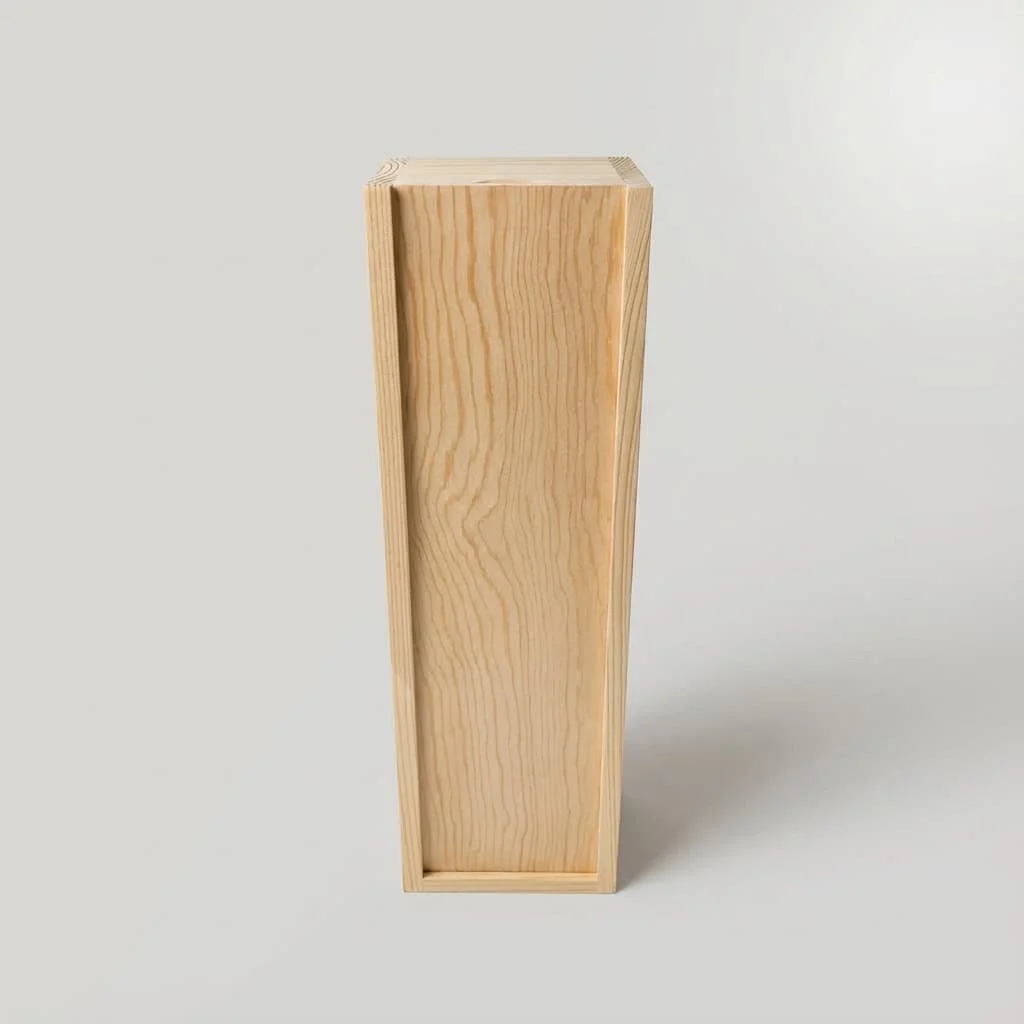
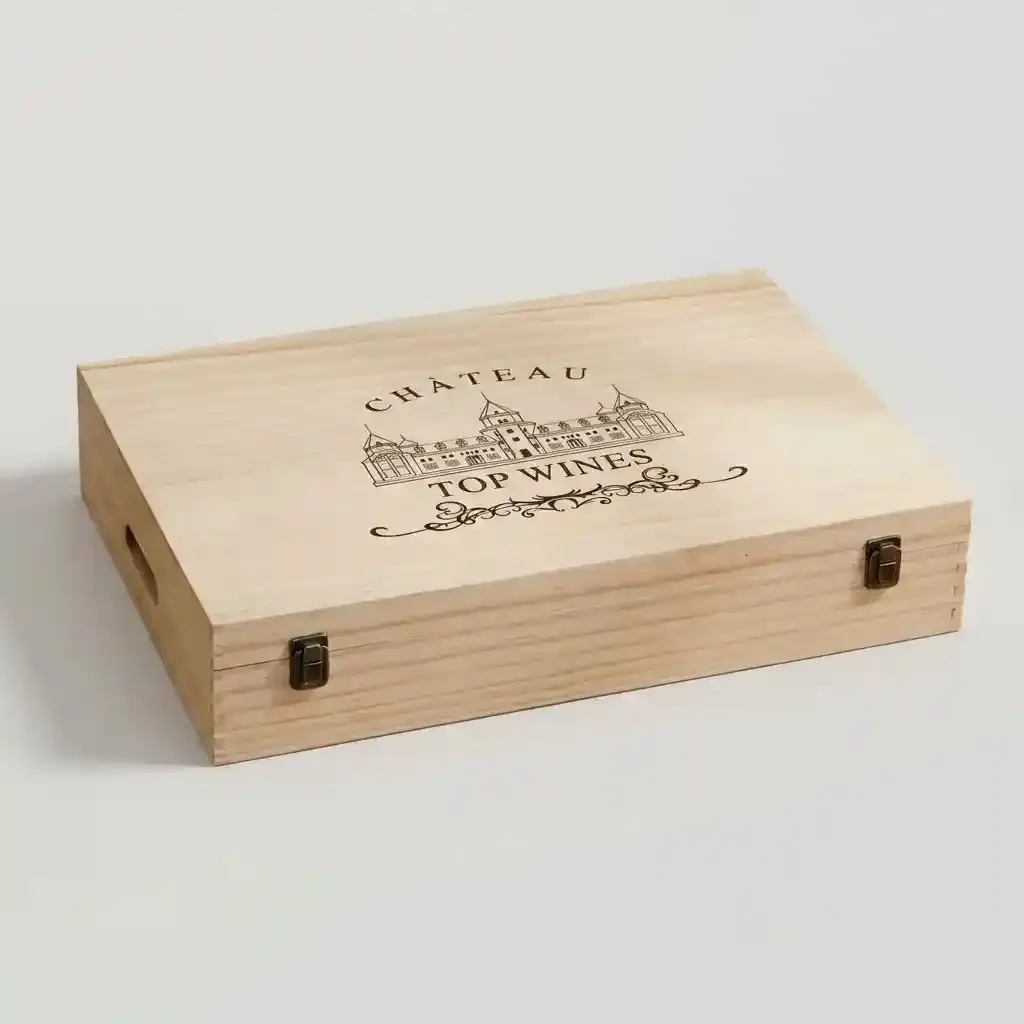
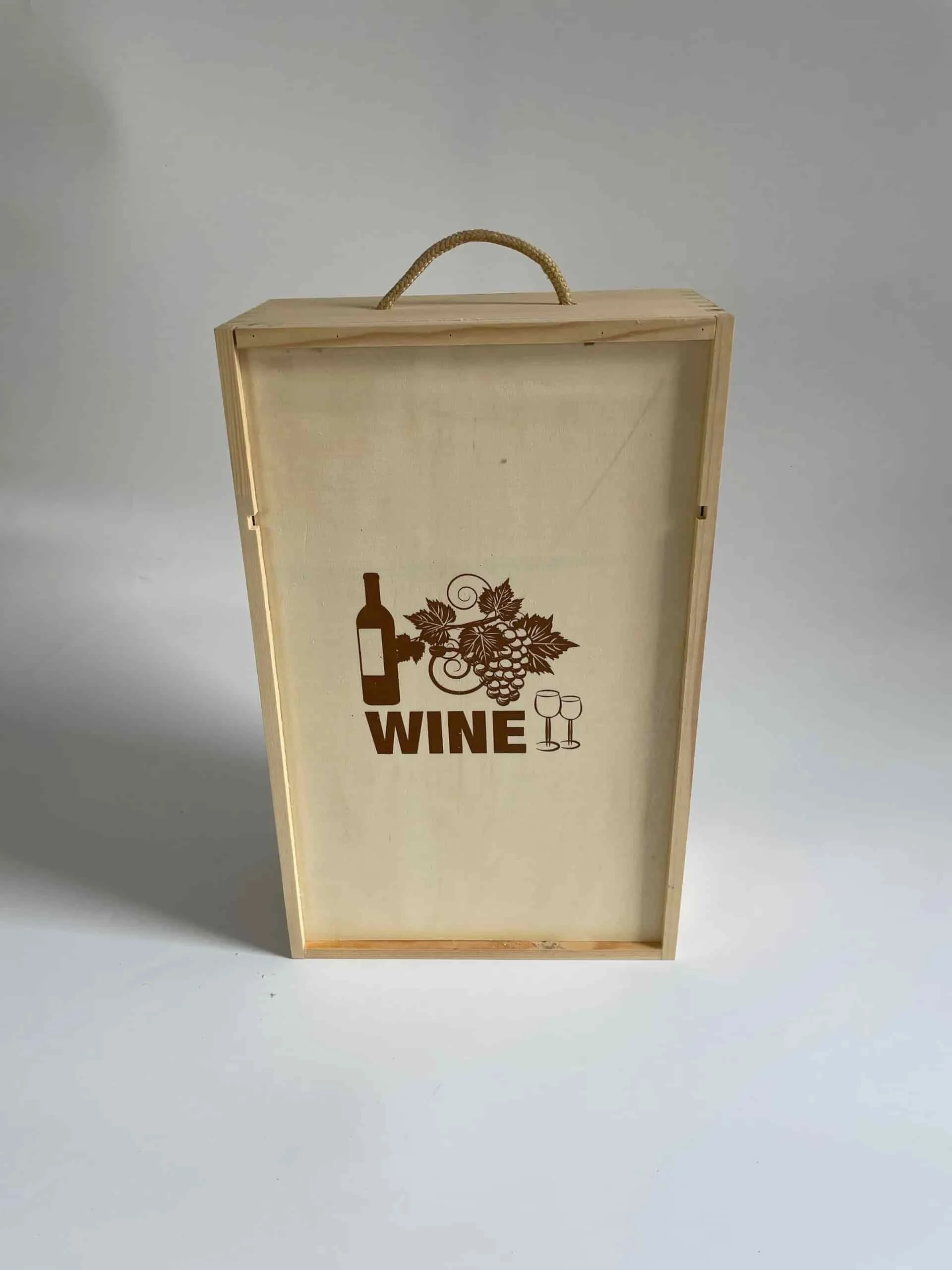
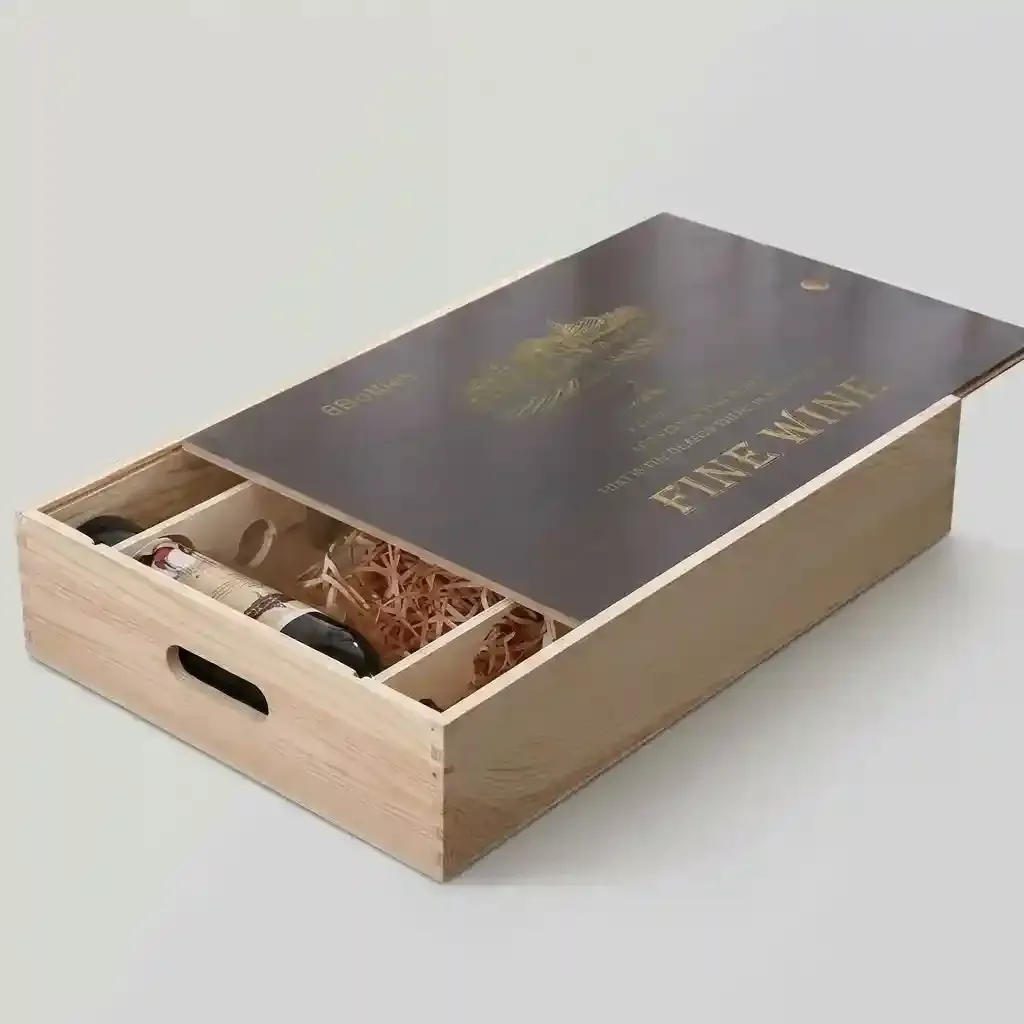
Custom six-bottle pine wood wine gift box with full-color UV-printed sliding lid and molded pulp inserts, built for premium retail display, corporate gifting, and winery direct-to-consumer shipments.
Key Features
- Full-color UV-printed sliding lid — landscape, typography, or brand graphics across the entire lid surface
- Molded pulp inserts contoured to cradle each bottle at neck and base — zero glass-to-glass contact
- Interlocking pine corner joints — load-bearing construction for 16–18 pounds of filled bottles
- Integrated side cutout handles — lift and carry a full 6-bottle load safely with two hands
- Finger-groove lid channel — smooth wood-on-wood slide, no metal hardware to corrode or loosen
$2.80 - $6.50 / piece
Prices vary based on order quantity, dimensions, material selection, and logo printing method. Send an inquiry.
Specifications
- Wood Type
- Natural pine wood
- Capacity
- Holds 6 standard wine bottles
- Dimension
- Customizable based on bottle specifications
- Design
- Sliding lid with integrated side handles
- Surface Finish
- Smooth sanded with custom color printing
- Usage
- Wine packaging, corporate gifting, retail display
- Customization
- Available for size, exterior printing, and internal inserts
Applications
Corporate gifting with mandatory brand visibility
The printed lid turns the packaging into a brand asset. A full-color logo and message across the lid surface means your corporate identity is on display before the box is even opened — no insert card, no sleeve, no second piece to lose.
Winery retail and tasting room display
Stacked on a shelf or displayed open on a tasting counter, the printed lid works as a silent salesperson. Molded pulp inserts hold bottles securely through repeated customer handling — employees don't need to reposition bottles after every curious visitor picks one up.
Direct-to-consumer wine shipment
Molded pulp absorbs transit shock better than rigid wood dividers. Bottles arrive label-intact because nothing hard contacts the glass. The sliding lid stays secure without latches that can open or hinges that can shift during carrier handling.
Customization Options
Lid Printing Method. UV full-color is standard — bonds directly to the wood, handles gradients and photos. Silk screen: lower per-unit cost, ideal for single-color logos at volume. Laser engraving: permanent, no ink to wear, but limited to monochrome. The trade-off: UV printing gives you full creative freedom but costs more per unit than silk screen; laser engraving reads as the most premium but can't reproduce color or photographic detail.
Wood Species. Pine is standard — lightweight, takes UV ink well, interlocking joints cut cleanly. Paulownia is lighter but softer, and printing adhesion on its smoother surface requires primer for full-color graphics. Birch plywood offers the most stable printing surface — no grain telegraphing through the print — at a higher material cost. Solid oak or walnut for ultra-premium runs at 2–3× pine cost.
Internal Protection. Molded pulp inserts are standard — shock-absorbing, eco-friendly, custom-molded to your bottle dimensions. Alternative: slotted wood dividers, which are more flexible across bottle shapes but transmit more vibration to the glass. Alternative: foam inserts, highest protection but less sustainable. Each pulp mold is specific to one bottle profile — changing bottle dimensions requires new mold tooling.
Branding Beyond the Lid. Exterior side panels also accept printing — handling instructions, regional appellation details, regulatory symbols, or secondary brand graphics. Interior lid printing is available for an unboxing reveal. The sides and interior use the same printing method as the lid for consistent color reproduction. UV printing & branding techniques →
Stain & Finish. Available from natural pine through any custom stain tone. For printed lids, natural or light stains are most common — dark stains can reduce UV print contrast. Matte or satin clear coat over unprinted surfaces. The lid surface receives a UV-cured clear layer over the print for scuff and moisture resistance.
Dimensions. Standard fits six 750ml Bordeaux bottles. Adjustable for Burgundy (wider), Riesling (taller/narrower), or sparkling (larger diameter + taller). The main constraint is material panel yield — dimensions that maximize boxes per sheet keep per-unit cost lowest.
Ready to get a recommendation?
Send us your requirements — we'll respond with material and production recommendations within 24–48 hours.
Why This Design Works
The printed lid turns packaging into marketing. Most wine boxes treat the lid as a lid — stain it, maybe silk screen a small logo, done. UV full-color printing across the entire lid surface changes what the box is: it's now a visual asset that carries the brand message before the recipient even sees the bottles. For corporate gifting and retail display, a printed lid does the work of an insert card, a sleeve, and a hang tag — without adding a single separate piece to produce, source, or lose. The finger groove keeps the printed surface uninterrupted — no metal pull tab or latch to break the graphic.
Molded pulp inserts protect differently than wood dividers. Wood dividers prevent bottle-to-bottle contact by creating rigid compartments — effective, but glass still sits against a hard surface, and vibration during transit transmits directly through the divider to the bottle. Molded pulp is a shock-absorbing layer. Each bottle sits in a contoured cradle that grips at the neck and base, and the pulp material compresses microscopically under impact instead of transferring the force to the glass. The trade-off: pulp inserts are product-specific — if you change bottle dimensions, new molds are needed. Wood dividers are more flexible across bottle shapes. Choose pulp when transit protection is the priority; choose wood dividers when the same box must fit multiple bottle formats.
Interlocking corner joints carry the load without metal fasteners. Six filled 750ml bottles weigh 16–18 pounds. That weight gets lifted by the side handles, putting the corner joints under both tension and compression. Interlocking joints — finger or box joints — multiply the glued surface area versus a simple butt joint and provide mechanical interlock so the load transfers through the wood itself, not just the glue line. The joint type also keeps the exterior clean: no nails, no screws, no corner brackets interrupting the box face or the printing surface.
See our full range of branded wooden wine gift boxes for wineries, corporate gifting, and direct-to-consumer shipments.
Manufacturing Considerations
UV print adhesion on wood is the #1 QC checkpoint on this product. UV ink bonds to the wood surface, not into it — unlike stain which penetrates. If the lid surface isn't sanded to the right profile, the ink sits on top of the grain peaks and wears unevenly. Too smooth and there's no mechanical key for the ink. Too rough and the print looks grainy. The sweet spot is 180–220 grit final sanding on the lid face — fine enough for crisp print resolution, coarse enough for ink adhesion. We test print adhesion on every sample by applying packaging tape to the printed surface and pulling — any ink lift and the surface prep gets adjusted before production.
Molded pulp insert fit tolerance determines whether the box works. If the insert is 1mm too small in any dimension, it shifts during transit and bottles can contact each other. Too large and it won't seat properly in the box — the lid drags on the bottle necks or won't close fully. The insert is molded to the bottle profile + 0.5mm clearance, then the outer dimensions are cut to match the box interior. First sample check: load six filled bottles, close the lid, shake the box in all orientations. If anything rattles, the insert needs adjustment.
Watch out for color variation between the printed lid and stained sides. If the sides are stained and the lid is UV-printed with brand colors, matching the lid's background tone to the side stain requires a separate calibration step. Stain absorbs into pine differently board to board — grain density variation means color shifts slightly across a production run. UV ink is consistent shot to shot. The fix: match the lid background to a Pantone reference, not to the stain sample, and accept that stained sides will have natural variation. If exact color uniformity matters across the entire box, print the sides too or use an opaque painted finish instead of stain.
Protect the printed lid during finishing and packing. A freshly UV-printed lid surface is fully cured but still a print — it scratches more easily than bare wood. During assembly, finished lids are handled separately and mounted only after the box body is fully assembled and sanded. Each box is poly-bagged individually, and a thin foam sheet is placed between the printed lid and the box rim during packing so the lid surface never contacts anything harder than itself.
Have a technical concern about your use case? Our team can walk you through how we'd handle it for your project.
Start with natural pine, UV full-color printed lid, molded pulp inserts, and a matte clear coat over the print. This configuration delivers the strongest brand presence per dollar — the printing is what people see, not the wood species. The one upgrade worth paying for is the molded pulp tooling: custom-contoured inserts matched exactly to your bottle profile will reduce transit damage claims far more than any wood species upgrade will improve perceived value. Skip upgrading from pine to hardwood for this design — the lid is fully covered by the print, so the wood grain underneath is invisible. If your brand has sustainability positioning, FSC-certified pine with recycled molded pulp is a stronger selling point than an endangered hardwood that nobody sees.
Start Your Project
Send us your design or reference images — we'll return with a pre-production sample for your approval.
Frequently Asked Questions
Q: How durable is the UV printing on the lid? Will it scratch during shipping?
Q: Can the molded pulp inserts be recycled?
Q: What happens if I change bottle dimensions after the pulp molds are made?
Q: Will the pine box hold up in humid climates or refrigerated storage?
Q: Can you print on both sides of the lid?
Q: How does the molded pulp compare to foam inserts for bottle protection?
Send Us Your Requirements
Send your design, reference images, or product sample. We don't just quote a price — we respond with material recommendations, a feasibility assessment, and professional suggestions grounded in over 20 years of manufacturing experience. Expect a detailed response within 24–48 hours.
- Professional recommendations included
- Small MOQ & trial orders supported
- Worldwide shipping with export documentation