Executive Summary
The global wood products market crossed $1.03 trillion in 2025. Custom wood packaging -- boxes, crates, gift packaging, branded containers -- is claiming a growing share as importers shift away from plastic.
Three forces are pulling demand: EUDR enforcement beginning December 2026, consumers now willing to pay a 16% premium for sustainable packaging (up from 8% in 2019), and large retailers like IKEA and Home Depot mandating FSC-certified materials throughout their supply chains.
On the supply side, China's Cao County manufacturing cluster continues to deliver the cost, flexibility, and quality control infrastructure bulk importers need. This report covers what B2B buyers need to know in 2026: how sustainability requirements reshape sourcing, where costs actually come from, and which certifications matter depending on your market.
Why Wood Packaging Is Overtaking Plastic
The consumer preference data is unambiguous. In 2019, 55% of consumers said they'd pay extra for sustainable products, accepting an average premium of 8% (First Insight, 2019). By 2025: 82% willing, accepting 16% (PwC Voice of the Consumer Survey, 2024; First Insight, 2025). For wood packaging specifically, the premium runs higher -- 15-30% for FSC-certified decorative boxes and gift packaging (FSC Global Market Report 2025).
What's driving this isn't just sentiment. It's regulation.
EUDR: The regulation reshaping global wood supply chains. The EU Deforestation Regulation (EU 2023/1115) requires any wood product entering the EU market to carry proof it didn't come from land deforested after December 31, 2020. Operators submit a Due Diligence Statement with geolocation data for harvest plots -- coordinates precise to six decimal places. Farms larger than 4 hectares need polygon mapping. The regulation goes live for large operators on December 30, 2026. SMEs follow in June 2027. The EU estimates 30-40% of non-compliant suppliers will be eliminated from EU supply chains. FSC certification is recognized as a reliable tool for demonstrating EUDR compliance. FSC Chain of Custody certificates have surpassed 68,000 globally (FSC Global Market Report 2025). The carbon math favors wood. One cubic meter of pine (dry density ~500 kg/m³) stores roughly 920 kg of CO₂-equivalent. Oak, denser at ~700 kg/m³, stores about 1,285 kg CO₂e. (How those numbers work: dry wood is roughly 50% carbon by weight. Convert carbon to CO₂ by multiplying by 44/12 — the ratio of molecular weights. Pine: 500 × 0.5 × 44/12 ≈ 917 kg. Oak: 700 × 0.5 × 44/12 ≈ 1,283 kg. The wood stores this carbon for the life of the product.) Per kilogram of material: plastic packaging emits 2.5–6.0 kg CO₂ during production. Corrugated cardboard emits roughly 0.5–1.2 kg. Steel (used for hardware, hinges, and industrial crates) emits 1.8–2.5 kg. Wood is the only packaging material that's net carbon-negative — it stores more CO₂ than its production releases.This matters because B2B buyers in Europe are now calculating Scope 3 emissions across their packaging supply chains. A buyer switching from plastic blister packaging to a FSC-certified pine gift box can claim a measurable carbon reduction in sustainability reporting.
The retail mandates are already in place. IKEA hit its 100% FSC-certified or recycled wood target in 2025. Home Depot, Lowe's, and Walmart have all tightened wood sourcing requirements. Target set binding sustainable material targets. These policies cascade: if you want to sell wood-packaged products through any of these retailers, certified supply is mandatory. Not all sustainability claims carry equal weight. FSC Mix (minimum 70% certified or controlled content) is the most common in packaging -- it balances cost with compliance. FSC 100% commands a 20-25% premium in the US, 15-30% in Europe. FSC Recycled (85%+ post-consumer) costs less but limits species and quality options. PEFC covers over 300 million hectares of certified forest across 50+ national schemes -- adequate but less demanded by EU retailers than FSC. For most B2B packaging buyers, FSC Mix is the practical sweet spot.The regulations and consumer expectations are clear. The next question for a buyer is where the wood actually comes from and who is making the boxes. For a large share of global wooden packaging, the answer starts in one place.
Cao County, Shandong: What Actually Matters When You Source There
Cao County is the center of China's wood products industry. A dense network of specialized factories operates within a compact area, covering lumber mills, panel suppliers, hardware manufacturers, finishing workshops, packaging providers, and logistics brokers. You can walk from a raw board yard to a CNC workshop to a packaging warehouse in a single afternoon.
This density creates two concrete advantages.
Speed. A typical custom wood packaging order -- design confirmation to container loading -- takes 30-45 days. Processes that would require multi-week coordination elsewhere (custom metal clasp sourcing, laser engraving, specific finish matching) get handled by neighboring workshops that have been doing that exact work for years. Transaction costs drop because everyone operates in the same ecosystem.
Cost. Material costs dominate wood product pricing, running 40-70% of the final unit cost. Labor: 10-25%. Manufacturing overhead: 15-30%. (These are independent ranges — the mix shifts by product. A simple box tilts high on materials and low on labor; a multi-process gift box with hardware and engraving pulls the opposite direction.) Material costs in Cao County benefit from bulk procurement at the cluster level. Kiln-dried pine -- a common packaging wood -- runs about 2,000 to 3,500 RMB per cubic meter in this market. For oak, white oak goes for 5,000-9,000 RMB/m3 and red oak roughly three and a half to six and a half thousand. Black walnut, used for premium gift packaging, trades between 8k and 15k RMB/m3. These are current market rates. I've watched buyers arrive expecting to find one perfect factory in an afternoon, then spend two weeks comparing samples from five different shops.
How to filter suppliers in Cao County. The density of the cluster means capability varies dramatically. Three criteria separate reliable export partners from opportunistic workshops:
First, certification status. FSC Chain of Custody is non-negotiable for EU and premium US markets. BSCI signals labor compliance for European buyers. ISO 9001 signals operational maturity. More on what each certification actually requires and costs in the next section.
Second, material transparency. A capable supplier specifies exact wood species (Latin name), board grade (FAS, #1 Common, or equivalent), moisture content (9-11% for indoor packaging bound for temperate climates, 12-14% for humid/subtropical destinations), and coating specification (NC lacquer, PU, water-based, oil/wax). If a supplier won't name the species or glosses over the finish, they aren't managing quality upstream.
Third, production documentation. Real factories maintain production records: batch numbers linking raw material lots to finished goods, QC check sheets at each workstation, pre-shipment inspection reports. For US-bound products, the supplier should understand CARB Phase 2 formaldehyde limits if any engineered wood (MDF, plywood) is used. Hardwood plywood limit: 0.05 ppm -- equivalent to E0 grade.
The Cao County advantage is real. It just requires diligence to separate the professional operations from workshops that give Chinese manufacturing an uneven reputation. A supplier with FSC CoC, BSCI, and ISO 9001 in hand has already done much of your vetting work.
Not every wood packaging buyer sources from Cao County. Vietnam has built competitive wood processing capacity over the last decade, particularly for furniture-grade products. Eastern European manufacturers (Poland, Romania) serve EU buyers who want shorter lead times and no import duties. India and Indonesia compete on commodity-priced hardwood items. For mid-to-high-volume custom packaging where cost, flexibility, and supply chain density are the deciding factors, Cao County remains the benchmark.
Where the Money Goes in a Custom Wood Box
B2B buyers who understand where their money goes negotiate better.
Materials eat 40-70% of unit cost. Biggest line item, hardest to reduce without changing the product. Wood species choice matters enormously. A 15x10x5 cm pine box costs roughly 8-12 RMB in materials. Same box in walnut: 25-40 RMB. Engineered alternatives -- birch plywood at 100-180 RMB per sheet (1220x2440mm), MDF at 80-140 RMB -- offer lower cost at the expense of the "solid wood" marketing claim. The material cost gap between solid wood and plywood: 30-50% on most box designs.
Labor: 10-25% of unit cost. Hand-finishing -- sanding, assembly, oil application -- is where labor bites hardest. An order of 500 custom boxes might clock 15-25 minutes of direct labor per unit. At 1,000 units, learning curve effects push that down 25-40%. At 5,000 units, automated jigs and batch processing bring it down another 30%. This is why MOQ matters. The first 200 units of a custom box cost disproportionately more than the next 800. Labor rates in Cao County: 28-55 RMB/hour for skilled woodworkers, 45-82 RMB/hour for spray finishing techs. These rates have risen about 8-12% each year since 2020. Here's what most specification sheets won't tell you: China's wood manufacturing isn't cheap anymore. It's skilled labor at competitive rates.
MOQ logic. The formula is straightforward. MOQ exists to cover the cost of switching production lines. Changing a box size means 30-90 minutes of line reconfiguration (200-800 RMB in lost production), new jig setup, material recalibration. Add mold amortization if the design requires custom tooling: a CNC routing jig costs 500-3,000 RMB, a hot press mold 3,000-15,000 RMB. These fixed costs spread across order volume. At 200 units, a 3,000 RMB jig adds about 15 RMB per box. At 1,000 units, about 3 RMB. Entirely why small orders cost more per unit. Suppliers who offer mixed-SKU orders within a single MOQ -- 500 total units spread across three box sizes -- effectively absorb line-change costs across products. This is common in Cao County. Ask about it.
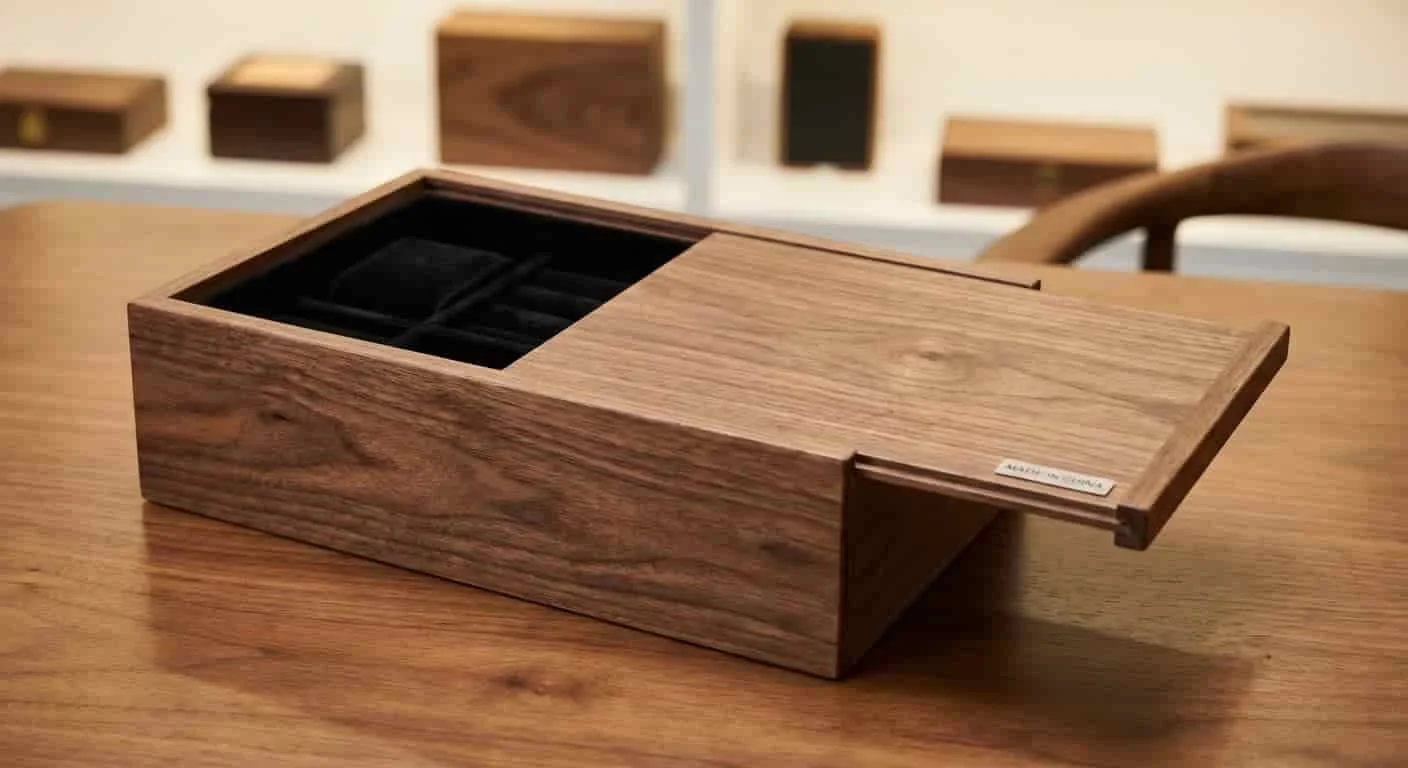
Design complexity. Every additional operation adds labor and tooling. A simple rectangular box with a sliding lid: four operations (cut, sand, assemble, finish). Add a hinged lid with metal hardware: six. Partitioned interior: eight. Laser engraving for branding: nine plus machine time. Each additional operation adds 8-15% to processing cost. Same principle applies to finishes. A single coat of matte PU lacquer is fast. Five coats of hand-rubbed tung oil, sanded between coats, takes days. The question: does the incremental aesthetic or functional value justify the incremental cost?
Shipping completes the picture. A 40-foot high cube container from Qingdao to Rotterdam costs $3,000-$5,500 (2025 range). To US West Coast: about 2,500 to 5,000 dollars per 40HQ. Wood boxes are volume-heavy but not weight-heavy. Container utilization drives landed cost more than freight rate fluctuations. A well-designed box that nests or flat-packs can cut per-unit shipping cost by 30-50%.
One note on shipping wood packaging internationally: ISPM-15 compliance (heat treatment to 56°C core temperature for 30+ minutes, or methyl bromide fumigation) is mandatory for all solid wood packaging entering most countries. Most Cao County manufacturers include this as standard for export orders, but specify it in the PO -- non-compliant shipments get quarantined or re-exported at the buyer's expense.
Which Certifications Do You Actually Need?
FSC Chain of Custody (FSC CoC). The baseline for responsible sourcing. FSC CoC means the manufacturer tracks certified material from receipt through production to sale, maintains physical or time-based separation from non-certified, and passes annual surveillance audits. Certificate validity: 5 years. Cost for a small-to-medium Chinese manufacturer: about 15k-35k RMB initial, plus 5,000-15,000 RMB annually. FSC-certified wood carries a raw material premium of 5-30% over non-certified. For EU-bound products, FSC is the most direct path to EUDR compliance.
EUDR (EU Deforestation Regulation). Effective December 30, 2026 for large operators. Requires three-step due diligence: information collection (species, harvest coordinates, supply chain participants), risk assessment (country risk tier, supply chain complexity, species-specific risk), and risk mitigation. Penalties reach at least 4% of annual EU turnover, plus product confiscation and public procurement bans. FSC streamlines but doesn't fully substitute for EUDR compliance -- the geolocation data requirement goes beyond standard FSC documentation.
CARB / EPA TSCA Title VI. Mandatory for any composite wood product (plywood, MDF, particleboard) sold in the United States. Hardwood plywood limits: 0.05 ppm formaldehyde by ASTM E1333 chamber testing -- equivalent to E0 under Chinese standards. Certified products carry TPC markings and undergo quarterly surveillance testing. Annual compliance cost roughly 50k-100k RMB. If your packaging uses solid wood only, CARB does not apply. Use any engineered wood component -- even a thin MDF base plate -- and it does.
FDA (US) and LFGB (Germany). Applicable when wood packaging contacts food. Uncoated solid wood is generally considered safe without testing, though most buyers request compliance documentation anyway. Coated wood (cutting boards, cheese boards, serving trays) requires migration testing. FDA testing: about 5,000-15,000 RMB per product model. LFGB, the German standard, is stricter -- sensory testing (odor and taste transfer to food simulants), formaldehyde migration limits of 15 mg/kg. Full LFGB testing: 5,000-10,000 RMB per model. LFGB is what most EU retailers request even outside Germany, because it's the most rigorous.
BSCI. Standard social compliance audit for European buyers. Covers management systems, worker participation, freedom of association, non-discrimination, fair remuneration, working hours (max 60 hours/week, one rest day per week), occupational health and safety, child labor prohibition, forced labor prohibition, environmental protection, ethical business behavior. Ratings run A through E. C or above is acceptable to most European importers. Initial audit: 8,000-15,000 RMB plus 5k-10k RMB annual amfori membership. Most common non-conformities in wood factories: fire safety equipment, PPE compliance (dust masks, ear protection), overtime hour documentation. All fixable.
ISO 9001. Signals operational maturity. Requires documented quality management procedures, internal audit programs, corrective action systems, management review. Certificate validity: 3 years with annual surveillance. Initial cost roughly 20k-40k RMB. A factory maintaining ISO 9001 understands process control: incoming material inspection, in-process checking, final QC, root cause analysis on defects. For custom packaging with tight tolerances -- lid fit, hinge alignment, consistent finish -- this matters.
Hilonwood
Hilonwood is a wood products manufacturer in Cao County, Shandong, exporting for over 20 years.
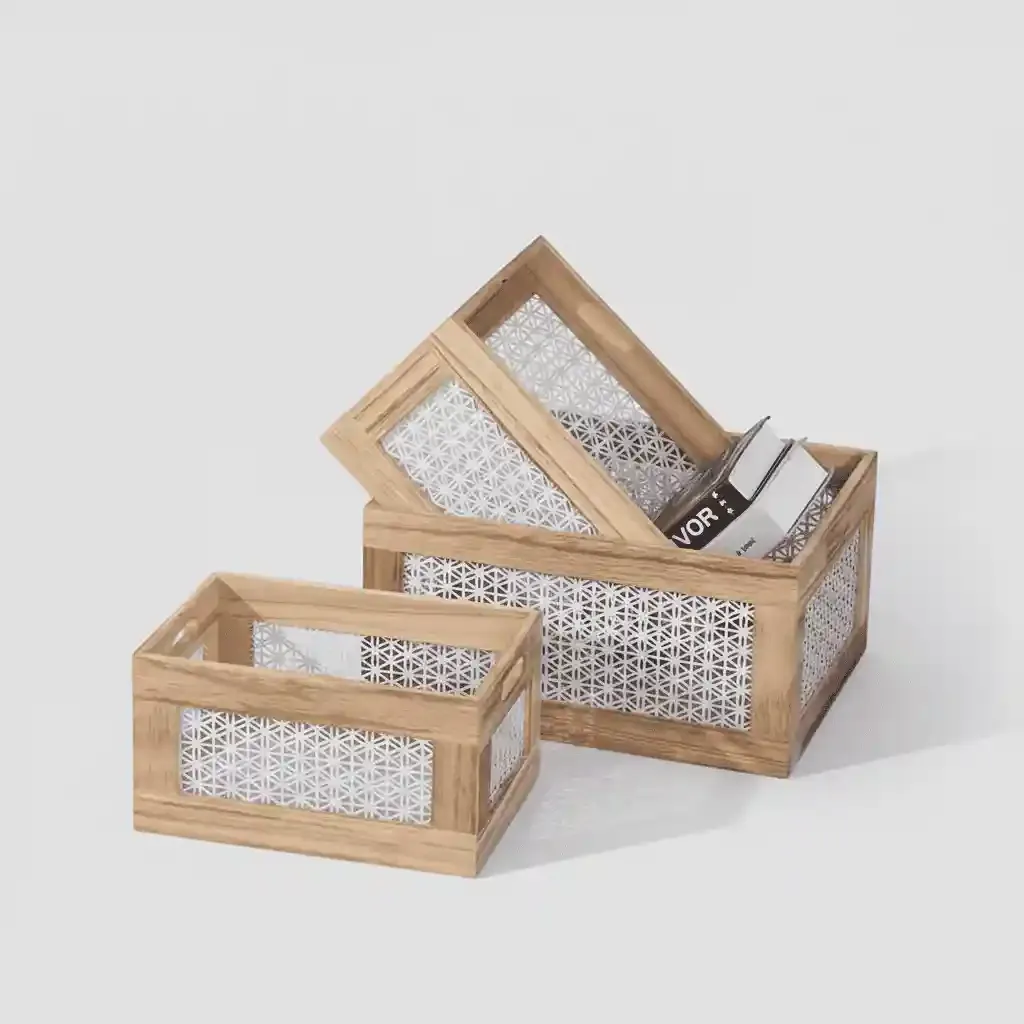
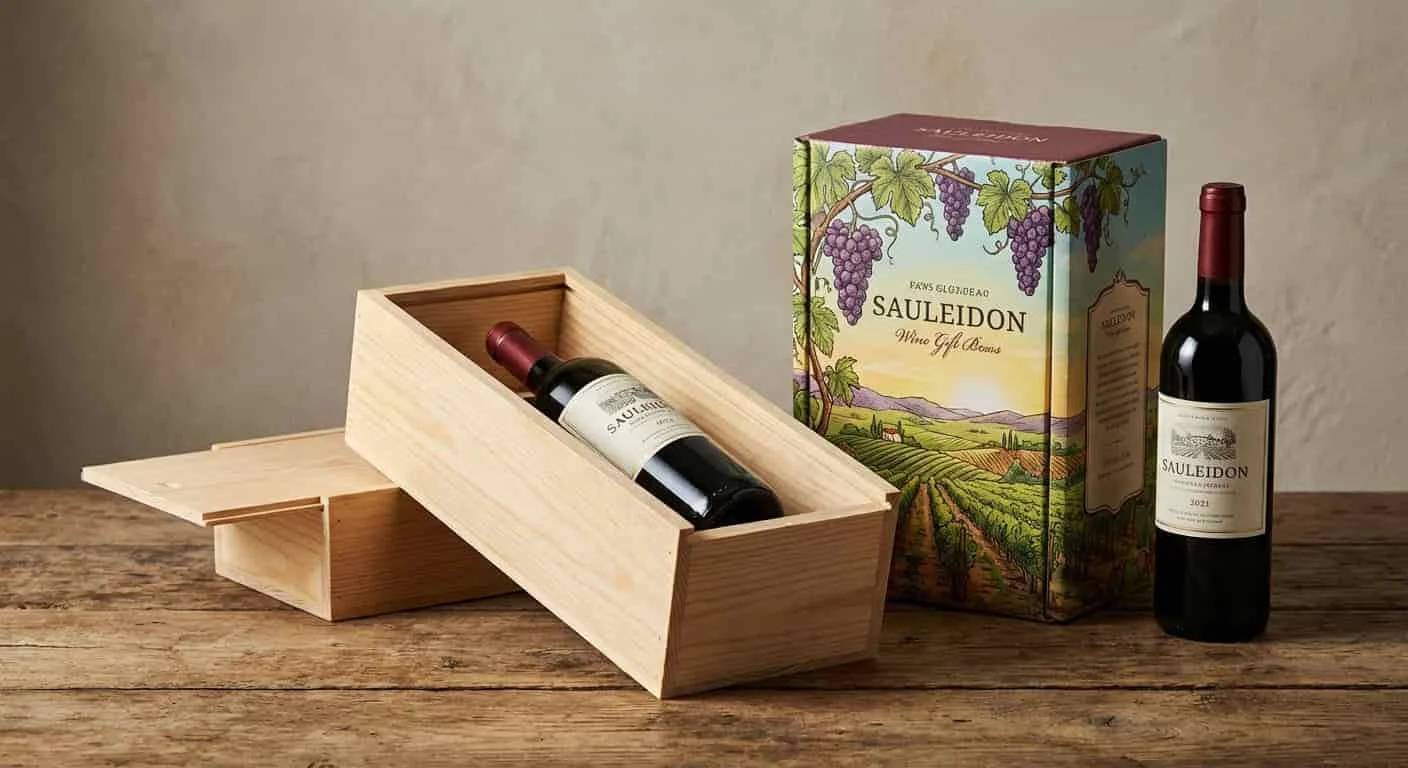
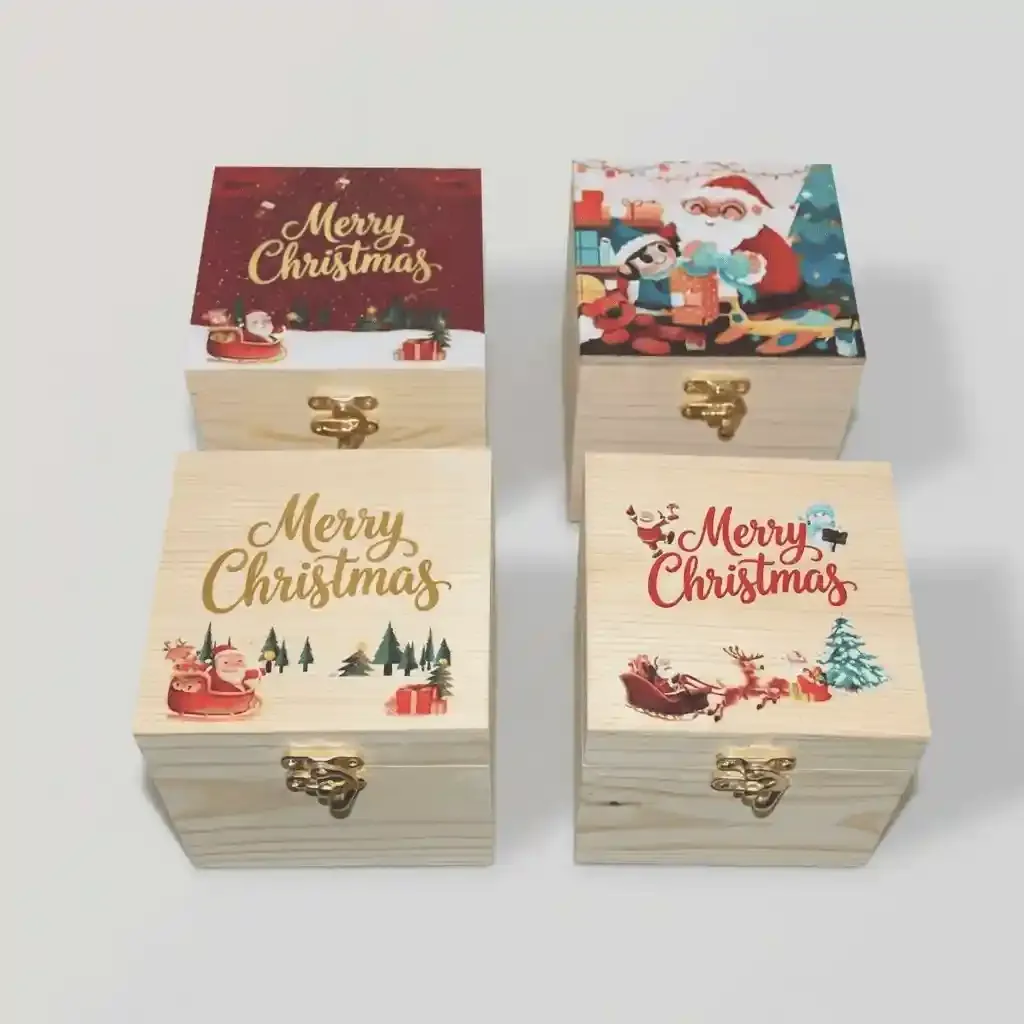
They make custom wood boxes, cutting boards, wine boxes, gift boxes, trays, coasters, crates, storage boxes, and home decor -- OEM and ODM. MOQs start at 200 pieces. Mixed-SKU orders are supported. Being located inside Cao County means direct access to lumber mills, panel suppliers, hardware manufacturers, finishing shops, and packaging providers within the same industrial zone. For importers serving retail, e-commerce, hospitality, or promotional channels, this translates to faster sampling and competitive landed costs.
Clients range from e-commerce brands launching private-label lines to wholesale distributors stocking seasonal catalogs to corporate gift buyers needing branded packaging at scale.
Methodology & Data Sources
This report combines two categories of data. Readers should apply appropriate scrutiny to each.
Publicly verifiable data comes from these sources:| Data Point | Source | Type |
|---|---|---|
| Global wood products market: $1.03T (2025) | Grand View Research, 2025 | Industry report |
| Consumer sustainability premium: 55% willing, 8% avg premium (2019) → 82% willing, 16% avg (2025) | First Insight, 2019 & 2025; PwC Voice of the Consumer Survey, 2024 | Published survey |
| FSC CoC certificates: 68,000+ globally | FSC Global Market Report 2025 | FSC annual publication |
| FSC Mix: 70% minimum; FSC Recycled: 85%+ post-consumer | FSC-STD-40-004 (Chain of Custody standard) | Certification standard |
| FSC premium: 20-25% (US), 15-30% (Europe) | FSC Global Market Report 2025 | FSC annual publication |
| PEFC: 300M+ hectares, 50+ national schemes | PEFC Annual Review 2024-2025 | PEFC annual publication |
| EUDR details (EU 2023/1115) — effective dates, geolocation requirements, penalty structure | EU Official Journal L 150/206, 9.6.2023; EU Commission Guidance 2025-2026 | Legislation |
| 30-40% non-compliant supplier elimination estimate | EU Commission EUDR Implementation Impact Assessment, 2025 | EU impact analysis |
| Carbon: pine 500 kg/m³, oak 700 kg/m³; CO₂ conversion formula (C × 44/12) | The Wood Database (wood-database.com); standard chemistry | Public database / standard chemistry |
| Plastic CO₂: 2.5-6.0 kg/kg (PlasticsEurope Eco-profiles); Corrugated cardboard CO₂: 0.5-1.2 kg/kg; Steel: 1.8-2.5 kg/kg (World Steel Association) | PlasticsEurope Eco-profiles; World Steel Association; industry LCA data | Public data |
| IKEA: 100% FSC-certified or recycled wood (2025) | IKEA Sustainability Report FY24-25 | Corporate report |
| CARB Phase 2: 0.05 ppm formaldehyde via ASTM E1333; EPA TSCA Title VI | California Code of Regulations §93120; 40 CFR Part 770 | Regulation |
| BSCI audit criteria (60h/week max, A-E ratings, C or above acceptable) | amfori BSCI System Manual 2024 | Audit standard |
| ISPM-15: 56°C core temp, 30+ minutes | ISPM-15 (FAO International Plant Protection Convention) | International standard |
| Moisture content: 9-11% temperate, 12-14% humid/subtropical | Principle per GB/T 6491-2012 (2-3% below local wood EMC); EMC data by climate zone | Industry practice |
- Wood material prices (pine 2,000-3,500 RMB/m³, white oak 5,000-9,000 RMB/m³, red oak 3,500-6,500 RMB/m³, walnut 8,000-15,000 RMB/m³)
- Birch plywood (100-180 RMB/sheet) and MDF (80-140 RMB/sheet) domestic pricing
- Labor rates (28-55 RMB/h woodworkers, 45-82 RMB/h spray finishing; 8-12% annual increase since 2020)
- Production times: line reconfiguration (30-90 min), per-unit labor for 500-unit orders (15-25 min)
- Learning curve effects: 25-40% at 1,000 units, cumulative ~55% at 5,000 units
- Tooling costs: CNC jig 500-3,000 RMB, hot press mold 3,000-15,000 RMB
- Cost structure breakdown: materials 40-70%, labor 10-25%, overhead 15-30% (varies by product complexity)
- Operation complexity: +8-15% cost per additional design operation
- Certification costs: FSC CoC initial 15k-35k RMB; BSCI audit 8k-15k RMB; ISO 9001 20k-40k RMB; FDA testing 5k-15k RMB; LFGB testing 5k-10k RMB; CARB compliance 50k-100k RMB/year
- Common BSCI non-conformities in wood factories (fire safety, PPE, overtime documentation)
- Shipping: 30-45 days design-to-container typical lead time; 30-50% cost reduction from nesting/flat-pack design
- MOQ of 200 pieces; mixed-SKU within single MOQ common in Cao County
Freight rates (Qingdao-Rotterdam $3,000-$5,500/40HQ; US West Coast $2,500-$5,000/40HQ) reflect 2025 spot and contract rate ranges from Freightos Baltic Index and Drewry World Container Index. Rates fluctuate — confirm with a freight forwarder before contracting.No part of this report is AI-generated financial or investment advice. Verify costs, certification fees, and regulatory requirements with qualified professionals before making sourcing decisions.