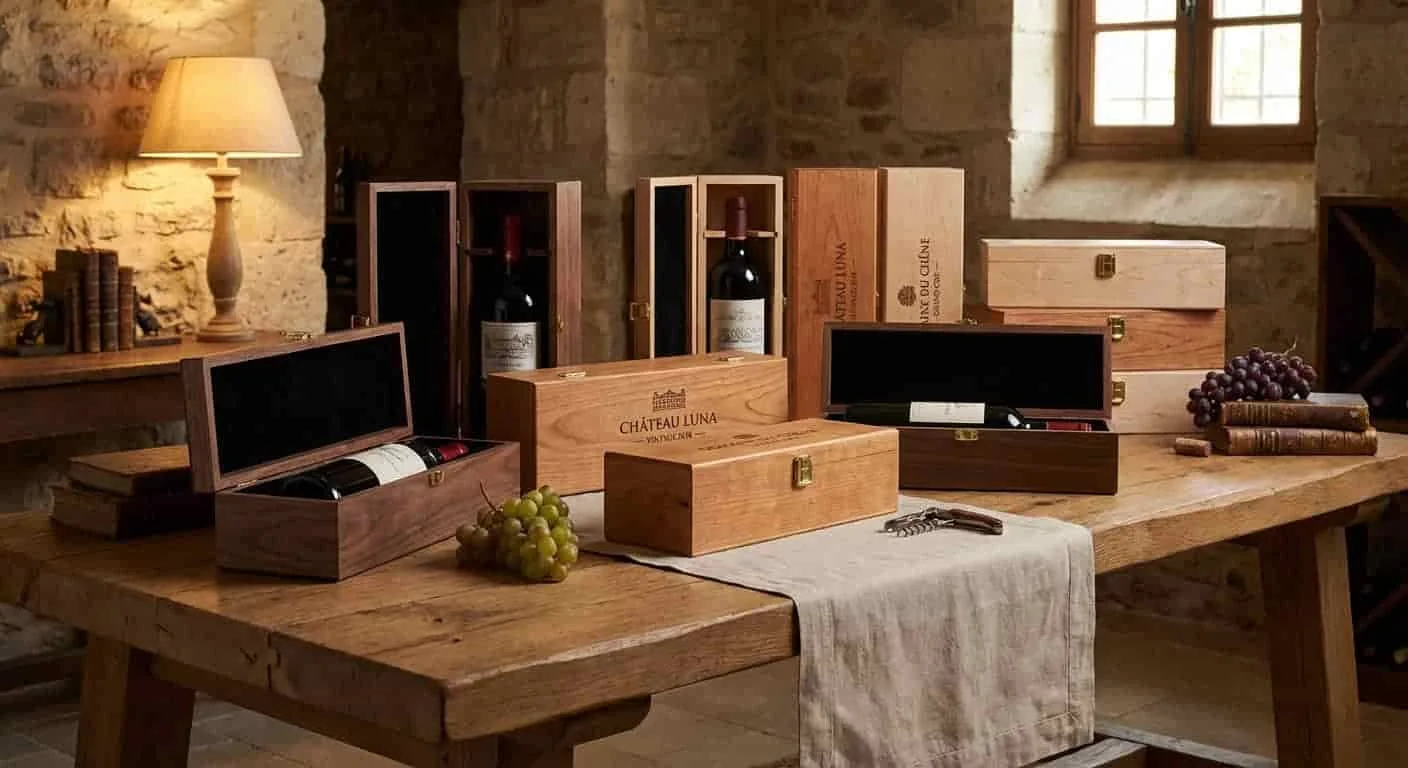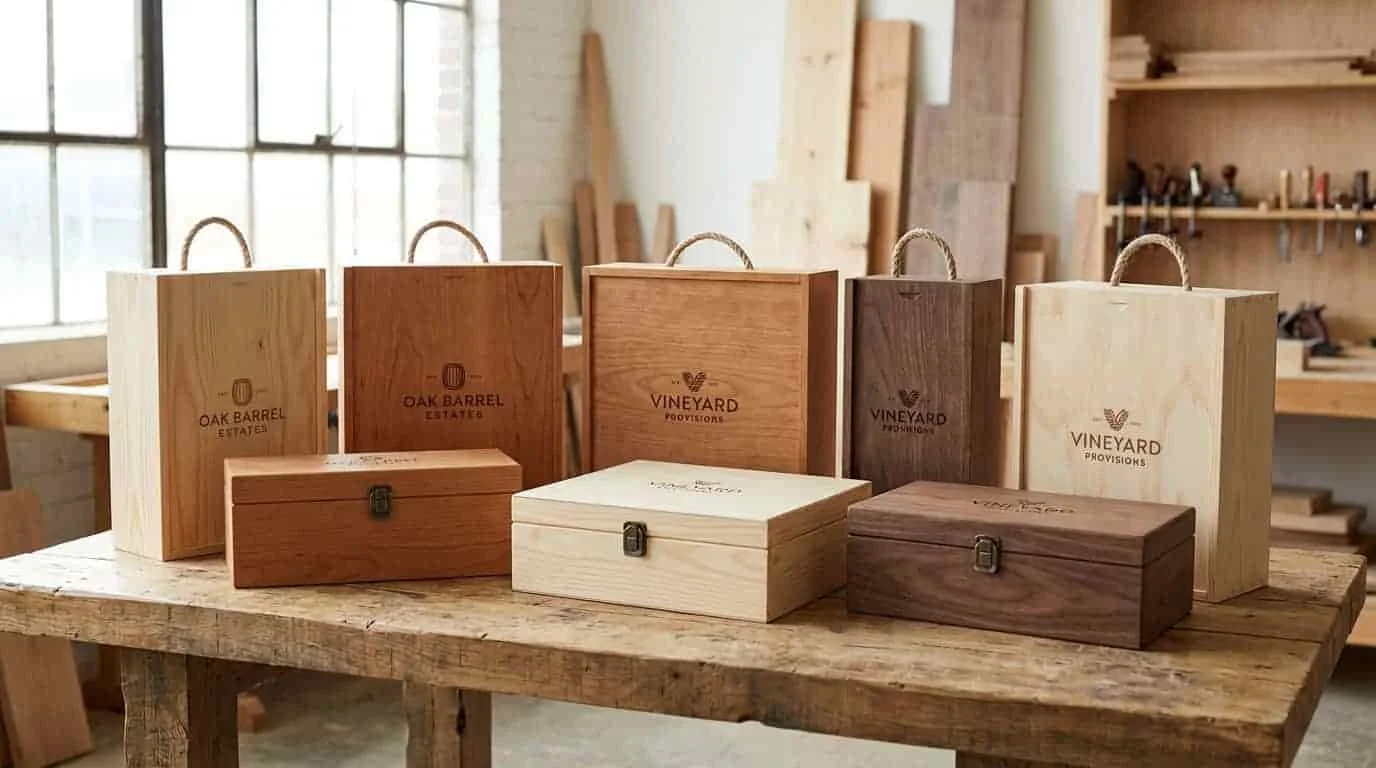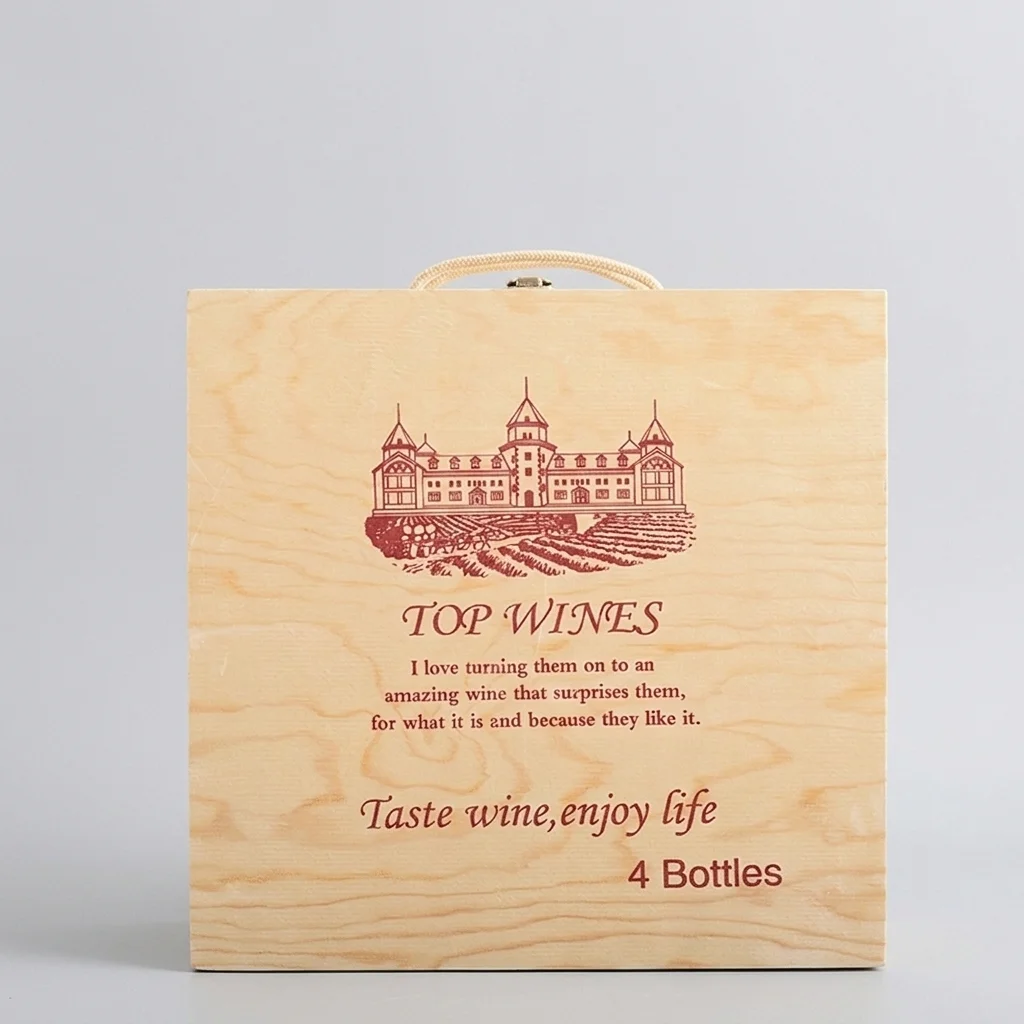
When you order custom wooden wine boxes in wholesale volumes, getting the dimensions wrong means costly returns, production delays, and wasted inventory — especially for Champagne, Magnum, or non-standard bottles. As a wooden wine box manufacturer, Hilon Wood has seen buyers lose thousands on boxes that didn't fit because bottle neck dimensions weren't verified before production began. This article covers the dimensions, specs, and procurement steps wholesale buyers need to specify custom wooden wine boxes correctly — whether you're placing a 200-unit trial run or a full container load.
Key Takeaways
– Standard 750ml Bordeaux bottles fit off-the-shelf 35 × 10 × 10 cm boxes; Burgundy and Champagne bottles require custom dimensions from your wooden wine box supplier
– Custom-sized OEM wine boxes carry different MOQ, sampling timelines, and lead times than standard sizes — plan your procurement schedule accordingly
– Internal dimensions are roughly 2 cm smaller than external due to wood wall thickness; always confirm both before placing wholesale orders
– Sending your bottle specs (photo + measurements) to a wooden wine box manufacturer gets you an accurate quote, typically within 24–48 hours
– Hilon Wood supports small trial orders for custom dimensions so you can verify fit with sampling before committing to full production volumes
Know Your Bottle Specs Before Ordering Custom Wooden Wine Box Dimensions
The single most expensive mistake wholesale buyers make is assuming "standard" bottle dimensions apply to their product. Every millimeter matters when you're ordering custom wooden wine boxes at scale. A box that's 3 mm too narrow for your Burgundy bottle won't just look wrong — it's unsellable inventory. Understanding your bottle dimensions before you engage a wooden wine box manufacturer is the difference between a smooth production run and an expensive rework that delays your wholesale orders by weeks.
Not every wine bottle shares the same dimensions — and the variation across bottle types directly affects which box size your OEM wine box supplier recommends.
The 750ml Bordeaux Bottle as Your Reference Point
The Bordeaux bottle is the most widely used wine bottle shape worldwide. Its dimensions serve as the baseline for most standard custom wooden wine boxes. Key characteristics: tall, straight sides with a high, pronounced shoulder. This shape fits snugly into most off-the-shelf boxes. When you see a standard wooden wine box listed at 35 × 10 × 10 cm, it's designed around a 750ml Bordeaux bottle. If your product uses this bottle shape, you'll benefit from shorter lead times and lower MOQ — the tooling and jigs are already set up at the factory.
Burgundy, Champagne, and Magnum: When Standard Sizes Don't Work
Burgundy bottles are shorter and wider than Bordeaux, with a more gradual slope from shoulder to body. Champagne bottles are typically the same height as Bordeaux but noticeably wider at the body, requiring additional clearance. Magnum bottles (1.5 L) are significantly taller and wider and will not fit any standard single-bottle box. For these bottle types, custom dimensions are not optional — they're required. A wooden wine box supplier who understands these variations will flag fit issues before you place a wholesale order, saving you from costly sampling rework and production delays.
| Bottle Type | Height (cm) | Diameter (cm) | Box Fit Notes |
|---|---|---|---|
| Bordeaux (750ml) | 28.8–30.5 | 7.0–7.6 | Standard 35×10×10 cm box fits |
| Burgundy (750ml) | 28.8–30.0 | 7.8–8.4 | Requires wider internal clearance |
| Champagne (750ml) | 29.0–30.5 | 8.0–8.8 | Requires wider + taller clearance |
| Magnum (1.5L) | 33.0–35.0 | 10.0–11.5 | Custom dimensions required |
| Demi / Half (375ml) | 23.0–24.5 | 6.5–7.0 | Shorter box needed |
Standard Wooden Wine Box Sizes for Wholesale Buyers
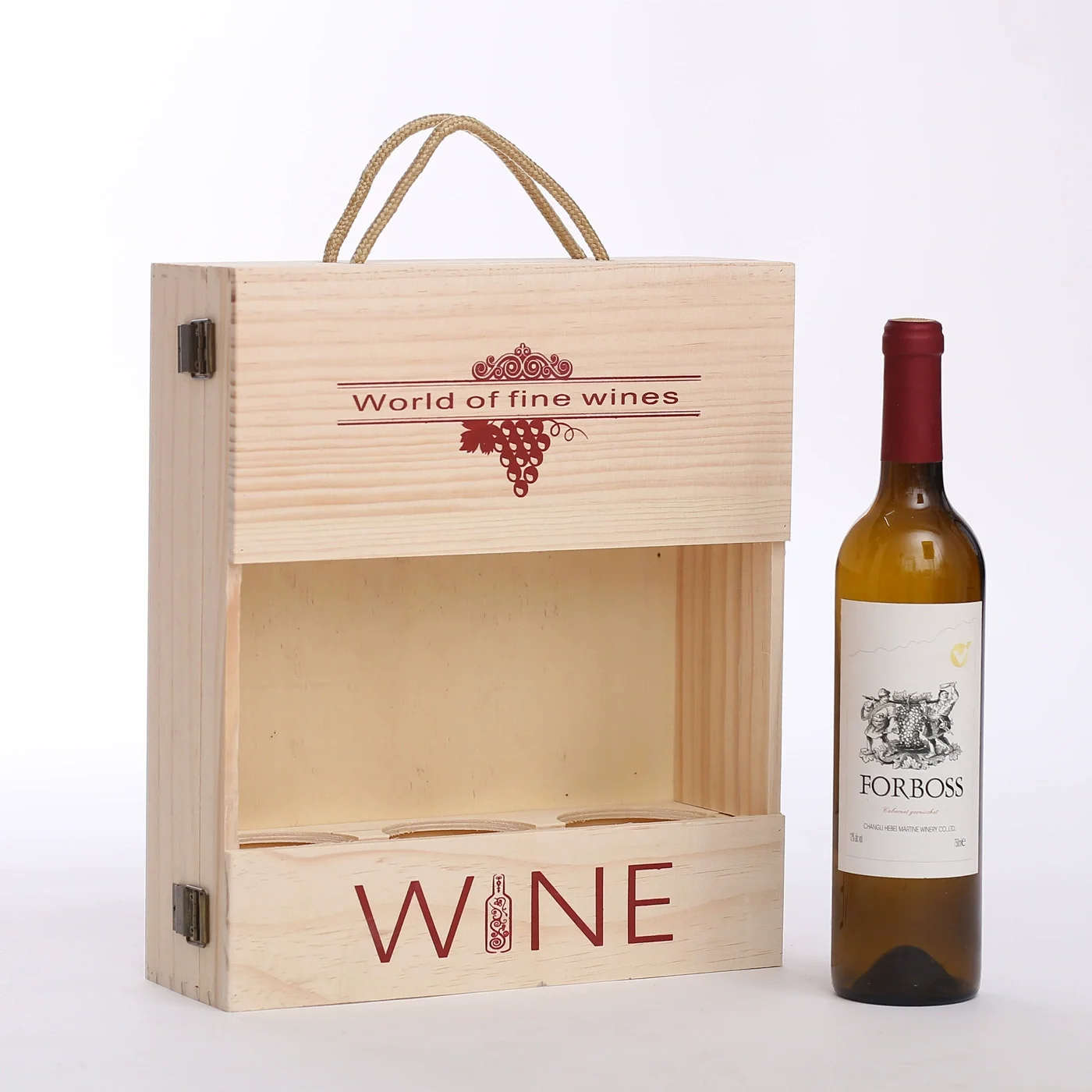
Once you know your bottle dimensions, the next step is matching them to the right box size. Below are the standard external and internal dimensions for wooden wine boxes in flat (single-layer) configurations — the most common wholesale SKUs with the fastest sampling turnaround. A wooden wine box manufacturer stocks these sizes our custom wooden wine boxes wholesale page as standard tooling — which means faster sampling, lower MOQ, and shorter production lead times for your wholesale orders.
| Box Configuration | External (L×W×H cm) | Internal (L×W×H cm) | Typical Use |
|---|---|---|---|
| 1 Bottle | 35 × 10 × 10 | 33.5 × 8.5 × 8.5 | Retail gift boxes, wine clubs |
| 2 Bottle | 35 × 19 × 10 | 33.5 × 17.5 × 8.5 | Gift sets, paired wines |
| 3 Bottle | 36 × 28 × 10 | 34 × 26.5 × 8.5 | Small tasting sets |
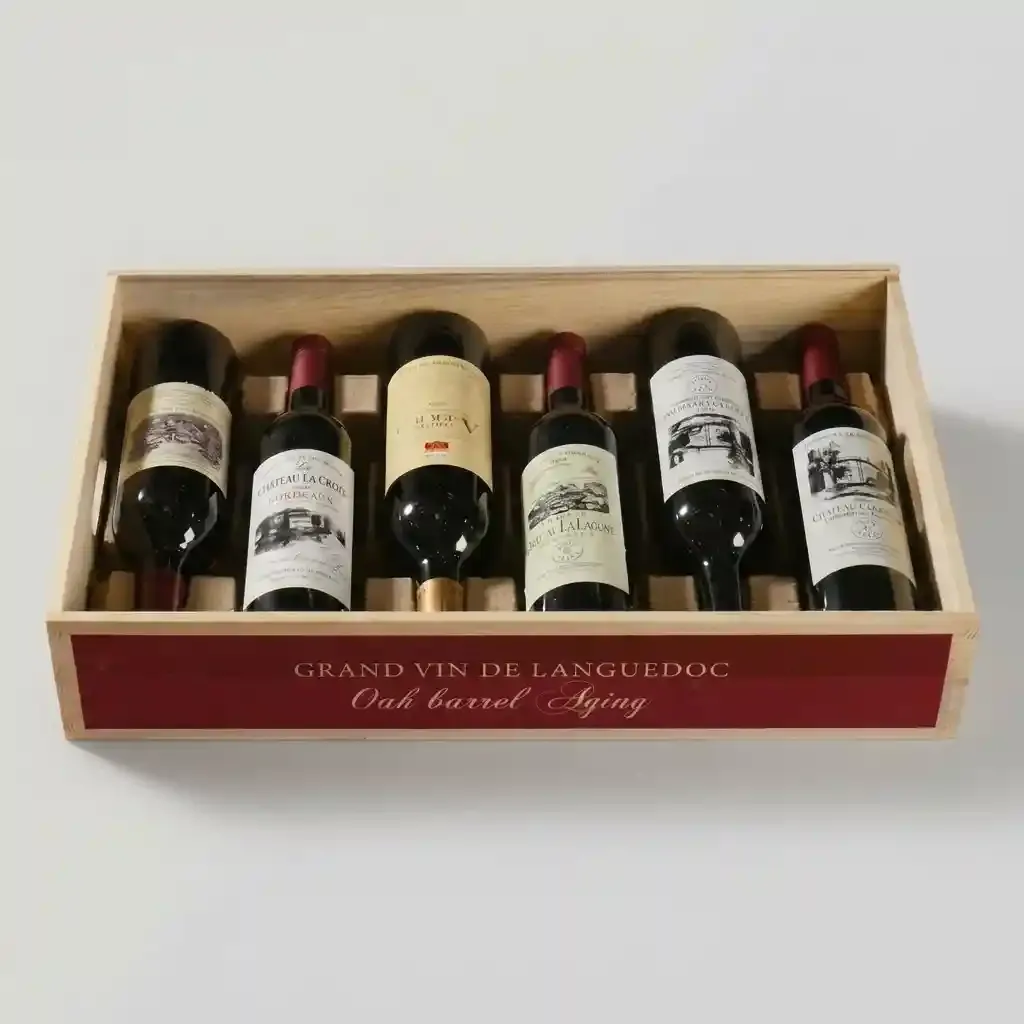
| 6 Bottle (flat) | 36 × 55 × 10 | 34 × 53.5 × 8.5 | Horizontal display (6 wide × 1 layer) |
Single Bottle Wine Box: The Highest-Volume Wholesale SKU
A single bottle wooden wine box is the most common wholesale order, accounting for the majority of wine box orders across most wooden wine box manufacturers. The external dimension of 35 × 10 × 10 cm provides roughly 1 cm of clearance around a standard 750ml Bordeaux bottle. For wholesale buyers, this format offers the most competitive per-unit pricing, fastest production turnaround, and widest supplier availability. If your business can standardize around Bordeaux-shaped bottles, the single-bottle box delivers the best unit economics for wholesale orders — making it the logical first SKU for any wine packaging program.
Double Bottle and Multi-Bottle Configurations for Wholesale Buyers
Double bottle boxes simply double the width of a single-bottle box to 19 cm. The height and depth remain the same, making them ideal for paired wine sets — for example, a red and white from the same winery. Three-bottle boxes use a flatter profile because the bottles are arranged side by side rather than in a deep configuration.
The flat 6-bottle box (36 × 55 × 10 cm) displays bottles in a single horizontal row of six — ideal for retail presentation where every label is visible at a glance. For stacked or multi-layer configurations (such as 3×2 stacked crates or 12-bottle cases), internal spacing between layers adds complexity: divider thickness, bottle-to-bottle clearance, and the gap between each tier all compound into the external dimensions. These are best quoted as custom dimensions after your wooden wine box manufacturer reviews your specific bottle specs and stacking requirements. When discussing your requirements, specify the bottle arrangement — it directly impacts the custom dimensions of your production run.
Why External and Internal Dimensions Differ — and Why It Matters for Wholesale Orders
The gap between external and internal dimensions causes costly ordering errors for wholesale buyers who don't catch it before approving production. For pine wooden boxes, wall thickness is typically 8–10 mm per side. This means a box listed at 35 cm externally has approximately 33.5 cm of usable internal length. Always verify both measurements with your OEM wine box supplier before approving production samples. A reputable wooden wine box manufacturer provides both internal and external dimensions on the quotation and spec sheet — if they don't, ask before committing to wholesale orders.
Standard vs Custom Dimensions: MOQ, Sampling, and Lead Time Trade-offs
Standard versus custom dimensions changes your minimum order quantity, sampling requirements, and production lead time.
When Standard Sizes Make Sense for Wholesale Orders
Standard single-bottle and double-bottle custom wooden wine boxes are ideal for wineries producing traditional Bordeaux-style wines, retail gift shops stocking common bottle shapes, and wine clubs shipping monthly selections. These boxes are available with lower MOQ — typically 200–500 units — and shorter lead times of 15–25 days for production. If your bottle fits the standard custom dimensions listed above, choosing an existing specification saves time, reduces per-unit cost, and eliminates the sampling phase for sizing. For buyers on a tight timeline or testing a new market, standard sizes are the lower-risk path.
When Custom Dimensions Are Worth the Investment
Custom dimensions are required for Champagne and sparkling wine bottles, Magnum (1.5 L) and larger formats, bottles with unusual shoulder profiles, gift sets that include accessories alongside the bottle, and boxes with intricate interior layouts. Custom-sized OEM wine boxes typically require a higher MOQ — often 500–1,000 units — and involve a sampling phase (7–10 working days) before full production begins. The per-unit cost is marginally higher, but for non-standard bottles, custom dimensions are the only path to a sellable product. Hilon Wood accepts small trial orders for custom dimensions, allowing you to test fit and finish through sampling before scaling to full production volumes.
How MOQ and Lead Time Vary by Box Size
As a general rule for wholesale orders: smaller boxes (1–2 bottles) carry lower MOQ and faster production turnaround. Larger multi-bottle crates require more material and assembly labor, typically with slightly higher MOQ thresholds. Lead time for standard sizes averages 15–25 days; custom dimensions with sampling add 7–10 days for sample approval and production. When engaging a wooden wine box supplier, ask for a clear breakdown: MOQ by box size, sample lead time, and production lead time after sample approval. A transparent wooden wine box manufacturer provides these numbers upfront in the quotation — not after you've committed.
What Specs to Send Your Wooden Wine Box Manufacturer for an Accurate Quote
To get an accurate quote for custom wooden wine boxes, your wooden wine box manufacturer needs five data points about your bottle. Here's what to send for a precise quotation.
Step 1: Bottle height. Place the bottle upright on a flat surface. Measure from the base to the top of the cork or capsule in millimetres. This determines the minimum internal box height for your custom dimensions.
Step 2: Widest diameter. Measure the widest point of the bottle body — usually the base or shoulder. This determines compartment width and is the single most critical measurement for custom dimensions. A 2 mm error here can make an entire production run unfit for use.
Step 3: Shoulder height. Measure from the base to where the bottle shoulder begins to slope inward. This determines internal compartment depth and whether the bottle seats correctly. Send this measurement to your OEM wine box supplier along with the first two.
Step 4: Bottle type. Specify Bordeaux, Burgundy, Champagne, Magnum, or other. A wooden wine box supplier familiar with industry bottle types can anticipate fit requirements and flag potential issues before production begins.
Step 5: Interior requirements. Specify whether you need velvet lining, foam inserts, ribbon cradles, or wood dividers. Each interior feature affects internal custom dimensions by 2–5 mm and may impact MOQ and lead time.
What a Reliable OEM Wine Box Supplier Does With Your Specs
Once you submit these five data points — plus a photo of your bottle next to a ruler — a competent wooden wine box manufacturer returns a quotation within 24–48 hours. Hilon Wood designs the box around your bottle rather than modifying your bottle to fit an existing box. The quotation covers: recommended internal and external custom dimensions, wood species options, finish and branding specifications, MOQ by quantity tier, sampling timeline and cost, and estimated production lead time. If you're unsure about any measurement, the manufacturer should advise — that's part of the procurement service included with wholesale orders.
Common Spec Errors That Delay Production
The most common mistake wholesale buyers make is measuring only the bottle body and ignoring the cork or capsule — a bottle 290 mm at the shoulder may be 315 mm total height with the cork. The second mistake is forgetting that wood expands and contracts with humidity; a box specified to the exact bottle diameter will bind in humid conditions. Always add 2–3 mm clearance per side in your custom dimensions. The third mistake is providing measurements in inches when your OEM wine box manufacturer works in millimetres — metric measurements eliminate conversion errors that cause sampling failures and production delays.
How Box Style Affects Custom Dimensions and Production Costs
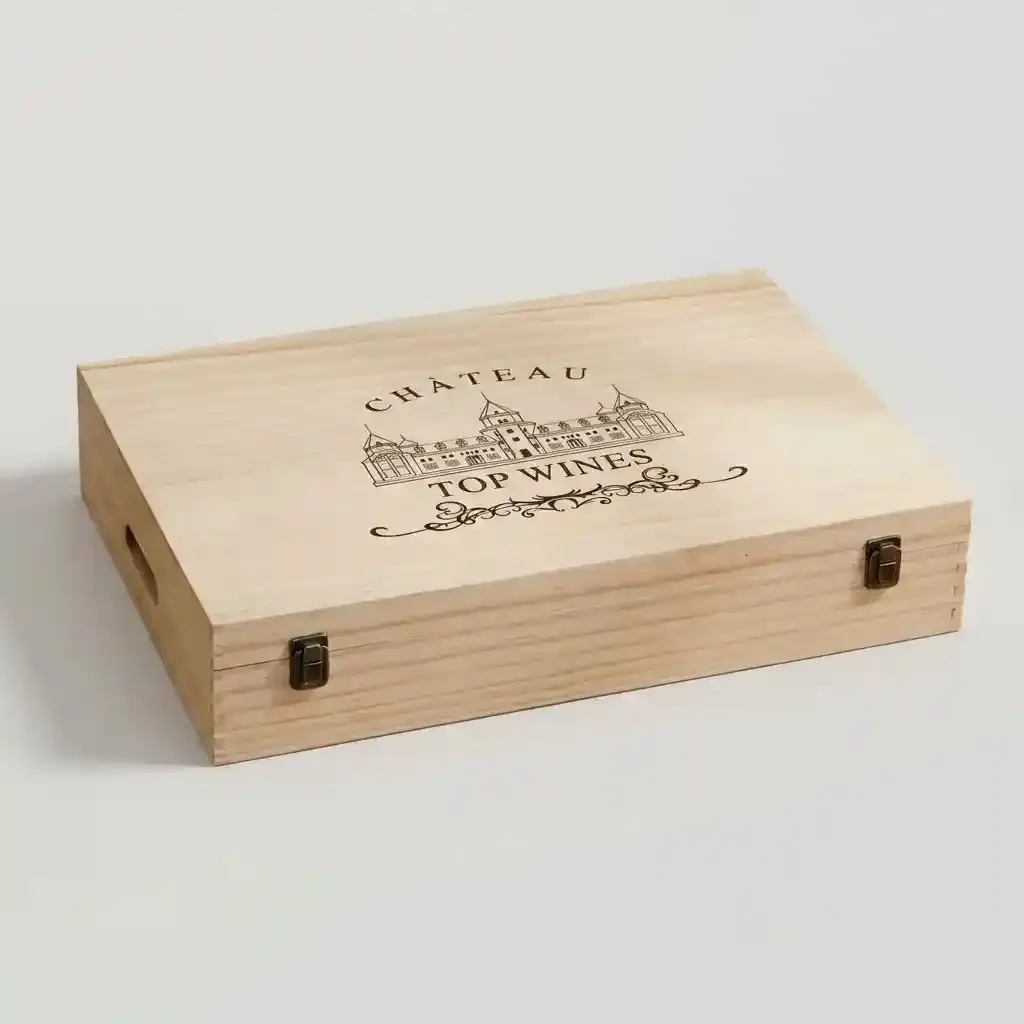
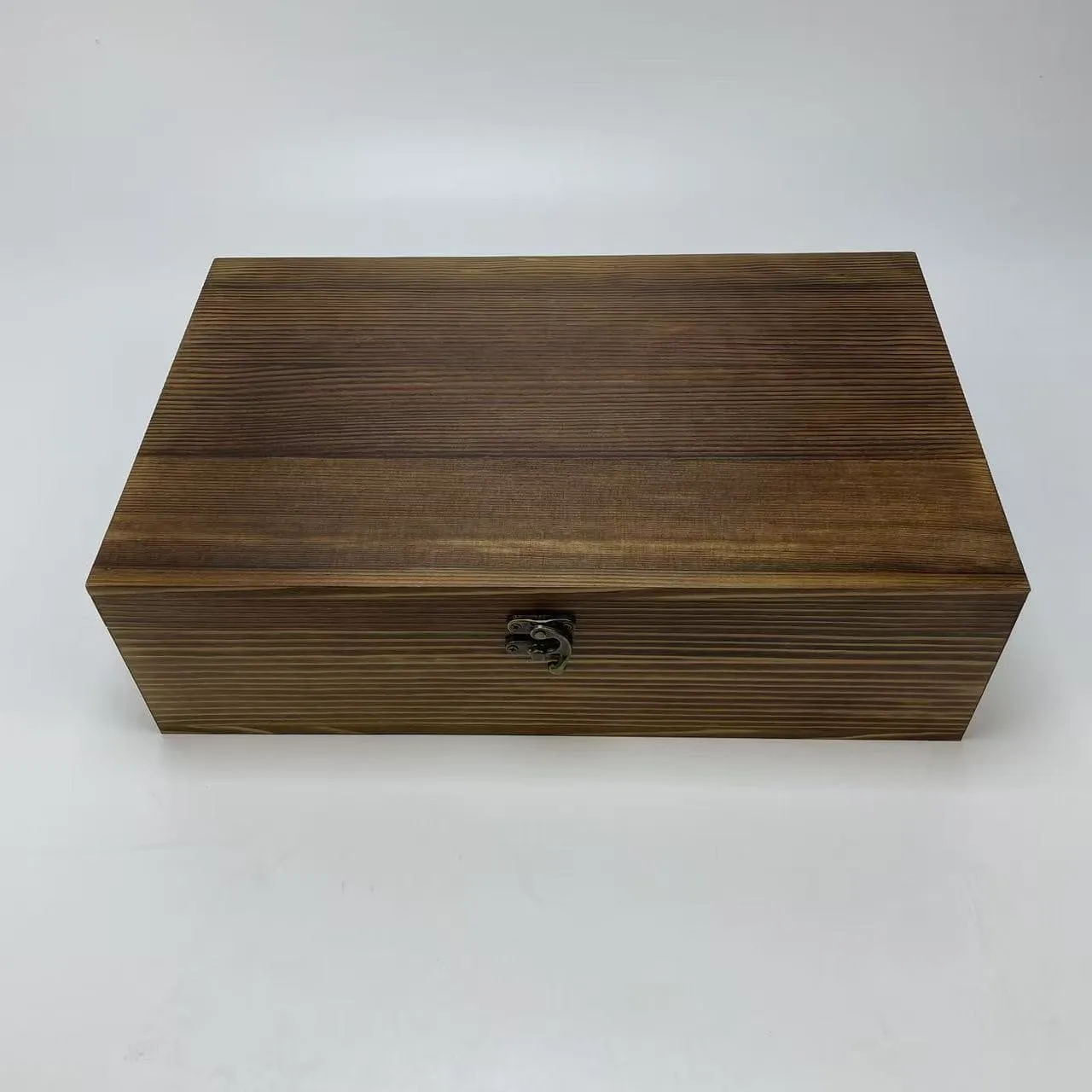
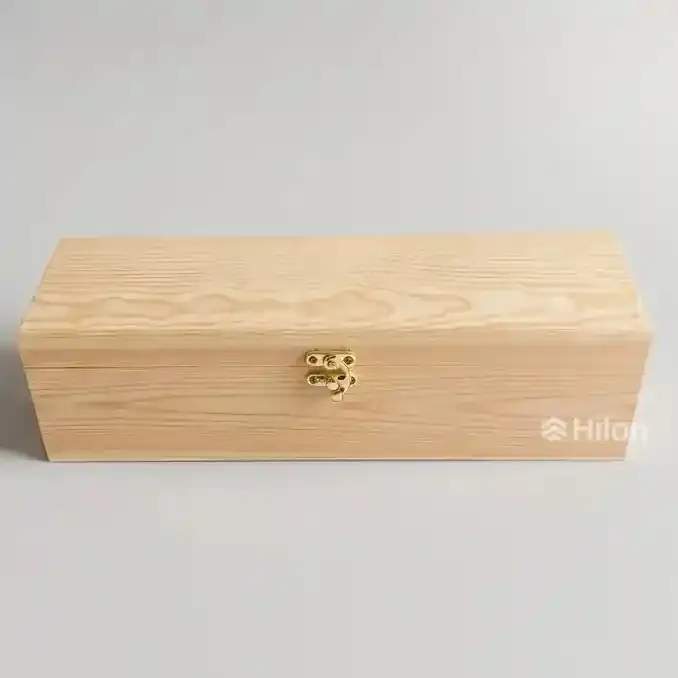
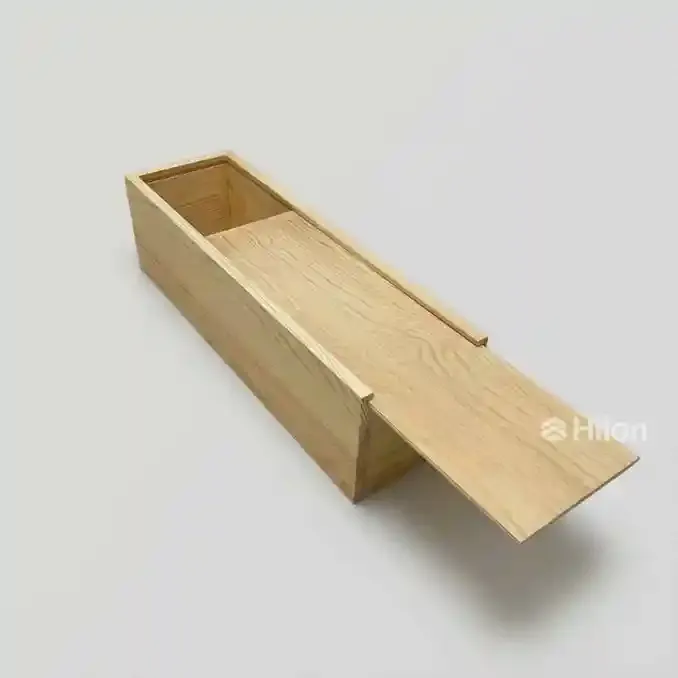
Box style directly affects the custom dimensions you need to specify — and your per-unit production cost. Sliding lid boxes require 3–5 cm of additional external length to accommodate lid travel. Hinged lid boxes use standard external dimensions but add 1–2 cm of height for the hinge mechanism. Crate-style boxes use thinner walls (5–6 mm slats vs 8–10 mm solid walls) and different internal layouts. When discussing your project with a wooden wine box manufacturer, specify the box style upfront — it changes the dimensional requirements and may affect MOQ and lead time for your wholesale orders.
Crate-Style and Multi-Compartment Configurations
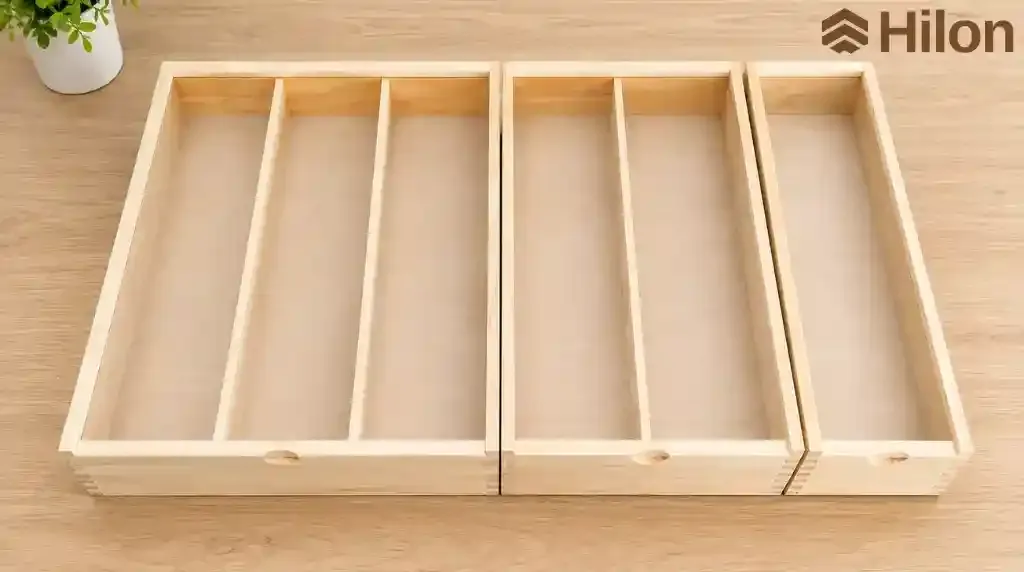
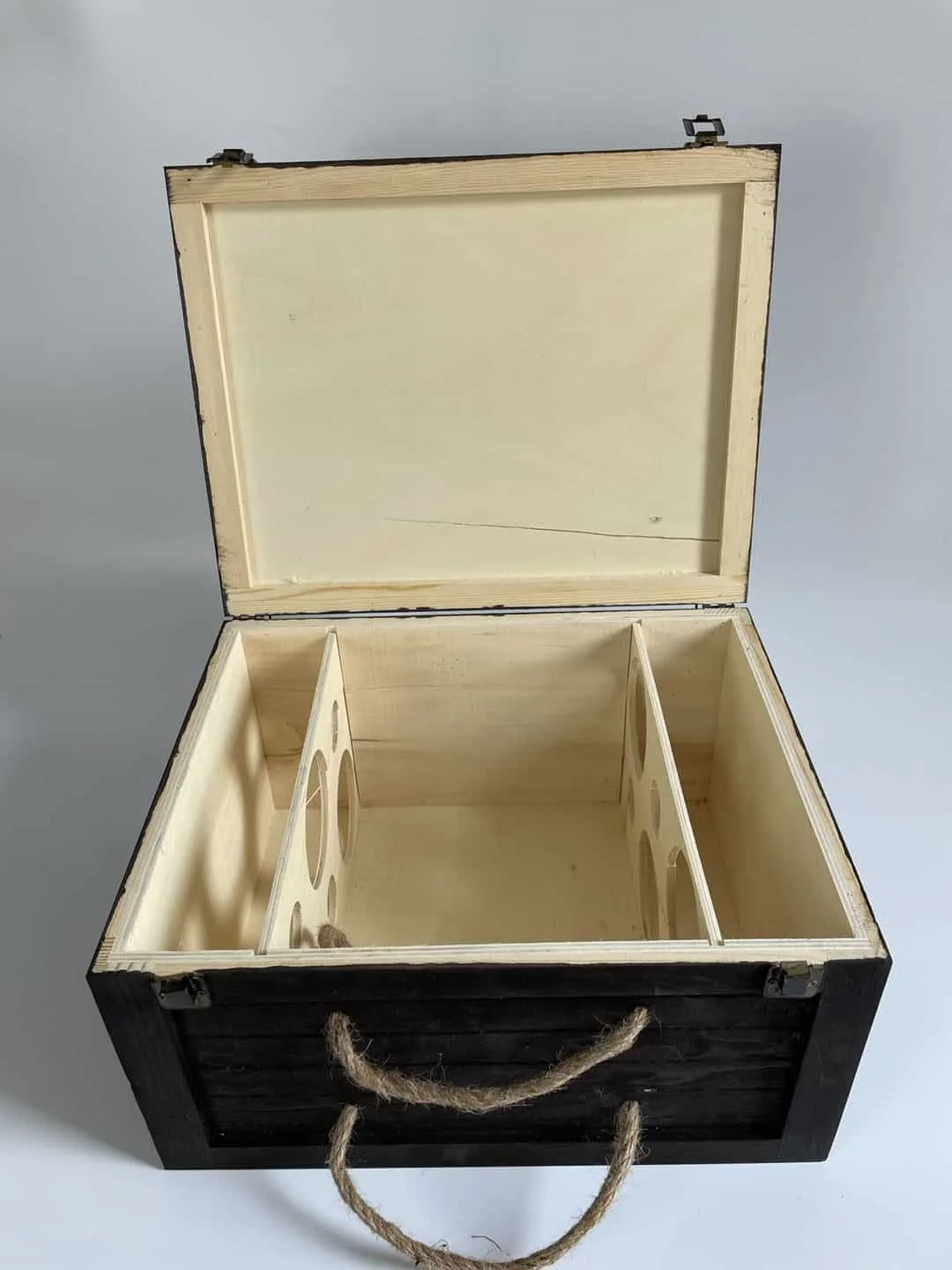
Crate-style boxes use an open-top design with slatted sides. They don't have the same wall thickness considerations because the slats are thinner (typically 5–6 mm). However, crates often include vertical dividers that partition the internal space, reducing the effective width of each compartment. A 6-bottle crate with a single divider fits three bottles per side, but each compartment is narrower than a full-width crate — an important consideration for custom dimensions when ordering Burgundy or Champagne-specific crates from your OEM wine box supplier.
How Inserts and Dividers Affect Fit and Sampling Requirements
Adding a foam insert or die-cut divider reduces each compartment's usable width by 3–5 mm. For a double-bottle OEM wine box with a centre divider, each compartment is roughly half the total internal width minus half the divider thickness. This matters most for Champagne bottles, which need every millimetre of width. Always confirm during the sampling phase that inserts and dividers are fitted to your specific bottle — generic inserts cut to a different bottle profile will cause fit issues in production. A wooden wine box manufacturer who handles both the box and the inserts under one roof eliminates the finger-pointing that happens when box and insert suppliers disagree on tolerances.
Staggered Bottle Arrangement: How Internal Layout Shrinks External Dimensions
Beyond dividers and inserts, the arrangement pattern of bottles inside the box — straight grid versus staggered offset — directly changes the external dimensions your wooden wine box manufacturer quotes you. This is visible in the 6-bottle wooden wine case product image: bottles in the second row nestle into the gaps between bottles of the first row, rather than sitting directly behind them.
In a straight grid layout, each bottle occupies a rectangular cell. Every additional row adds the full bottle diameter plus clearance to the box depth. Two rows of bottles require 2 × (bottle diameter + clearance) of internal depth — roughly 18 cm for standard Bordeaux bottles.
In a staggered (offset) layout, adjacent rows interlock: the centre of each bottle in row two sits between two bottles in row one. The centre-to-centre distance between staggered rows is approximately 0.87 × the bottle diameter, not 1.0 × the diameter. This reduces the two-row internal depth from roughly 18 cm to about 16.5 cm — a 1.5 cm savings that carries through to the external dimension, reducing material usage and freight volume.
This optimisation compounds with quantity. On a wholesale order of 1,000 units, a 1.5 cm reduction in one dimension cuts total crate volume by roughly 8%, directly lowering freight costs — especially for air and express shipments where volumetric weight determines pricing. When you submit your bottle specs to a wooden wine box supplier, ask whether staggered internal layout is feasible for your configuration. An experienced OEM wine box manufacturer calculates the optimal bottle arrangement and presents both standard and space-optimised dimension options at the quotation stage, rather than waiting for you to discover the fit issue during sampling.
Choosing the Right Wooden Wine Box Size for Your Business Model
Different wholesale buyer types need different box sizes — browse our full wholesale wine box catalog to see what fits your use case. Different buyer types face different dimension requirements, order volumes, and lead time constraints.
Retail and Gift Shop Wholesale Buyers
For retail wine shops and gift stores, single-bottle custom wooden wine boxes are the highest-volume SKU. The standard 35 × 10 × 10 cm size fits most commercially available wines and stacks efficiently on retail shelving. Retail buyers typically start with 500–1,000 unit wholesale orders and reorder quarterly based on sell-through. Lead time for repeat orders is shorter since your wooden wine box supplier already has your tooling and specifications on file. Consider ordering a batch with your logo laser-engraved on the lid — permanent branding that doesn't wear off.
Winery Tasting Room and Corporate Gift Programs
Wineries benefit most from double-bottle and 6-bottle configurations. Double-bottle boxes (35 × 19 × 10 cm) work well for paired-vineyard gift sets, while 6-bottle presentation crates are the standard format for corporate year-end gifting wholesale orders. For these programs, plan your procurement timeline backward from your peak season: production lead time (15–25 days) plus international shipping (15–30 days by sea) means you should engage your OEM wine box supplier at least 8–10 weeks before you need inventory in hand. Rush production and air freight are available for last-minute orders, at a premium.
Wine Subscription and Recurring Packaging Programs
Wine subscription services need consistent, stackable packaging that fits standard courier box dimensions. A flat 6-bottle crate (36 × 55 × 10 cm) works well for monthly subscription boxes — its low-profile single-layer design fits within standard shipping dimensional weight thresholds and keeps each bottle visible. For higher-volume subscriptions, 12-bottle cases minimise per-unit packaging cost, but the stacked configuration requires custom dimensioning to account for inter-layer spacing while maintaining premium presentation. Subscription buyers should negotiate annual volume commitments with their wooden wine box manufacturer — this locks in pricing across the year, reserves production capacity, and smooths out lead time across seasonal peaks. With a committed volume agreement, your wooden wine box supplier can stage materials in advance, cutting production lead time for reorders.
How to Order Custom Wooden Wine Boxes: From Specs to Delivery
Ordering custom wooden wine boxes with the right dimensions follows a structured five-step process. Understanding each step keeps your procurement timeline predictable and your budget accurate.
Step 1: Submit Your Bottle Specs and Requirements
Send your bottle measurements, preferred wood species, box style, finish preferences, and branding requirements to your wooden wine box supplier. You don't need a detailed technical drawing — a photo of your bottle next to a ruler, plus the five measurements listed above, is sufficient to begin. A responsive wooden wine box manufacturer confirms receipt within 24–48 hours and follows up with clarifying questions if any detail is unclear.
Step 2: Receive and Review Your Quotation
The quotation covers per-unit pricing by quantity tier, MOQ, sampling cost and timeline, production lead time, and shipping estimates. Custom dimensions that require new tooling or jigs may add a modest setup fee, typically absorbed into the per-unit cost at higher volumes. Expect pricing to vary by box size (larger boxes use more material), wood species (hardwoods cost more than pine), and finishing complexity. Review the quotation against your budget and timeline before proceeding to sampling.
Step 3: Sampling — Verify Fit Before Full Production
Sampling is the most critical step in custom wooden wine box procurement. Before any production run begins, your manufacturer produces physical samples for your approval. You evaluate wood quality and grain consistency, finish accuracy and uniformity, bottle fit (secure without rattling), hardware function (hinges, latches, closures), and branding precision (engraving depth, print alignment). Sampling typically takes 7–10 working days. Request adjustments and approve only when the sample meets your standards — never skip sampling for custom dimensions, no matter how tight your timeline. The cost of a failed production run far exceeds the time invested in proper sampling.
Step 4: Production and Quality Control
Once you approve the sample, full production begins. Materials are sourced, components are machined, boxes are assembled, and finishes and branding are applied. A professional OEM wine box manufacturer conducts in-process inspection during production and finished batch inspection before shipment, with photo or video evidence for your review. Production lead time for standard custom wooden wine box sizes is typically 15–25 days; custom dimensions may extend to 25–35 days depending on complexity, quantity, and current production queue. Ask for production updates at agreed milestones so you're never in the dark about your order status.
Step 5: Packing, Shipping, and Delivery
Your wooden wine box manufacturer handles export packing, shipping documentation, and logistics coordination. Boxes are packed in outer corrugated master cartons for international transit protection — individual boxes are wrapped or separated to prevent surface damage. Freight options include sea (most cost-effective for full container wholesale orders), air (faster, higher cost per unit), and express courier (fastest, best for sample shipments and urgent small orders). A full-service wooden wine box supplier provides freight quotes for all three options and handles customs documentation so your order clears without delays.
Get Custom Wooden Wine Boxes Sized to Your Exact Bottle
Getting your custom wooden wine box dimensions right means knowing your bottle measurements, understanding when standard sizing works versus when custom is required, and working with a wooden wine box manufacturer who designs around your specs — not the other way around. Hilon Wood produces custom-sized wooden wine boxes in 13 wood species with your choice of finish, branding technique, and interior configuration.
- Send your bottle dimensions for a quotation — height, diameter, shoulder height, and bottle type
- Standard or custom dimensions — both supported, with transparent MOQ and production lead time for each option
- Sampling available before full production so you verify fit, finish, and branding before committing to volume
- OEM wine box manufacturing with laser engraving, foil stamping, screen printing, or UV printing for your brand
- Small trial orders supported — test your custom dimensions at low volume before scaling to full wholesale orders
If you need wooden wine boxes sized to your exact bottle — whether Bordeaux, Burgundy, Champagne, or Magnum — contact Hilon Wood. Send your bottle photo and measurements for a quotation within 24–48 hours. For more on material options and packaging strategy, read about wooden wine packaging advantages, browse our custom wooden boxes collection, and see why wood remains the preferred choice for wine packaging.
Frequently Asked Questions About Custom Wooden Wine Box Sizes
Does wood species affect the external dimensions of my wine box?
Yes. Pine and paulownia typically use 8–10 mm wall thickness, while softer woods may need 10–12 mm for the same rigidity. This adds 2–4 mm per side — roughly 0.5 cm to external length and width for a paulownia box versus pine. For a deeper look at material options, refer to our wooden wine gift box materials guide. Confirm wall thickness with your wooden wine box manufacturer before approving the spec sheet.
How do interior linings and inserts change the internal dimensions?
Velvet and felt reduce each covered surface by 1–3 mm; flocked foam by 3–5 mm; die-cut EVA inserts by 5–10 mm. For a single-bottle box with full velvet lining, internal width and depth each shrink by roughly 2–4 mm. Give your bottle dimensions after selecting the lining — your wooden wine box supplier should adjust the external dimensions outward to preserve proper clearance.
How do I measure my bottle correctly to send to a manufacturer for an accurate quote?
Measure with a caliper or ruler: (1) total bottle height from base to top of closure; (2) widest body diameter; (3) shoulder height from base to where the neck begins. A photo of the bottle next to a ruler provides a visual cross-check. Missing the shoulder height is the most common measurement error — it matters because the box interior profile follows the bottle contour.
What dimensional tolerance should I expect on finished wooden wine boxes?
±1 mm on external dimensions is the industry standard for pine and paulownia boxes. Internal dimensions have slightly wider tolerance (±1.5 mm) due to wood's natural expansion and contraction.
Does the box closure style affect the external dimensions?
Yes. A slide-lid box adds 3–5 mm in height to accommodate the lid track groove. Hinged-lid boxes add the hardware thickness (2–3 mm) to the rear external dimension. Two-piece telescoping lids add 6–10 mm to both length and width because the outer lid must sleeve over the base. Specify your preferred closure style before your wooden wine box manufacturer finalises the dimension drawing.
What is the minimum viable wall thickness for a structurally sound wine box?
8 mm for pine boxes up to 55 cm in length (6-bottle flat). Paulownia needs 9–10 mm minimum. Boxes over 40 cm benefit from 10 mm walls or corner reinforcement. The base panel should be 5 mm minimum for single-bottle boxes, 6–7 mm for multi-bottle. If a quotation seems unusually low, check the wall thickness — thinning the walls is a common cost-cutting shortcut that compromises strength.