
Custom Square Lift-off Lid Wooden Boxes
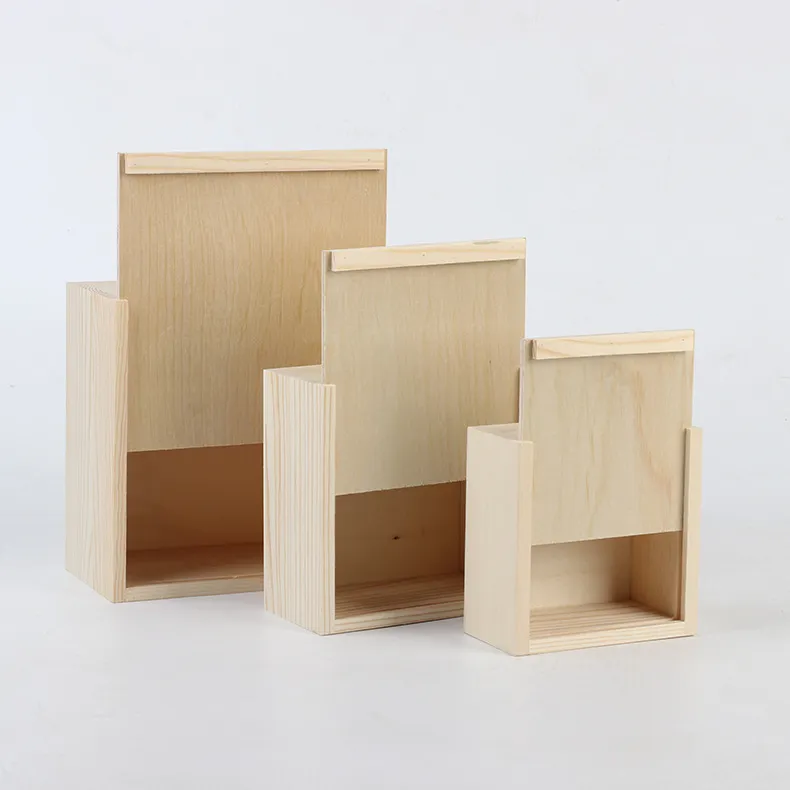
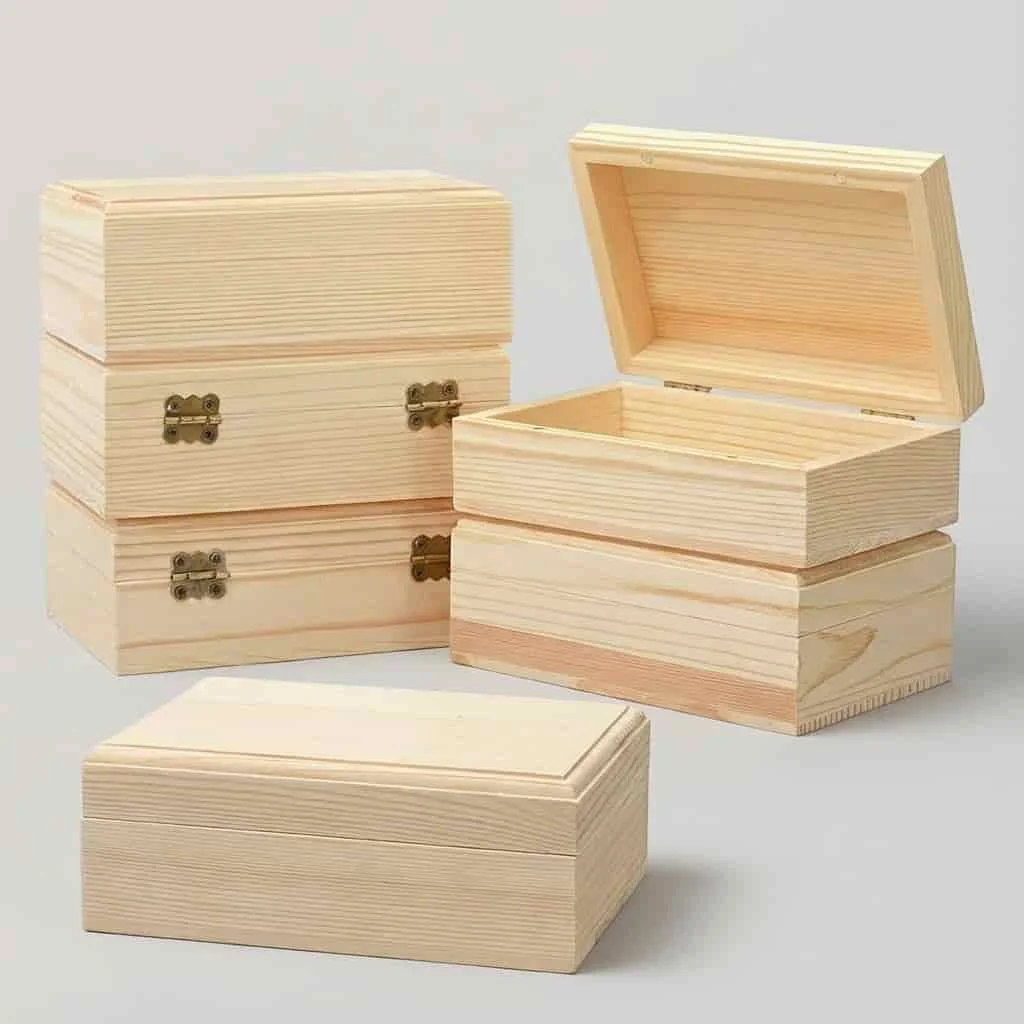
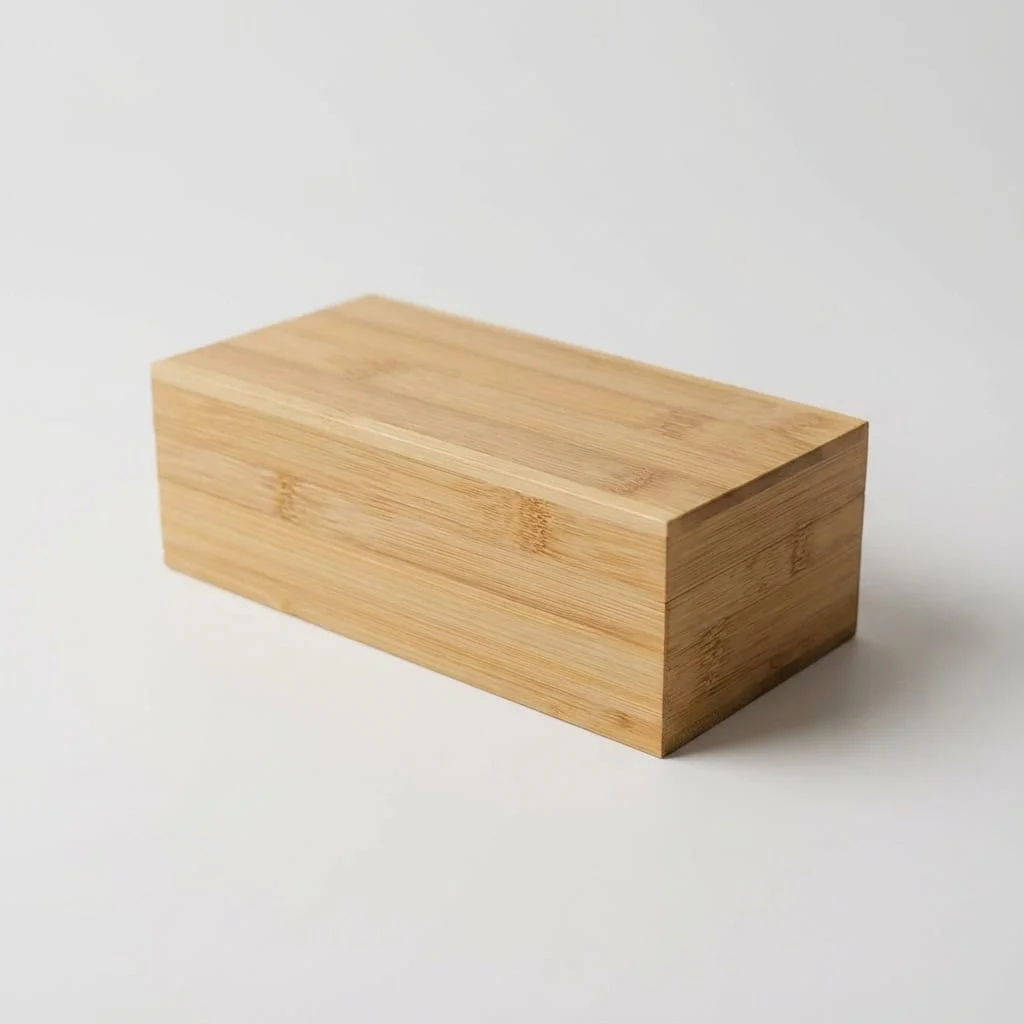
Square paulownia wood boxes with lift-off lid, engineered as blank-canvas storage for DIY customization, craft projects, and simple gift presentation.
Key Features
- Lift-off lid — the simplest lid mechanism in wood box manufacturing: a lid that lifts completely off the base with no hinges, no clasps, no moving parts; the lid seats onto the base via a stepped rim that centers the lid and prevents lateral sliding
- Paulownia wood — the lightest commercial hardwood alternative; paulownia weighs roughly 40% less than pine at the same dimensions, making it the preferred wood for cost-sensitive volume orders where freight weight drives total landed cost
- Unfinished sanded surface — no paint, no stain, no varnish; the box ships as a smooth, sanded blank ready for the buyer's own customization: paint, stain, decoupage, wood burning, laser engraving, or leave as-is for a natural look
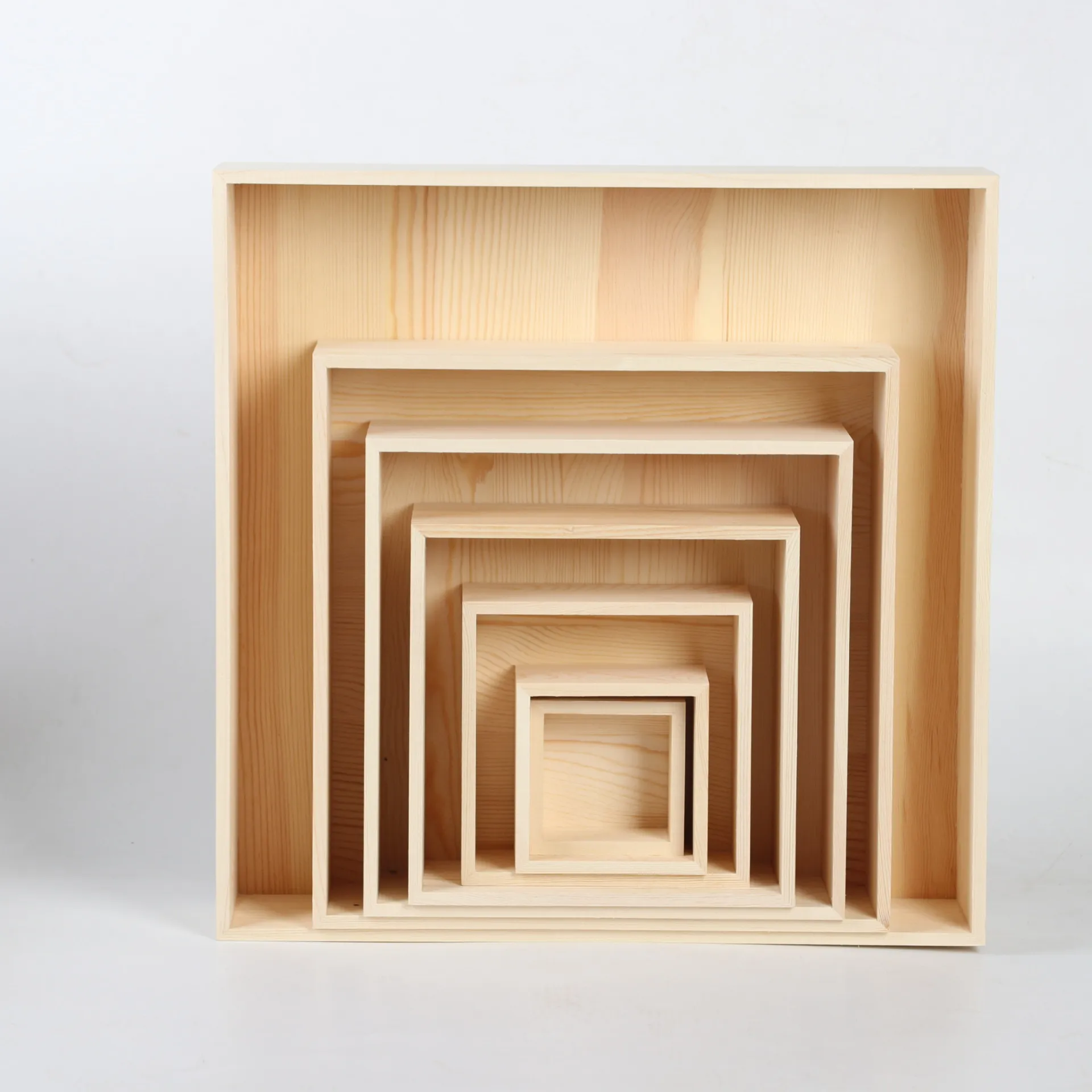
- Square format — clean geometric simplicity that looks intentional in any orientation; the lift-off lid is also square, so it can be placed back on the base in any 90° rotation without misalignment
- Customizable dimensions — the square format and simple construction (four walls + bottom + lid) make dimensional changes straightforward; the box scales up or down without affecting the structural design
$1.20 - $4.50 / piece
Prices vary based on order quantity, dimensions, material selection, and logo printing method. Send an inquiry.
Specifications
- Material
- Paulownia wood (pine, birch, bamboo options available)
- Lid
- Lift-off with stepped rim for centering
- Finish
- Unfinished sanded (varnish, stain, paint options available)
- Application
- DIY crafts, gift packaging, small business packaging, home organization
Applications
DIY and craft blank boxes
Where makers, crafters, and artists buy unfinished paulownia boxes in bulk to customize with their own artwork and resell as handmade storage, gift boxes, or decorative pieces — the unfinished surface accepts paint, stain, decoupage, and wood burning without any finish removal prep.
Simple gift packaging
Where the box is part of the gift — a jewelry box, keepsake container, or presentation case that the recipient keeps after unwrapping; the lift-off lid provides a clean, classic opening experience without hardware that might clash with the gift aesthetic.
Small business packaging and organization
Where small products are packaged in custom-finished boxes for retail sale, or where small parts and supplies are organized in labeled boxes on workshop shelves — the lift-off lid provides full top access when open and dust protection when closed.
Customization Options
Dimensions: Fully customizable. The square format means the width and depth are equal — only one footprint dimension needs to be specified. The stepped rim (the lip that centers the lid) adds approximately 3mm to the interior wall thickness on all four sides — the interior usable space is approximately 6mm less than the exterior footprint in both width and depth.
Wood species: Paulownia (standard) — lightweight, smooth grain, takes paint and stain well, lowest cost per box. Pine available for a heavier, denser alternative. Birch available for finer grain and smoother painting surface. Bamboo available for a harder, pre-finished alternative.
Finish: Unfinished sanded (standard) — the blank-canvas option for DIY and craft buyers. Clear varnish for a protected natural wood look. Stained (multiple tones) for a finished retail-ready appearance. Painted (white, black, custom Pantone) for brand-matched packaging. The unfinished option is specifically for buyers who add their own finish — we recommend clear varnish for all retail-ready products.
Branding: Laser engraving on the lid — the large flat square surface is an excellent engraving canvas. Screen printing for multi-color designs. Interior branding on the box bottom. For unfinished boxes sold as craft blanks, branding can be applied to the exterior bottom only — invisible during use, visible at purchase.
Ready to get a recommendation?
Send us your requirements — we'll respond with material and production recommendations within 24–48 hours.
Why This Design Works
The lift-off lid is the most mechanically simple lid design — zero moving parts, zero hardware, zero failure modes. A hinged lid can loosen over time. A sliding lid can bind. A clasp can break. A lift-off lid has a lid and a base — two pieces of wood that fit together via a stepped rim. If the rim is machined correctly, the lid centers itself when placed on the base, stays in place without rattling, and lifts off cleanly when pulled. The simplicity isn't a compromise — it's a functional advantage for applications where the box is opened infrequently (keepsake storage, seasonal decoration storage) or where hardware would detract from the aesthetic (minimalist gift packaging, craft blanks). A lift-off lid box will function identically in year 20 as it did on day 1 — no hinges to wear out, no screws to loosen.
Paulownia is the strategically correct wood for a blank-canvas, volume-shipped product — lightweight for freight, smooth for painting, and inexpensive enough that the box cost doesn't prevent the buyer from adding their own value. A crafter who buys an $8 pine box, spends 30 minutes painting it, and sells it for $25 makes $17 minus the box cost. The same crafter buying a $5 paulownia box makes $20 — a 17% margin improvement from a wood species switch that the end customer won't notice once the box is painted. For volume orders where the buyer is adding significant value through customization, every dollar saved on the blank box is a dollar added to their margin. Paulownia's lower density also means approximately 40% lower freight cost per unit — for an air-freighted order of 500 boxes, the wood choice alone can save $200–400 in shipping.
The square format with a square lid means the lid fits in any orientation — a small UX detail that eliminates a common friction point of rectangular boxes. With a rectangular lift-off lid box, the lid only fits one way — rotate it 90° and it won't seat. The user has to visually align the long and short sides every time they close the box. A square lid fits in any of four orientations — the user drops the lid on without thinking. For a box that might be opened and closed daily, this small convenience is the difference between "this box is annoying" and "this box just works."
Manufacturing Considerations
The stepped rim — the lip that centers the lid on the base — is the most tolerance-sensitive feature on the box. The step is typically 3mm wide and 3mm deep, machined into the inside top edge of the base. The lid has a matching recess on its underside that fits over this step. If the step is too tight (less than 0.2mm clearance), the lid binds and requires force to seat — the user feels resistance and assumes poor quality. If the step is too loose (more than 0.5mm clearance), the lid rattles and shifts — same quality perception problem. We machine the step and the lid recess as a matched pair from the same CNC setup, ensuring the clearance is 0.3mm ±0.1mm on all four sides. After assembly, each box is tested: place the lid on the base, push laterally — the lid should shift less than 0.5mm in any direction.
Paulownia's softness (Janka ~200–250) makes it prone to corner dents and edge compression during bulk packing. When 50 paulownia boxes are packed tight in a master carton, the weight of the stack can compress the bottom box's top edges, leaving a slight flattening that's visible when the lid is removed. We pack paulownia boxes with 2mm corrugated cardboard separators between each box to distribute stacking pressure. Master cartons are sized so boxes fit snugly but not compressed — the carton interior is 4–6mm larger than the total box stack in each dimension.
Have a technical concern about your use case? Our team can walk you through how we'd handle it for your project.
Start with the 18×18×8 cm format in unfinished paulownia as the craft-and-DIY anchor SKU. This size works for jewelry storage, desk organization, and small gift packaging — the three most common use cases for blank wooden boxes. Sell it unfinished, bulk-packed (no individual retail packaging), at the lowest possible unit cost — the buyer's value is in the customization they add. Add a clear-varnished version at a 20% premium for buyers who want a finished product. For the retail-ready market, offer the same box in stained pine — the heavier weight and richer color command a higher perceived value and price point for gift and home decor buyers. Skip custom dimensions for orders under 500 units — the tooling cost for custom square box dimensions at small quantities erodes the paulownia cost advantage.
Start Your Project
Send us your design or reference images — we'll return with a pre-production sample for your approval.
Frequently Asked Questions
Q: Does the lid stay on securely without a clasp?
Q: Can I paint directly on the unfinished surface?
Q: Why paulownia instead of pine?
Send Us Your Requirements
Send your design, reference images, or product sample. We don't just quote a price — we respond with material recommendations, a feasibility assessment, and professional suggestions grounded in over 20 years of manufacturing experience. Expect a detailed response within 24–48 hours.
- Professional recommendations included
- Small MOQ & trial orders supported
- Worldwide shipping with export documentation