Pick paulownia when shipping weight drives your freight bill. Pick pine when your crate needs to hold 50 kg and get forklifted twice a day. That's the short answer. The longer one depends on your product, your supply chain, and what "cost" means in your operation — the raw board price at the factory gate tells about half the story.
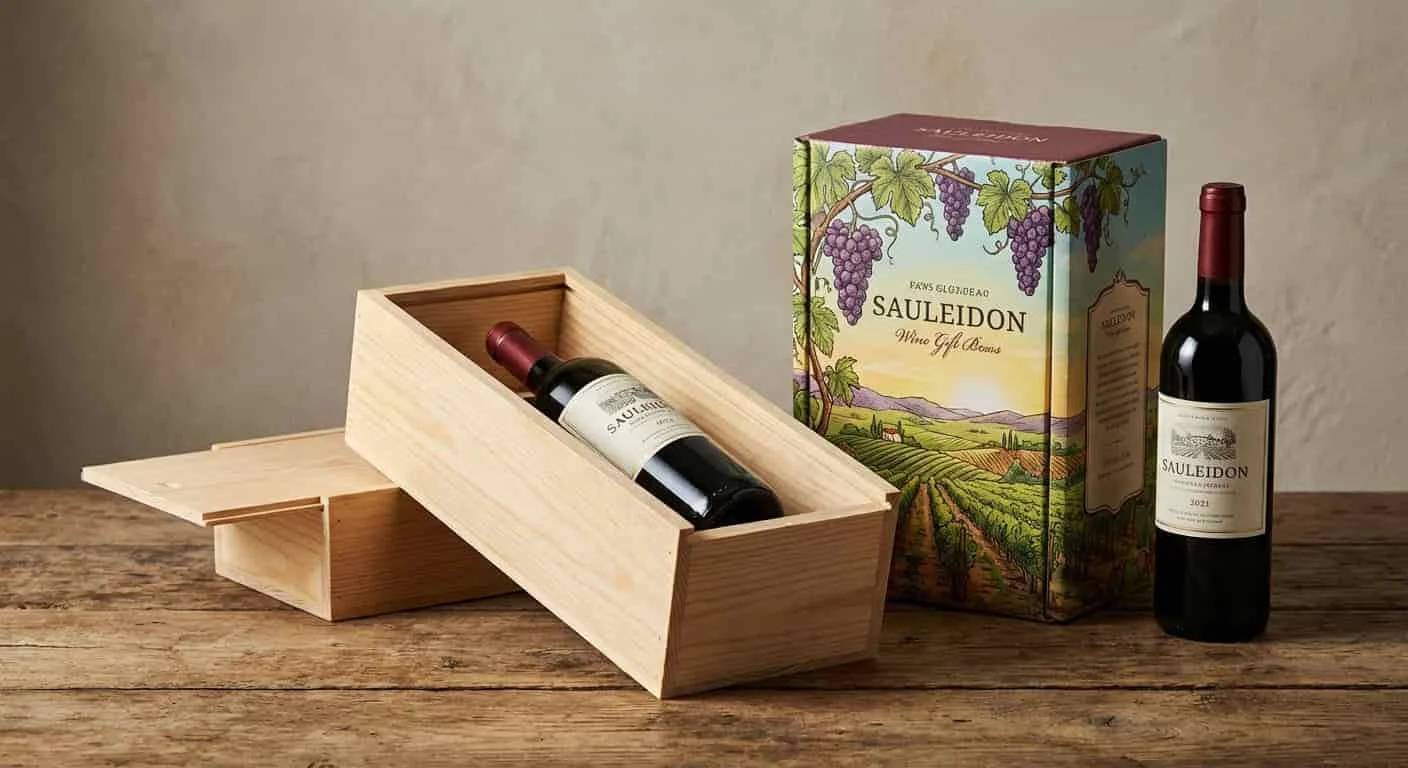
A German kitchenware brand shipped 3,000 gift boxes from Shandong to Hamburg last November. Their wooden presentation boxes used 12mm solid pine, each weighing about 1.1 kg. Freight on that container ran 2,800 EUR.
They ran the same order in paulownia for their spring collection — same dimensions, same design, same factory. Box weight dropped to 0.64 kg per unit. Same container size, 1,200 EUR less in ocean freight. The paulownia lumber cost 200 RMB more per cubic meter at sourcing, but the shipping savings ate that gap three times over. They switched permanently. They aren't switching back.
Key Takeaways - Paulownia weighs roughly half as much as pine (260-310 kg/m³ vs 400-600 kg/m³), which directly cuts ocean and air freight costs. - Pine delivers roughly double the compressive strength of paulownia, 35-40 MPa vs 20-23 MPa, and holds screws better for nailed crates. - Processing waste runs about 5% on paulownia versus 10-15% on pine, a difference that compounds on runs above 2,000 units. - Moisture stability favors paulownia (6-8% volumetric shrinkage vs 8-12% for pine), reducing warranty claims in humid shipping lanes. - Neither wood is wrong; picking depends on whether your biggest cost is materials, freight, or returns.
What You Are Actually Comparing
Paulownia (泡桐): The Lightweight Specialist
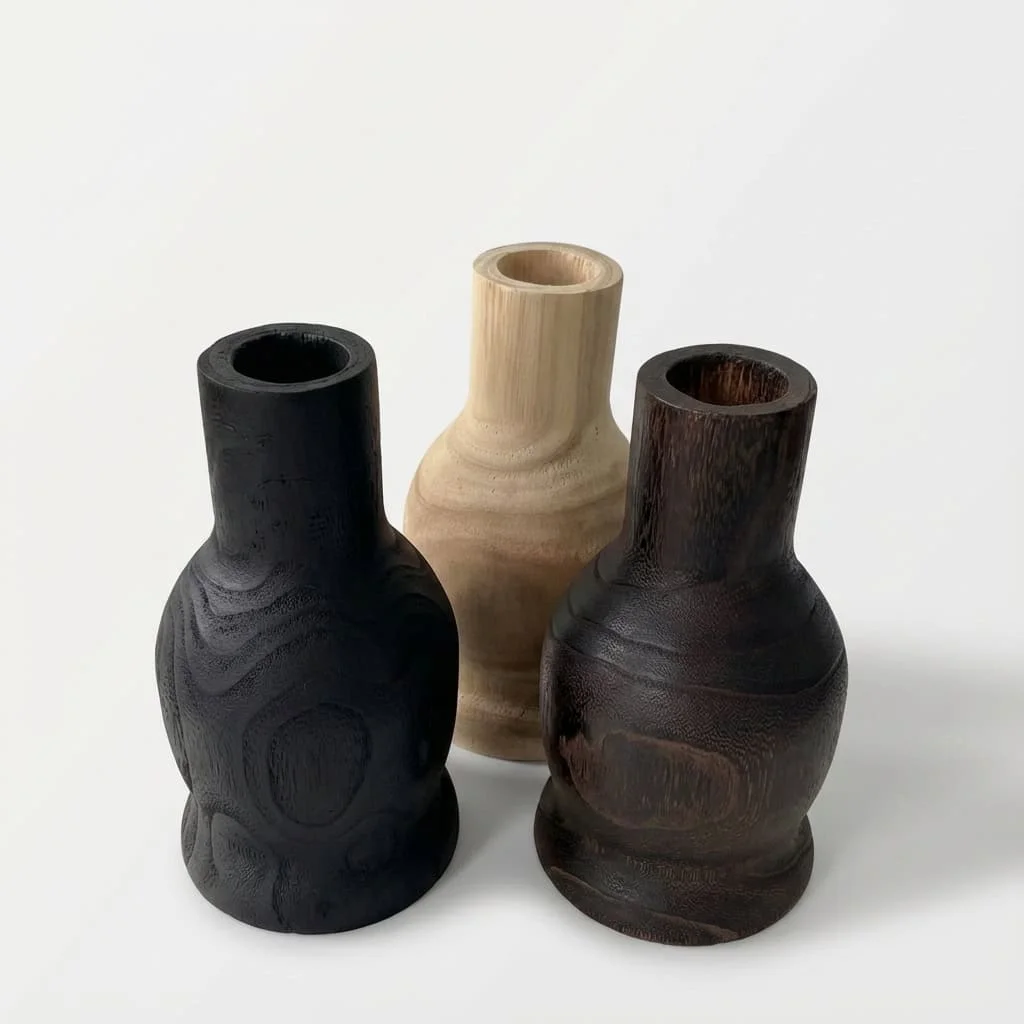
Paulownia grows fast — harvestable in five to seven years — and produces a pale, even-grained wood with no knots and no resin. It's technically a hardwood by botanical classification but shares few characteristics with oak or walnut. It machines clean. It doesn't gum up cutting tools. It dries to 10-12% moisture content without the internal stresses that twist pine boards after kilning.
The density sits at 260 to 310 kg per cubic meter at 12% moisture content. That puts it roughly 30% lighter than Western Red Cedar and about half the weight of Radiata pine. The Janka hardness lands around 300 lbf. You can press a thumbnail into it.
The trade-off is dimensional stability. Radial and tangential shrinkage both stay under 4%. Total volumetric movement from green to oven-dry is under 9%. For packaging that ships across climate zones, that's the property that matters most.
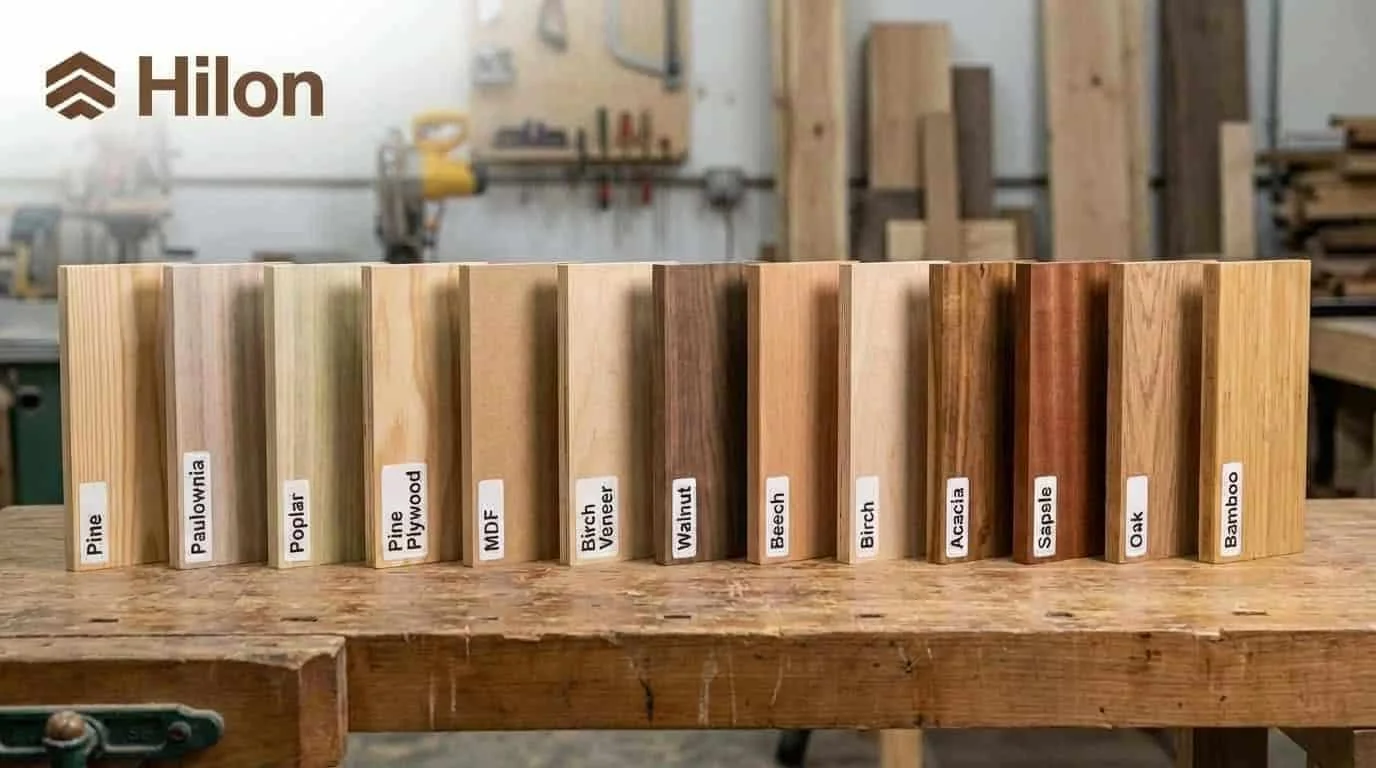
In Shandong, Hebei, and Henan, paulownia plantation lumber trades at 1,500 to 2,000 RMB per cubic meter. It's commodity-priced at source. China planted massive acreage of paulownia in the 1990s for farmland shelterbelts. That supply infrastructure still feeds the packaging industry. For a complete rundown of all species available for custom manufacturing, see our wood species guide.
Pine (松木): The Workhorse
"Pine" in a Chinese packaging factory means at least three different species with different properties. Eastern White Pine runs lightest among the common ones, about 400 kg/m³, and machines easily with low resin content. Radiata pine from New Zealand and Chile lands at 450 to 550 kg/m³. Mongolian Scotch pine, the dominant Russian import through Manzhouli, pushes up to 580 kg/m³ with noticeably higher resin. Southern Yellow Pine, used less in China but common in the Americas, hits 640 kg/m³ and chews through tooling faster than any of them.
All pines share practical advantages for packaging. Screw-holding power is real — the denser latewood bands grab fasteners in a way paulownia can't match. Impact resistance is higher. The supply chain is enormous: China imported over 40 million cubic meters of softwood in 2024, with pine and larch dominating. You can source pine in any port city within 48 hours.
The downsides for packaging work are predictable. Resin bleeds through finishes if the kiln schedule was rushed. Knots create weak points and waste at the saw.
The density difference between earlywood and latewood inside a single pine board produces an uneven surface after sanding. The soft earlywood wears faster, leaving the harder latewood rings slightly raised. On a gift box lid where finish quality is everything, that texture reads as a defect.
Paulownia vs Pine: Head-to-Head Property Comparison
| Property | Paulownia | Eastern White Pine | Radiata Pine | Mongolian Scotch Pine | |
-|
--|
--|
--|
| | Density (kg/m³) | 260-310 | 400 | 450-550 | 480-580 | | Janka hardness (lbf) | ~300 | 380-420 | ~470 | ~500 | | Compressive strength (MPa) | 20-23 | 35.2 | ~37 | ~37 | | Volumetric shrinkage | 6.4-8.7% | 8.2% | ~10% | ~11% | | Radial shrinkage | 0.8-2.4% | 2.1% | ~3% | ~3.5% | | Tangential shrinkage | 1.8-3.9% | 6.1% | ~7% | ~7% | | Processing waste rate | ~5% | ~10% | ~12% | ~12% | | Resin content | None | Low | Medium | Medium-High | | Knot frequency | Very low | Low-Medium | Medium | Medium | | Raw price (RMB/m³) | 1,500-2,000 | 1,500-3,000 | 2,000-3,500 | 2,500-4,000 | | Harvest cycle | 5-7 years | 20-40 years | 25-35 years | 40-80 years |
By the numbers: Paulownia's 260-310 kg/m³ density is about 40% lighter than Eastern White Pine and 50% lighter than Radiata. Volumetric shrinkage under 9% means paulownia boxes arrive at the destination warehouse the same shape they left the factory — a bigger deal than it sounds if your packaging goes through Singapore or Panama in August.
The table shows the raw data. What it doesn't show is how these numbers compound across a production run.
Waste rate is the hidden cost most buyers never model. A 10,000-unit order in pine at 12% waste rate means you're buying wood for 11,200 units. The same order in paulownia at 5% waste needs wood for 10,500 units. At 2,500 RMB/m³ for Radiata, that 700 extra board-feet costs real money. Paulownia's lower waste rate and lower per-unit raw material cost often cancel out pine's apparent price advantage on the invoice.
Freight Math: Where Paulownia Wins by Default
A 40-foot container holds roughly 67 cubic meters of cargo. For a standard wooden gift box measuring 300 × 200 × 80 mm external (0.0048 m³), you fit about 13,900 units per container after accounting for packaging air space.
At paulownia's 300 kg/m³, the wood in each box weighs about 0.43 kg. Total crate weight: just under 6,000 kg.
At Radiata pine's 500 kg/m³, each box weighs about 0.72 kg. Total: 10,000 kg.
That 4,000 kg difference doesn't change the container booking — both loads fall under a standard 40-footer's weight limit. But it changes the freight bill. Ocean carriers charge by weight or volume, whichever is higher. On routes where weight is the billing basis — common with LCL shipments and air freight — halving the crate weight cuts shipping costs by 30-40%.
The math shifts further with air freight. At a typical 2026 China-to-Europe air rate of about 4-6 USD per kilogram, saving 4 tonnes on a shipment means $16,000 to $24,000 back in your budget. For high-value items like electronics or luxury gifts where air freight is the default, paulownia isn't a nice-to-have. It's the difference between profitable and dead.
For FCL ocean freight, weight matters less on the carrier invoice but still affects handling, warehousing, and last-mile delivery. Lighter crates mean lower forklift fuel consumption at the warehouse. They mean fewer injury claims from workers lifting heavy boxes. Nobody tracks those costs on a per-unit basis, but they're real.
Don't confuse paulownia with balsa.: Balsa is lighter (150 kg/m³) but falls apart under any structural load. Paulownia at 260-310 kg/m³ has enough compressive strength for stacking three to four layers of filled boxes without crushing the bottom row. For standard retail packaging — a wooden box holding a bottle, a set of glasses, a folded textile — paulownia is strong enough. For a 30 kg machinery part shipped in a nailed crate, it isn't.
When Pine Is the Only Right Answer
There are applications where pine's extra density and strength are non-negotiable.
A crate carrying machined steel components that weighs 40 kg loaded needs nail-holding power. Pine's alternating earlywood and latewood bands grip nail shanks. Paulownia's uniform, low-density structure lets nail heads pull through under repeated impact — the kind that happens when a forklift operator drops a pallet six inches onto a warehouse floor.
For industrial crating, heavy-duty export cases, and returnable packaging that cycles through a supply chain, use pine. End of discussion.
Pine also wins on upfront material cost in some markets. Radiata pine from New Zealand plantations trades at 2,000-3,500 RMB per cubic meter in Chinese ports, overlapping with paulownia's range. When the buyer is sourcing locally in North America, Southern Yellow Pine is cheaper than imported paulownia. The equation changes by region. A furniture brand in North Carolina shipping crates to Texas cares more about the lumber yard price five miles from the factory than ocean freight.
One thing buyers routinely miss: pine machines fine, but it's harder on tooling. The resin gums up saw blades. The hardness differential between growth rings creates an uneven cutting surface. Tool life drops maybe 20-30% compared to paulownia on long production runs. For a packaging factory running 5,000 units a day, that's extra blade changes, extra downtime, extra cost. Factor it in.
Production Floor Differences That Affect Your Timeline
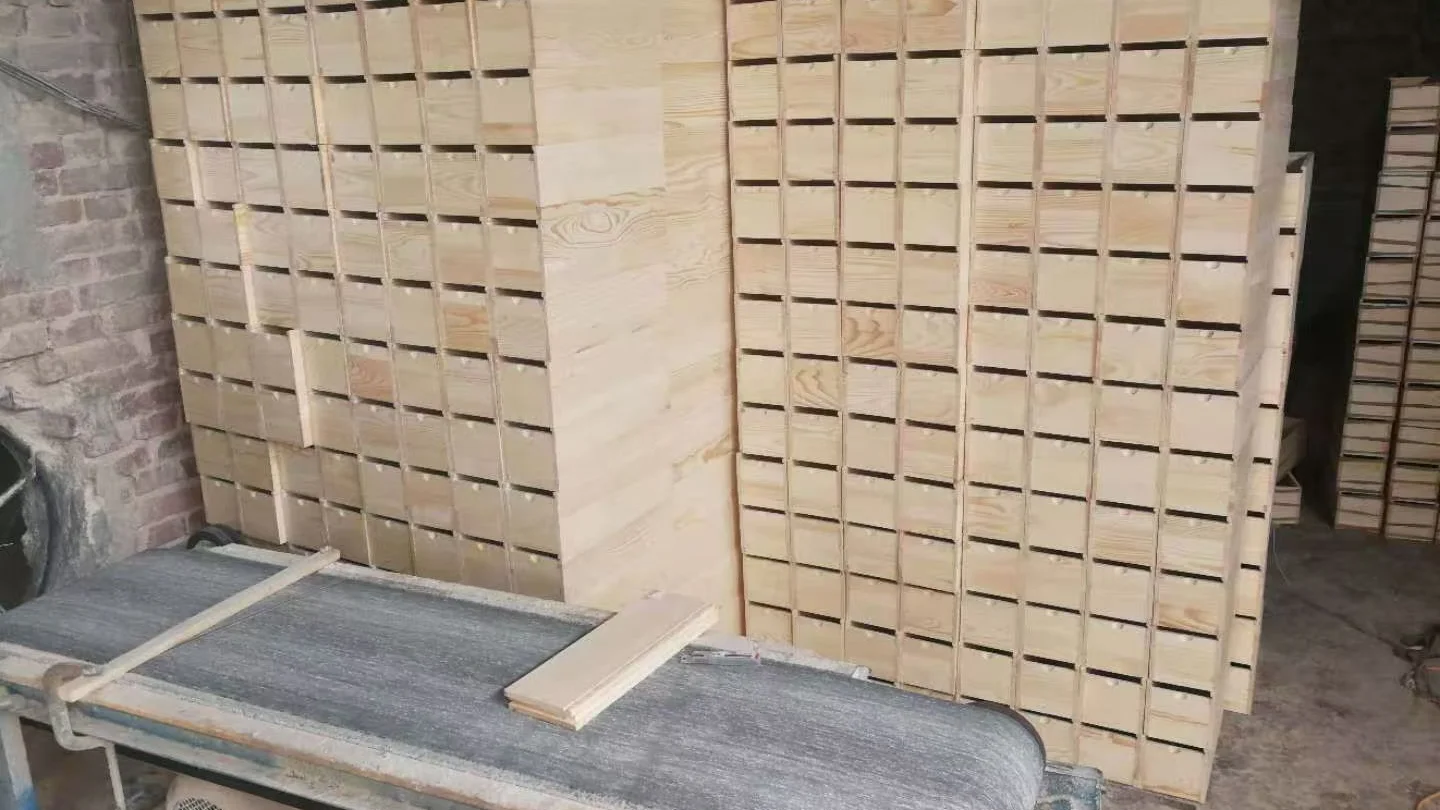
Walk through a packaging factory running identical designs in both woods, and the speed difference is visible. Paulownia moves through CNC routing faster because the spindle encounters no hard latewood bands. Sanding takes fewer passes to reach a uniform surface, no raised grain, no resin pockets, no knots to work around. A line producing 1,000 jewelry box lids a day in paulownia typically finishes the batch one to two hours faster than the same line in pine.
Moisture content at the point of assembly is the other variable that changes everything. Pine absorbs and releases moisture more aggressively than paulownia. A pine box assembled at 10% MC in Shandong in April reaches 16% MC in a Rotterdam warehouse in November if it wasn't finished properly. That 6% swing means boards swelling, lids sticking, corners separating. Paulownia's lower equilibrium moisture content range and higher dimensional stability mean those problems happen less. It isn't immune — no wood is — but the failure rate on long-haul exports is lower by a measurable margin.
Drying time adds another wrinkle. Pine kiln dries in two to seven days for one-inch stock. Paulownia's open cell structure dries even faster, comparable to poplar, which air-dries from green to 15% in about 20 to 30 days in the Yangtze basin climate. Faster drying means the factory carries less inventory tied up in the drying yard. It means you can respond to a rush order without telling the buyer "the wood needs another two weeks."
MOQ considerations: Both paulownia and pine are widely stocked in Chinese lumber markets, so minimum order quantities for standard-dimension boards are similar — around 500 to 1,000 linear meters for most suppliers. The real MOQ difference shows up when you need a specific grade: clear paulownia without knots is easy to source because the trees produce nearly knot-free lumber naturally. Clear pine, especially in wider boards, costs more and takes longer to accumulate. A 200mm-wide clear pine panel is a special order item. A 200mm clear paulownia panel is Tuesday.
How to Decide: A Decision Matrix
| Your Situation | Recommended Wood | Why | |
-|
| -- |
|---|
| Export gift boxes, wine boxes, jewelry packaging |
| Electronics packaging, instruments, delicate goods |
| Retail shelf packaging with printed graphics |
| Heavy industrial crates, machine parts, returnable containers |
| Budget-first domestic packaging, short supply chain |
| Air freight shipments of any product |
| Branded premium packaging where appearance matters |
| Multi-use crates that will get forklifted and stacked |
Frequently Asked Questions
Is paulownia strong enough for a wooden box that stacks six high in a warehouse?
For most consumer packaging, yes. A 12mm-thick paulownia box with standard corner joinery can hold 15-20 kg of stacked weight per layer before the bottom box shows deflection. That covers gift boxes, wine boxes, and small product packaging. If your stack weight exceeds 30 kg per layer, switch to pine or increase board thickness, the cost equation shifts at that threshold.
Does paulownia cost more than pine at the factory gate?
Not consistently. Chinese paulownia plantation lumber trades at 1,500-2,000 RMB/m³. Radiata pine lands at 2,000-3,500 RMB/m³. Eastern White Pine overlaps at 1,500-3,000 RMB/m³. Paulownia is usually cheaper at the lumber yard but more expensive to import outside of Asia due to lower global supply chain maturity. The total cost winner depends on where your factory is and where the boxes are going.
Will customs flag paulownia crates for ISPM-15 treatment?
Paulownia solid wood packaging still requires ISPM-15 heat treatment or fumigation for international shipping — same as pine, same as any solid wood. The wood species doesn't exempt you. Both paulownia and pine can be heat-treated to the 56°C core temperature for 30 minutes that ISPM-15 requires. Both process through customs without issue when the stamp is present.
Can you laser-engrave a logo on paulownia?
Paulownia engraves cleanly. The uniform, low-density grain produces consistent burn depth without the light-and-dark banding issues that pine gives you. For brand logos on gift box lids, paulownia is the better engraving surface.
Why do suppliers always recommend pine if paulownia has so many advantages?
Pine supply chains are deeper and more familiar. A packaging factory in Guangdong can buy pine from a dozen suppliers who've been delivering the same grades for twenty years. Paulownia, while widely planted in northern China, has less developed distribution — fewer mills specialize in it, fewer traders carry inventory in southern ports. Suppliers recommend what they can source reliably with predictable lead times. That doesn't mean pine is better. It means paulownia requires a supplier who already works with the material.
The Bottom Line
Paulownia and pine each own half the packaging market for a reason. One isn't the upgrade to the other — they answer different requirements.
For export packaging where freight cost per kilogram makes or breaks your margin, paulownia's weight advantage is so large that chasing a cheaper pine board price at the lumber yard costs you money by the time the container lands. For packaging that takes physical abuse — forklifted six times, stacked under 200 kg, used for five return trips — pine's structural integrity justifies its weight.
If you're sourcing custom wood packaging and want a supplier who stocks both materials and can help you run the freight math, contact us with your specs. We manufacture packaging in paulownia, pine, and a dozen other species at our Shandong facility. We can put numbers on both options before you commit.