
Custom Charred Paulownia Wood Storage Box
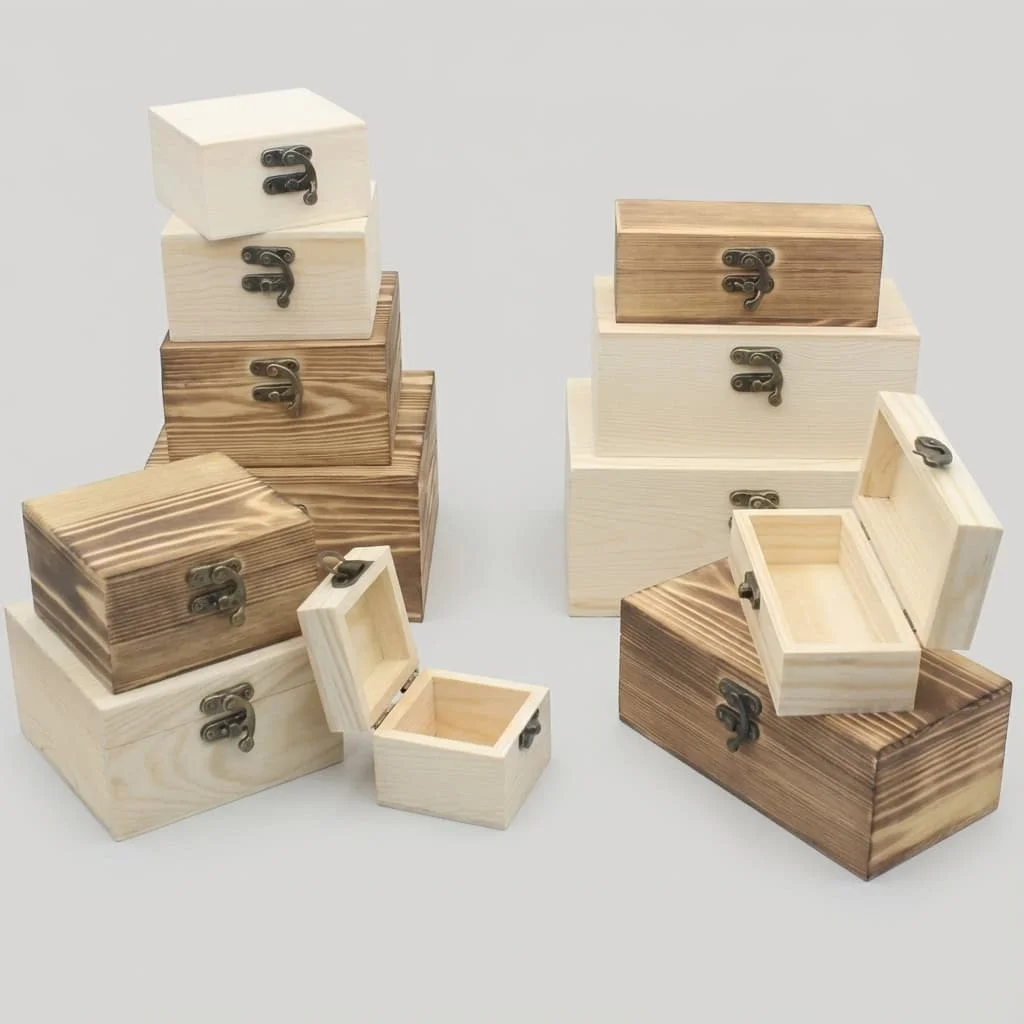
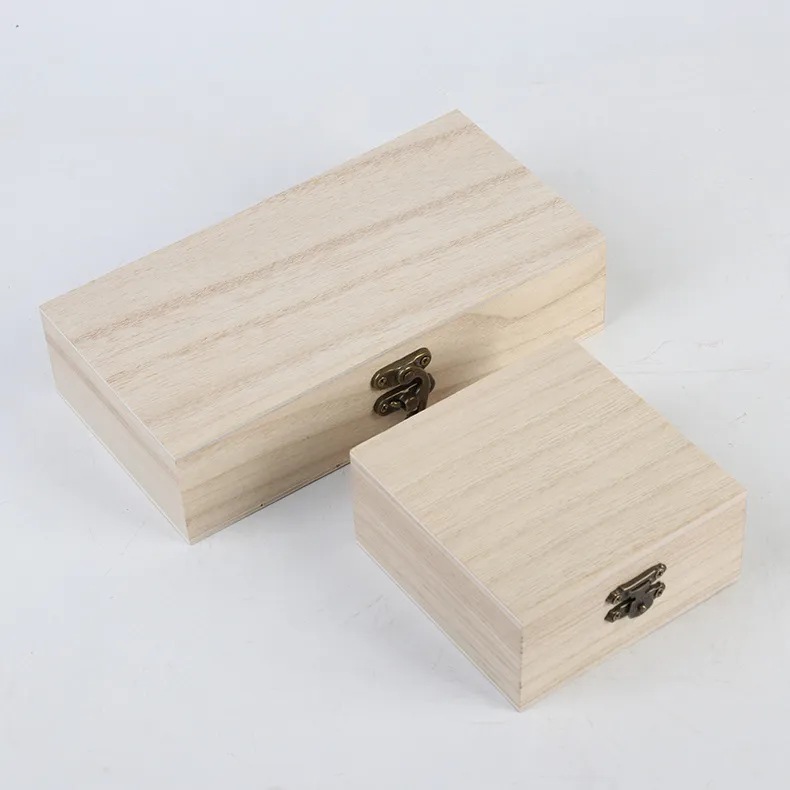
Charred paulownia wood storage box with hinged lid and retro-style metal latch, suitable for rustic gift packaging and vintage-inspired retail display.
Key Features
- Charred (burnt wood) finish — the surface is lightly charred using a controlled flame process that carbonizes the outer 0.5–1mm of wood; the result is a dark brown-to-black textured surface with a subtle sheen and a unique pattern on every box; the charring also provides mild natural weather resistance and pest deterrence
- Retro-style metal latch — an antique-finish metal clasp mounted on the front panel secures the hinged lid closed with a satisfying mechanical engagement; the latch reads as vintage hardware, reinforcing the rustic aesthetic and providing positive closure for transported or frequently handled boxes
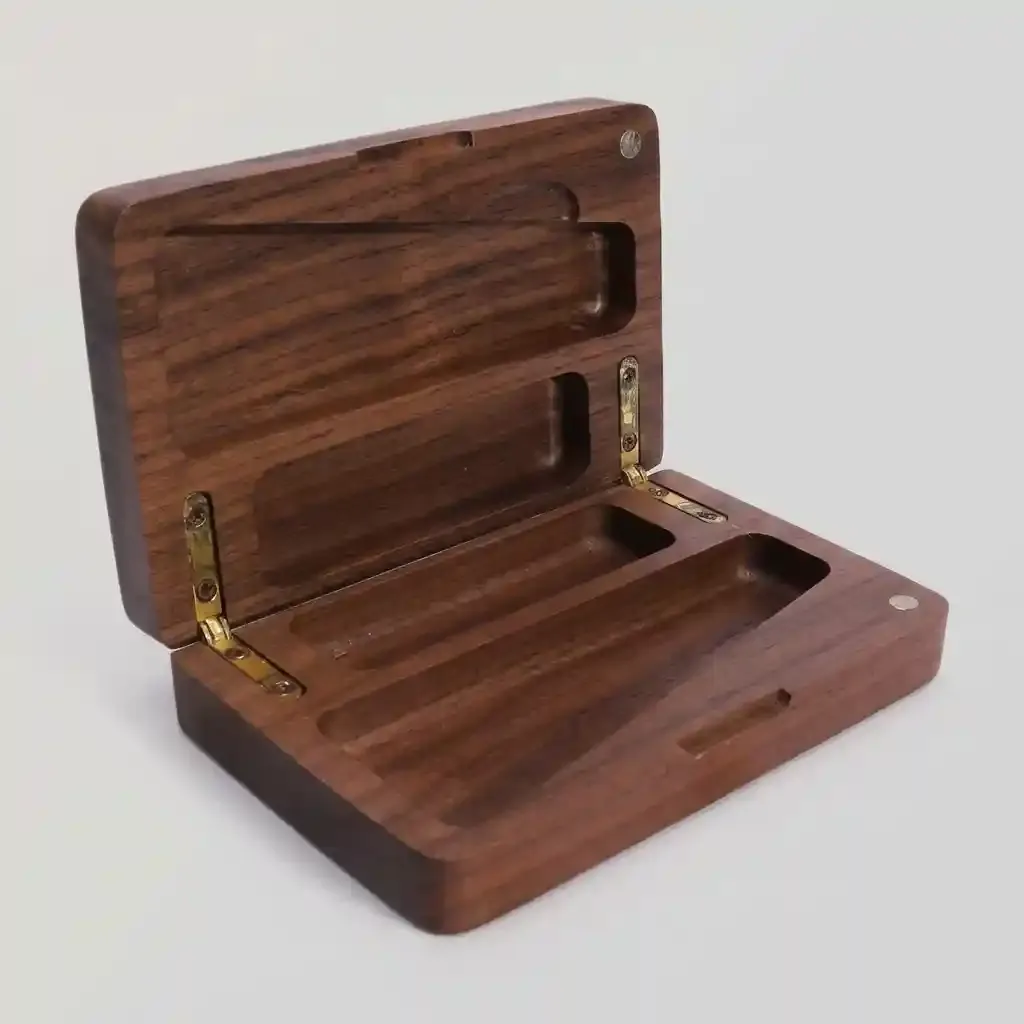
- Hinged lid — full-length metal hinge in an antique finish matching the latch; the lid opens to past 90° for full interior access and stays open during use; unlike a lift-off lid, the hinge keeps the lid attached — no misplaced lids at a craft fair or market stall
- Paulownia wood — the lightweight base material keeps total box weight low despite the visual heft of the charred finish; a box that looks heavy and substantial but weighs approximately 250–400g, making it practical for shipping-intensive applications like e-commerce gift packaging
- Customizable with logo printing — the charred surface accepts laser engraving (which burns a slightly lighter mark on the already-dark surface for a subtle tone-on-tone effect), silk screen printing, hot branding, foil stamping, and UV printing
$0.72 - $2.70 / piece
Prices vary based on order quantity, dimensions, material selection, and logo printing method. Send an inquiry.
Specifications
- Material
- Paulownia wood (pine and cedar options available)
- Finish
- Charred with clear matte lacquer seal
- Hardware
- Antique brass, nickel, or black iron latch and hinges
- Application
- Artisanal product packaging, boutique display, event giveaways
Applications
Rustic and vintage gift packaging
Where artisanal products (handmade soap, craft spirits, small-batch candles) are packaged in a box that matches the handcrafted aesthetic — the charred finish and retro latch signal 'handmade' and 'small-batch' before the box is even opened, aligning packaging character with product character.
Boutique and market-stall product display
Where products are displayed inside the open box at a craft fair, farmers market, or boutique — the charred box functions as both packaging (closed for transport) and display fixture (open at the stall), and the distinctive charred finish stands out among rows of plain pine boxes from competing vendors.
Event giveaways and promotional packaging
Where branded charred boxes are filled with promotional items and given to event attendees or corporate gift recipients — the charred finish reads as premium and considered, elevating the perceived value of the contents.
Customization Options
Charred finish depth: Standard is a light-to-medium char — the surface is carbonized to a dark brown with visible wood grain still apparent through the char. Heavy char available — deeper carbonization producing a near-black, more textured surface with less visible grain. Light char available — a surface scorch producing a warm brown tone with more grain visibility. The char depth affects both appearance and the surface's acceptance of printing — heavier char provides a more dramatic look but slightly reduces laser engraving contrast.
Dimensions: Fully customizable. The charred finish is applied after the box is assembled and sanded, so the final dimensions include the char layer (which removes approximately 0.2–0.3mm of material from the surface).
Wood species: Paulownia (standard) — the combination of charred finish and lightweight wood is the value proposition: rustic appearance without the freight cost of heavier woods. Pine available for a heavier, denser alternative with deeper charring potential. Cedar available — natural cedar + charring creates a distinctive aroma box popular for cigar and spice packaging.
Hardware finish: Antique brass (standard) — warm gold-tone that complements the dark charred surface. Antique nickel — cooler silver tone for a more industrial vintage look. Black iron — darkest option, nearly blends with the charred surface for a monochromatic aesthetic.
Branding: Laser engraving — produces a subtle lighter-brown mark on the charred surface; tone-on-tone, understated. Hot branding — burns the logo into the surface, creating a slightly deeper char in the branded area; the most integrated look. UV printing — for full-color logos that contrast against the dark background. Silk screen printing — for bold, opaque branding.
Ready to get a recommendation?
Send us your requirements — we'll respond with material and production recommendations within 24–48 hours.
Why This Design Works
The charred finish is a centuries-old Japanese wood preservation technique (shou sugi ban) that's been repurposed here as a purely aesthetic feature — and it works because it creates surface character that no stain, paint, or varnish can match. Stain changes the color of wood but not its texture. Paint covers the wood entirely. Varnish adds a glossy layer. Charring transforms the surface — it creates a micro-texture of carbonized ridges and valleys that catches light differently at every angle, produces a subtle smoky aroma that fades over weeks but contributes to the initial unboxing experience, and ensures no two boxes look exactly the same. For a brand selling handmade, small-batch, or artisanal products, the charred box aligns the packaging's character with the product's character — both are "made by a process that leaves marks." For a corporate gift, the charred box says "we chose something with character, not the standard option."
The retro metal latch is more than closure hardware — it's the visual anchor that completes the vintage aesthetic and provides a tactile interaction that a magnetic catch or friction fit cannot. Opening a box with a metal latch involves a small ritual: lift the clasp, hear the metal-on-metal release, swing the lid open. Closing involves another: swing the lid down, feel the clasp engage, press it home. This tactile ritual is part of the product experience — it makes the box feel like something from a previous era, when objects had mechanical interactions rather than magnetic clicks. The latch also provides positive, fail-safe closure — if the latch is engaged, the lid is closed. There's no ambiguity, no "did I close it properly?", no lid that seems closed but opens in transport.
The combination of charred finish + retro latch + lightweight paulownia solves a pricing problem: it looks expensive but costs less to manufacture and ship than a stained pine box with a magnetic catch. The charred finish is achieved with a flame pass that takes roughly the same labor time as staining but requires no drying time and no chemical inventory. The retro latch is a simple metal stamping that costs about the same as a magnetic catch but creates a stronger visual impression. Paulownia costs less per board foot than pine. The result: a box that reads as a $25–35 retail product but costs roughly the same to produce as a $15 pine box with conventional finish. For wholesale buyers, this means healthier margins on a product that looks premium.
Manufacturing Considerations
The charring process is inherently variable — controlling char depth and consistency across a production run requires disciplined process control, not just a torch. Charring too lightly produces a blotchy, inconsistent surface — some areas dark, some areas barely touched. Charring too heavily burns through the wood and weakens the structure, particularly at thin panel edges and corners. We char using a controlled gas flame array with fixed distance and fixed dwell time — the box passes under the flame array on a conveyor at a calibrated speed that produces consistent char depth across the surface. Edge charring is done with a separate, lower-intensity flame to prevent burning through the thinner material at panel edges. After charring, the surface is brushed with a stiff nylon brush to remove loose carbon dust, then sealed with a light clear matte lacquer that locks in the carbon and prevents smudging during handling.
The metal latch alignment is the #1 mechanical QC risk — if the latch tongue doesn't align with the catch plate, the box won't close properly. The latch has two components: the clasp body (mounted on the lid) and the catch plate (mounted on the front panel). When the lid closes, the clasp tongue must engage the catch plate slot within ±0.5mm. We install both latch components using a single drilling jig that references the lid and front panel in the closed position. After installation, each box's latch is tested: close the lid, engage the latch, attempt to open the lid against the engaged latch — the lid must not open more than 1mm. Disengage the latch, open the lid — the latch must release cleanly without sticking.
The charred surface produces carbon dust that can transfer to hands, clothing, and contents if not properly sealed. Freshly charred wood sheds fine carbon particles when handled — this is the "smudging" that users of charred wood products sometimes complain about. The post-char brushing removes loose particles, and the clear matte lacquer seal locks the remaining carbon into the surface. A properly sealed charred box should not transfer carbon to hands or contents under normal handling. We test this: wipe a white cotton cloth across the charred surface with moderate pressure — no visible carbon transfer is acceptable.
Have a technical concern about your use case? Our team can walk you through how we'd handle it for your project.
Start with the medium rectangular format (approximately 20×12×7 cm) in charred paulownia with antique brass latch. This size is the workhorse — large enough for meaningful gift packaging (candle + soap + small accessory), small enough for cost-effective volume orders. The charred paulownia + antique brass combination is the most popular configuration — it photographs well for e-commerce (the dark surface creates dramatic product photography) and reads as premium in person. If your use case involves food products (tea, coffee, spices), specify the cedar wood option — the combination of charring and natural cedar aroma creates a distinctive packaging experience that tea and spice brands value. Skip the heavy char option for boxes under 15 cm in any dimension — the deeper char on small boxes can make the piece look burnt rather than charred, crossing the line from "rustic" to "damaged."
Start Your Project
Send us your design or reference images — we'll return with a pre-production sample for your approval.
Frequently Asked Questions
Q: Does the charred finish transfer black residue to hands or contents?
Q: Will the charred finish fade or wear off over time?
Q: Can the latch be locked with a padlock?
Q: How does charred paulownia compare to charred pine?
Send Us Your Requirements
Send your design, reference images, or product sample. We don't just quote a price — we respond with material recommendations, a feasibility assessment, and professional suggestions grounded in over 20 years of manufacturing experience. Expect a detailed response within 24–48 hours.
- Professional recommendations included
- Small MOQ & trial orders supported
- Worldwide shipping with export documentation