
Custom Antique Wooden Wine Box – 2 Bottle – Paulownia Wood
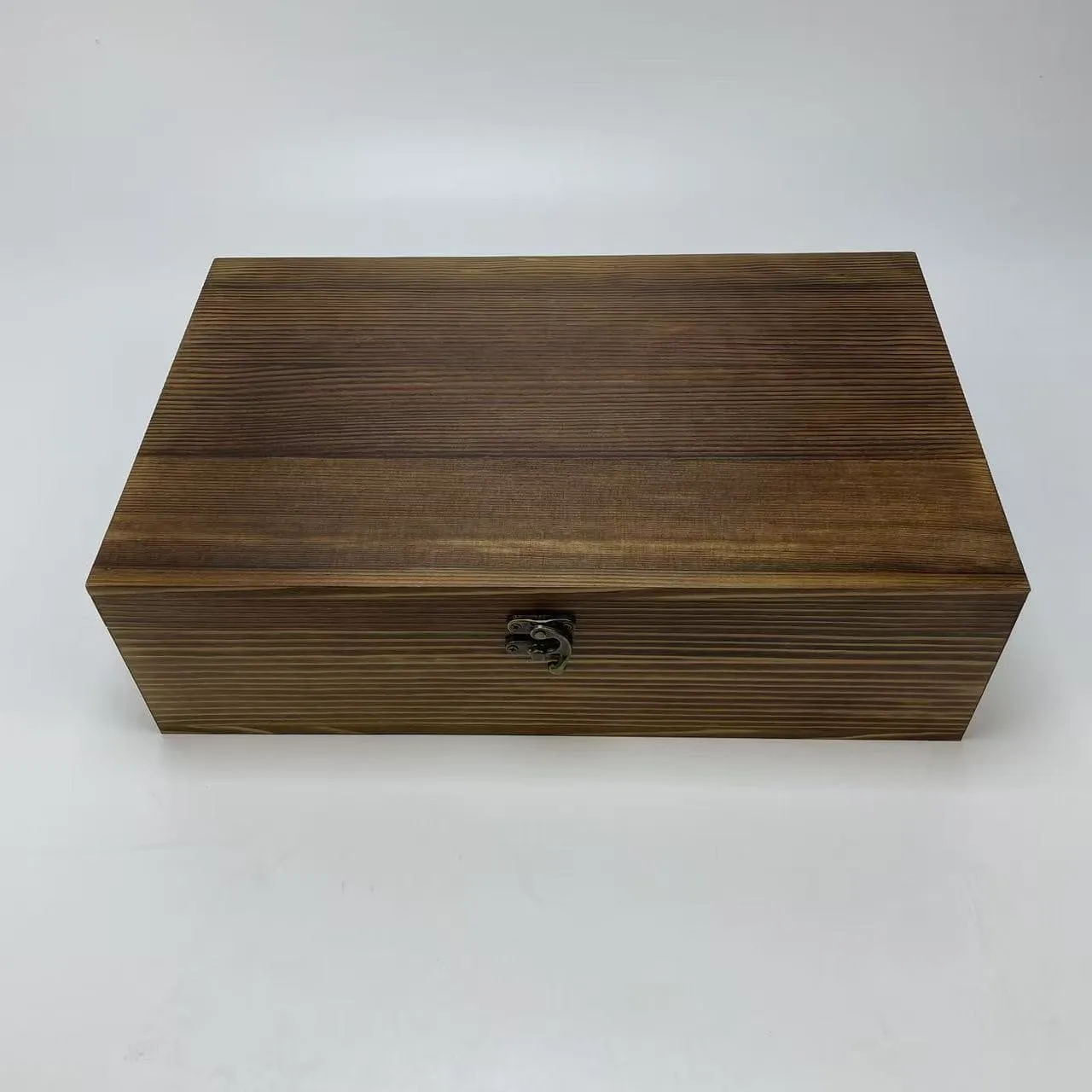
Custom antique paulownia wood two-bottle wine box with burnt finish and removable dividers, built for lightweight vintage gift packaging and rustic retail presentation.
Key Features
- Paulownia wood — 30% lighter than pine, exceptional dimensional stability across humidity swings, fine uniform grain
- Burnt finish with matte clear coat — even, refined char that reads as antique rather than rustic; no raised-grain drama, just smooth darkened wood
- Hinged lid with vintage metal clasp — single-point closure suitable for the short lid span of a two-bottle format
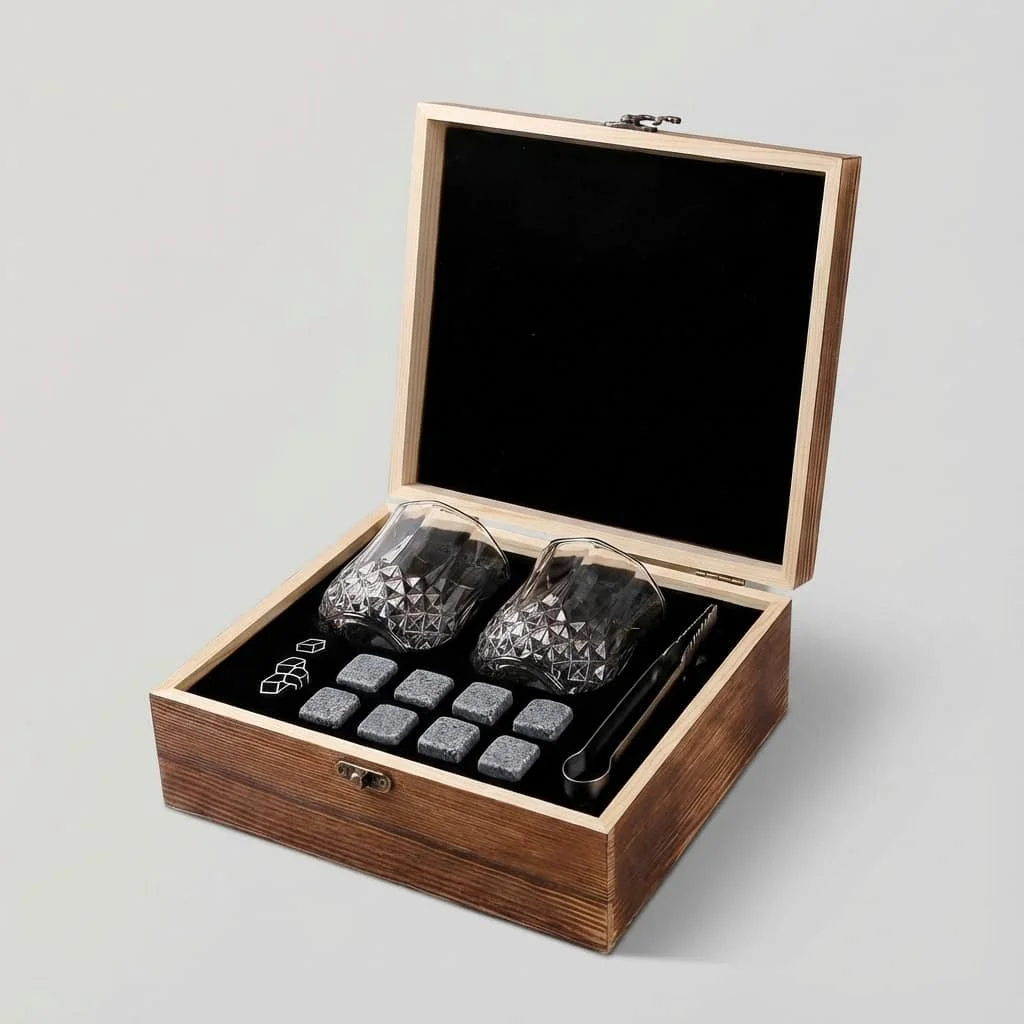
- Removable wooden divider — two-bottle wine carrier with the divider in; general antique gift box with it lifted out
- Lightest wine box in the catalog — lower per-unit freight cost on air and sea shipments, easier one-hand carry
$3.80 - $6.50 / piece
Prices vary based on order quantity, dimensions, material selection, and logo printing method. Send an inquiry.
Specifications
- Wood Type
- Paulownia wood
- Capacity
- 2 standard wine bottles (with dividers)
- Dimension
- Custom (as per buyer’s requirements)
- Design
- Hinged lid with vintage metal clasp, removable wood dividers
- Surface Finish
- Burnt finish (vintage style)
- Usage
- Wine packaging, gift box, specialty product storage, retail display
- Customization
- Available for size, material, finish, logo, and internal configuration
Applications
Export wine gifting where freight cost matters
Paulownia weighs about 280 kg/m³ versus pine at ~400 kg/m³. On a full container of gift boxes, that difference compounds into meaningful freight savings. For wineries and distributors shipping to distant markets, the lighter box means more margin per gift set.
Antique and heirloom presentation
The even, refined char on paulownia reads as aged-patina antique — different from the dramatic grain texture of burnt pine. For heritage wine brands, estate releases, and products positioned around legacy and tradition, the smoother burnt surface communicates old-world refinement rather than rustic handicraft.
Multi-season corporate gifting
The removable divider converts the box from wine carrier to general gift case. Holiday wine sets in Q4, gourmet food and candle sets in Q1-Q3 — same box, different contents. Paulownia's light weight also means lower dimensional freight charges if you ship the empty boxes to a fulfillment center.
Customization Options
Burnt Finish Intensity. Paulownia burns faster and more evenly than pine — its uniform density means the char develops at a consistent rate across the surface. Light char: deepens the natural cream color to a warm brown, subtle grain visibility. Medium char: dark brown, fine alligator texture barely visible. Heavy char: near-black, shallow texture. The trade-off: paulownia's even density produces a flatter, more uniform char than pine — there's no earlywood/latewood contrast. Choose paulownia when you want an antique patina, not a dramatic grain texture. Burnt & distressed finish options →
Wood Species. Paulownia is standard — the lightest commercially available wood for boxes, naturally warp-resistant, takes the char as a smooth even tone. Pine if you want the dramatic grain contrast of earlywood/latewood differential charring (see our vintage pine wine box). Cedar for aromatic appeal — the burnt + cedar combination creates a complex scent profile. Solid hardwood (oak, walnut) for maximum durability at 2–3× the weight.
Dimensions. Standard fits two 750ml Bordeaux bottles with the divider in place. Adjustable for Champagne, Burgundy, or custom bottle profiles. Paulownia's lower density means panels can be slightly thinner than pine at the same structural strength, or standard thickness for maximum rigidity — your call based on the shipping environment.
Hardware & Clasp. Standard vintage metal clasp in antique bronze. Single clasp is mechanically sufficient for the short lid span; dual latches available for custom widths. Paulownia's lower screw withdrawal resistance means we use slightly longer screws with coarse threads for all hardware attachment points — invisible from the outside, standard in production.
Clear Coat Sheen. Matte is standard on paulownia — the fine, even grain looks best without gloss competing for attention. Satin for a middle ground. Glossy available but we recommend against it for paulownia: the smooth surface reflects too uniformly and can look plastic-coated rather than antique. The matte coat lets the burnt color do the visual work.
Branding Method. Laser engraving: removes the char layer to reveal the light cream-colored raw paulownia beneath — high contrast, permanent. Screen printing: works on the sealed surface after clear coat. Hot foil stamping: metallic on dark char reads as premium antique marking. Paulownia's fine grain doesn't interfere with print registration the way pine's pronounced grain can.
Ready to get a recommendation?
Send us your requirements — we'll respond with material and production recommendations within 24–48 hours.
Why This Design Works
Paulownia isn't an alternative to pine — it's a different product for a different buyer. Paulownia weighs approximately 280 kg/m³ — about 30% lighter than pine. For a two-bottle box that weighs 5–6 pounds loaded, the box itself contributes less to the shipping weight. On air freight (charged by actual weight) and sea freight (charged by volume or weight), lighter packaging compounds into real cost differences across thousands of units. Paulownia also has exceptional dimensional stability — its shrinkage coefficient is among the lowest of any commercial wood species. A paulownia box holds its shape across climate zones better than pine, which means fewer fit issues with the hinged lid when the box travels from a humid production region to a dry retail environment.
The burnt finish on paulownia produces a different aesthetic than burnt pine — and that's by design. Pine's alternating earlywood and latewood bands burn at different rates, creating a dramatic raised-grain texture. Paulownia has a uniform cell structure — it burns evenly, producing a smooth, consistent dark surface with very subtle texture. The result reads as antique patina rather than rustic char. For heritage wine brands, estate releases, and products positioned around refinement rather than rusticity, the even burn on paulownia aligns with the brand message. This isn't one finish being better than the other — it's about which aesthetic matches your brand.
The removable divider logic is the same as the pine version — but the second-life story is different. With the divider out, the box becomes a lightweight, warp-resistant storage case. Paulownia's natural resistance to humidity and its light weight make it ideal for storing documents, textiles, or keepsakes in closets and attics where temperature and humidity fluctuate. A pine box repurposed for storage might warp over time in those conditions. A paulownia box won't. That second-life durability keeps your brand visible longer.
See our full range of antique paulownia wine boxes — lightweight burnt-finish packaging for heritage brands and export gifting.
Manufacturing Considerations
Screw retention in paulownia is the #1 structural engineering challenge on this product. Paulownia's low density (~280 kg/m³) means it has roughly half the screw withdrawal resistance of pine. Every hardware attachment point — hinge leaves, clasp catch, clasp body — is a potential failure if the screw engagement is too short or the pilot hole is too wide. The fix: all hardware screws are upsized in length by 3–4mm versus what pine would require, pilot holes are drilled at 70–75% of screw minor diameter (tighter than the 75–80% used in pine), and coarse-thread screws are mandatory — fine-thread wood screws will strip. Every assembly sample gets a hardware pull-test: each hinge screw is torqued to specification, then the lid is opened and closed under load to verify no screw movement after repeated cycling.
Burn control is faster and less forgiving on paulownia than pine. Paulownia's lower density means it chars more quickly — the same flame distance and dwell time that produces a medium char on pine will produce a heavy char on paulownia. The production team adjusts flame distance and movement speed per species, not per order. First piece of every batch is burned, wire-brushed, and checked for char depth and surface texture before the batch proceeds. If the char is too deep on paulownia, the surface can develop a brittle, crackled crust that flakes under the wire brush — wasted material. Correctly burned paulownia should show a smooth dark surface with no flaking after brushing.
Surface handling during production requires more care with paulownia. Paulownia's surface hardness is lower than pine — it dents and scratches more easily. The burnt-and-sealed surface is tougher than raw paulownia, but during assembly the raw interior surfaces are vulnerable. Assembly stations use padded jigs and work surfaces. Finished boxes are individually poly-bagged immediately after final inspection — not stacked naked on carts where box-to-box contact can leave impressions. This extra handling care adds production time per unit but eliminates the surface-quality issues that would otherwise show up on a smooth, even-toned burnt box.
Watch out for the clasp catch tearing out of the front panel. The clasp body is mounted on the lid; the catch is mounted on the front panel. Every time the lid opens, the catch takes the full tension load. In pine, the catch's two small screws have adequate grip. In paulownia, those same screws in the same positions can work loose or tear out after repeated opening — especially if the user pulls the lid open without releasing the clasp first (which happens). The fix: a small hardwood dowel glued into the front panel behind each catch screw location. The screw passes through the paulownia face and into the dowel, which provides hardwood-level withdrawal resistance. Invisible, adds cents to production cost, and eliminates the most common warranty return on paulownia hinged boxes.
Have a technical concern about your use case? Our team can walk you through how we'd handle it for your project.
Start with paulownia, medium char, matte clear coat, antique bronze clasp with the hardwood-dowel catch reinforcement, and the removable divider. This configuration is the right choice for two specific buyers: anyone shipping wine gift boxes by air freight (where the 30% weight savings over pine translates directly to lower shipping bills), and any brand whose aesthetic is antique refinement rather than rustic texture. The one upgrade worth paying for: laser engraving. The laser removes the dark burnt layer to reveal light cream paulownia beneath — the contrast is sharper and cleaner than on burnt pine, because paulownia's raw color is naturally lighter. Skip upgrading to a glossy clear coat — paulownia's uniform surface reflects gloss too evenly and the result looks lacquered rather than antique. Matte lets the burnt color speak without competition. If your brand positioning emphasizes heritage, legacy, and old-world quality — not rough-hewn cellar authenticity — this is the box configuration you want.
Start Your Project
Send us your design or reference images — we'll return with a pre-production sample for your approval.
Customization Services
We offer comprehensive customization services to meet your specific requirements. From dimensions to surface finishes and logo branding, our team works with you to create the antique wooden wine box for your brand or product line.
Frequently Asked Questions
Q: Does the lighter paulownia box feel less substantial or premium as a gift compared to a heavier pine box?
Q: Is paulownia strong enough to protect wine bottles during international shipping?
Q: Will the burnt finish fade, rub off, or change over time with handling and light exposure?
Q: How should the box be stored or handled to protect the paulownia surface from damage?
Q: Can I get this box without the burnt finish — just natural paulownia?
Q: How does the antique bronze clasp hold up compared to dual latches?
Send Us Your Requirements
Send your design, reference images, or product sample. We don't just quote a price — we respond with material recommendations, a feasibility assessment, and professional suggestions grounded in over 20 years of manufacturing experience. Expect a detailed response within 24–48 hours.
- Professional recommendations included
- Small MOQ & trial orders supported
- Worldwide shipping with export documentation