
Custom Vintage Wooden Wine Box – 2 Bottle – Pine Wood
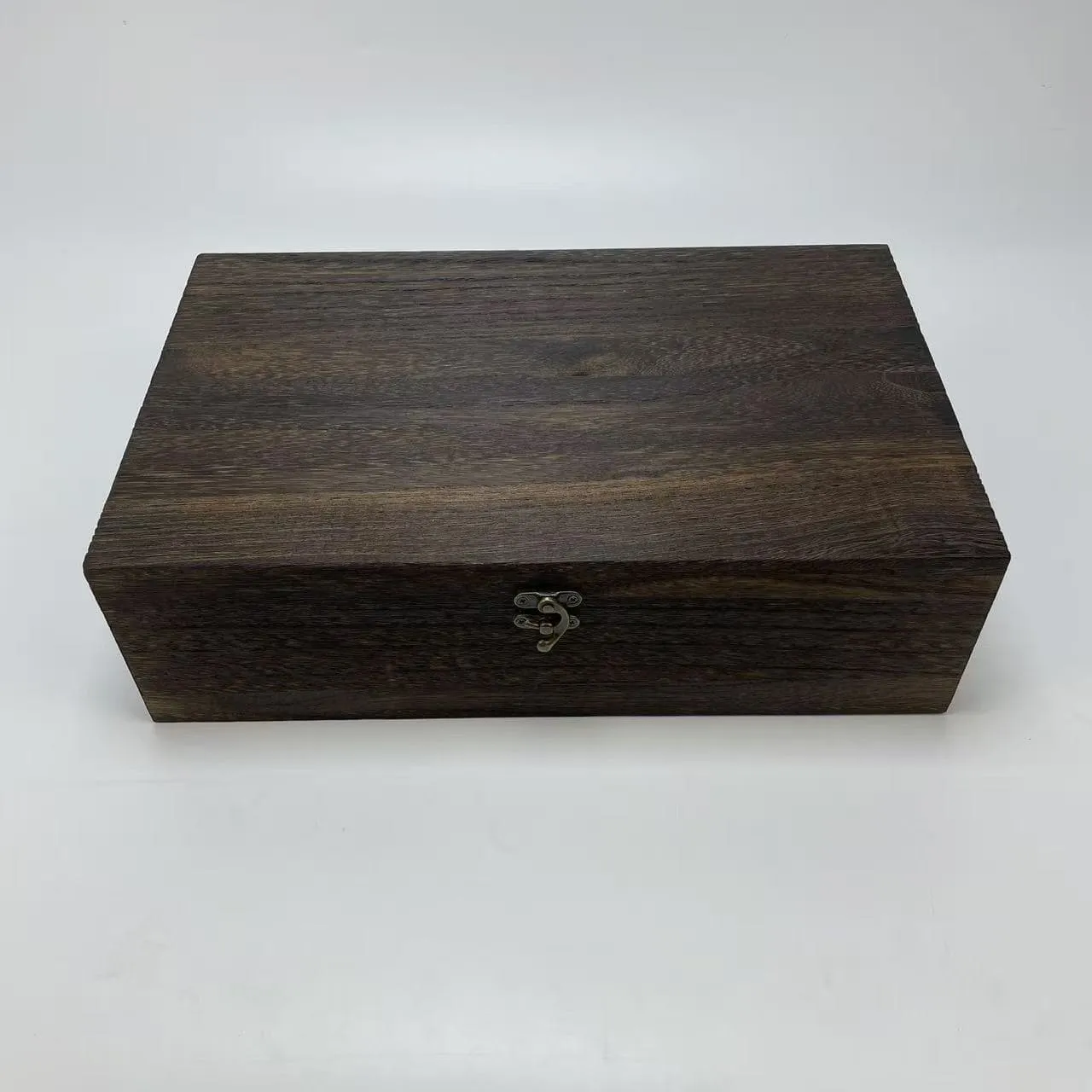
Custom vintage pine wood two-bottle wine box with charred burnt finish and removable dividers, built for rustic gift presentation and farmhouse-style retail display.
Key Features
- Burnt pine surface with glossy seal coat — charred wood grain creates a one-of-a-kind texture; no two boxes look identical
- Hinged lid with vintage metal clasp — single-point closure, simpler than dual latches, fewer alignment variables
- Removable wooden divider — holds two standard bottles securely, lifts out to convert the box into general gift packaging
- Solid pine construction — lightweight, takes the char evenly, finger joints or quality butt joints at all four corners
- Slightly glossy clear coat over the burnt surface — seals the carbonized layer so it won't shed carbon dust on hands or bottles
$3.80 - $6.50 / piece
Prices vary based on order quantity, dimensions, material selection, and logo printing method. Send an inquiry.
Specifications
- Wood Type
- Pine wood
- Capacity
- 2 x standard wine bottles (with dividers)
- Design
- Hinged lid with metal clasp closure
- Surface Finish
- Vintage burnt with slightly glossy coating
- Usage
- Wine packaging, gift box, retail display, promotional item
- Customization
- Available for size, material, finish, and logo
Applications
Premium wine gifting
The burnt finish reads as handcrafted and intentional — a different signal than stained or painted wood. For limited-release vintages, anniversary bottles, and collector editions, a charred box says 'this bottle is different' before the recipient even opens the lid.
Multi-purpose gift packaging
Remove the divider and the box becomes a general gift case — candles, glassware, gourmet foods, keepsakes. Retailers and corporate buyers who package varied products seasonally get more SKU utility from one box design.
Retail display with rustic or industrial aesthetic
The dark, textured burnt surface creates shelf contrast that stained wood can't match. For wine shops, farm-to-table retailers, and lifestyle brands with a rustic-modern aesthetic, the charred pine box reads as design piece, not packaging.
Customization Options
Burnt Finish Intensity. Standard is a medium char — the grain raises into visible texture, the surface darkens to a deep brown-black, and the glossy clear coat locks it in. Light char: more of the natural pine color shows through, subtler texture. Heavy char: deep alligator-skin texture, near-black surface. The trade-off: heavier char creates more dramatic visuals but produces more loose carbon that must be thoroughly wire-brushed before sealing, adding production time. Charred & burnt finish techniques →
Wood Species. Pine is standard — lightweight, soft earlywood burns faster than hard latewood, creating natural contrast in the char pattern. Paulownia is lighter but its uniform density burns more evenly — less dramatic grain contrast but a more consistent surface. Cedar for aromatic appeal and natural insect resistance. Hardwoods (oak, walnut) can be charred but require longer burn time and produce a different texture — denser, less raised grain.
Dimensions. Standard fits two 750ml Bordeaux bottles with the divider in place. We adjust for Champagne (wider), Burgundy (broader shoulder), or custom bottle shapes. Box dimensions are re-optimized per order for material panel yield.
Divider Configuration. Standard is a single removable wooden divider creating two equal compartments. Alternatives: no divider (open interior for general gifting), two removable dividers for three compartments, or a fixed divider for permanent two-bottle configuration. Removable dividers are slotted, not glued — they lift out cleanly without tools.
Hardware Finish. Standard vintage metal clasp in antique bronze or matte black — dark hardware complements the burnt surface. Alternatives: polished brass (high contrast against dark char), nickel (clean modern look). Single clasp is standard; dual latches available if lid-span tension is a concern on wider custom dimensions.
Branding Method. Laser engraving on the burnt surface: the laser removes the charred layer, revealing lighter wood underneath — high-contrast natural mark, no ink needed. Screen printing: works on the sealed surface after the glossy coat. Hot stamping: metallic foil on dark char creates a dramatic premium mark. The burnt surface darkens the wood, so light or metallic branding methods create the strongest contrast.
Ready to get a recommendation?
Send us your requirements — we'll respond with material and production recommendations within 24–48 hours.
Why This Design Works
The burnt finish isn't a stain — it's a transformation of the wood surface itself. Burning pine with an open flame chars the softer earlywood deeper and faster than the harder latewood, creating a raised-grain texture that follows the natural growth rings. After charring, the surface is wire-brushed to remove loose carbon, then sealed with a glossy clear coat. The result: a dark, textured surface with subtle three-dimensional grain patterns that no stain, paint, or print can replicate. Each box is unique because the grain pattern — and therefore the char pattern — varies board to board. For wine brands that trade on authenticity, craftsmanship, and terroir, a burnt-finish box signals "made by hand" more credibly than any printed vintage graphic.
Removable dividers make this two products in one. With the divider in place, it's a dedicated two-bottle wine box — bottles sit in separate compartments, no glass-to-glass contact, secure during transit. Lift the divider out and it's a general-purpose wooden gift box sized for candles, glassware, gourmet foods, or keepsakes. For corporate buyers who package different products across seasons, one box SKU covers multiple gifting programs. For wineries, the customer keeps the box after the wine is gone — and repurposes it. The divider is a simple slotted wood piece, not a complex assembly. It adds cents to the unit cost and multiplies the box's useful life.
A single metal clasp is simpler than dual latches — and that's the point. Dual latches exist to distribute closure force evenly across a wide lid span. On a two-bottle box (~20cm wide), the span is short enough that a single centered clasp provides even closure pressure across the full lid width. One clasp means one mortise to cut, two screws to drive, one catch to align — half the hardware complexity of a dual-latch setup. Fewer variables, fewer QC checkpoints, lower cost. The vintage metal clasp is surface-mounted on the front — visible, tactile, and the only metal on the box besides the hinges.
See our full range of charred pine wine boxes — burnt-finish two-bottle crates with vintage hardware for rustic gift presentation.
Manufacturing Considerations
Char depth consistency is the #1 QC challenge on burnt-finish products. Pine earlywood burns faster than latewood. If the flame dwells too long on one area, the char goes too deep and the wood loses structural thickness. Too short, and the surface is patchy — some areas charred, some still raw. The solution is not timing the burn — it's controlling the flame distance and movement speed so the char progresses evenly, then checking depth on the first piece of every batch. Acceptable char depth: enough to raise the grain into visible texture and darken the surface uniformly, but not so deep that sanding-through becomes a risk during the wire-brushing step. If char penetrates more than 0.5mm into a 10mm panel, the remaining sound wood is still structurally fine — but the surface texture becomes rougher than most buyers want. The production sweet spot: char depth of 0.2–0.4mm, just enough to raise the grain.
Clear coat adhesion on carbonized wood requires surface prep that raw wood doesn't. The burnt surface is covered in microscopic loose carbon particles. If clear coat is applied directly over unbrushed char, it bonds to the loose carbon — not the wood — and peels off in sheets within weeks. The fix: after charring, every surface is wire-brushed to remove loose carbon, then blown clean with compressed air, then wiped with a tack cloth. Only then is the clear coat applied. The glossy coat serves two functions: it seals the carbonized layer so it won't shed black dust on hands or bottles, and it deepens the burnt color from a flat charcoal to a rich dark brown with visible grain depth.
Removable divider fit tolerance determines whether the box works as a wine carrier. If the divider is too loose, bottles shift during transit and can contact each other — the divider is doing nothing. Too tight, and the divider wedges in place and the customer can't remove it without prying — defeating the "removable" feature. The divider is cut to the interior width minus 0.5mm clearance — snug enough to stay put during handling, loose enough to lift out with finger pressure. First piece check: insert the divider, shake the empty box in all orientations — no rattle. Then remove the divider with two fingers — no prying. If either test fails, the divider slot width is adjusted on the next cut.
Watch out for hinge screw retention in the charred front panel. The burnt surface layer is softer and more friable than raw wood — it crushes more easily under screw head pressure. If hinge screws are driven directly into the charred face without counterboring, the screw heads can sink into the softened surface layer over repeated lid cycles, loosening the hinge. The fix: hinge screw holes are counterbored through the char layer to sound wood beneath, so the screw head bears against raw pine, not carbonized surface. This adds one drilling step per hinge but eliminates the most common long-term failure on burnt-finish hinged boxes.
Have a technical concern about your use case? Our team can walk you through how we'd handle it for your project.
Start with pine, a medium char, wire-brushed surface, glossy clear coat, single vintage metal clasp in matte black, and the removable divider. This configuration delivers the strongest visual impact per dollar of any two-bottle wine box — the burnt finish creates a texture and depth that stained wood cannot match, and the removable divider doubles the box's functional life. The one upgrade worth paying for: if your brand identity uses a light or metallic logo, add laser engraving. The laser removes the charred layer and exposes the lighter raw pine beneath — creating a permanent, high-contrast brand mark with no ink. Skip upgrading to hardwood — pine's pronounced earlywood/latewood density difference is what creates the dramatic char pattern. Uniform-density woods like paulownia or oak produce a flatter, less interesting burnt surface. The cheaper wood actually produces the better visual result here.
Start Your Project
Send us your design or reference images — we'll return with a pre-production sample for your approval.
Customization Services
We offer comprehensive customization services to meet your specific requirements. From wood type and dimensions to surface finishes and logo branding, our team works with you to create the perfect wooden wine packaging solution for your brand.
Frequently Asked Questions
Q: Will the burnt finish shed black residue on hands or bottles?
Q: Does the burnt finish provide any functional benefit, or is it purely aesthetic?
Q: Are the removable dividers sturdy enough to protect bottles during shipping?
Q: Can the burnt finish be combined with other decorative techniques?
Q: How does the single clasp compare to dual latches for keeping the lid closed during shipping?
Q: Will the burnt wood smell transfer to the wine or the bottle labels?
Send Us Your Requirements
Send your design, reference images, or product sample. We don't just quote a price — we respond with material recommendations, a feasibility assessment, and professional suggestions grounded in over 20 years of manufacturing experience. Expect a detailed response within 24–48 hours.
- Professional recommendations included
- Small MOQ & trial orders supported
- Worldwide shipping with export documentation