
Natural Pine Wood 12 Bottle Wine Transport Crate Manufacturer & Wholesale Supplier
Standardized natural pine wood 12-bottle shipping crate with nailed-down lid and fixed internal dividers, built for one-way secure bulk shipping from winery to distribution center.
Key Features
- Solid 12mm thick natural pine wood panels ensure robust structural integrity for heavy loads.
- Precision finger-joint (comb joint) corner construction prevents racking and separation under stress.
- Integrated 12-compartment fixed pine wood dividers isolate each 750ml bottle, minimizing contact.
- Standardized external dimensions of 52x35x22cm facilitate efficient palletization and container loading.
- Includes natural wood wool packing material for enhanced shock absorption and void filling.
- Nailed lid closure — lid is fastened with nails after bottle loading for a rigid, tamper-evident seal that withstands rough handling.
- Optional heat-branded or screen-printed logo application for visible branding.
- Unfinished, raw wood surface provides a clean, industrial look at the lowest possible cost.
- Built as a one-way transport crate — loaded, nailed shut, shipped, and opened at the final destination.
- Recyclable and biodegradable wooden components appeal to eco-conscious buyers.
$6.3 - $9.5 / piece
Prices vary based on order quantity, dimensions, material selection, and logo printing method. Send an inquiry.
Specifications
- Wood Type
- Pine Wood
- Capacity
- 12 standard 750ml bottles
- Dimension
- 52 x 35 x 22 cm
- Design
- Wooden crate with nailed lid and internal dividers
- Surface Finish
- Natural wood color, option for hot stamping
- Usage
- Bulk transport and wholesale packaging
- Customization
- Size, logo, and finish available
Applications
Bulk Wine Importers & Distributors
A high-volume importer needing a reliable, low-cost shipping case for full mixed or single-varietal cases. This crate provides necessary stack strength for warehouse storage and protection for cross-country distribution to retailers.
Private Label Wine Programs
Retailers or corporate clients creating custom curated wine 12-packs. The raw wood surface accepts simple branding, allowing the product value to focus on the contents while still offering a substantial, reusable wooden package.
Winery Fulfillment & Cross-Dock Distribution
Mixed-case pallets broken down and redistributed through regional logistics hubs. This crate is engineered for exactly one trip from packing line to retailer shelf — nailed shut at the winery, handled through cross-dock transfers, pried open at the store. No hinges to loosen across four touch points, no sliding tracks to jam from warehouse dust. The standardized 52x35x22cm footprint stacks cleanly on any standard pallet with zero wasted cubic space. Explore our full range of custom wooden wine boxes for additional bottle capacities and crate configurations.
Customization Options
This is a nailed-lid transport crate, purpose-built for one-way shipping. The lid is not designed for repeated opening and closing — it's nailed in place after the bottles are loaded and pried open at the destination. This construction choice prioritizes closure strength and crate rigidity over reusability, making it the most cost-effective option for high-volume winery-to-distributor logistics.
While natural pine is standard for its cost-benefit ratio, upgrading to paulownia significantly reduces weight (saving shipping costs) at the expense of surface hardness, whereas cedar or oak provides superior aesthetics and durability but dramatically increases material spend and production time. See our wood species guide for density, hardness, and cost comparisons across all available materials. We strongly advise against altering the core 52×35×22cm dimensions unless your specific bottle geometry dictates it; this size is highly optimized for standard 750ml Bordeaux/Burgundy bottles and pallet efficiency.
Branding options remain practical: heat stamping on the lid or side panels for a rustic, permanent mark — cost-effective at volume and reads as intentional craft detail. Silk screening offers cleaner graphics for larger logos. Interior configuration is customizable: fixed dividers maximize structural support for the bottles but are less flexible than removable insert systems. We can omit the dividers and wool entirely if you intend to use custom foam inserts.
Ready to get a recommendation?
Send us your requirements — we'll respond with material and production recommendations within 24–48 hours.
Why This Design Works
The overriding priority in this design is achieving maximal stack strength and internal bottle security while keeping manufacturing costs low. We prioritize finger-jointed corner construction over simple butt or miter joints. This trade-off significantly increases assembly time and requires more precise machining, but it guarantees that the vertical load-bearing capacity is far superior, preventing the box from collapsing or racking when stacked ten cases high in a warehouse. Using thick 12mm pine panels, rather than thinner options, reinforces this structural stability and minimizes the risk of panel puncture or splitting during rough handling.
Inside, the fixed 12-cell divider system serves a dual purpose: bottle isolation and crate reinforcement. While removable dividers offer flexibility, fixed dividers are glued and nailed in place, becoming integral to the crate’s overall rigidity. They effectively prevent bottles from touching, which is the leading cause of breakage, and act as internal struts, further enhancing the crate’s ability to withstand top-down pressure. This internal structure, combined with the naturally shock-absorbing properties of the included wood wool, makes this design a robust solution for transporting heavy glass bottles.
Finally, a nailed lid and raw wood finish eliminates the most expensive and failure-prone elements. A nailed lid removes every machined track and groove from the production process — the lid is a flat panel that gets fastened to the frame with nails after the bottles are loaded. There are no sliding tolerances to maintain, no grooves that can swell shut with humidity, and no consumable components beyond standard nails. This is the lowest-cost, highest-integrity closure available for a wooden transport crate. For shipments that need end-user re-access and resealing — wine club fulfillment, retail display — our hinged-lid 12-bottle wine crate trades ultimate closure strength for repeat access with metal latches and cut-out side handles. The raw pine finish reinforces this approach — it's authentic, fully recyclable, and accepts branding perfectly without the added cost and environmental impact of lacquer or stain.
Manufacturing Considerations
Consistent finger-joint accuracy is the critical quality checkpoint for this crate. If the finger-joints are machined poorly, with either too much or too little clearance, the structural integrity of the entire crate is compromised. In production, we constantly monitor cutting tools to ensure precise, tight-fitting joints that require minimal adhesive yet provide maximum interlocking strength; excessive gaps fill with glue, weakening the structure, while overly tight joints can split the pine during assembly.
Managing pine’s inherent characteristics—knots and moisture content—is vital for functional reliability. Large, loose knots weaken panels and can cause splitting under load, so we grade lumber strictly to minimize their placement in critical structural areas like corners or lid grooves. Furthermore, the pine must be kiln-dried to a precise moisture content (10-14%); if it’s too high, the box will warp and crack as it dries in a customer's low-humidity warehouse, potentially causing lids to stick or dividers to pop loose, rendering the crate unusable.
Divider squareness and secure fixation prevent interior rattling and potential bottle damage. The 12-cell divider grid must be cut accurately and installed plumb within the crate. If the grid is twisted or poorly fixed, it may allow bottles to rub against each other or the crate walls. We utilize jigs during assembly to ensure consistent cell dimensions and verify that dividers are securely fastened to both the bottom panel and outer walls, providing the necessary internal support. Our guide to wooden wine box sizes and standard dimensions covers how crate dimensions affect pallet density and shipping cost per bottle.
Have a technical concern about your use case? Our team can walk you through how we'd handle it for your project.
For high-volume wine shipping or retail applications demanding the best cost-to-performance ratio, start with this exact 12-bottle pine wood case using the standard finger-joint construction and fixed 12-cell dividers. While upgrading to a hinged lid might seem appealing for a gift product, the nailed lid provides superior structural rigidity — the lid becomes part of the crate's unified structure once fastened, unlike a sliding lid that remains a separate, unbonded panel. It also eliminates every moving part and machined groove from the production process, keeping costs to the absolute minimum for a functional wholesale transport crate. We highly recommend investing in heat branding (burning) for your logo on one or two faces; it's a permanent, cost-effective branding solution that complements the raw wood’s rustic aesthetic better than printing. Skip expensive clear lacquers or stains unless you are targeting a very premium price point, as the unfinished wood is already functional, durable, and biodegradable, which is often a strong selling point itself.
Start Your Project
Send us your design or reference images — we'll return with a pre-production sample for your approval.
Related Products
You may also be interested in
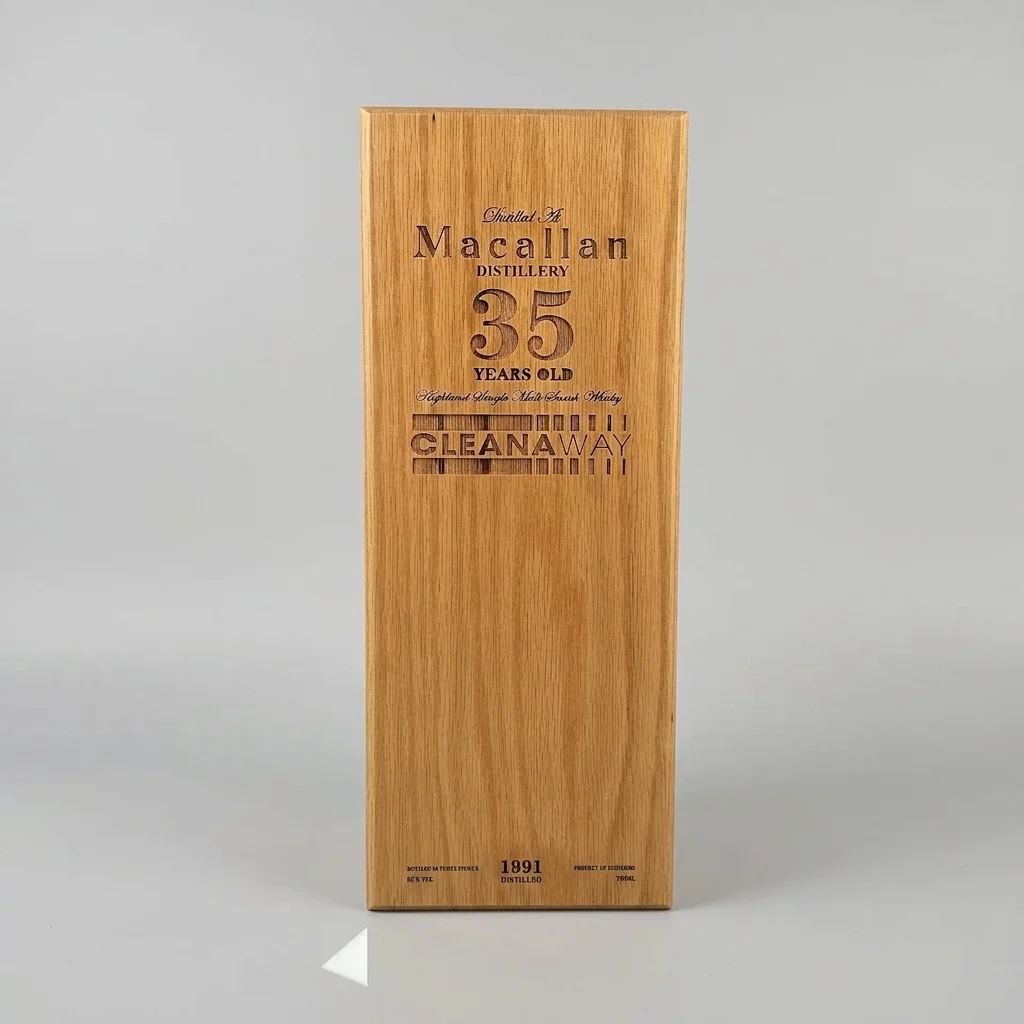
Custom Oak Whiskey Boxes Wholesale, Lacquered Solid Wood Gift Box - Manufacturer & Wholesale Supplier
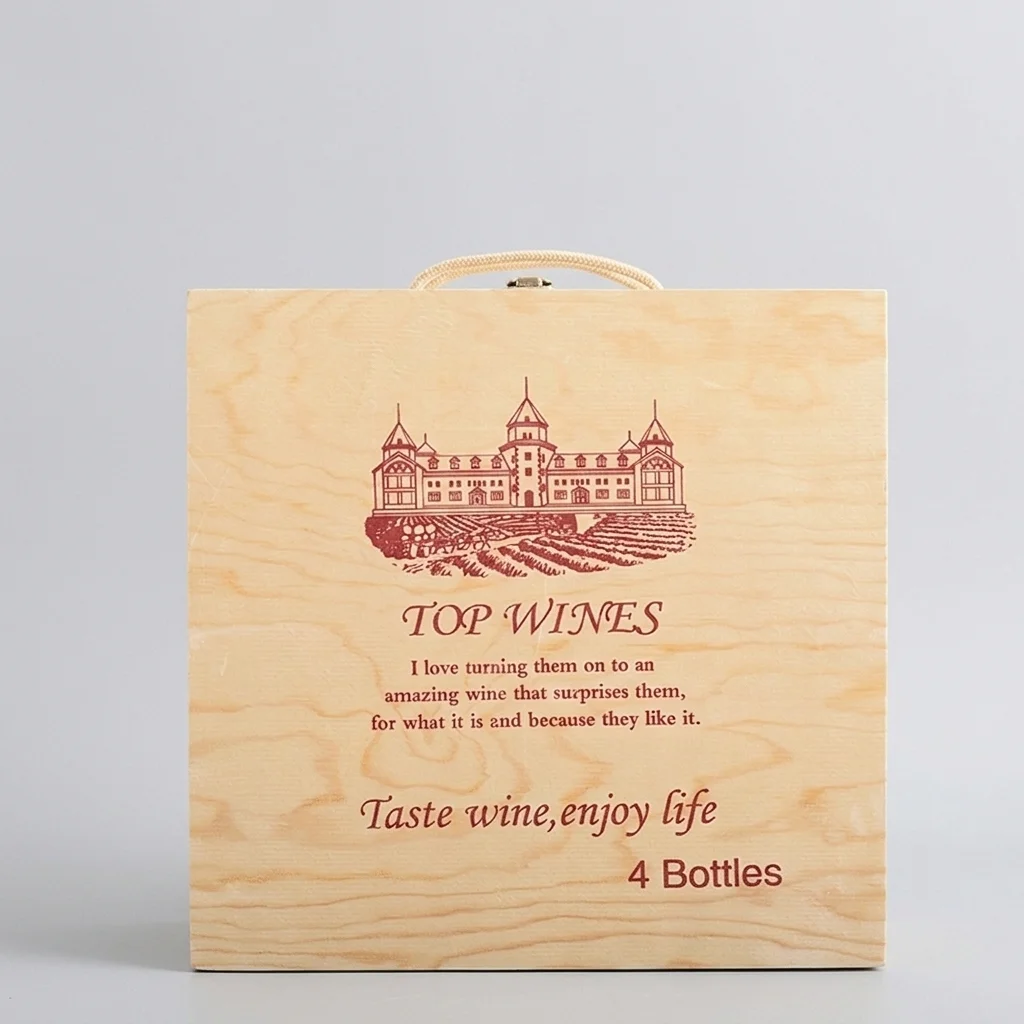
Custom 4 Bottle Vintage Wooden Wine Crate, Natural Pine Construction - Manufacturer & Wholesale Supplier
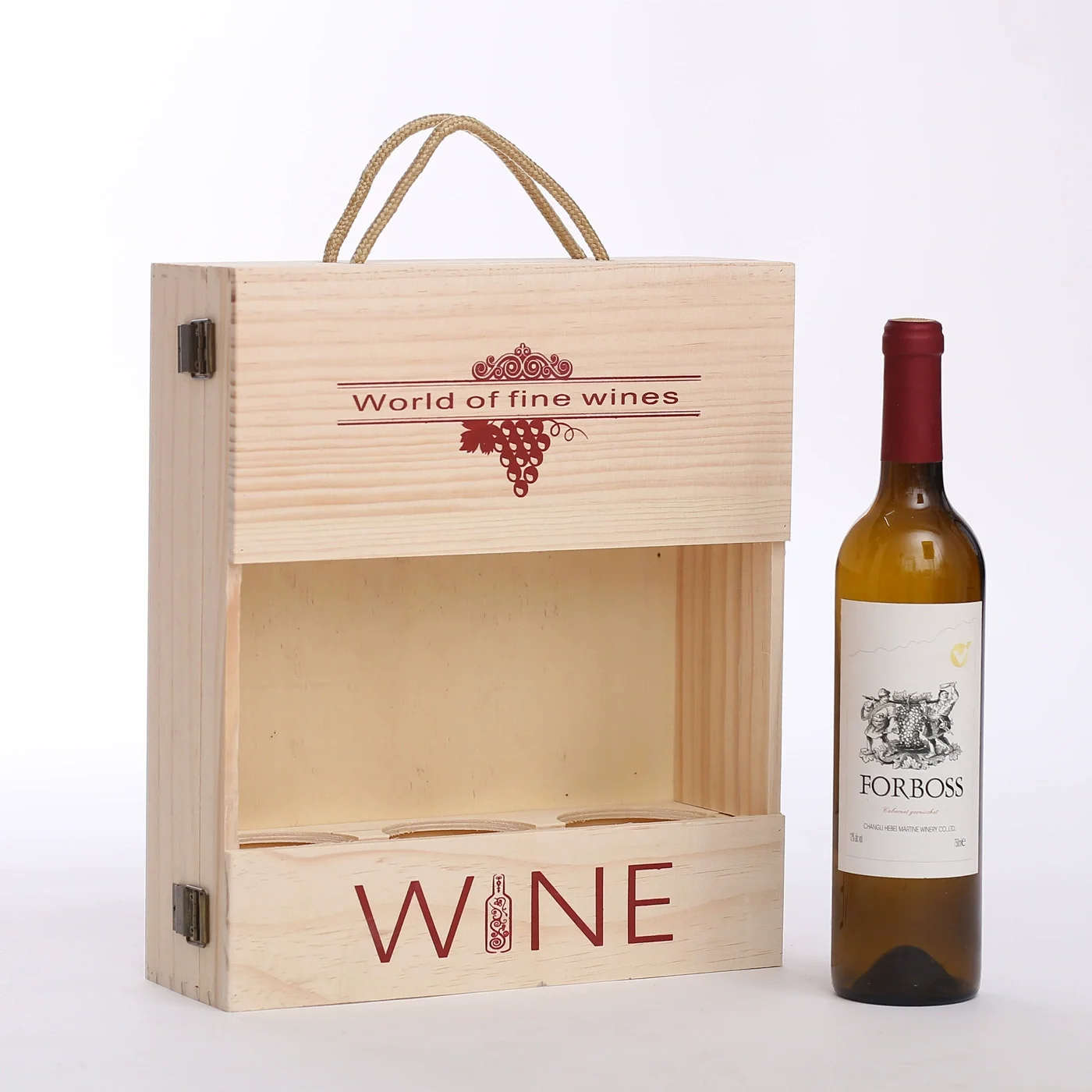
Natural Custom 3 Bottle Wooden Wine Boxes for Wholesale and Corporate Gifting - Manufacturer & Wholesale Supplier
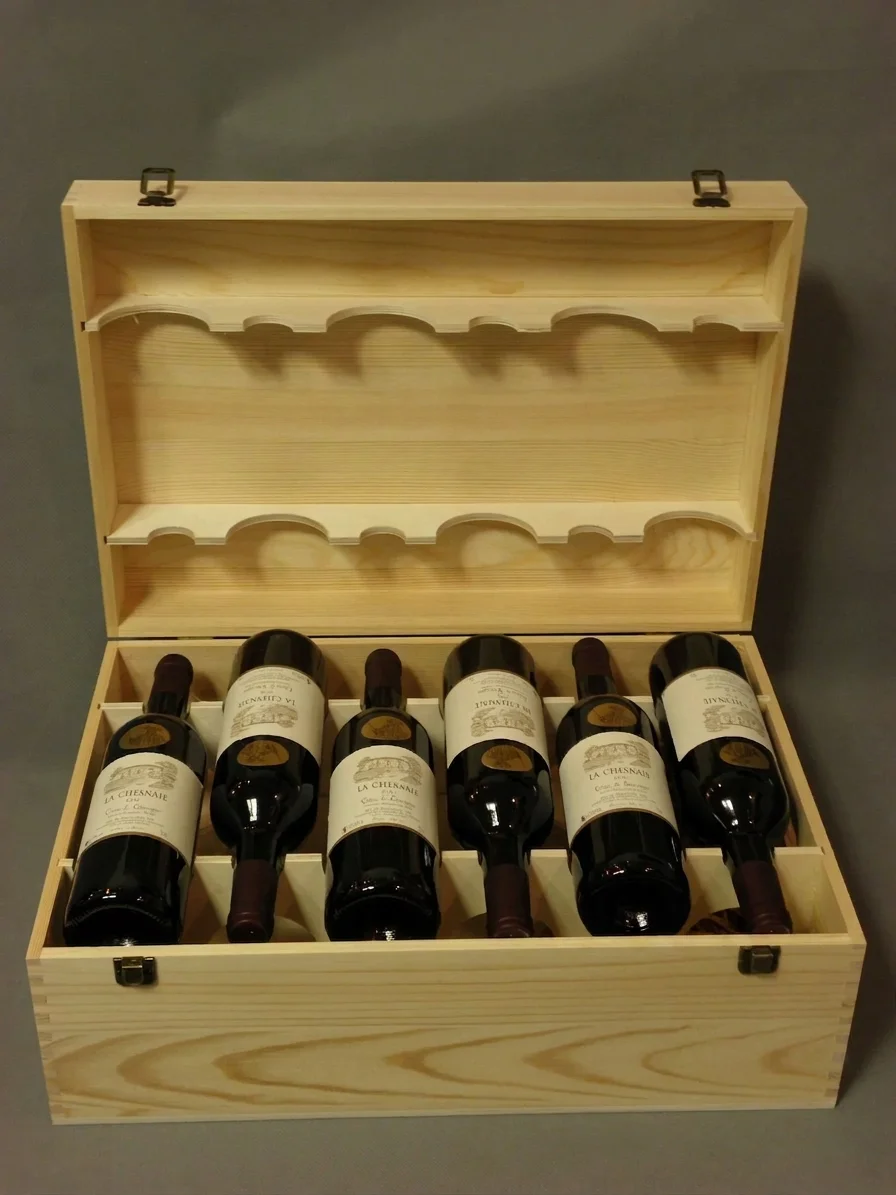
Custom 12 Bottle Pine Wood Wine Crates for Wholesale & Manufacturer
Frequently Asked Questions
Q: How do you prevent the thin wood dividers from snapping during transit?
Q: We need to stack these cases 10 high; will the bottom one buckle?
Q: Are the internal cell dimensions compatible with larger 750ml bottle shapes?
Q: Is the natural wood wool included as standard, or an optional add-on?
Q: Can the pine wood finish be made smoother or a different species used for a more premium feel?
Send Us Your Requirements
Send your design, reference images, or product sample. We don't just quote a price — we respond with material recommendations, a feasibility assessment, and professional suggestions grounded in over 20 years of manufacturing experience. Expect a detailed response within 24–48 hours.
- Professional recommendations included
- Small MOQ & trial orders supported
- Worldwide shipping with export documentation