
Custom 4 Bottle Vintage Wooden Wine Crate, Natural Pine Construction - Manufacturer & Wholesale Supplier
Wholesale 4-bottle vintage wooden wine crate with finger-joint pine construction, front-panel rope handles, hinged lid with single latch, and integrated neck-and-base bottle insert for promotional gifting, event favors, and small-format retail packaging.
Key Features
- Finger-joint pine construction — interlocking corner joints on all four corners transfer carrying stress through the structure, not just the glue line; cuts and assembly identical to our 6- and 12-bottle crates, scaled to this smaller format
- Front-panel braided rope handles — two ropes threaded through the front wall, carried like a small picnic basket or vintage tool crate; the front-carry design changes the unboxing dynamic from 'open it on a table' to 'hand it to someone'
- Hinged lid with single metal latch — one center-positioned clasp is sufficient at this crate width; fewer hardware pieces, simpler assembly, lower cost without sacrificing closure reliability
- Integrated wooden bottle insert — pre-fitted neck-and-base support holes for four standard 750ml bottles; each bottle is independently positioned with no glass-to-glass contact during transport
- Natural untreated pine surface — clean, sanded, ready for branding; no finish means no chemical compatibility concerns when applying screen printing ink, laser engraving, or hot stamping
$3.1 - $6.8 / piece
Prices vary based on order quantity, dimensions, material selection, and logo printing method. Send an inquiry.
Specifications
- Wood Type
- Natural Pine (or optional Paulownia/Oak)
- Capacity
- 4 Bottles (Standard 750ml)
- Dimensions
- Available upon request (Customizable)
- Joinery
- Sturdy Finger Joint Construction
- Surface Finish
- Natural/Untreated (Optional Stain/Varnish)
- Hardware
- Metal Latch, Hinges, Braided Rope Handles
- Customization
- Logo Printing/Engraving, Dimension Changes
Applications
Promotional gifting and corporate giveaways
At four bottles, this crate hits the price point where packaging can be part of the gift rather than just a box around it. For corporate wine gifts, employee appreciation, and client holiday gifts, the crate becomes a keepsake — bottle storage, a desk organizer, a planter. The front-panel rope handles mean the recipient carries it out of the office by hand, not tucked under an arm in a bag — maximum brand visibility from the moment of giving.
Wedding and event favors at scale
Wineries and event planners ordering 200–2,000 units for wedding favors, gala dinners, or tasting event takeaways. The 4-bottle format is compact enough for a place setting display, substantial enough to feel like a real gift. Branding on the front panel and lid top gives two surfaces for event messaging or sponsor logos. The rope handles let guests carry them out of the venue hands-free for photos and conversation.
Retail — small-format wine packaging
Not every wine purchase is a case. For wine shops and specialty retailers, a 4-bottle branded crate turns a 'grab four bottles' purchase into a premium packaged set. The customer leaves with a crate, not a paper bag. For limited-release wines where the four bottles together tell a story — a vertical tasting set, a varietal comparison pack, a producer spotlight — the crate frames the collection.
Customization Options
Dimensions. Standard internal spacing fits four 750ml Bordeaux/Burgundy bottles. We adjust the insert layout for Champagne (wider diameter, taller), Riesling (taller and narrower), or mixed bottle configurations. The crate footprint changes proportionally — a 4-bottle Champagne crate is taller and slightly deeper than a 4-bottle Bordeaux crate. External dimensions affect pallet layout — tell us your logistics team's pallet specs early. Custom dimensions & sizing →
Wood Species. Pine is standard — ~400 kg/m³ density keeps the 4-bottle format comfortably hand-carryable. Paulownia (~250–300 kg/m³) for ultra-lightweight crates — meaningful for event favors where guests carry them for hours. Oak for premium positioning — higher material cost but the wood grain is a visible quality signal on the natural surface. Birch plywood for the lid panel improves screw retention for the latch and hinges. Wood species options →
Finish. Natural untreated pine is standard — supplied sanded and clean, ready for your branding application. Clear matte or satin lacquer for a finished wood look that seals the surface. Custom stain in any tone — medium browns and dark walnuts are popular, matching wine cellar and vineyard aesthetics. Painted finishes in brand colors — the finger-joint corners remain visible as craft detail under paint. Whitewash for a coastal/farmhouse aesthetic. The finish decision should be made together with the branding method — some finishes create a better adhesion surface for screen printing, others for laser. Finishes & color options →
Handle Configuration. Standard is two braided rope handles on the front panel. Rope material options: cotton (natural, soft hand-feel), jute (rustic, textured), synthetic polyester (weather-resistant, color options). Alternative configurations: side panel handles for a different carrying dynamic, single center handle on the lid (briefcase style), or rope handles on both front and side panels. The front-panel position is chosen for the way it presents the crate when carried — flat against the body, brand face forward.
Hardware. Single center latch in antique brass (standard), matte black, or polished nickel. The single-latch design works on this crate width because the lid span is shorter than the 6- or 12-bottle formats — one latch at center provides even closure pressure across the front. Hinges matched to latch finish. Alternative closure: magnetic snap closure for a cleaner front face with no visible hardware — slightly higher cost, cleaner appearance, suitable for high-end gift packaging where the latch is perceived as utilitarian.
Branding. Screen printing on the wide front panel — the largest uninterrupted surface on the crate, visible when carried. Laser engraving on the lid top — permanent, subtle, visible when the crate is displayed open. Hot foil stamping on a small branding plate applied to the front panel — metallic contrast on natural wood. Branding the rope handles with woven-in logo tags is possible for an additional textile component. The natural pine surface is porous — screen printing ink adheres directly without primer; laser engraving produces a clean dark burn on pine. Logo & branding methods →
Bottle Insert Layout. Standard is a pre-fitted wooden insert with neck-and-base holes for four bottles. The insert is removable — empty the bottles, lift out the insert, and the crate becomes a general-purpose wooden box. For a permanent layout, the insert is glued in place — more durable, not removable. Mixed insert options: two bottles + two glasses, four bottles + corkscrew slot, four bottles + tasting notes pocket.
Ready to get a recommendation?
Send us your requirements — we'll respond with material and production recommendations within 24–48 hours.
Why This Design Works
Front-panel rope handles change how the crate is experienced — it's carried like a gift, not a shipping container. Side handles on a crate say 'this weighs enough to need two hands.' Front-panel handles on a compact 4-bottle format say 'pick this up and take it with you.' The carrying position is natural — arm at your side, crate flat against your leg, brand panel facing forward. For promotional events, the rope handles mean the recipient walks through the room displaying the branding, not hiding it under an arm. For wedding favors, the handles mean guests can carry the crate while holding a glass of wine in the other hand. This isn't a minor design detail — it determines how the product moves through the world after it leaves your hands.
Four bottles is the sweet spot between accessible price and perceived value. A single-bottle box is packaging that gets discarded. A six-bottle box is a case purchase. A four-bottle crate is a curated selection — small enough to feel personal, substantial enough to feel like a real gift. The format emerged from wine tasting experiences where four wines create a story: a flight, a comparison, a vertical or horizontal tasting. For promotional use, four bottles keeps per-unit cost manageable at scale while delivering packaging that recipients keep. The embedded retention: every time the recipient uses the crate for bottle storage, desk organization, or home decor, the brand on the front panel stays visible for years.
Finger joints on a 4-bottle crate are proportionally more impressive than on a larger format. The smaller the box, the more the joinery reads as intentional craft rather than structural necessity. On a 12-bottle crate, finger joints look like engineering — load-bearing, sensible. On a 4-bottle crate, they look like furniture — the same joinery you'd see on a hardwood keepsake box or a well-made drawer. The ratio of finger joint to total box height is higher, so the joinery is more visually prominent. This matters for the retail and gifting applications where the box is examined up close, not just seen on a shelf.
See our full range of custom wooden wine boxes — from single-bottle gift packaging to multi-bottle commercial crates from our Cao County factory.
Manufacturing Considerations
Rope handle attachment integrity is the #1 durability concern on this design. Each rope passes through two holes in the front panel and is knotted on the inside. The load path is: rope tension → knot compression against the interior panel face → panel material resisting pull-through. Pine's relatively low density means the area around the pass-through hole can compress under repeated load — each time the crate is lifted by the handles, the knot pulls slightly harder against the wood. Over many lifts, the hole can elongate. Three things prevent this: metal grommets in each pass-through hole (distributes load from the rope to the grommet, from the grommet to the surrounding wood), a small wooden washer behind each interior knot (spreads the knot's compression force across a larger area), and oversized knots that physically cannot fit through the hole even as the wood ages. For promotional crates carried once or twice, the basic knot-through-hole design is sufficient. For crates intended as long-term reusable storage, grommets and knot washers are the minimum upgrade.
Insert-to-crate fit tolerance determines whether bottles rattle. The wooden insert must seat snugly in the crate with no lateral play — if the insert can slide by even 1–2 mm side to side, the creaking is audible and perceptible as low quality. The insert is CNC-cut to the crate's internal dimensions with a nominal 0.2 mm clearance. After assembly, the insert is test-fitted — if it's loose, the crate internal dimension is checked for tolerance stack; if it's tight, the insert edges are sanded. For glued-in inserts, the glue bond eliminates any potential for movement but makes the insert permanent. The decision between loose and glued insert comes down to whether you want the crate to have a second life as a general-purpose box after the bottles are removed.
Natural untreated surface means every sanding mark and glue squeeze-out is visible. Paint covers imperfections — natural wood exposes them. The standard surface is sanded to 180–220 grit, which produces a smooth-to-the-touch finish while leaving enough tooth for screen printing ink adhesion. Visible defects on natural pine: glue squeeze-out at finger joints (must be cleaned while wet or sanded off after cure), planer snipe at board ends (end-trimmed to clean edge before assembly), and raised grain after humidity exposure (final sand after assembly and before packing). The surface is the product on a natural-finish crate — it's the first thing the customer touches and the surface their branding goes onto. Our QC treats surface quality as a major defect category on natural-finish products, with the same inspection standard as painted surfaces: 600–1000 lux lighting, 40–50 cm viewing distance, 45° light angle to catch surface irregularities.
At volume (2,000+ units), assembly labor becomes the cost driver — not material. A single 4-bottle crate involves: cutting four side panels with finger joints, cutting one base panel and one lid panel, routing handle pass-through holes, cutting the insert with neck-and-base holes, assembling the crate body, threading and knotting the rope handles, mounting hinges and latch, test-fitting the insert, and final sanding. Assembly labor accounts for roughly 40–50% of total production cost at standard batch sizes. At volumes above 5,000 units, we shift to batch processing — all crates assembled to the same stage, then all handles threaded in sequence, then all hardware mounted in sequence. This reduces per-unit handling time versus building each crate individually from start to finish.
Have a technical concern about your use case? Our team can walk you through how we'd handle it for your project.
Start with natural pine, finger joints, front-panel braided cotton rope handles, antique brass single latch, and a removable wooden insert. This configuration maximizes what the 4-bottle format does best: the natural pine surface takes branding cleanly, the rope handles make it carryable, the removable insert lets the recipient keep using the crate after the wine is gone, and the simple hardware keeps per-unit cost where it belongs — in the wood and the craft, not in metal pieces the customer barely notices. The one upgrade worth paying for: rope handle grommets. A small metal grommet in each pass-through hole costs almost nothing at volume and turns a potential wear point into a finished detail. Skip the lid stay — at this crate size, the lid opens flat and stays out of the way without assistance. Skip the permanent insert — giving the recipient a usable box after the wine is gone embeds your brand in their home for years, not days.
Start Your Project
Send us your design or reference images — we'll return with a pre-production sample for your approval.
Related Products
You may also be interested in
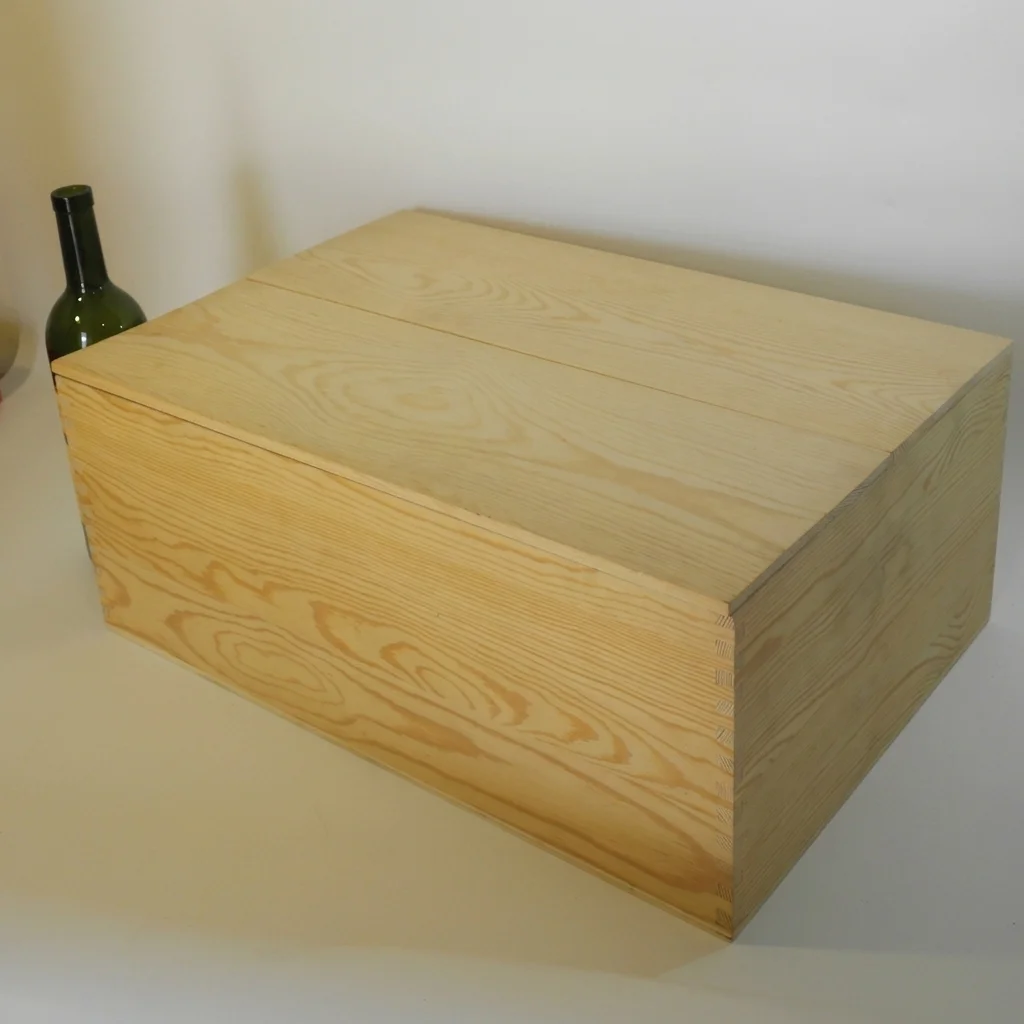
Natural Pine Wood 12 Bottle Wine Transport Crate Manufacturer & Wholesale Supplier
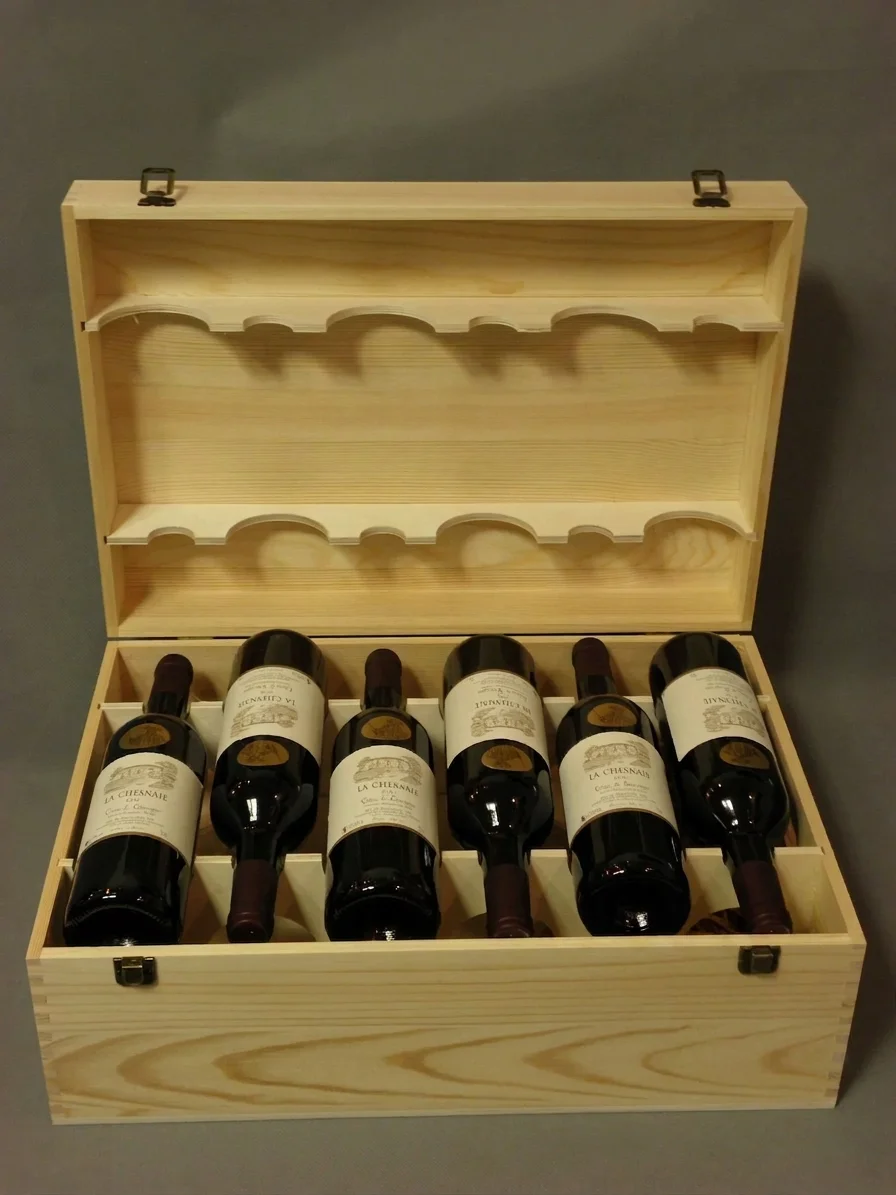
Custom 12 Bottle Pine Wood Wine Crates for Wholesale & Manufacturer
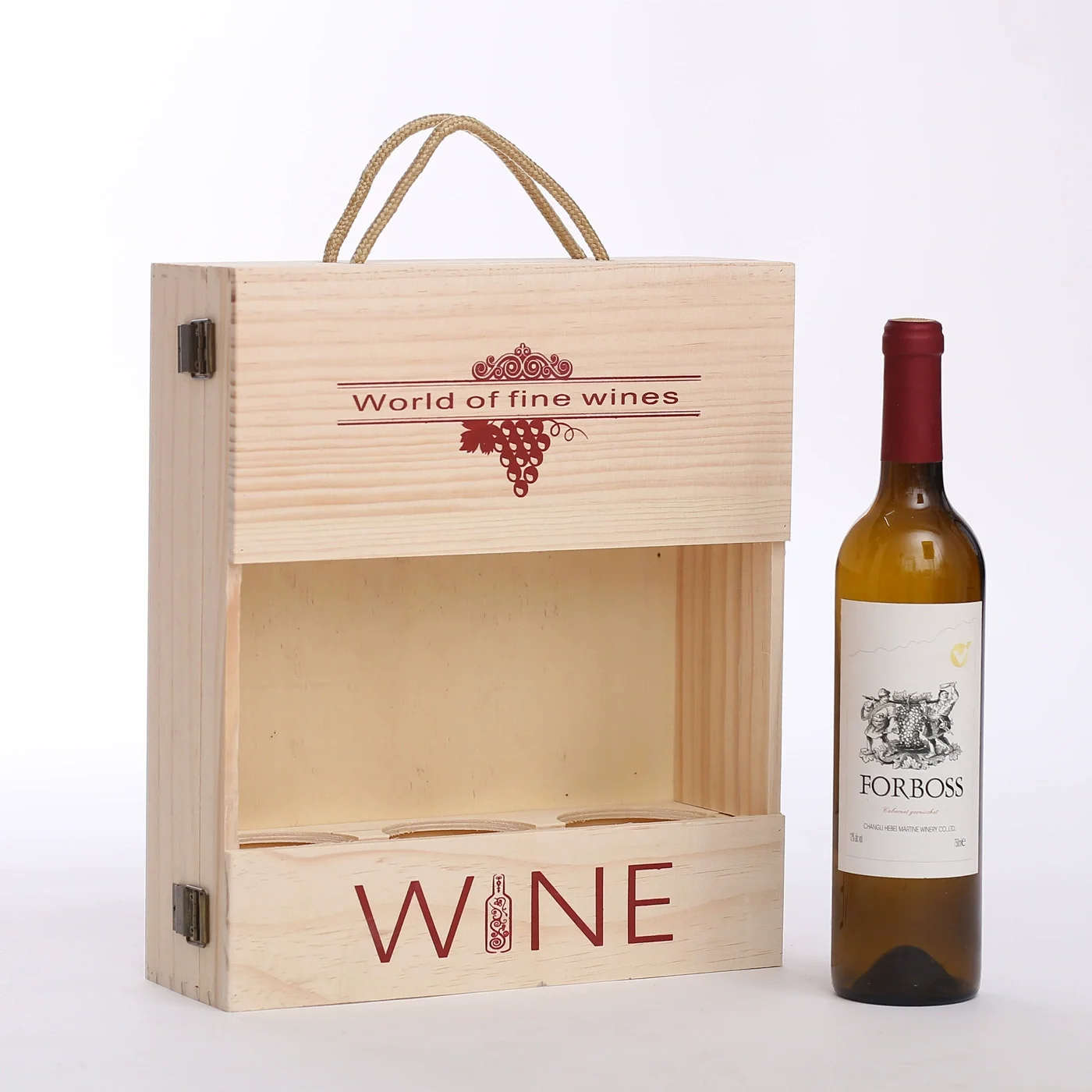
Natural Custom 3 Bottle Wooden Wine Boxes for Wholesale and Corporate Gifting - Manufacturer & Wholesale Supplier
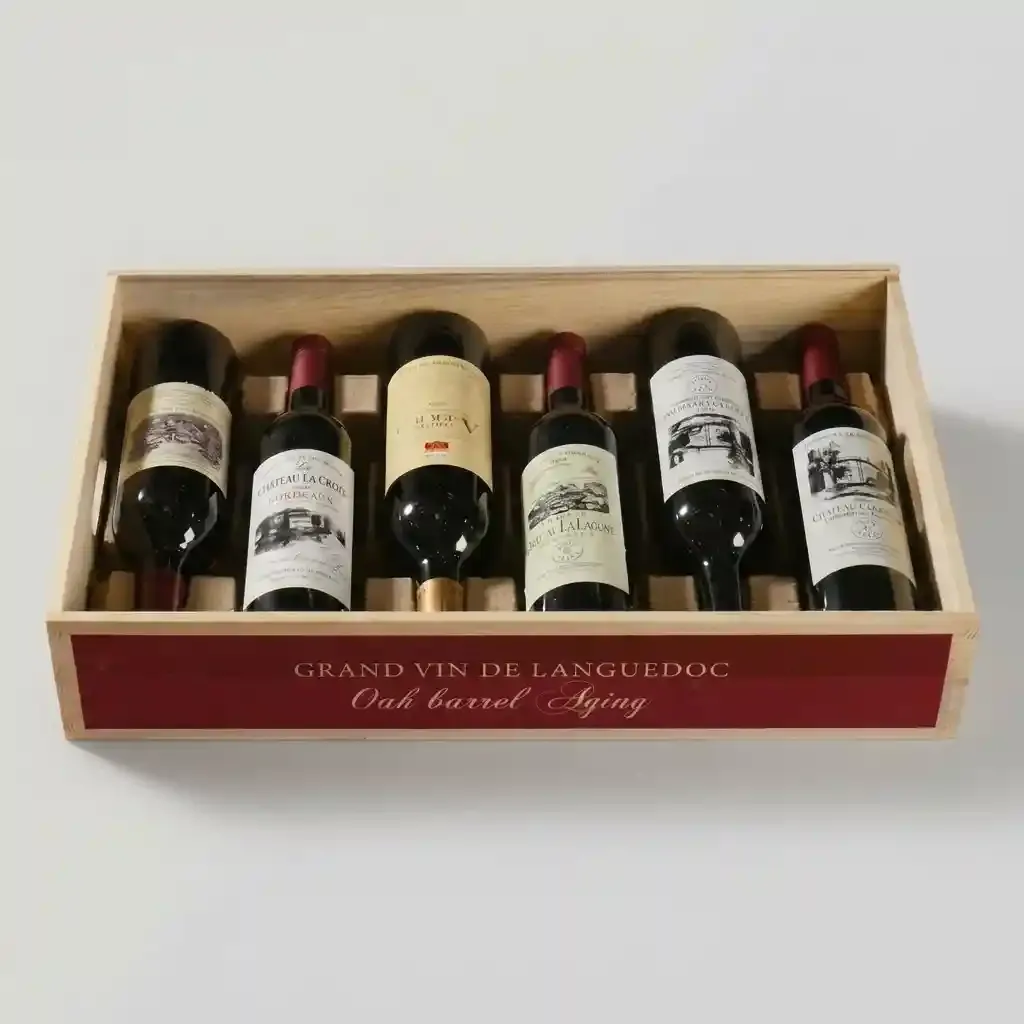
Custom Six-Bottle Pine Wood Wine Gift Box
Frequently Asked Questions
Q: How do the rope handles hold up over time? Do they fray or loosen?
Q: Can I order the crate with the insert glued in place, or does it need to be removable?
Q: Can the bottle insert be configured for non-standard bottle sizes?
Q: What branding methods work best on the natural unfinished pine surface?
Q: How does this 4-bottle crate compare to a standard gift box with dividers?
Send Us Your Requirements
Send your design, reference images, or product sample. We don't just quote a price — we respond with material recommendations, a feasibility assessment, and professional suggestions grounded in over 20 years of manufacturing experience. Expect a detailed response within 24–48 hours.
- Professional recommendations included
- Small MOQ & trial orders supported
- Worldwide shipping with export documentation