
6-Bottle Wooden Wine Crate
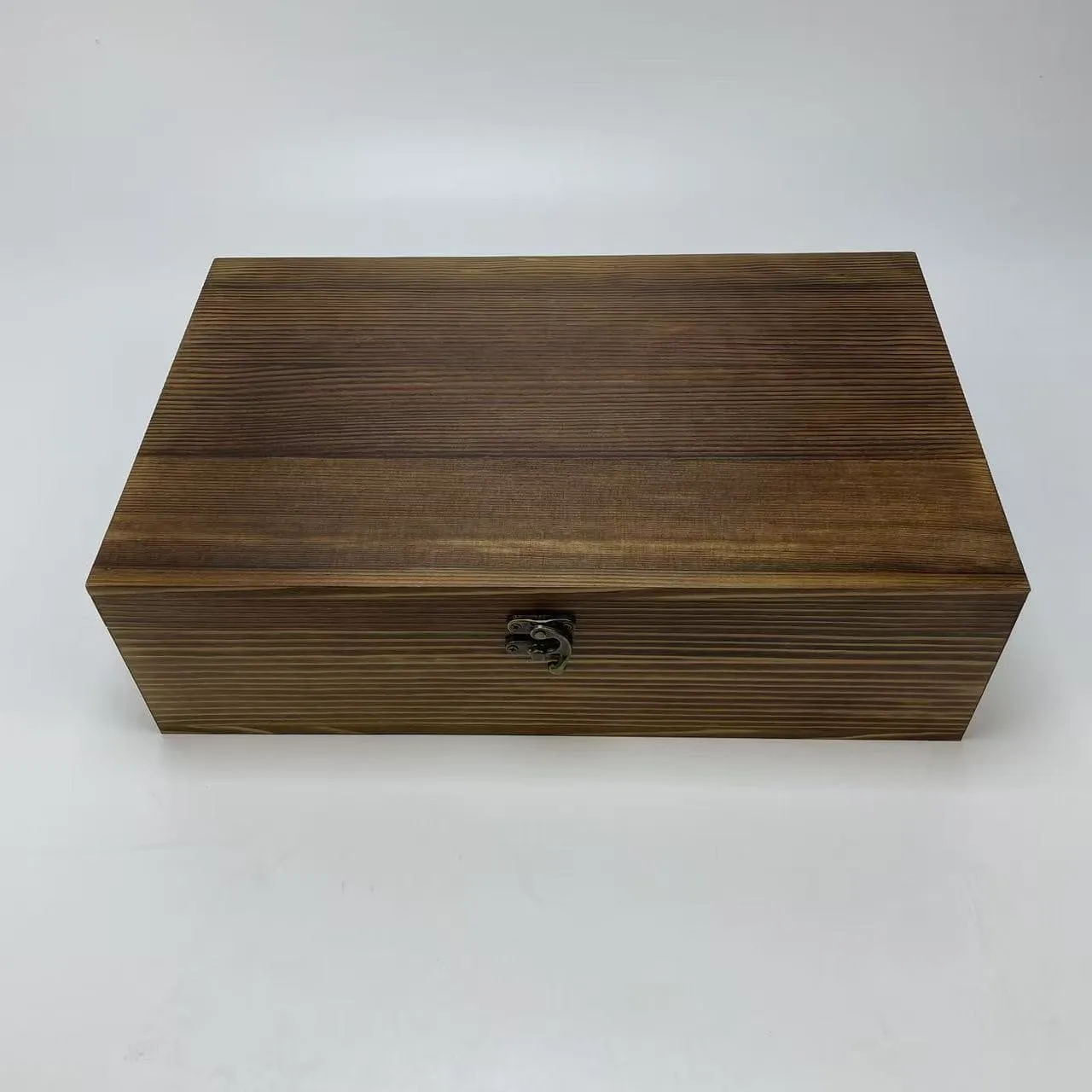
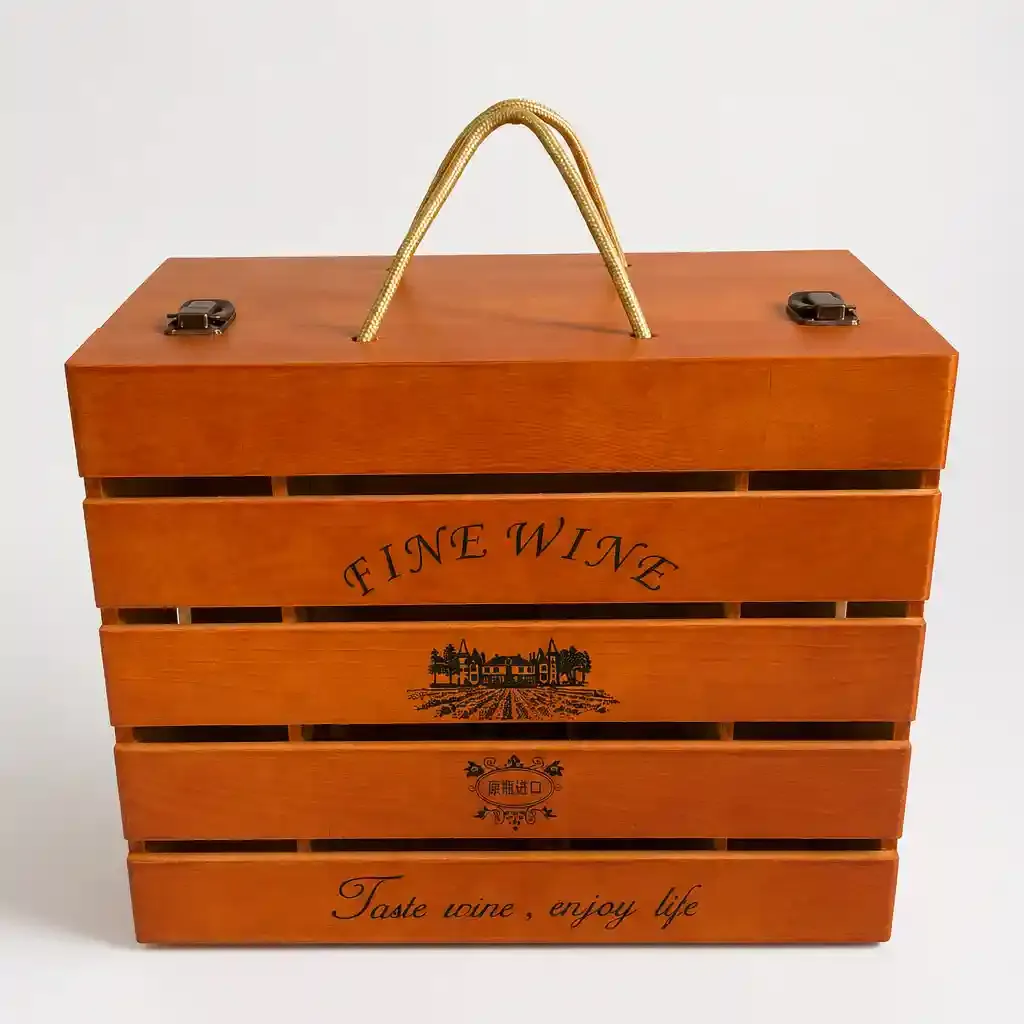
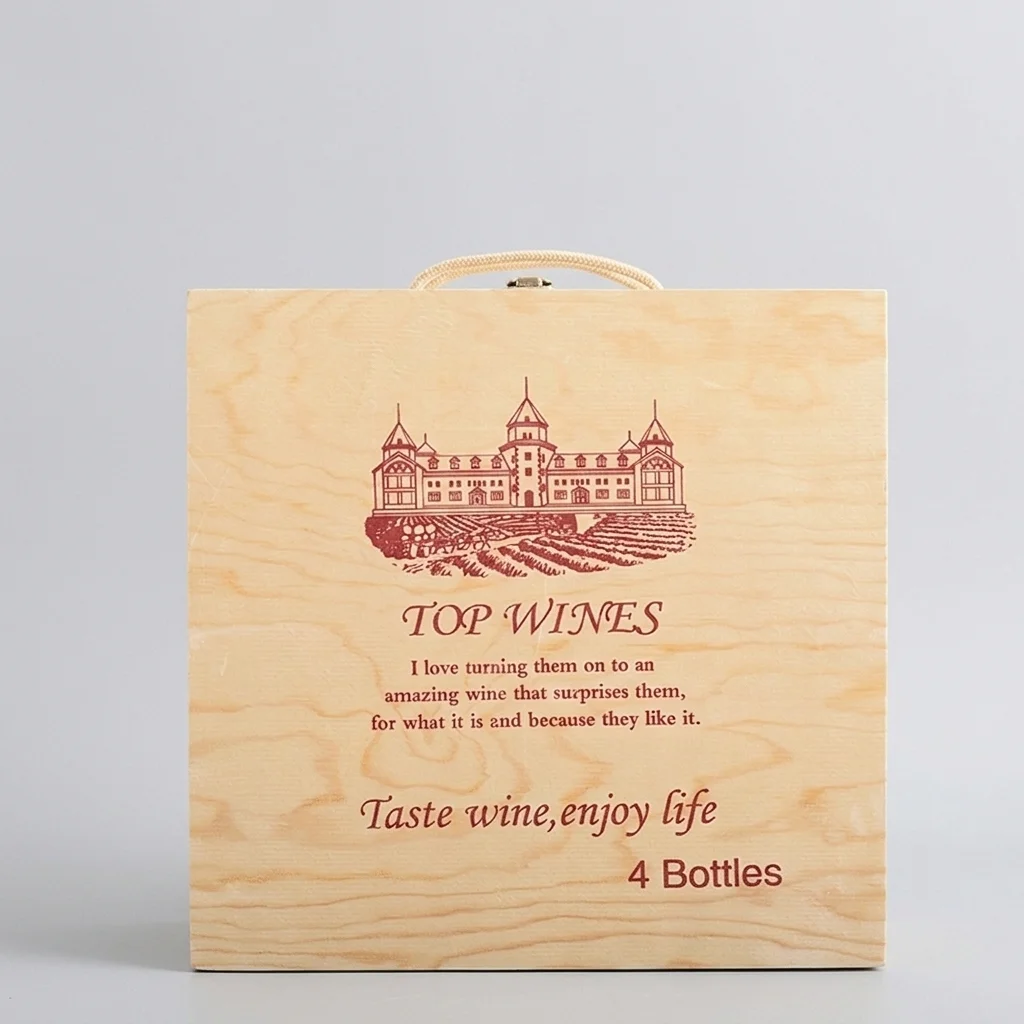
6-bottle wooden wine crate with slatted pine construction, burnt scorched finish, and studded metal straps, built for dimensional, ventilated wine presentation. Key Features
Key Features
- Slatted pine construction — open-gap design with visible gaps between horizontal slats, lighter than a solid box, natural ventilation for cellar storage
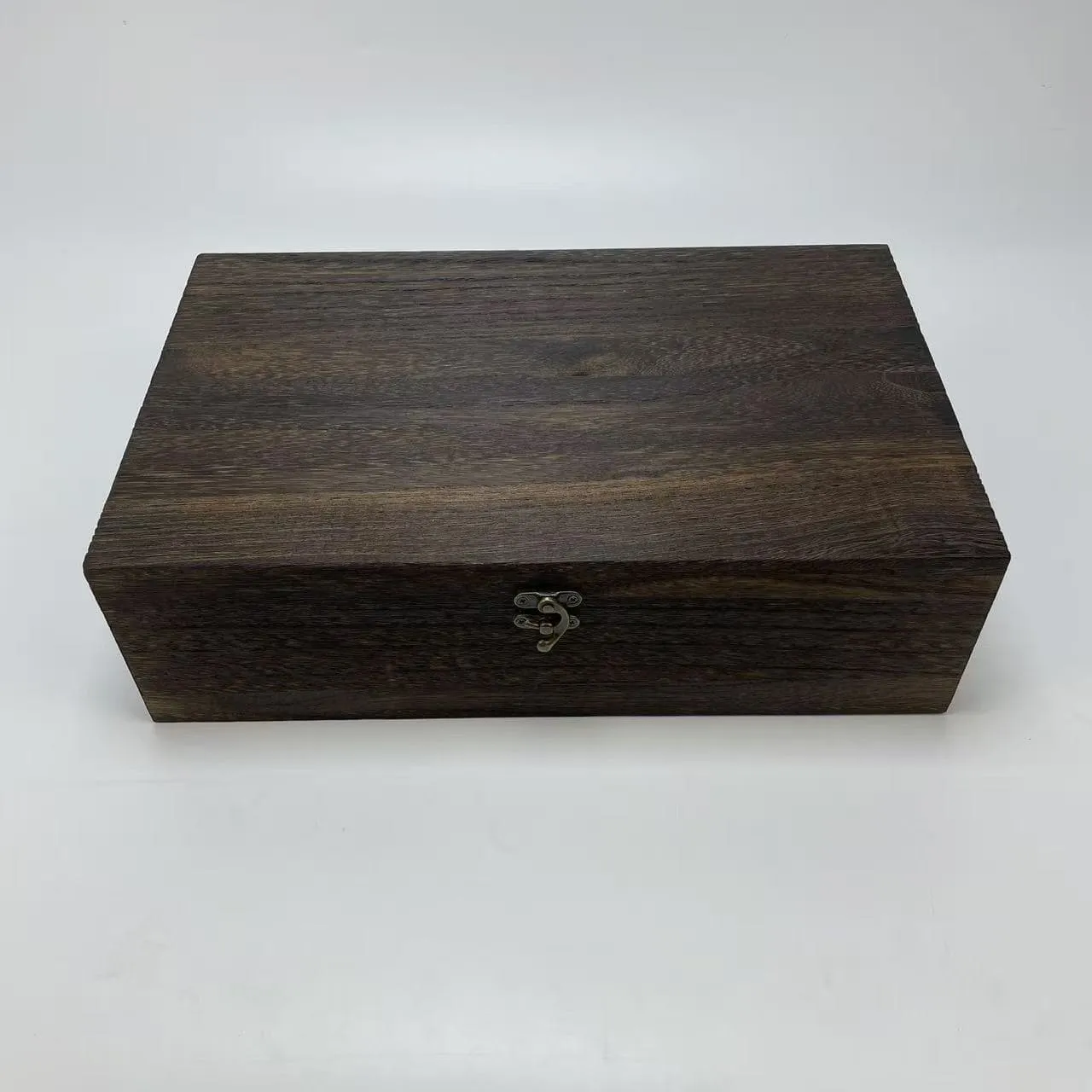
- Burnt scorched finish — deeply darkened wood with subtle surface texture, each crate uniquely patterned by the flame; the dark rustic aesthetic that solid boxes can only approximate with stain
- Decorative studded metal straps — applied to the front face, the studs and straps create an industrial-vintage look that reads as reclaimed and authentic
- Rope handle threaded through the side panels — carry six full bottles by hand, the rope is functional and reinforces the rustic material language
- Internal neck and base holders — bottle positioning without full-height dividers; the bottles rest in cradles that secure neck and base, leaving the bottle body visible through the slatted sides
$2.50 - $5.00 / piece
Prices vary based on order quantity, dimensions, material selection, and logo printing method. Send an inquiry.
Specifications
- Material
- Pine wood, metal hardware, synthetic rope.
- Capacity
- 6 standard 750ml wine bottles.
- Style
- Slatted crate with hinged lid.
- Finish
- Burnt/scorched wood effect.
- Internal Structure
- neck and base holders
Applications
Winery direct-to-consumer — the cellar-door crate
Customers who visit the winery and buy a mixed six-pack leave with a crate that looks like it came from the barrel room — not a cardboard box. The slatted design and burnt finish communicate cellar authenticity. The rope handle makes it portable. The crate becomes cellar storage at home, keeping the brand visible for years.
Rustic and industrial-themed wine branding
For wine brands built around rugged, authentic, handcrafted identity — not polished luxury. The burnt finish, studded straps, and slatted construction create a visual language that no stained or painted box can reproduce. If your brand story involves old vines, family tradition, or barn-and-barrel imagery, this crate is the packaging that matches.
Gift sets where the packaging is part of the story
A curated six-bottle set presented in a burnt slatted crate tells a different story than the same bottles in a polished wooden box. The crate says 'this came from somewhere real.' For holiday gift sets, limited releases, and special collections where the packaging narrative matters, the slatted burnt aesthetic is a differentiator that cardboard and solid boxes can't match.
Customization Options
Burnt Finish Intensity. Light char: brown with visible grain, subtle texture. Medium char: dark brown to black, moderate alligator texture, the standard for this crate. Heavy char: near-black with pronounced surface texture — dramatic but requires careful handling as the char layer can be more brittle. The burnt finish is applied to slats before assembly, so each slat gets even coverage on all faces. Burnt & charred finish techniques →
Wood Species. Pine is standard — burns well with visible earlywood/latewood texture contrast, cost-effective for the slatted construction. Cedar for aromatic appeal — the burnt cedar scent is complex and distinctive. Paulownia for lighter weight at higher material cost — the burn on paulownia is smoother and more even than pine. Hardwood for maximum durability at significantly higher weight and cost.
Slat Configuration. Standard slats are 40–60mm wide with 5–8mm gaps between them. Wider slats with narrower gaps for more coverage and less ventilation. Narrower slats with wider gaps for a more open, ventilated look. The slatted design means the bottle bodies are partially visible through the sides — the gap-to-slat ratio controls how much bottle is seen.
Metal Hardware. Studded straps are standard in black iron finish — matches the burnt wood tone. Antique brass or nickel finish available for a different metal contrast. The strap count and layout are customizable — standard is two horizontal straps across the front. Rope handle in synthetic sisal-look polyester — cotton or leather-wrapped options available.
Interior Bottle Holders. Standard is wooden neck cradles and base blocks — the bottle neck sits in a notched wooden rail, the bottle base rests against a positioning block. Full-height dividers available if you prefer complete bottle separation. Felt lining on the cradle contact points available to prevent label abrasion during transport.
Branding. Laser engraving on the front slats: burns a darker mark into the already-dark burnt surface — subtle, visible at close range. Hot foil stamping on a solid wood plaque attached to the front: high contrast, metallic on dark. Screen printing on the slatted surface is challenging due to the gaps — we recommend branding the solid wood corner posts or a dedicated branding plate. Branding by wood burning: a custom branding iron with your logo, applied to the crate — thematically consistent with the burnt finish aesthetic.
Ready to get a recommendation?
Send us your requirements — we'll respond with material and production recommendations within 24–48 hours.
Why This Design Works
Slatted construction is a structural and aesthetic decision — the crate is ventilated by design. Solid wooden boxes trap moisture — six bottles, possibly chilled, placed in a sealed wooden box in a warm room will develop condensation inside. The slatted design provides passive airflow through the gaps between slats. For winery customers who take the crate home and store it in a cellar, the ventilation matters. For wine shops where bottles may go in and out of the crate at different temperatures, the airflow prevents trapped humidity. The slatted design also reduces material usage — less wood per crate means lower material cost and lighter shipping weight, which partially offsets the higher labor cost of assembling multiple individual slats.
The burnt finish on a slatted crate produces an effect that solid boxes can't replicate. Each slat is burned individually before assembly — the char wraps around all four edges of every slat. When the crate is assembled, the gaps between slats reveal dark edges that create a shadow-line depth effect. A solid box with a burnt finish looks dark and textured from the outside. A slatted crate with burnt slats looks dark, textured, AND dimensional — the gaps let light into the interior, and the charred slat edges catch that light differently than flat surfaces. This three-dimensional burnt aesthetic is exclusive to slatted construction.
The neck-and-base holder system is the right interior for a slatted crate. Full-height dividers would block the view through the slatted sides — you'd see wood dividers, not wine bottles. The neck cradle and base block position each bottle securely while leaving the bottle body visible through the slats. The bottle labels are partially visible from the outside — the slatted crate doesn't hide the wine, it frames it. This interior design choice aligns with the open, ventilated philosophy of the crate: show the bottles, don't hide them behind solid walls or full dividers.
See our full range of wooden wine crates — slatted, solid-panel, and burnt-finish designs for winery retail, cellar storage, and rustic gift presentation.
Manufacturing Considerations
Burnt finish consistency across multiple slats is the #1 quality challenge on this crate. Each slat is burned individually — if the flame distance, dwell time, or wood moisture content varies between slats, the assembled crate will show color inconsistency from one slat to the next. The fix: all slats for a batch are burned in sequence by the same operator using the same flame setting, and the burned slats are sorted by color tone before assembly — matching slats are grouped together so each crate has consistent slat color. A crate with one noticeably lighter or darker slat stands out immediately and is rejected at assembly. This sorting step adds labor but is essential for a product where the burnt finish is the primary visual feature.
Slat alignment and spacing is a precision assembly operation. A solid box has four side panels — alignment is straightforward. A slatted crate has 12–20 individual slats per crate, each of which must be positioned with consistent spacing. If the gaps between slats vary — 5mm here, 8mm there — the crate looks sloppy rather than crafted. Slats are assembled on a jig that sets the exact gap between each slat using spacer blocks. The jig holds all slats in position while the corner posts are fastened. After assembly, the gap consistency is checked with a go/no-go gauge — any gap more than 1mm off spec means the crate is reworked.
The studded straps are decorative — but they must not become damage points. The metal straps are applied to the front face of the slats with small nails or tacks. If a tack protrudes through the back of a slat, it can contact the wine bottle inside and scratch the label. Every tack is sized to penetrate the strap and the slat face without exiting the back of the slat — tack length is set to slat thickness minus 2mm. After strap installation, the interior face of each slat is checked for protruding tack points. Any protrusion is clipped and filed flush.
Watch out for the rope handle pulling through the side panel over time. The rope passes through a hole in each side panel and is knotted on the inside. Repeated lifting can cause the knot to work loose or the rope to abrade against the wood edge. The fix: a metal grommet in each pass-through hole prevents rope-on-wood abrasion, and the interior knot is backed by a small wooden washer that distributes the pulling force across a larger area than the knot alone. The rope is synthetic — sisal-look polyester — which resists fraying and moisture weakening better than natural sisal while looking identical.
Have a technical concern about your use case? Our team can walk you through how we'd handle it for your project.
Start with pine slats (45–50mm width, 6mm gaps), medium char burnt finish, black iron studded straps, synthetic sisal rope handle, and neck-and-base bottle holders. This configuration maximizes what the slatted crate does that no solid box can: the burnt slats create dimensional shadow-line depth, the gaps ventilate the interior, and the studded straps reinforce the industrial-vintage aesthetic. The one upgrade worth paying for: cedar wood instead of pine. Cedar's natural aroma combined with the burnt finish creates a complex scent profile — smoky, woody, spicy — that adds another sensory dimension to the unboxing. Skip full-height dividers — they defeat the purpose of the slatted sides by blocking the bottle view. Skip painting over the burnt finish — if you want a painted crate, start with raw pine and skip the burn step entirely. This crate is for brands that want their packaging to look like it came from somewhere with history — a barrel room, a workshop, a cellar — not a pristine factory floor.
Start Your Project
Send us your design or reference images — we'll return with a pre-production sample for your approval.
Frequently Asked Questions
Q: Does the burnt finish leave soot or smell on hands when handling the crate?
Q: Are the gaps between slats a problem for shipping — can dust or moisture get in?
Q: How secure are the bottles in neck-and-base holders compared to full-height dividers?
Q: Can the studded straps be customized in layout or finish?
Q: How does the slatted crate compare to a solid 6-bottle wooden box for durability?
Q: Will the burnt finish fade or change over time with exposure to light?
Send Us Your Requirements
Send your design, reference images, or product sample. We don't just quote a price — we respond with material recommendations, a feasibility assessment, and professional suggestions grounded in over 20 years of manufacturing experience. Expect a detailed response within 24–48 hours.
- Professional recommendations included
- Small MOQ & trial orders supported
- Worldwide shipping with export documentation