
Custom High Gloss Piano Lacquer Single Bottle Wine Boxes | Manufacturer & Wholesale Supplier
Multi-layer high gloss lacquer applied to precision-milled MDF, creating a robust, reflective presentation case for single wine and spirit bottles.
Key Features
- CNC routed MDF substrate for perfectly matched seams and rigid structure.
- Multiple stages of black lacquer application and machine polishing achieve a true high-gloss, mirror-like finish.
- High-density foam (high-foam) liner, custom cut for secure bottle fit and impact absorption.
- Precision-set concealed barrel hinges and magnet closure system for smooth, positive operation.
- Standard exterior dimensions: 360mm x 115mm x 115mm (scalable for specific bottle profiles).
- Screen printed or precision-etched logo options for subtle brand integration.
$5.0 - $7.0 / piece
Prices vary based on order quantity, dimensions, material selection, and logo printing method. Send an inquiry.
Specifications
- Wood Type
- Robust Fiberboard (MDF)
- Capacity
- Single Bottle (750ml standard, Customizable)
- Dimension
- Custom External and Internal Dimensions
- Design
- Rectangular Box with Hinged Lid
- Surface Finish
- High Gloss Black Piano Lacquer
- Usage
- Champagne, Cognac, Premium Red Wine Packaging
- Customization
- Logo (Silk-Screen, Hot Stamping), Internal Lining, Color
- Hardware
- Brass-Plated Hinges
- MOQ
- 500 units for custom wholesale orders
Applications
Corporate Gift Packaging
Companies need a gift that communicates premium value. This high-gloss finish provides an immediate tactile and visual perception of high quality, matching the importance of the gift to the recipient. The finish is so dominant it creates a luxurious feel without additional ornamentation.
Winery Special Editions
For specific vintage releases or limited production runs, standard packaging isn't sufficient. This case differentiates the product at the point of sale and creates a complete package that justifies a premium price point, leveraging the packaging to tell the quality story of the wine.
Premium Spirit Brand Product Launches
When a distillery launches a $200+ limited-release whiskey or cognac, the packaging must match the bottle's price point. The mirror-finish piano lacquer creates a jewelry-case unboxing experience — the reflective surface signals luxury before the lid is even opened. Browse our complete range of custom wooden wine and spirit boxes for alternative materials, finishes, and construction types.
Customization Options
We manipulate six core variables: material, dimensions, finish, hardware, branding, and interior.
Wood Species: For this specific high-gloss finish, the material choice is rigid. We almost always recommend MDF over solid wood because solid wood expands and contracts with humidity, which will crack the lacquer within months. MDF provides the perfectly stable substrate required for this finish to remain flawless. See our wood species reference for a complete guide to material properties and stability characteristics across solid wood and engineered substrates.
Dimensions: Every box is custom-sized; there is no standard. If your bottle is 80mm in diameter, we make the interior 81mm. We maintain tight tolerances (±0.5mm) to ensure the high-foam liner grips correctly. Wider boxes give a presence but add material cost and shipping volume.
Finish: The standard is black piano lacquer. We can match any Pantone color for the base coat. Satin and matte finishes are options, which hide fingerprints better but sacrifice that defining 'wet look' gloss.
Branding: Screen printing sits on top of the final clear coat. For a integrated look, we can etch through the clear coat (though this risk exposing the color layer).
Hardware: Standard hidden hinges and magnet closures are included. Upgrading to visible quadrant or barrel hinges adds a complex mechanical feel, but also significantly increases production time and precision requirements to align correctly.
Ready to get a recommendation?
Send us your requirements — we'll respond with material and production recommendations within 24–48 hours.
Why This Design Works
The choice of MDF as the substrate is purely pragmatic and critical. Attempting this multi-layer lacquer process on solid wood (like pine or paulownia) is risky. Wood moves; lacquer doesn't. When the wood moves, the finish cracks. By using 15mm MDF, we gain absolute dimensional stability, creating a perfect canvas that won't compromise the finish over time, although we lose the ability to show any natural wood grain.
We rely on density and finish, not complexity. The box is simple—a rectangle with clean edges. This simplicity is intentional. The high-gloss finish becomes the design feature itself. Adding complex contours or routed details only makes the multi-stage polishing process infinitely harder, increasing the likelihood of imperfections or inconsistent gloss across the surface. A simple shape with a flawless finish is far more valuable than a complex shape with a compromised finish.
The interior is a study in protection and contrast. Inside, we always recommend a high-density foam rather than a cheap flocking over paper. The high foam is rigid enough to hold the bottle securely but gives slightly under pressure to absorb shock. We often recommend lining the foam with a contrasting material—like gold or silver satin—which looks particularly dramatic against the black lacquer exterior, adding a second moment of 'premium reveal' for the consumer.
Piano lacquer and natural hardwood serve fundamentally different luxury languages. This lacquered MDF box achieves its effect through surface perfection — a flawless mirror finish that looks like it came from an automotive paint booth. Our black walnut presentation box achieves luxury through the material itself — visible dovetail joinery, natural grain, and a tactile matte finish. Choose piano lacquer when the packaging should feel engineered and pristine; choose black walnut when the packaging should feel crafted and warm.
For a matte surface that still uses solid wood (not MDF), oak is the practical alternative. Our matte oak whiskey packaging boxes provide the flat, non-reflective surface of a matte finish with the structural presence and natural grain of solid oak — no MDF, no lacquer, just a matte spray over solid wood with a hardware-free sliding lid.
Manufacturing Considerations
The finish quality is 100% determined by the environment. This is not a box you paint; this is a box you cure and polish. Every layer of lacquer (often 5 to 8 coats) must be applied in a clean room. A single speck of dust that gets caught in coat three will be visible in coat seven and will require re-sanding the entire box back to the substrate. We maintain dust-controlled spray booths and curing areas specifically to manage this risk.
We monitor the edge radius with extreme precision. A sharp edge on the box might look modern, but it’s a failure point. Lacquer won't cover a sharp corner properly—the finish pulls away, leading to 'edge break' where the coating is thin and prone to chipping. We always apply a subtle (often 2mm) radius to every edge. It looks visually sharp, but it provides enough surface area for the multiple coats of lacquer to achieve a consistent thickness.
Curing time is non-negotiable. Each coat must flash off and then fully cure before the next is applied. Trying to rush this process leads to a finish that is visually inconsistent (with orange peel texture) and, more critically, soft. A soft finish will adhere to other boxes during shipping or cloud up immediately when handled, ruining the presentation. We allow 24 hours of curing time *per coat*—so a 5-coat box has a minimum 5-day cycle just in the paint department.
Wooden packaging and cardboard packaging serve different tiers of the market, and the manufacturing implications are entirely different. Cardboard requires print registration and die-cutting precision; wood requires joinery tolerance, moisture control, and finish consistency — a completely different set of QC checkpoints, skill requirements, and production timelines. Read our comparison of wooden wine packaging vs cardboard packaging for a detailed breakdown of cost, durability, and brand perception across both materials.
Have a technical concern about your use case? Our team can walk you through how we'd handle it for your project.
For an entry point into true premium, start with a 15mm MDF structure, finished in a high-gloss black with a 2mm radius on all edges. Use high-density EVA foam lined with gold satin; this creates a striking contrast. Choose concealed magnetic closures for a clean exterior silhouette. Skip complex etching and go with a high-quality screen print logo on the lid, applied *after* the clear coat. This setup offers the best balance: the critical visual and tactile quality is achieved without the added cost and potential failure points of exotic hardware or complex branding techniques.
Start Your Project
Send us your design or reference images — we'll return with a pre-production sample for your approval.
Related Products
You may also be interested in
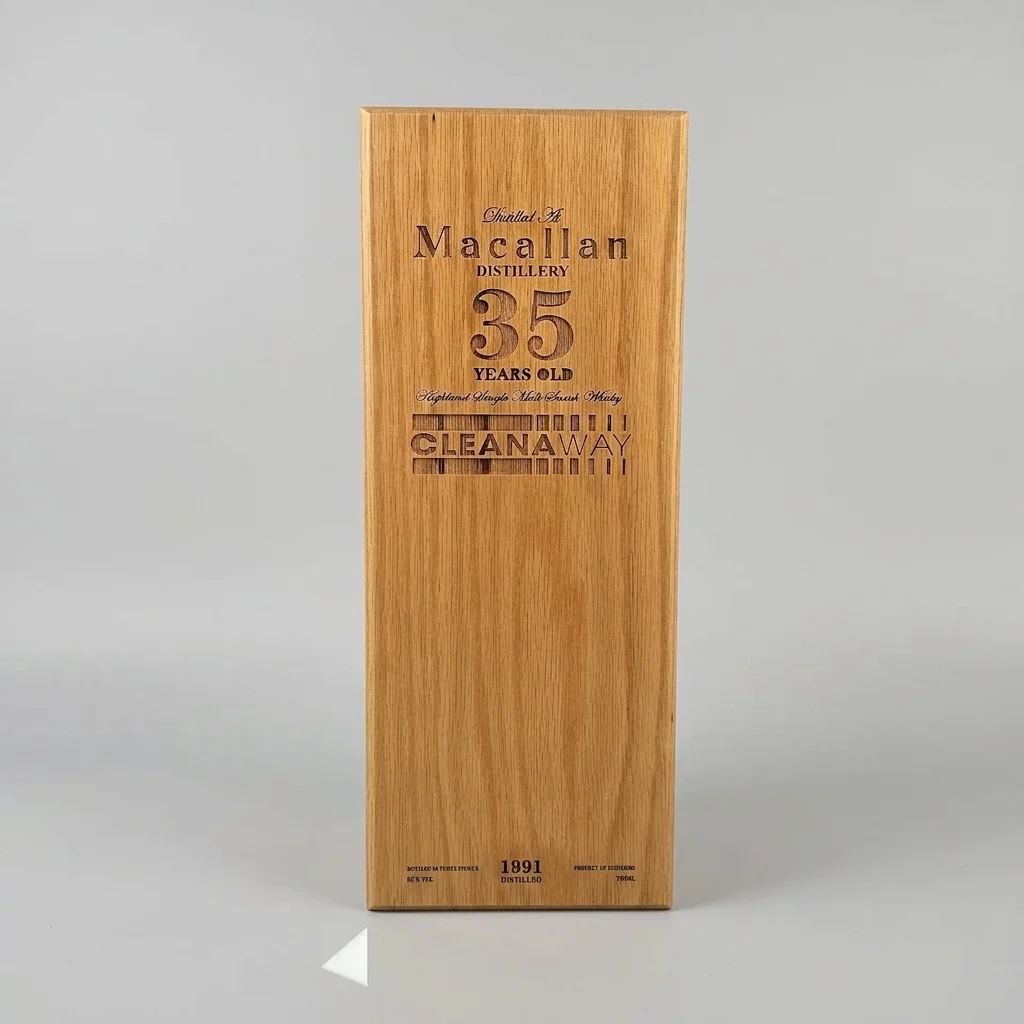
Custom Oak Whiskey Boxes Wholesale, Lacquered Solid Wood Gift Box - Manufacturer & Wholesale Supplier
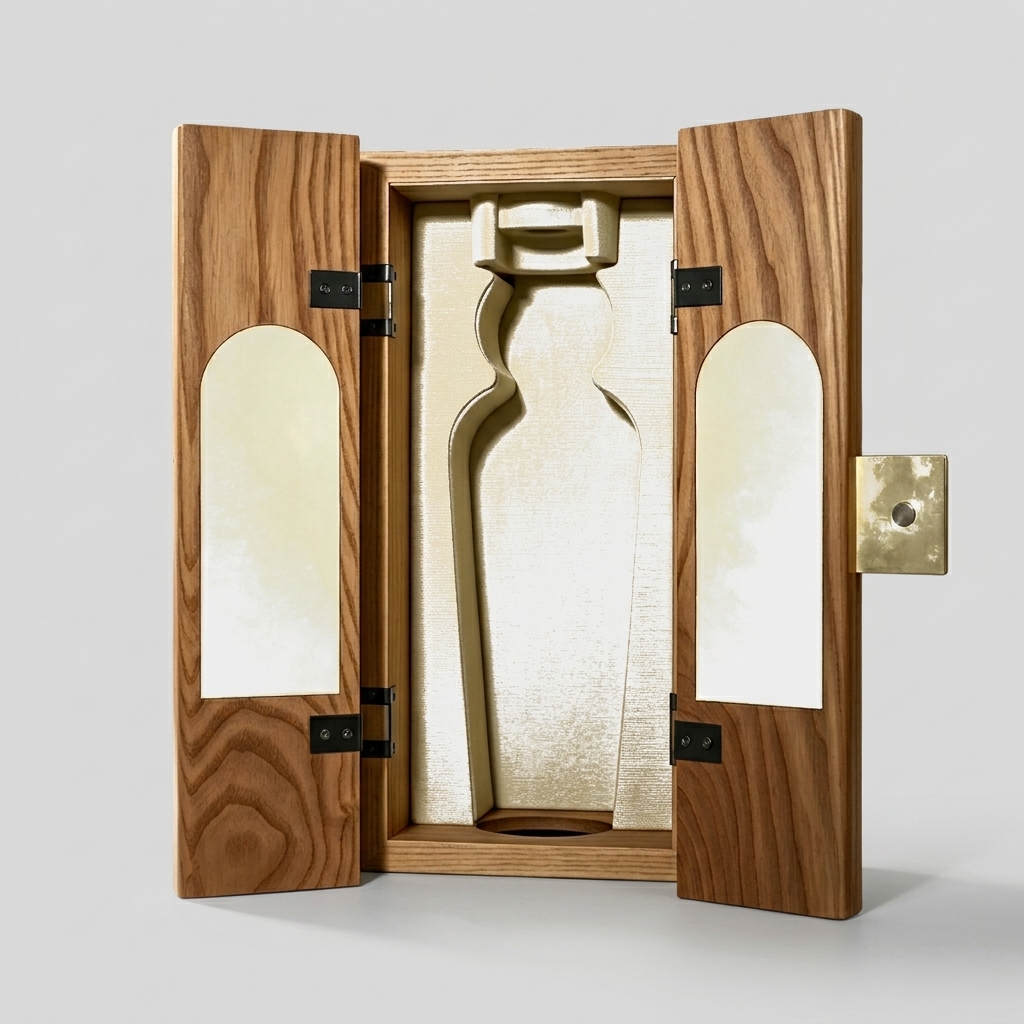
Premium Custom Matte Oak Whiskey Packaging Boxes with Sliding Lid Manufacturer & Wholesale Supplier
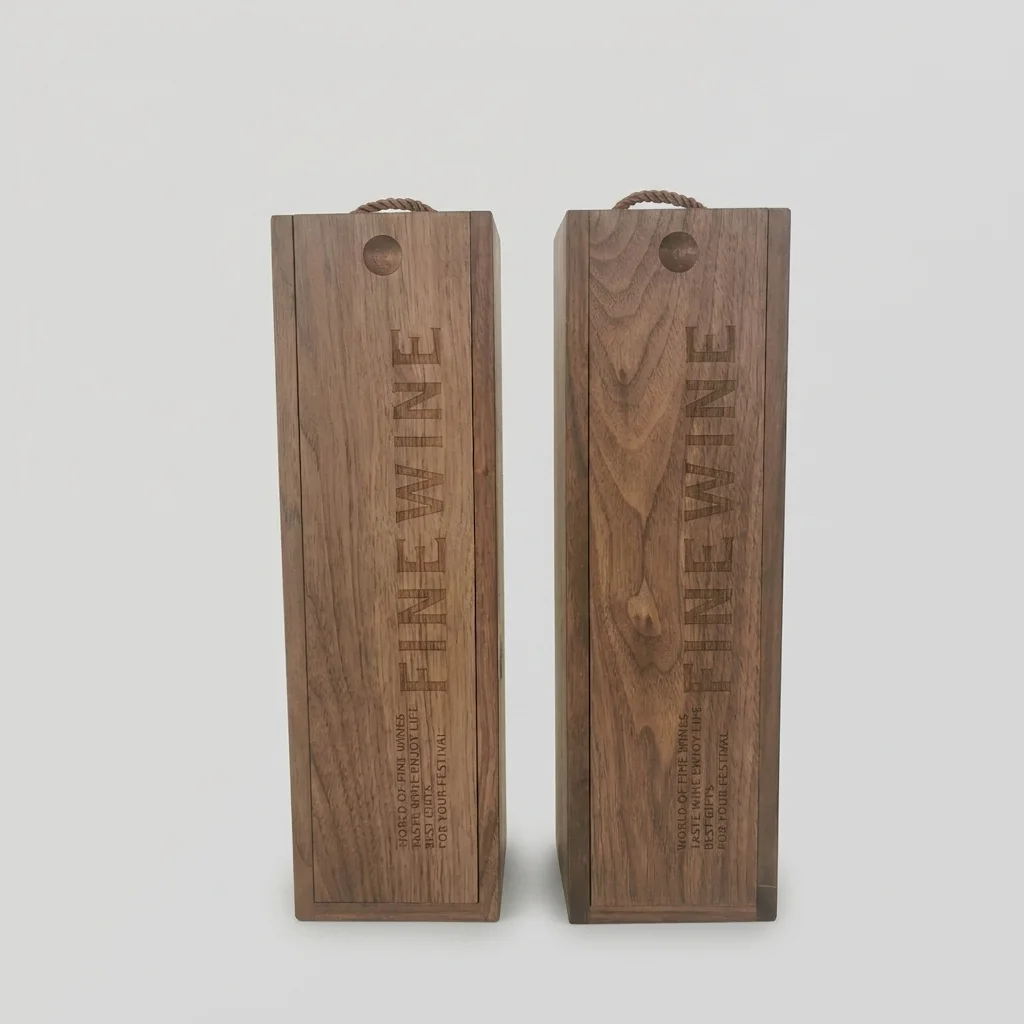
Custom Single Bottle Black Walnut Wine Gift Box - Manufacturer & Wholesale Supplier
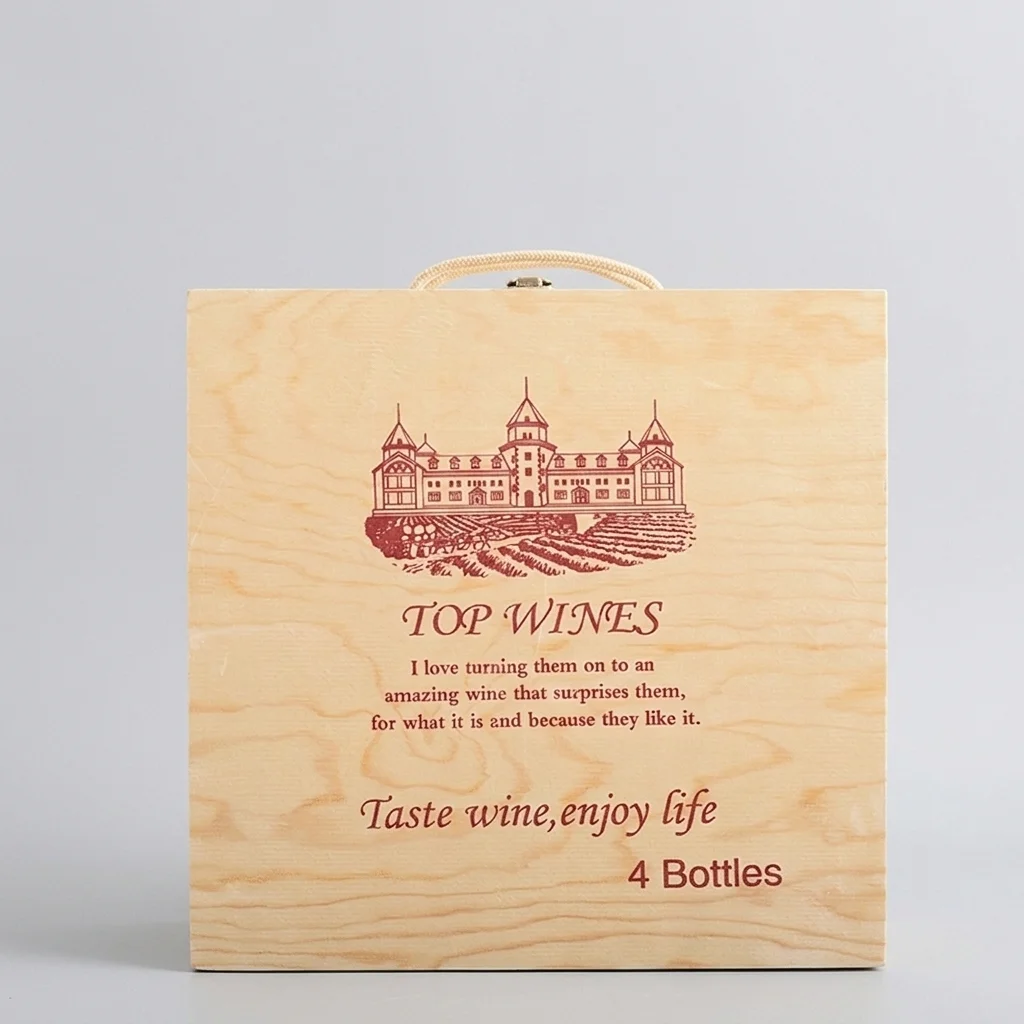
Custom 4 Bottle Vintage Wooden Wine Crate, Natural Pine Construction - Manufacturer & Wholesale Supplier
Frequently Asked Questions
Q: Why is the lead time longer for this type of box?
Q: Will the finish on these boxes easily chip during shipping?
Q: Do these boxes show fingerprints easily?
Q: Can you match the lacquer to our specific brand color?
Q: Why don't you use quadrant hinges on this design by default?
Send Us Your Requirements
Send your design, reference images, or product sample. We don't just quote a price — we respond with material recommendations, a feasibility assessment, and professional suggestions grounded in over 20 years of manufacturing experience. Expect a detailed response within 24–48 hours.
- Professional recommendations included
- Small MOQ & trial orders supported
- Worldwide shipping with export documentation