Wooden wine gift boxes are increasingly popular among wineries, retailers, distributors, and corporate gift buyers who want packaging that feels premium, protective, and aligned with sustainable values. When you choose the right combination of materials, structural designs, and customization options, your wooden wine box becomes a powerful branding tool instead of just a container.
This guide explains how wooden wine gift boxes sourcing work from end to end: what wood materials to choose, how different structures protect and present bottles, which finishing and printing methods elevate your brand, and how to collaborate smoothly with a professional manufacturer like Hilon Wood to control cost, quality, and lead time.
Why Wooden Wine Gift Boxes Are in High Demand
For many brands, the wine bottle itself is only half the story; the other half is the experience of receiving and opening the package. Wooden wine gift boxes answer several needs at once: they protect fragile glass bottles, upgrade perceived value, and communicate identity and craftsmanship.
Compared with common alternatives like cardboard or plastic, wooden gift boxes offer a unique mix of durability, tactile warmth, and long-term reuse. This combination makes them especially attractive for premium, reserve, or limited-edition wines, and for corporate or seasonal gifting campaigns.
Key Benefits for Wineries and Retailers
Wooden wine gift boxes create tangible advantages across marketing, logistics, and customer experience:
| Aspect | Cardboard Gift Box | Wooden Wine Gift Box |
|---|---|---|
| Perceived Value | Standard, often seen as disposable | Premium, collectible, suitable for gifting |
| Durability | Moderate, sensitive to moisture and crushing | High, strong protection against impact |
| Brand Longevity | Short life span, usually discarded | Long-term reuse, brand remains visible |
| Customization | Good, mostly print-based | Excellent, engraving, hardware, finishes, prints |
| Sustainability | Recyclable but often single-use | Renewable materials, reusable, upcyclable |
By choosing wooden wine gift boxes, you give customers something they want to keep. Many reuse the box for storage, decor, or re-gifting, which keeps your brand visible long after the wine has been enjoyed.
Use Cases for Wooden Wine Gift Boxes
Well-designed wooden boxes fit a wide variety of scenarios:
Wineries use wooden boxes for cellar releases, tasting room upsell bundles, anniversary cuvées, and club shipments. Retailers and wine shops use them for holiday promotions, cross-brand gift sets, and in-store displays that highlight premium bottles. Corporate buyers rely on wooden boxes for executive gifts, year-end appreciation packages, conference VIP kits, and bespoke branded experiences. E-commerce brands also use wooden boxes for online gifting sets that must both ship safely and arrive looking impressive.

Overview of Common Wood Materials for Wine Gift Boxes
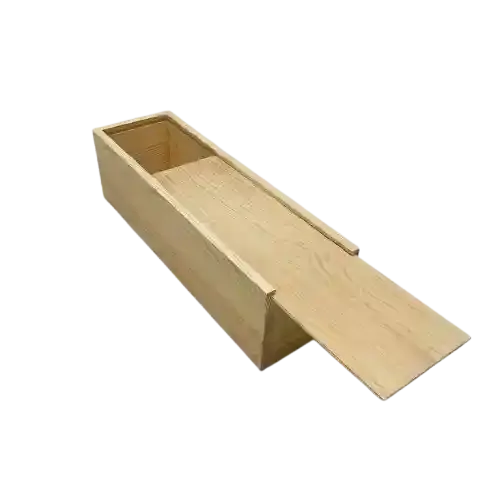
Wooden wine gift boxes are produced using different types of wood, and the material choice directly affects appearance, durability, cost, and suitability for customization. In practical production, manufacturers usually offer several commonly used options so buyers can balance budget, weight, and surface finishing requirements.
Solid Softwoods: Pine, Paulownia
Solid softwoods are a classic choice for wooden wine gift boxes. Pine and paulownia are particularly popular because they are light, easy to machine, and show attractive grain patterns. Pine offers a familiar, warm look with visible growth rings and knots that communicate a natural, rustic feel. Paulownia is extremely light yet structurally stable, which is useful when shipping larger cases or multi-bottle sets.
Solid wood boxes are well-suited to laser engraving and deep carving, which visually highlights the grain. They can be left unfinished for a natural vibe, coated with clear lacquer for subtle sheen and protection, or stained to match brand colors while preserving wood texture.
Hardwood and Bamboo Options for Premium Wine Boxes
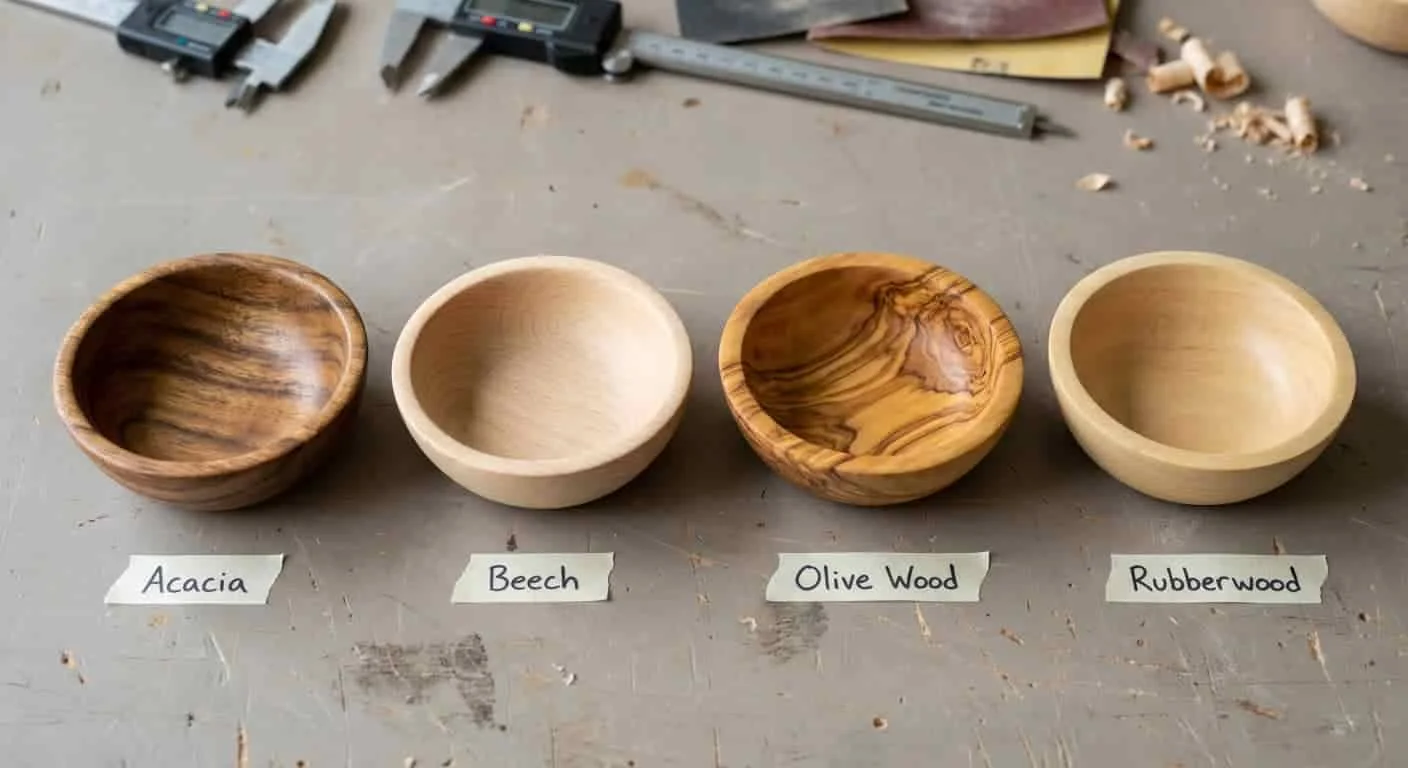
Hardwoods such as beech, oak, birch, and walnut, along with bamboo, are commonly used for higher-end wooden wine gift boxes. These materials offer greater density and a more refined appearance compared with softwoods. Beech provides a smooth and uniform surface, while oak features a stronger structure with a more pronounced grain pattern. Birch is valued for its light color and consistent texture, making it suitable for clean and modern designs. Walnut stands out for its naturally dark tone and rich grain, often associated with luxury packaging. Walnut is typically selected for high-end or limited edition wine packaging. Bamboo, although technically a grass, offers a clean, linear grain and is often selected for eco-focused packaging concepts.
These materials are well-suited to precision machining, fine engraving, and high-quality finishing. They can be coated with clear lacquer to enhance natural grain, stained for deeper tones, or painted depending on design requirements. In premium wooden wine gift boxes, these materials are often used for visible outer panels or full box construction to achieve a more refined presentation and stronger brand positioning.
Plywood: Strength and Dimensional Stability
Plywood is made from thin layers of wood veneer glued together with alternating grain directions. This structure increases dimensional stability and resistance to warping, making plywood ideal for export packaging or climates with high humidity variations. Plywood also tends to be more cost-effective than high-grade solid wood for larger production runs.
Plywood surfaces accept printing, painting, and veneer finishes well. Many wooden wine gift boxes with sliding lids or hinged lids use plywood panels for sides and base, combined with solid wood frames or edges for added strength and aesthetics.
MDF and Engineered Wood Options
Medium Density Fiberboard (MDF) and similar engineered materials are dense and smooth, providing an excellent base for painted finishes and high-coverage printing. MDF is a good choice when you want a very uniform surface, bold solid colors, or complex printed graphics. However, it is heavier than softwoods and must be properly sealed to resist moisture.
Well-engineered MDF wine boxes can achieve very clean edges and contemporary lines, making them suitable for modern, minimalist brand designs that favor paint and print over visible wood grain.
Your manufacturer can help you choose material combinations that balance budget, durability, and branding for your specific project.
Core Structural Designs for Wooden Wine Gift Boxes
Beyond material choice, the structure of a wooden wine gift box affects everything from protection and user experience to packing efficiency. Wooden wine gift boxes often combine several core structures to cover different bottle formats and price tiers.
Single-Bottle vs Multi-Bottle Wine Boxes
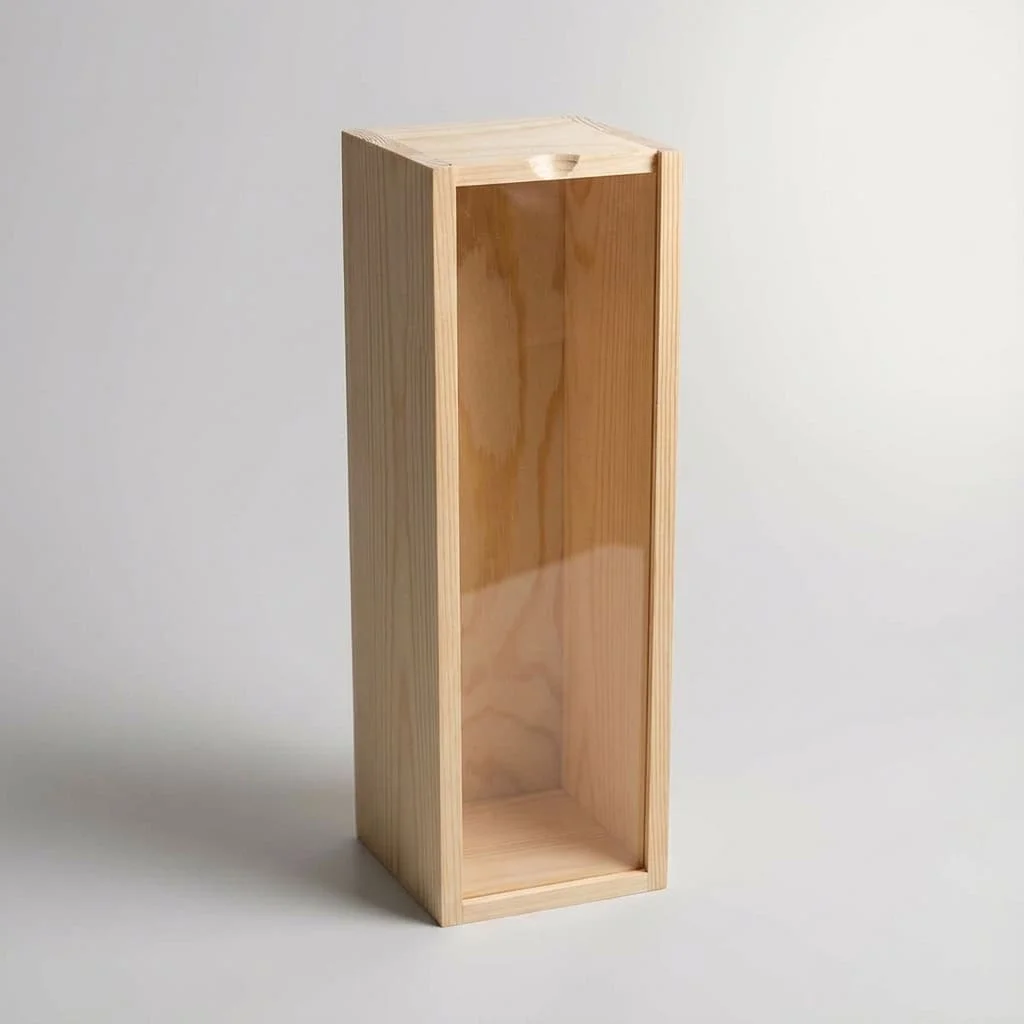
Single-bottle boxes focus on individual presentation. These are often used for special vintages, personalized gifts, or corporate recognition. They can be very slim and elegant, with interior lining, inserts, and engraving tailored to one label.
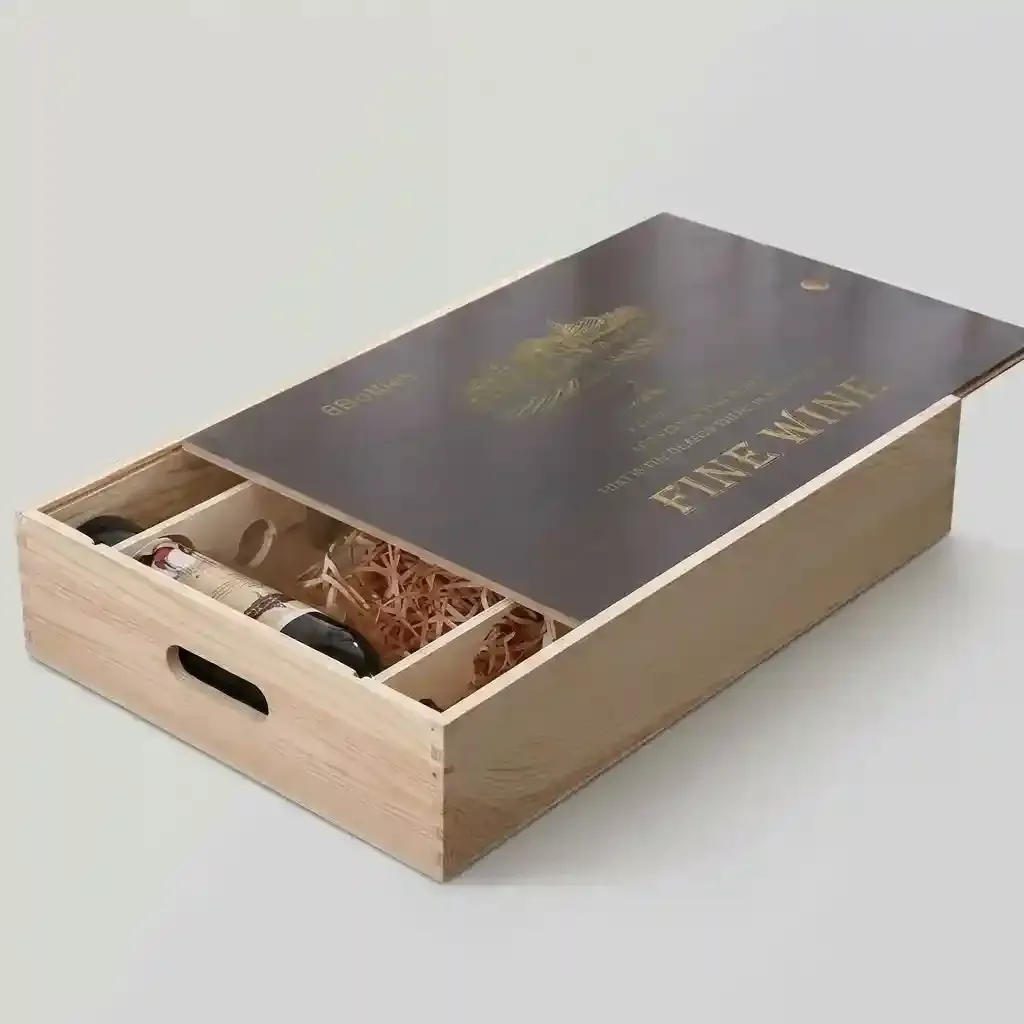
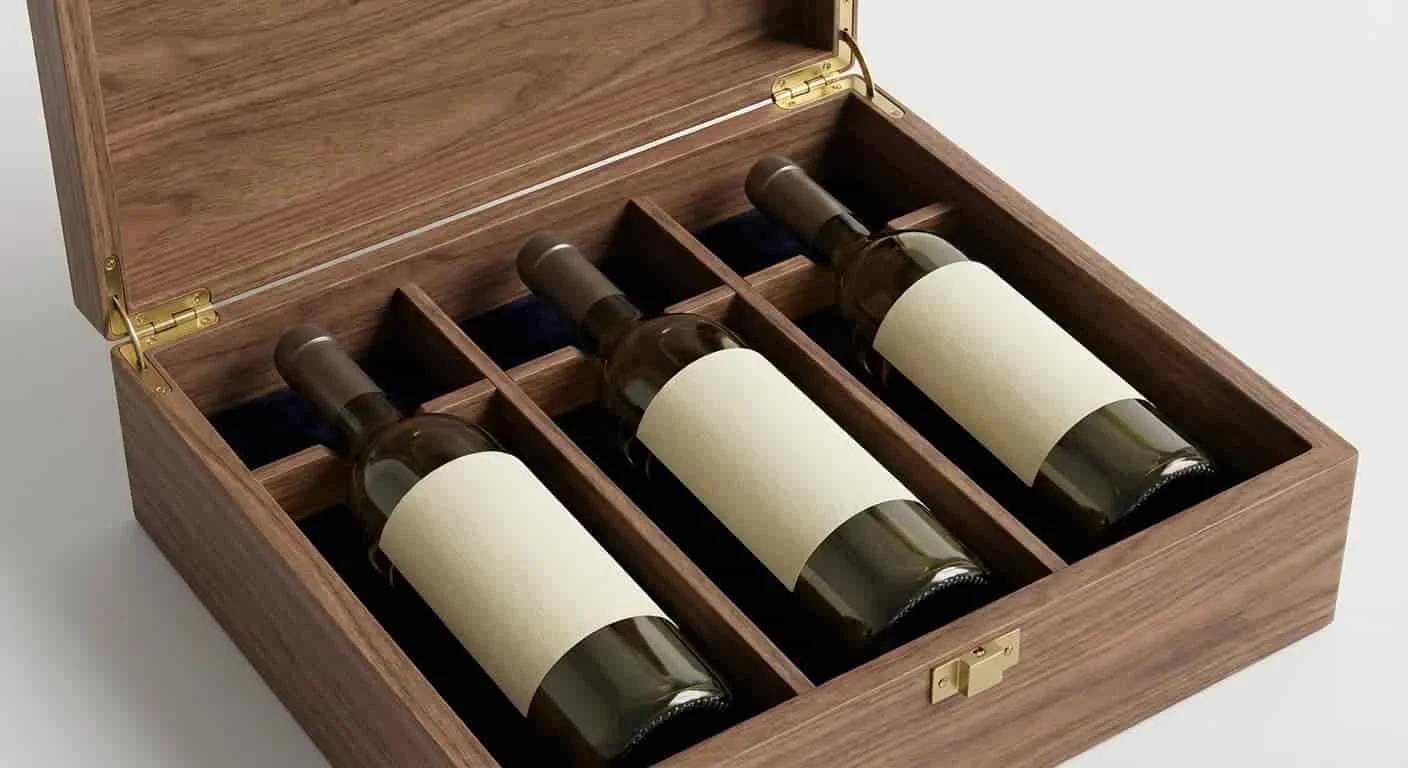
Multi-bottle boxes (two, three, six, or twelve bottles) are designed for sets. They might group vertical vintages, mixed varietal selections, or corporate bundles. Interior dividers keep bottles separated to prevent impact. Multi-bottle structures need careful engineering so they remain strong under the combined weight of full bottles.
Common Lid and Opening Styles
The lid and opening style determines both usability and aesthetic impact. Wooden wine gift boxes typically use a few proven structures:
| Opening Style | Description | Advantages |
|---|---|---|
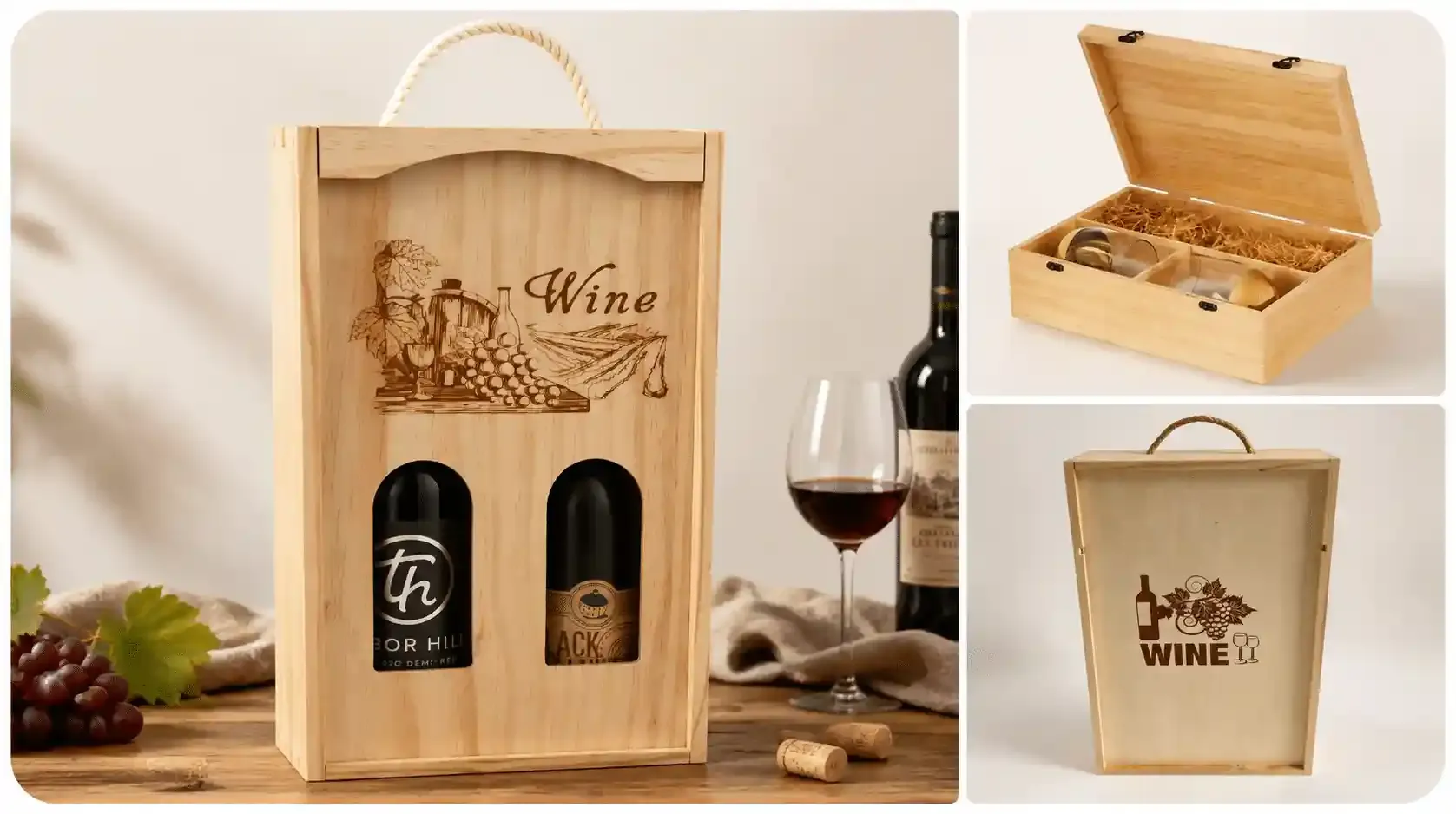
| Sliding Lid | A panel slides in grooves along the sides | Simple, secure, ideal for engraving on top |
| Hinged Lid | Lid attached on one side by metal or wooden hinges | Premium feel, easy to open and close |
| Lift-Off Lid | Separate lid covers the box, lifted completely off | Clean lines, good for display in open position |
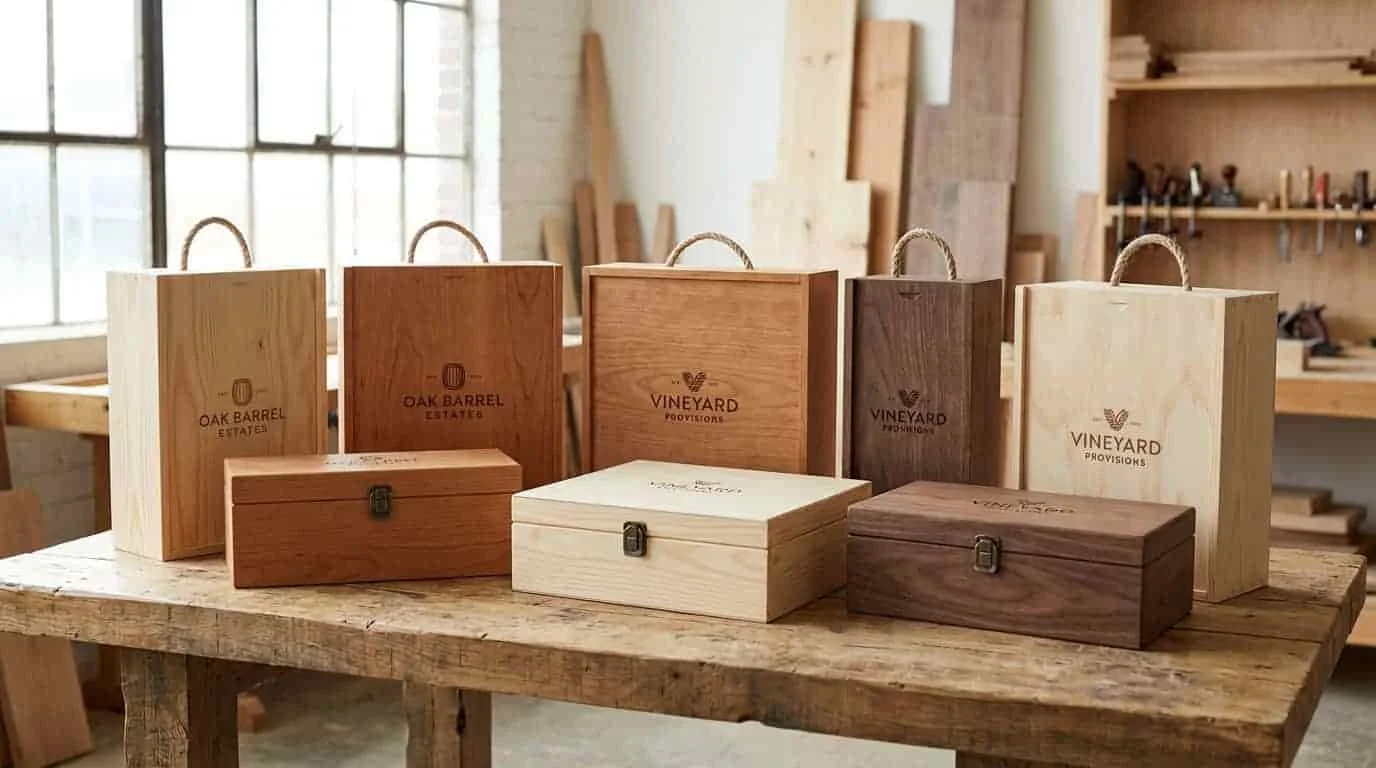
| Chest / Clasp Closure | Front hardware with latch or clasp | Decorative, secure, collectible look |
Handles, Hardware, and Functional Details
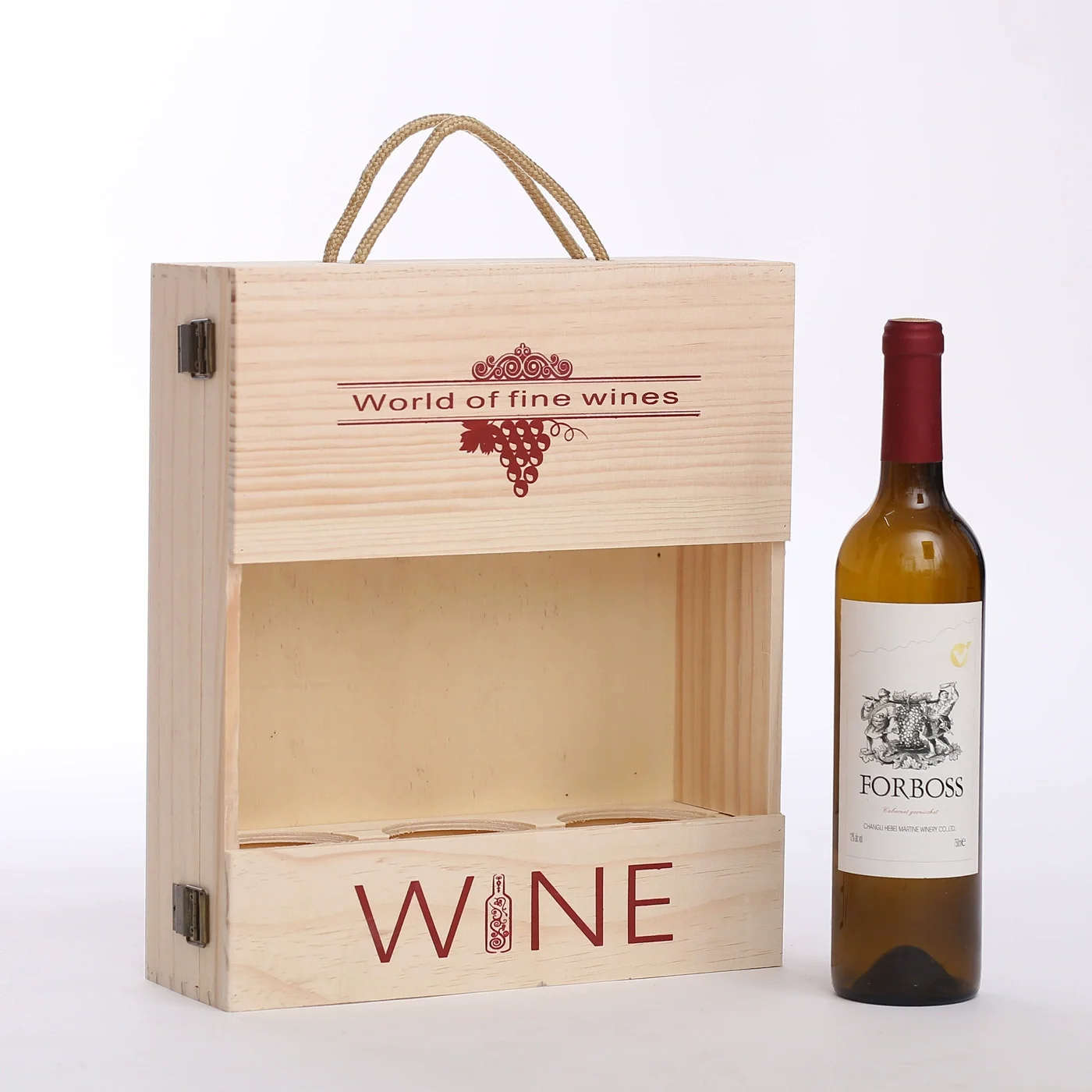
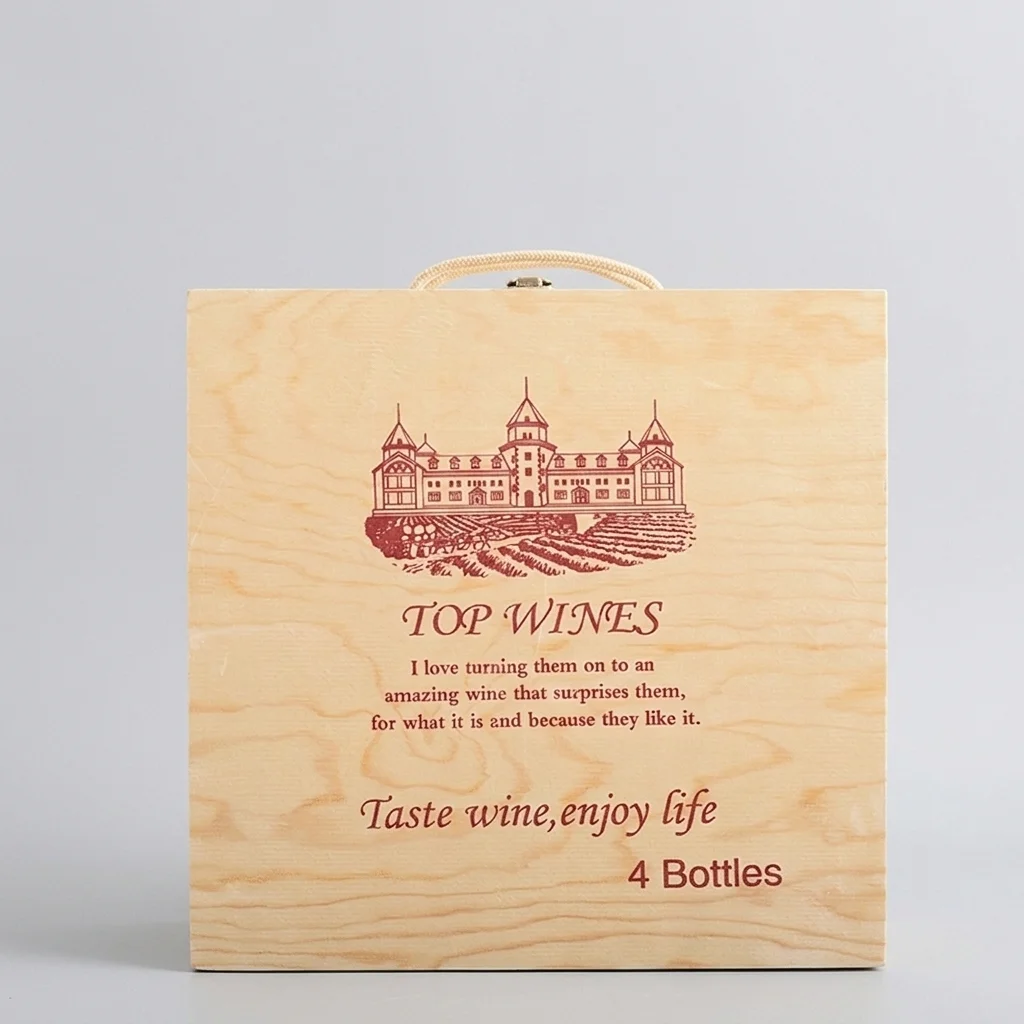
Hardware and handles add both function and visual flair. Rope or jute handles at the top or sides make single-bottle boxes easy to carry from shop to event. Metal hinges and clasps in antique brass, matte black, or brushed nickel raise perceived value and align with brand aesthetics. Recessed finger pulls or cut-outs are helpful for sliding lids, improving ergonomics while staying minimalist. Some wooden wine gift boxes may also integrate magnets in the lid for a clean but secure closure.
When ordering in bulk, discuss hardware options early because they influence drilling positions, wall thickness, and assembly workflows on the production line.
Interior Protection and Presentation Systems
Inside the box, protection and presentation must work together. Wooden wine gift boxes generally combine the wood shell with interior supports that keep bottles from moving, reduce vibration, and visually stage the product.
Inserts, Dividers, and Liners
Inserts and dividers are particularly important for multi-bottle sets. Wooden or plywood dividers create a solid grid that keeps bottles from colliding. Cardboard or molded pulp inserts can be custom-shaped to hold specific bottle silhouettes while reducing cost and weight. Foam inserts (EVA, PU, or EPE) are useful for high-value or fragile bottles and can be wrapped with fabric for a luxurious look.
For single-bottle wooden wine gift boxes, a simple bottle cradle, semi-circular wooden support, or dense foam block is often enough to keep the bottle centered and secure. Many brands also add paper, wood wool, or textile fillers around the bottle for visual richness and additional cushioning.
Decorative and Protective Linings
Fabric linings play a dual role: they protect glass surfaces and create a premium first impression. Common options include satin or silk-like fabrics for classic luxury, natural linen or cotton for a rustic or eco style, and velvet or suede-like textiles for dark, dramatic presentations. These linings can be color-matched to capsule and label elements for cohesive branding.
For high-volume wooden wine gift boxes, partial lining solutions may be used, such as lining only the base or bottle recess while leaving the sides in natural wood to control costs.
Finishing Methods: From Natural to High-Gloss
The finish applied to your wooden wine gift boxes wholesale order dramatically changes the box’s appearance, feel, and durability. Finishing also affects how well the box resists moisture, fingerprints, and shipping wear.
Natural, Stained, and Painted Finishes
Natural finishes such as clear lacquer or oil preserve the character of the wood grain and knots. This is popular for rustic, artisanal, or nature-oriented brands. Stained finishes add color while allowing the grain to show through. Common choices include walnut, oak, mahogany, and custom stain mixes to match brand palettes.
Painted finishes offer the most freedom for color and surface uniformity. MDF and well-sanded softwoods can be coated in solid brand colors, either matte, satin, or high-gloss. Painted surfaces pair well with screen printing, UV printing, or metallic foiling.
Matte vs Gloss Surface Effects
Matte surfaces give a refined, contemporary look and reduce fingerprints and reflections. They are widely used for minimalist, high-end branding. Glossy finishes, on the other hand, create depth and shine, drawing attention on retail shelves and photography. Semi-gloss and satin finishes sit between these extremes, balancing elegance and practical maintenance.
Protective Coatings for Durability
Besides visual impact, coatings protect wooden wine gift boxes from wear. Polyurethane and acrylic lacquers are common protective layers that resist scratches and stains. Water-based, low-VOC coatings are preferred for brands focusing on sustainability and worker safety, while still delivering strong performance.
When wooden wine gift boxes will be shipped long distances or stored in varying environmental conditions, specifying protective coatings becomes essential to keep them looking pristine.
Branding and Customization Options
Customization is where wooden wine gift boxes really shine. They offer three-dimensional surfaces, tactile textures, and hardware that make your brand unforgettable. A professional manufacturer such as Hilonwood.com custom wood box services can combine multiple techniques to create a fully branded experience.
Laser Engraving and Carving
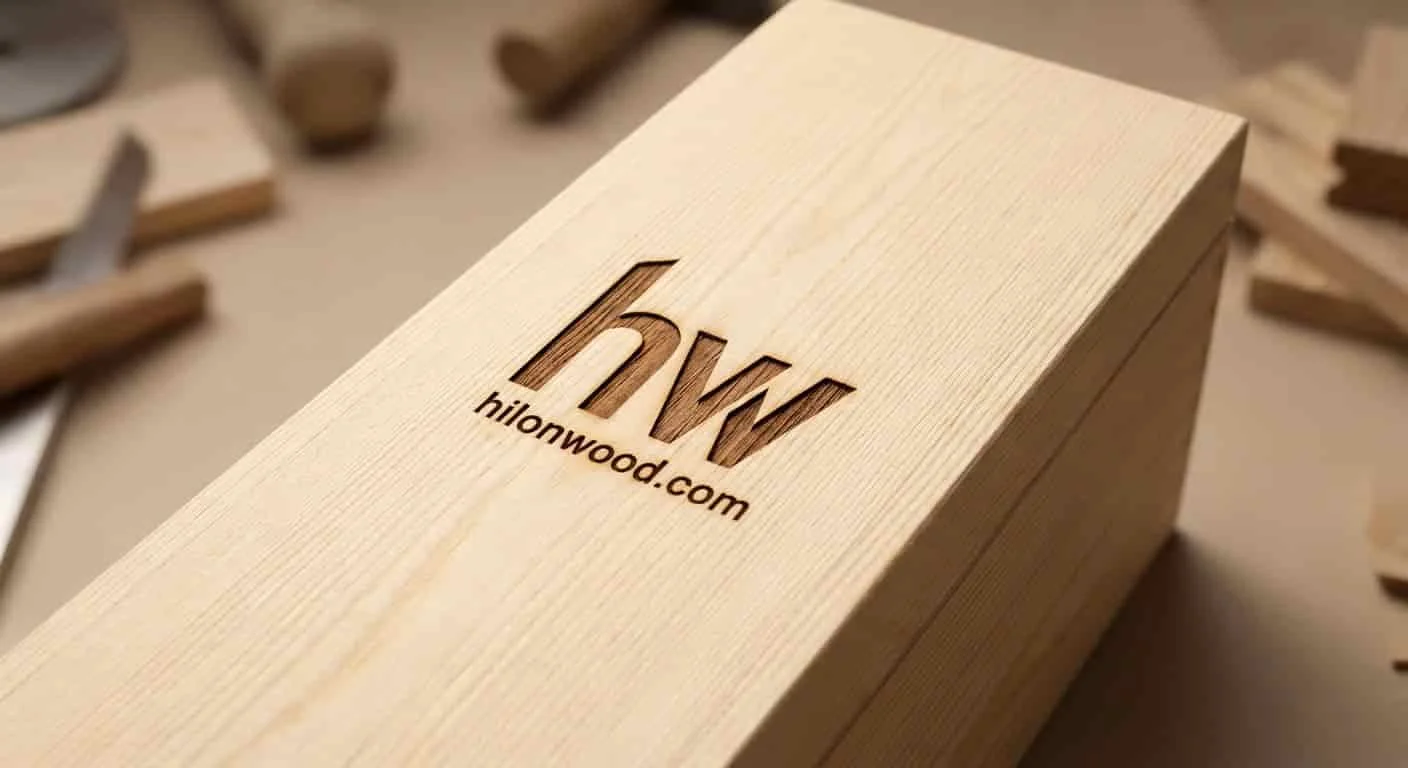
Laser engraving is one of the most popular ways to customize wooden wine boxes. It produces precise, permanent marks that follow your logo outlines, typography, and even fine line illustrations. Engraving can be shallow for a subtle tone-on-tone effect or deeper for strong relief and shadow play.
Because engraving removes a thin layer of wood, it works best on natural or lightly stained surfaces. It is ideal for lids, side panels, and sometimes the back of the box for messages or serial numbers. For very special editions, deeper CNC carving can create 3D logos or patterns that become a tactile feature of the box itself.
Screen Printing, UV Printing, and Hot Stamping
Printing gives you flexibility for full-color graphics or bold, high-contrast logos. Screen printing works well for one- to three-color designs and large production runs. It creates opaque, vibrant colors on both natural and painted wood. UV digital printing allows full-color images, gradients, and photographic elements with good color control, especially on smooth surfaces.
Hot stamping and foil stamping apply metallic or pigmented foils using pressure and heat. Gold, silver, or copper foils are frequently used for logos, seals, and key text. This creates a premium shine that pairs well with darker stains or solid color paints.
Color Matching and Brand Consistency
For many wineries and corporate clients, precise color consistency is non-negotiable. Pantone-based color matching helps align your wooden wine gift boxes with labels, capsules, and other brand collateral. This is especially important when painting boxes or printing large solid color areas.
Manufacturers usually request official color codes and artwork files in vector formats. They can then produce pre-production samples or color swatches for approval before mass production, ensuring that every box in your wholesale order reinforces brand identity accurately.
Personalization Options for Gifting
Beyond core branding, many clients add fields for individual personalization. This might mean engraved recipient names, event titles, or short messages on the lid or inside panel. For corporate programs, a base design can be standardized while personal details vary per recipient or per batch.
Discuss these needs with your supplier early, as personalization may influence the production workflow and whether laser engraving or digital printing is the better method at scale.
Designing Wooden Wine Gift Boxes for Different Channels
Where and how your wine boxes will be used should guide their design. Wooden wine gift boxes that perform beautifully in a boutique winery setting may need modifications for e-commerce shipping or corporate logistics.
Retail and Tasting Room Display
In retail environments and tasting rooms, visual impact and touch matter most. Boxes may remain open to show labels, or closed and stacked to create strong brand blocks. Front-facing logos, visible grain, and distinctive hardware make passersby stop and look.
Handles and easy-open lids encourage customers to pick up and interact with the box. For tasting rooms, including your domain on the box (e.g., Hilonwood.com or your own winery URL) helps drive future direct orders and loyalty.
E-commerce and Shipping Considerations
For online sales, protecting the bottle during courier transport is critical. Wooden wine gift boxes already provide strong shell protection, but they may still need outer cartons and additional padding for harsh shipping conditions.
Consider the total weight and dimensional limits of your most common shipping services. Thinner wall sections, lighter woods like paulownia, and compact multi-bottle arrangements can keep cost per shipment under control. Work with your wood box supplier to test sample shipments before finalizing specs.
Corporate and Event Gifting
Corporate clients need streamlined processes and consistent presentation for large volumes. Branded wooden wine gift boxes with space for printed cards, brochures, or co-branded accessories (like corkscrews and stoppers) work well in this context. Interior layouts can be modified to include compartments for glasses, notes, or small promotional items.
When boxes are shipped directly to recipients, designs that are intuitive to open and re-close reduce customer service issues. Clear instructions or small printed icons inside the lid can help recipients understand how to reuse the box after the wine is removed.
Sustainability and Eco-Friendly Choices
Many buyers of wooden wine gift boxes are also concerned about environmental impact. Responsible material sourcing, coatings, and logistics all contribute to a more sustainable packaging strategy.
Sustainably Sourced Wood and Certifications
Look for suppliers able to provide wood from responsibly managed forests. Certifications such as FSC (Forest Stewardship Council) or PEFC demonstrate that raw materials come from sources that meet environmental and social standards. You can learn more from the official FSC website at https://www.fsc.org.
Using certified wood can also support your own ESG and CSR reporting, which is increasingly important for publicly listed companies and export markets.
Low-VOC Coatings and Adhesives
Traditional solvent-based finishes may release volatile organic compounds (VOCs). Many modern wooden wine gift box manufacturers have shifted to water-based, low-VOC lacquers, stains, and adhesives that deliver high performance with lower environmental and health impact.
When sustainability is a key selling point for your brand, ask your supplier about specific coating systems, MSDS (Material Safety Data Sheets), and compliance with regulations in your target markets.
Reusability and End-of-Life Considerations
One of the biggest sustainability advantages of wooden wine gift boxes is their long life. Recipients rarely discard a well-designed wooden box; instead, they reuse it for storage or decor. This extends the functional life of the material and keeps your branding in circulation.
At end of life, untreated or lightly finished wood can often be recycled or repurposed. Designing boxes with minimal plastic components, and clearly separable parts, helps improve recyclability.
Wooden Wine Gift Boxes Sourcing: Process and Key Points
Once you have a clear vision of materials, design, and customization, the next step is to navigate the ordering process.
Defining Your Specifications
Begin with a concise specification that covers bottle size and shape (standard 750ml, magnum, or specialty bottles), quantity (estimated annual volume and first order), material preferences (solid wood, plywood, MDF or combinations), structural style (single or multi-bottle, lid type, handles, hardware), customization (engraving, printing, color finishes, interior lining), and packaging and shipping requirements.
Sampling and Prototyping
Before mass production, sampling is essential. A physical prototype allows you to verify dimensions, test bottle fit, inspect finishing and branding, and evaluate overall feel. You can also test how the box performs in shipping or retail display.
Typically, one or more rounds of sample refinement are done for new designs, especially if you are introducing complex interior inserts or multi-material combinations.
MOQ, Lead Time, and Cost Control
Most wooden wine gift boxes wholesale projects have a minimum order quantity (MOQ) determined by material sourcing, setup time, and production efficiency. Higher volumes usually reduce unit cost. Lead times depend on design complexity, order size, and seasonal demand. Busy periods such as pre-holiday months require additional planning buffer.
Your supplier can suggest cost optimization strategies such as standardizing certain dimensions, sharing components across different SKUs, or using a combination of engraving and printing instead of only premium processes. Reviewing these options early ensures you hit both budget and branding goals.
Quality Control and Compliance
For export and large-scale distribution, consistent quality is vital. Professional suppliers implement in-process and final inspections to check dimensions, assembly, finish uniformity, logo positioning, and functional hardware.
If your markets require specific compliance (such as formaldehyde emission limits or packaging waste regulations), share those requirements with your supplier. They can select compliant materials and keep relevant documentation ready for audits or customs checks.
How Hilon Wood Supports Your Wooden Wine Gift Box Sourcing
As a specialized manufacturer of custom wooden products, Hilonwood.com provides end-to-end support for wooden wine gift boxes wholesale orders, from early design consultation to mass production and logistics.
Custom Design and Engineering Support
Hilonwood’s team works with your design files, sketches, or even conceptual ideas to create workable box structures that can be manufactured reliably. They verify wall thickness, joinery, lid mechanisms, and interior supports against real-world usage scenarios and shipping needs.
By collaborating early, you can avoid costly redesigns later and ensure your artwork aligns with the chosen engraving or printing technology.
Wide Range of Materials and Finishes
Hilonwood.com sources multiple wood species and engineered boards, giving you flexibility to balance cost, aesthetics, and sustainability. Their finishing capabilities cover natural, stained, and painted surfaces, as well as matte, satin, and gloss effects.
This breadth means you can build a tiered packaging program: for example, a natural pine engraved box for standard gifts, a stained hinged-lid box with lining for premium sets, and a fully painted, UV-printed MDF box for bold campaign-driven releases.
Branding, Personalization, and Small-Batch Flexibility
With in-house engraving and various printing options, Hilonwood supports both large-scale branding runs and smaller, highly personalized batches. This is useful for club member exclusives, event-specific boxes, or corporate programs that require changing text while maintaining consistent structure and design.
To explore capabilities and see more examples, you can review the blog and case studies section on Hilonwood’s blog, where wooden packaging trends and project highlights are regularly shared.
Frequently Asked Questions About Wooden Wine Gift Boxes Sourcing
How should I choose between engraving and printing?
If your brand aesthetic is natural, understated, or craft-focused, laser engraving on natural or lightly stained wood is often best. It ages gracefully and feels authentic. If your brand relies on bold colors, complex graphics, or photographic elements, UV or screen printing on a smooth surface or painted box will serve you better.
Some brands combine both: engraved main logos with printed secondary details and color accents.
Can wooden wine gift boxes be used for other beverages or products?
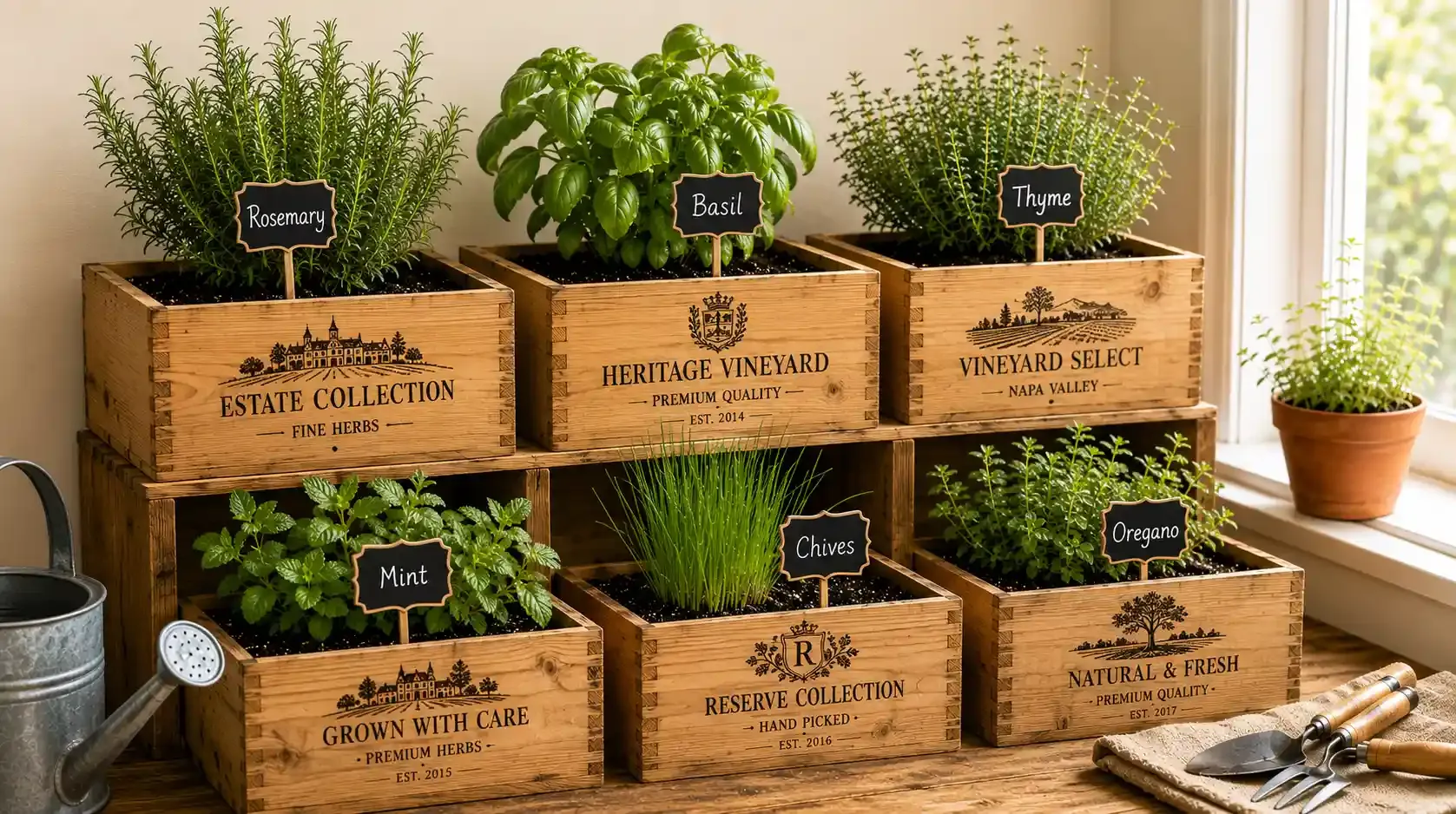
Yes. While designed for wine, the same structures can be adapted for spirits, olive oil, gourmet food sets, or mixed gift hampers. Adjustments to interior inserts, dividers, and overall dimensions allow a single box family to support several product lines.
What information does my supplier need to start a quote?
At minimum, provide bottle details, quantity, preferred materials, rough dimensions, desired lid style, branding methods, and destination country. For a complete sizing reference, consult our guide on custom wooden wine box sizes. Reference photos or links to similar boxes make communication faster and more precise.
Are wooden wine boxes suitable for long-term bottle storage?
Wooden wine boxes protect against light and impact, but long-term storage also depends on ambient temperature and humidity. Many collectors keep bottles in cellars or temperature-controlled spaces and use wooden boxes mainly for organization and additional protection. For very long storage, ensure that corks and capsules are not under pressure from inserts or lids.
This article was made by Hilon Wood. We are dedicated to custom wooden products manufacturing.
Planning Your Next Wooden Wine Gift Box Project with Hilon Wood
Hilon Wood specializes in custom wooden wine boxes based on reference images, samples, drawings, or bottle specifications. Box structure, material, surface finish, hardware options and logo printing methods can all be customized. Small trial orders are supported for initial evaluation.
Let us manufacture custom wooden wine boxes for you.