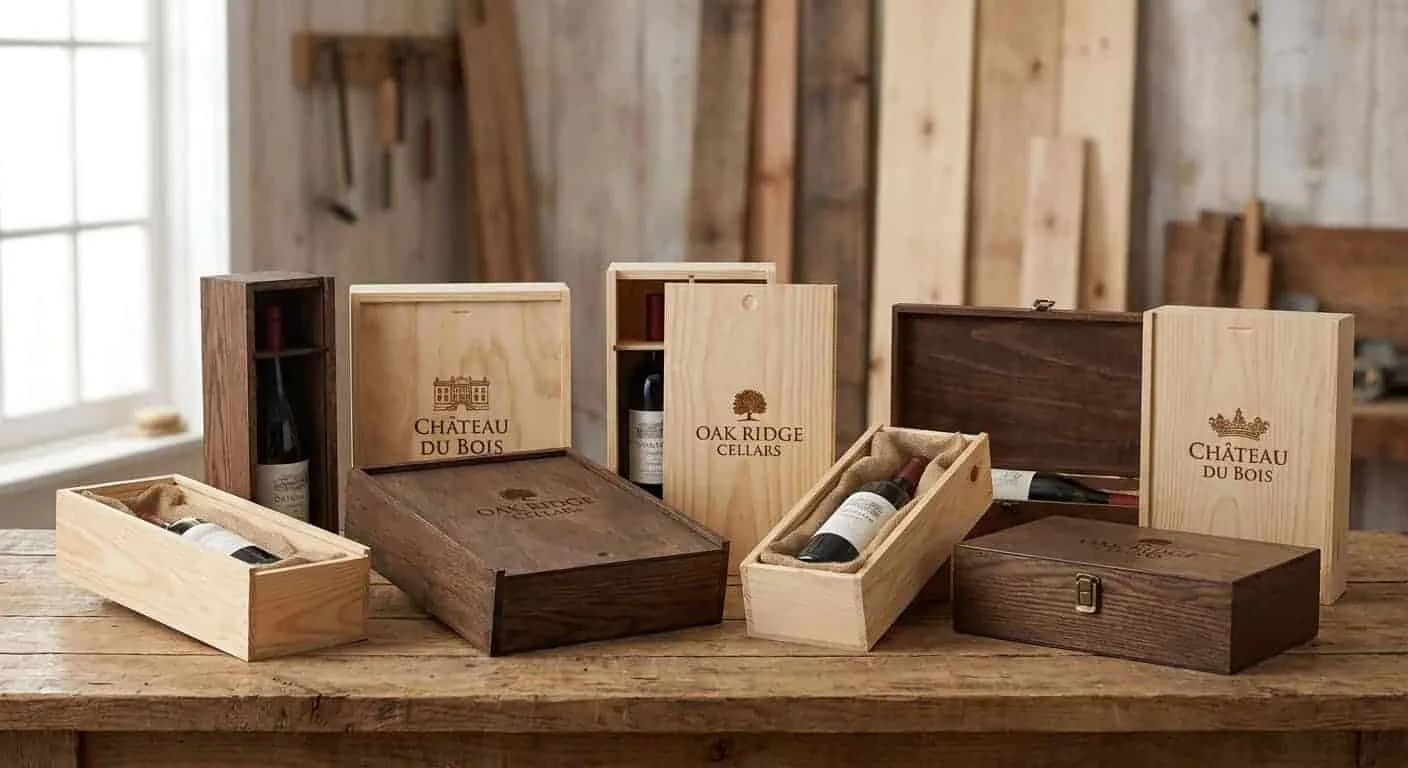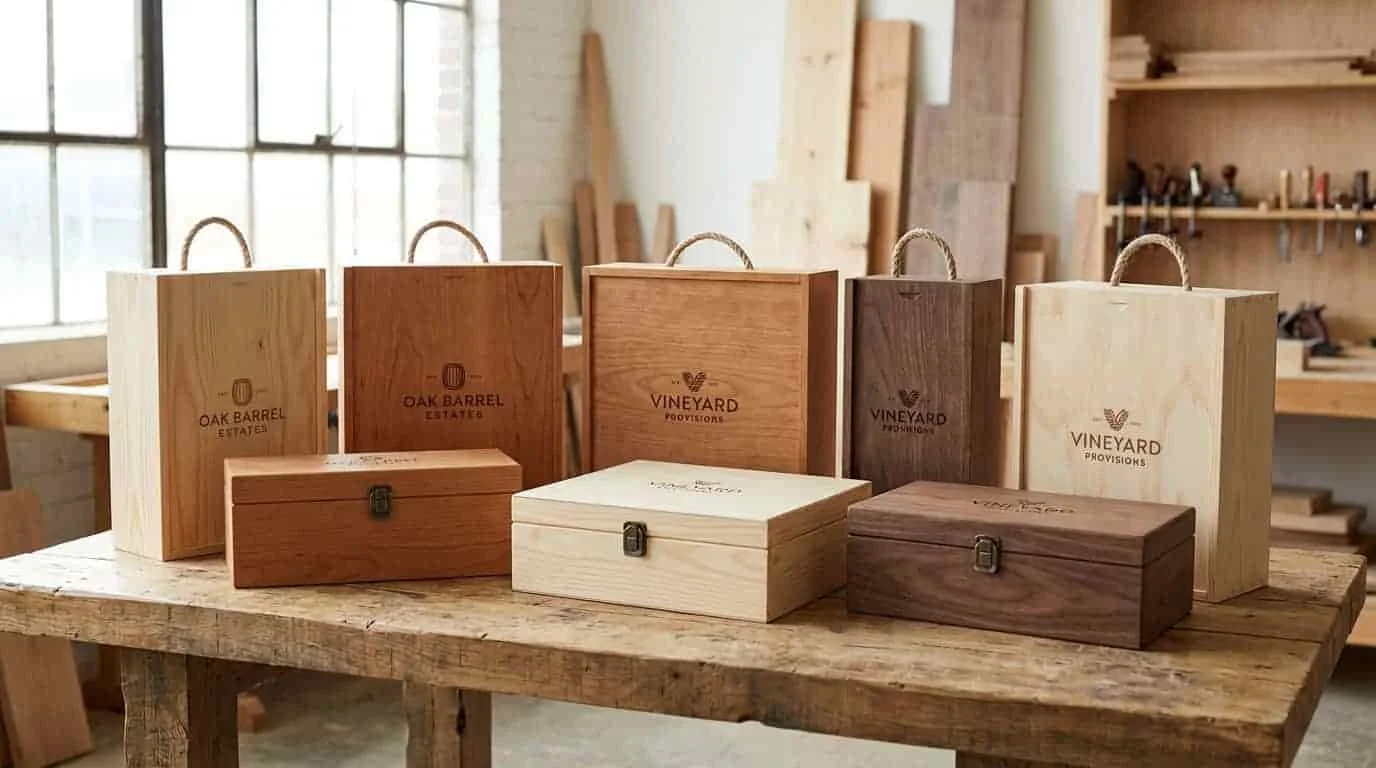
OEM wooden wine boxes for wine brands are more than containers — they are strategic assets that communicate quality, build brand recognition, and drive purchase decisions at the point of sale. When a wine brand invests in OEM wooden wine boxes, the return extends beyond protection into measurable business outcomes: higher perceived value, stronger customer loyalty, and a premium brand image that commands attention on crowded retail shelves. This guide explains how OEM wooden wine boxes deliver these returns, how the OEM process works from concept to delivery, and how to select the right design and manufacturing partner for your custom wooden wine boxes wholesale needs.
Key Takeaways
- The global wine packaging market is valued at $6–7 billion in 2025 and growing 4–6% annually
- Premium wood packaging can improve consumer perceived value by up to 35%
- Academic research confirms that packaging format directly influences wine purchase decisions and taste perception
- OEM wooden wine boxes offer full customization — wood species, structure, branding, and finishes
- OEM wooden wine boxes serve as reusable marketing assets that extend brand exposure long after the sale
- The corporate gifting market, valued at $966 billion, rewards premium presentation
Why Should Wine Brands Invest in OEM Wooden Wine Boxes for Wine Brands?
OEM wooden wine boxes for wine brands provide a measurable competitive advantage that extends far beyond aesthetics — they increase perceived value, strengthen brand identity, and directly influence purchasing behavior. For wine brands evaluating packaging investments, OEM wooden wine boxes deliver returns that compound with every order.
The Business Case Backed by Data
The global wine packaging market is valued at approximately $6–7 billion in 2025, with a projected CAGR of 4–6% driven by demand for premium presentation and sustainable materials. Within this market, wooden packaging occupies the fastest-growing premium tier.
Research consistently demonstrates that OEM wooden wine boxes influence wine purchase decisions more than standard packaging formats. A 2024 systematic review published in academic journals — covering fifteen studies between 2002 and 2024 — confirmed that packaging cues such as material, shape, and design directly impact consumer perceptions of wine quality and taste. According to ScienceDirect research, participants perceived the same wine differently based solely on its packaging format. For more on why wood outperforms other materials, see our detailed analysis of why wooden wine boxes are popular for wine packaging.
Industry analysis further shows that premium packaging can improve consumer perceived value by up to 35%. A wine presented in an OEM wooden wine box is not perceived as the same product in a cardboard carton — it is viewed as more valuable, more gift-worthy, and more memorable. For wine brands choosing OEM wooden wine boxes, this perception differential translates into higher sell-through rates, stronger brand recall, and the ability to command premium positioning.
The Corporate Gifting Advantage
The corporate gifting market is valued at $966 billion, with 58% of spending allocated to premium gifts. Wine presented in OEM wooden wine boxes arrives gift-ready and reflects well on the giver. This segment alone represents a significant opportunity for wine brands that invest in OEM wooden wine boxes for corporate accounts.
Reusability as Ongoing Brand Exposure
Unlike cardboard packaging that is discarded after opening, OEM wooden wine boxes are frequently kept and reused as storage, display pieces, or decorative items. This extended product life means ongoing brand exposure long after the wine is consumed — a benefit unique to OEM wooden wine boxes.
How Does the OEM Process Work for Custom Wine Boxes?
The OEM wooden wine box process follows a structured five-step sequence: requirement discussion, quotation, sampling, production with quality control, and delivery. Understanding this process helps wine brands plan their packaging projects with confidence.
Step 1: Requirement Discussion
You provide your specifications — bottle size, preferred wood type, box structure, finish, and branding requirements. You do not need a detailed technical drawing. A reference photo, sketch, or description of your vision is sufficient to begin.
Step 2: Quotation
The manufacturer reviews your requirements and returns a quotation covering production rates, tooling or setup fees, sample charges, and estimated lead time. Quotation levels depend on wood species, box complexity, finish type, and branding method.
Step 3: Sampling Before Mass Production
Before any production run begins, the manufacturer produces physical samples for your approval. You evaluate:
- Wood quality and grain consistency
- Finish accuracy and uniformity
- Bottle fit — secure without rattling
- Hardware function — hinges, latches, closures
- Branding precision — engraving depth, print alignment
Request adjustments and approve only when the sample meets your standards. Sampling prevents quality surprises at scale.
Step 4: Production and Quality Control
Once you approve the sample, full production begins. Materials are sourced, components are machined, boxes are assembled, and finishes and branding are applied.
Quality control happens at every stage. Reputable manufacturers conduct:
- In-process inspection during production
- Finished batch inspection before shipment
- Photo or video evidence for your review
Step 5: Delivery
The manufacturer handles packing, shipping documentation, and logistics. Boxes are packed securely for international transit, with outer corrugated master cartons protecting the inner wooden boxes.
What Design Options Can You Customize for Your Wine Brand?
Every element of OEM wooden wine boxes can be tailored to reflect your brand identity — from the wood species to the interior lining. Customization is what makes OEM wooden wine boxes a strategic packaging choice rather than an off-the-shelf container.
Wood Species Selection
| Wood Species | Appearance | Best For |
|---|---|---|
| Pine | Light color, clean grain | Rustic and farmhouse brands; cost-effective for volume |
| Paulownia | Fine grain, lightweight | Gift boxes where shipping weight matters |
| Oak | Rich grain, heavy, durable | Traditional premium positioning |
| Walnut | Dark, luxurious | Ultra-premium limited releases |
| Beech | Smooth, even grain | Modern minimalist branding |
For a detailed comparison of how each wood species performs in packaging applications, refer to our wood packaging material selection guide.
Box Structure and Capacity
OEM wooden wine boxes can be built in any configuration:
- Single-bottle boxes — most versatile and widely used for OEM wooden wine boxes
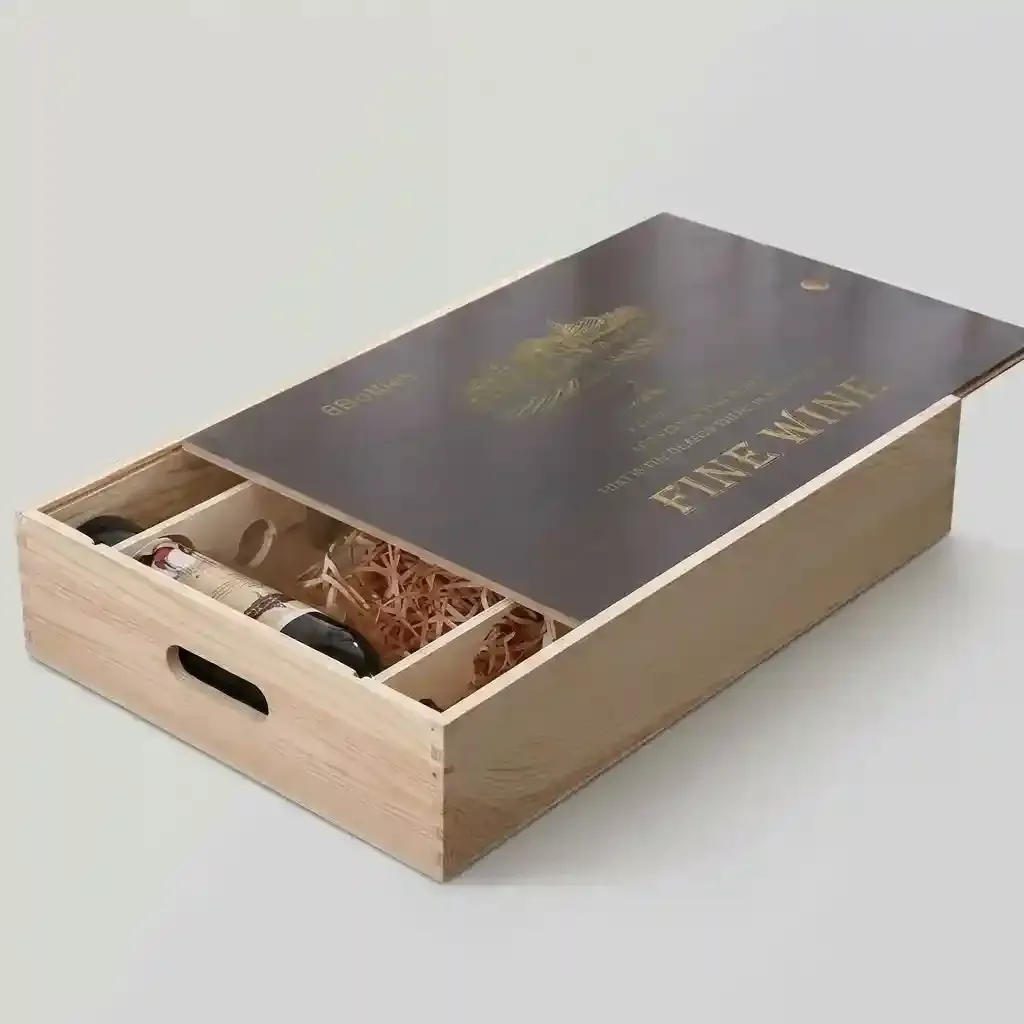
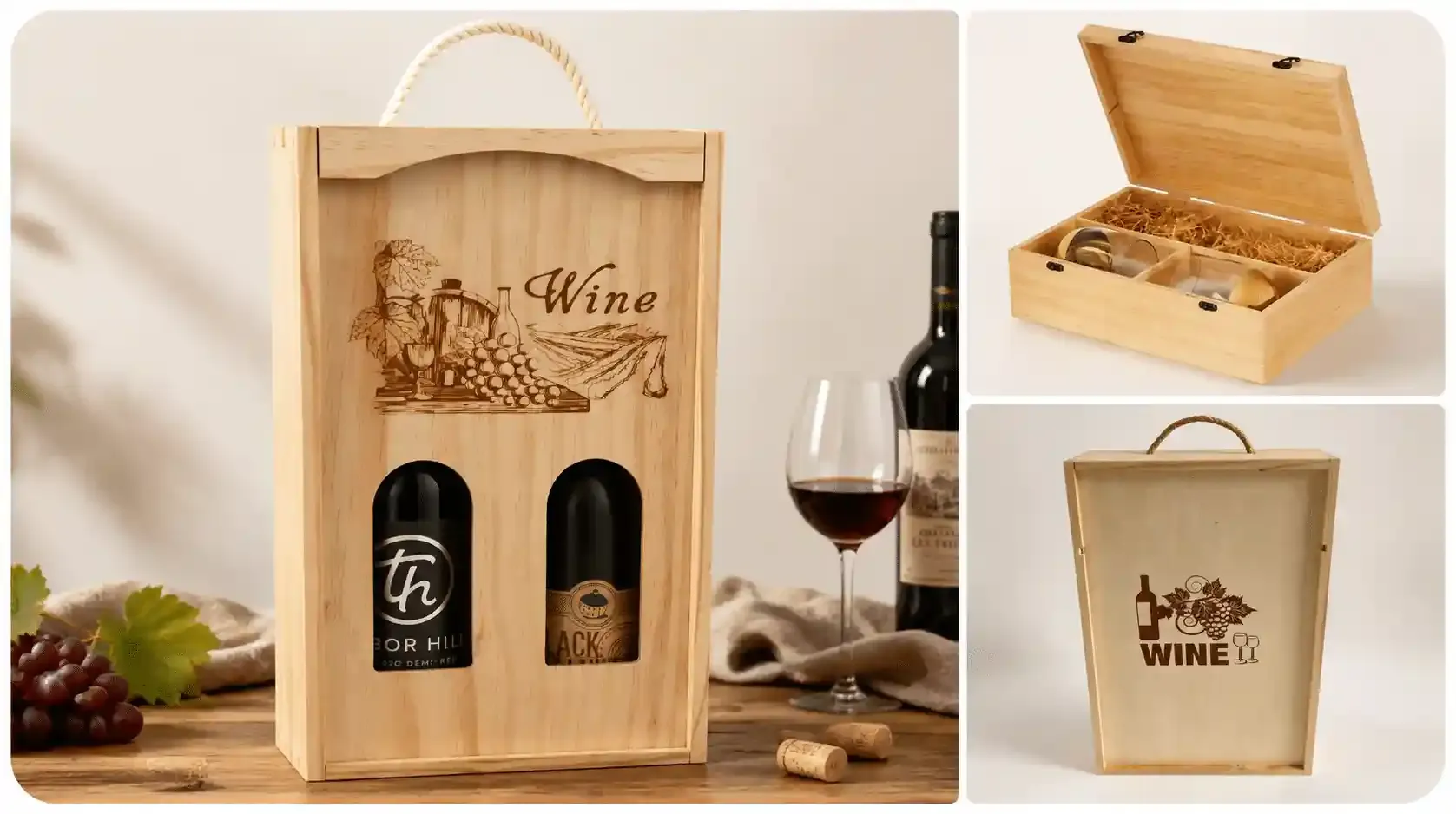
- Double-bottle boxes — designed for gift sets and paired offerings
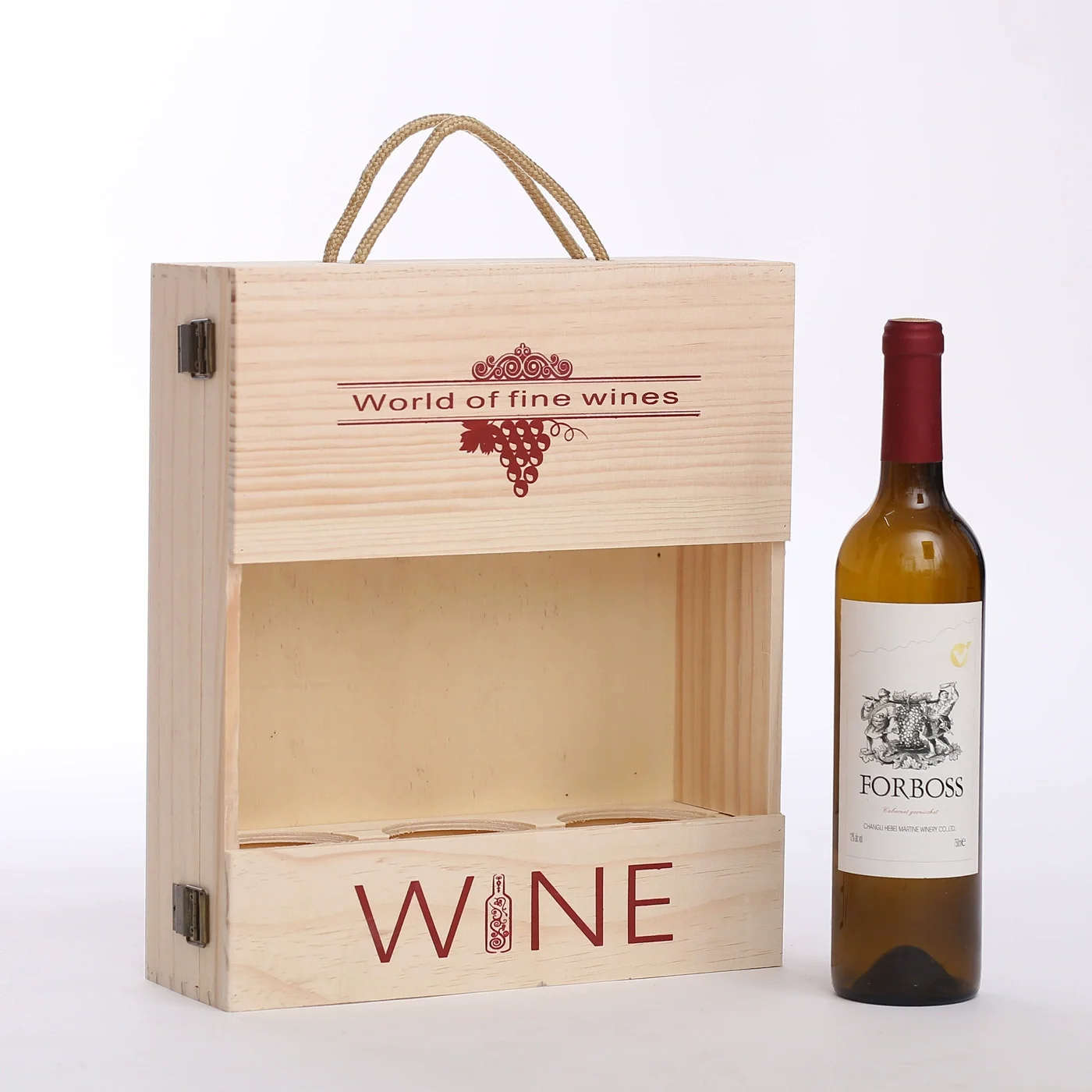
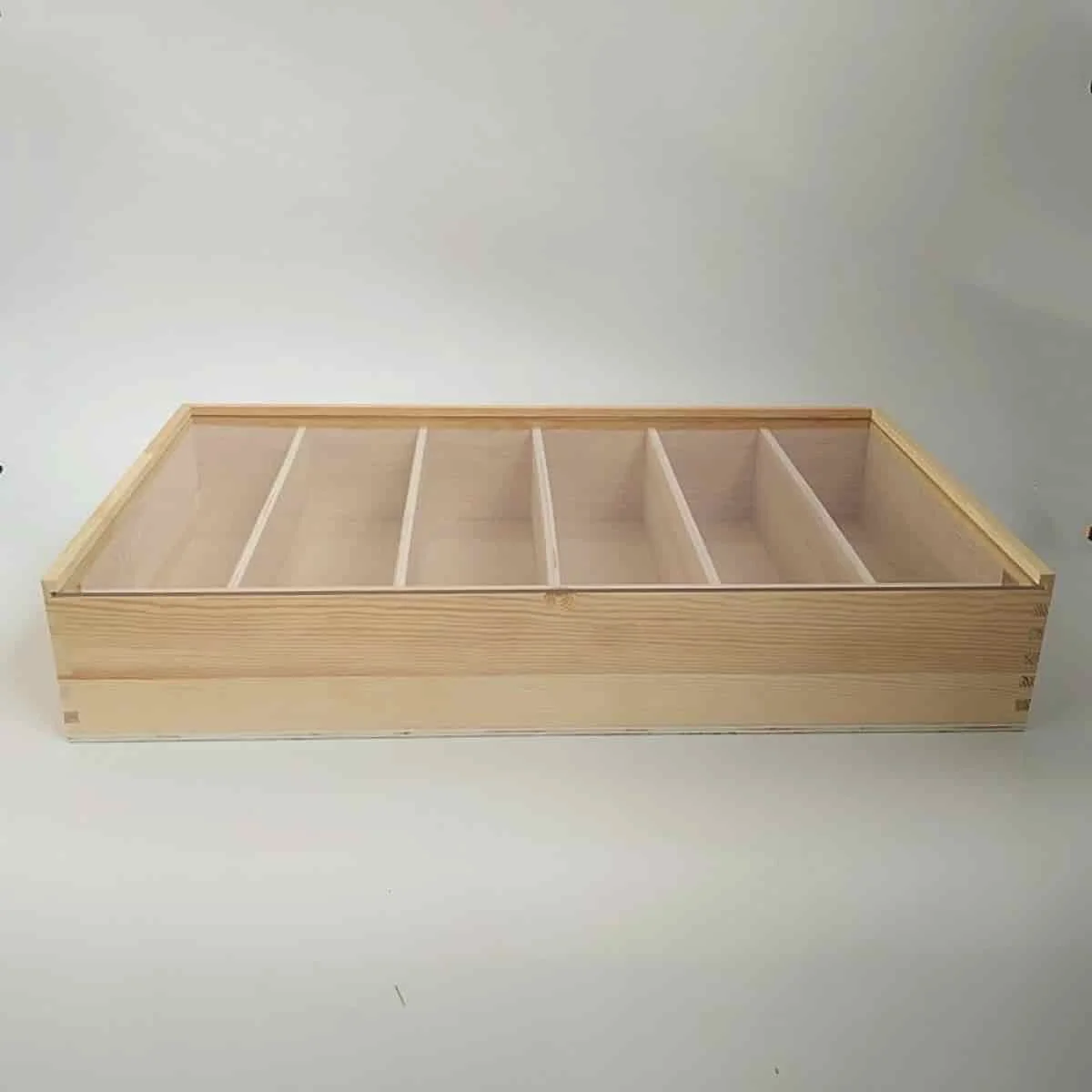
- Three-bottle and six-bottle crates — ideal for collectors and curated packs
- Wine and accessory boxes — combine a bottle with glasses or tools
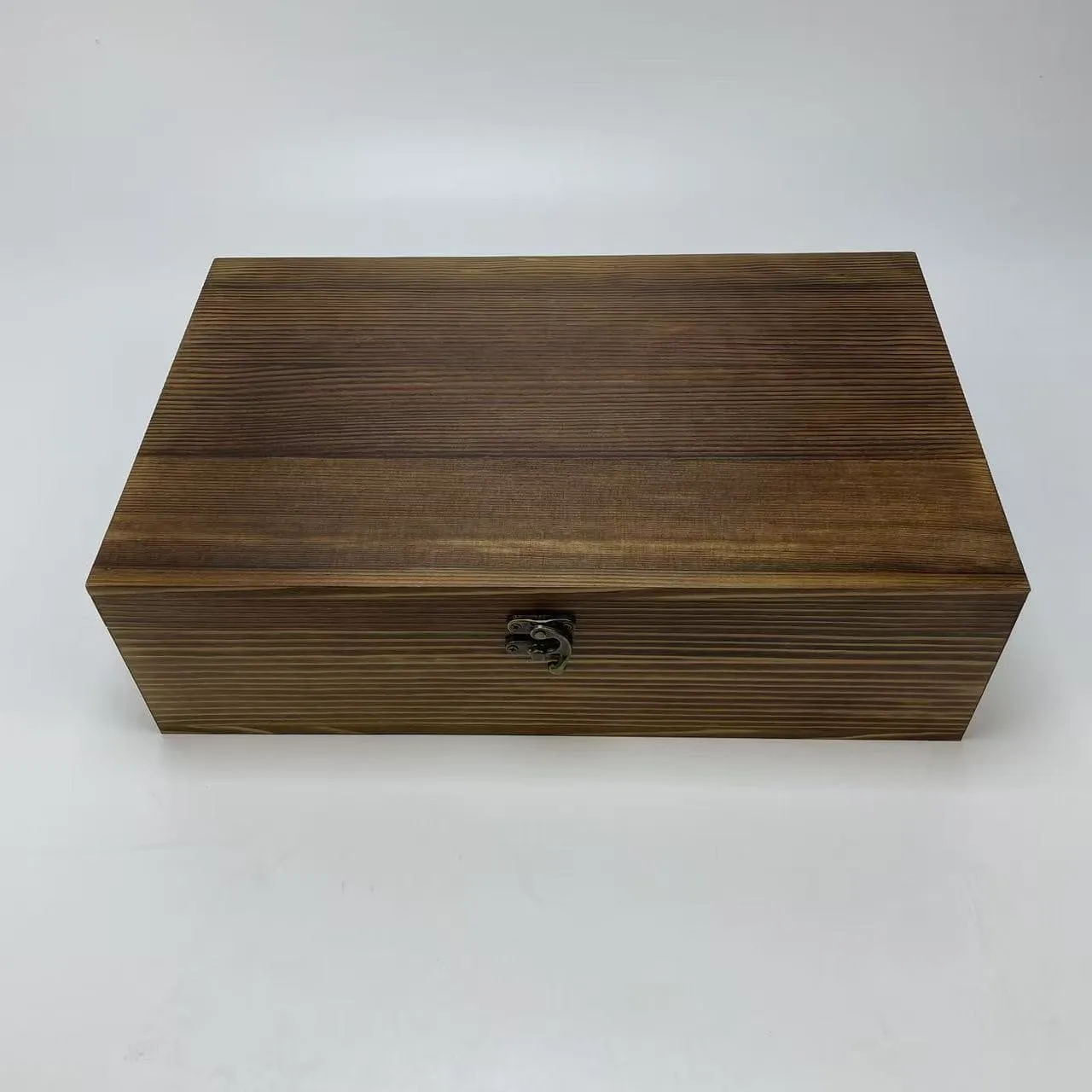
Closure options include sliding lids, custom hinged wine boxes, lift-off lids, and magnetic closures.
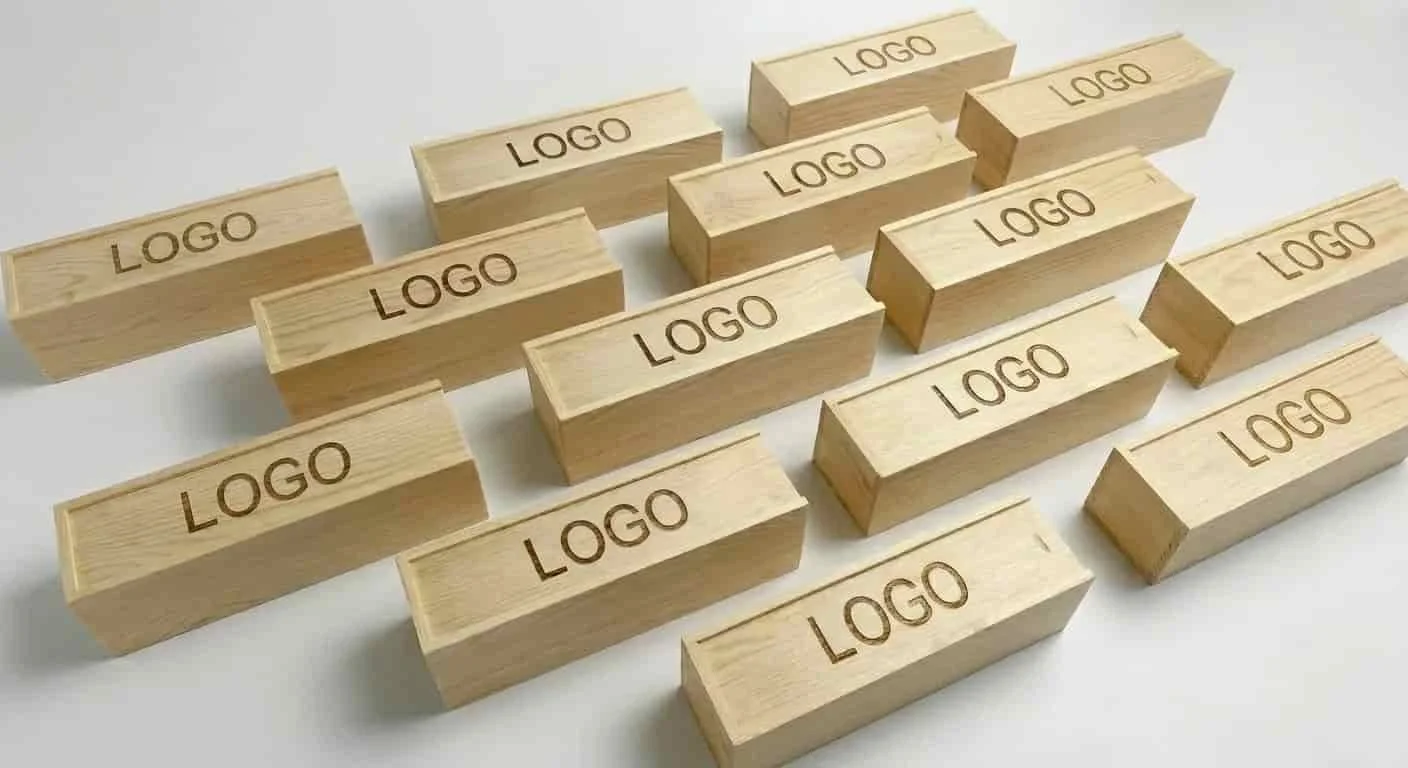
Branding Techniques
| Technique | Best For | Durability |
|---|---|---|
| Laser engraving | Logos, text, fine details | Permanent — cannot wear off |
| Screen printing | Bold logos, solid colors | Good with protective finish |
| Hot stamping / foil | Metallic accents, luxury look | Good |
| UV printing | Full-color graphics, gradients, photos | Good with protective coating |
Surface Finishes
- Natural oil or wax — enhances grain, matte feel
- Stain — adds color while preserving grain visibility
- Lacquer or varnish — glossy protective coating
- Paint — solid color, grain hidden
Interior Customization
- Velvet or faux suede lining — premium unboxing experience
- Foam inserts — secure bottle protection
- Wood dividers — for multi-bottle configurations
- Ribbon lift straps — easy bottle removal
How Do You Choose the Right OEM Manufacturer for Wine Boxes?
The right manufacturing partner for OEM wooden wine boxes combines experience with wine packaging, rigorous quality control, and clear communication — these three factors determine whether your project succeeds or encounters problems.
Wine Packaging Experience
Not all wood manufacturers specialize in OEM wooden wine boxes. Wine bottle dimensions, weight distribution, and the need for precise, snug-fitting inserts require specific expertise that general box manufacturers may lack. Ask about their experience with wine packaging. Request references from wine brand clients. Review their portfolio for similar projects. A manufacturer who understands wine packaging will anticipate requirements that a general box maker might miss. For a step-by-step framework on vetting suppliers, see our guide on how to choose a wooden packaging manufacturer in China.
Communication and Project Management
Clear communication prevents costly mistakes. Look for:
- A dedicated project manager for your account
- Responses within 24–48 hours
- Clear English communication
- Regular production updates without being asked
Shipping and Logistics Support
International shipping requires proper handling. A good OEM partner manages export documentation, provides freight quotes for sea, air, or express options, and packs boxes securely for international transit.
What Should You Ask a Manufacturer Before Placing an Order for OEM Wooden Wine Boxes?
- What is your minimum order quantity for OEM wooden wine boxes?
- Can we combine multiple box designs in one production batch?
- What is your sample policy — fees, lead time, and revision process?
- What is your typical lead time from order to delivery?
Why Are Wooden Wine Boxes a Sustainable Packaging Choice?
OEM wooden wine boxes offer genuine sustainability advantages over plastic and mixed-material alternatives — renewable sourcing, reusability, and full biodegradability. For wine brands committed to environmental responsibility, OEM wooden wine boxes align packaging with sustainability goals.
Renewable Materials
Wood is a renewable resource. Responsibly managed forests are replanted and maintained for long-term ecological health. For wine brands with environmental commitments, wooden boxes provide a verifiable sustainability story that resonates with eco-conscious consumers.
Reusability Reduces Waste
Cardboard packaging is single-use — opened and discarded. OEM wooden wine boxes are frequently repurposed for storage, home decor, or display. This reuse cycle dramatically extends the packaging’s useful life and reduces overall waste. Every box that becomes a storage container or shelf piece is a piece of packaging that did not enter the waste stream.
Biodegradability at End of Life
Wood is fully biodegradable and compostable. Unlike plastic-based packaging that persists in landfills for centuries, untreated or minimally finished wood returns to the earth naturally. Combined with renewable sourcing and long reusability, this makes wood one of the most environmentally sound packaging materials available.
How Can Wine Brands Use OEM Wood Boxes for Marketing?
OEM wooden wine boxes function as marketing assets — they drive social sharing, strengthen corporate relationships, and create collectible products that build brand loyalty. Wine brands that treat OEM wooden wine boxes as part of their marketing strategy gain advantages that cardboard packaging cannot deliver.
Unboxing as Social Media Content
Millennials are the largest segment of wine consumers globally, and this demographic values shareability. A well-crafted wooden box with branded interior details and quality hardware creates an unboxing moment worth photographing and posting. Every social share is a product placement viewed by the sharer’s network — earned media that costs nothing but delivers brand exposure.
Corporate Gifting Programs
Wine in a premium wooden box is the default choice for corporate gifting. It arrives ready to give, communicates the value of the business relationship, and fits naturally into holiday and year-end gifting cycles. For a deeper look, read our guide on wooden wine box for corporate gifting. Wineries that develop corporate accounts often find that gifting volume equals or exceeds retail volume during peak seasons.
Limited Editions and Collector Releases
OEM wooden boxes are the standard for limited-release wines, anniversary vintages, and collector editions. The box itself becomes part of the collectible — customers purchase for the complete package, not just the wine. This packaging strategy builds urgency, justifies premium pricing, and creates products that customers hold onto.
How Does Premium Packaging Drive Customer Loyalty?
A customer who receives a custom wooden wine box experiences the brand at every touchpoint — the weight of the box, the texture of the wood, the precision of the engraving, the feel of the interior lining. These sensory details create a memorable impression that cardboard cannot match. When the box is reused for storage or display, every glance reinforces brand affinity. Customers who experience premium packaging are more likely to repurchase and to recommend the brand to others.
Conclusion
OEM wooden wine boxes for wine brands deliver measurable value — higher perceived quality, stronger shelf presence, and a memorable unboxing experience that drives social sharing and repeat purchases. From wood species selection and branding techniques to quality control and environmental benefits, every aspect of OEM wooden wine boxes can be tailored to your brand’s specific requirements.
Frequently Asked Questions
What is the typical minimum order quantity for OEM wooden wine boxes?
Most custom wood manufacturers offer starting quantities of 200 units for standard designs. Some accept lower quantities for simple designs or sample orders. Mixed orders that combine multiple box styles in one production run are often permitted.
How long does sample production take?
Sample production typically takes 7–15 days, depending on complexity and component availability. Rush sampling may be available for an additional fee. Sample costs are generally $50–200 and are often credited back or deducted from your first production order.
What wood species works best for premium wine boxes?
Oak and walnut deliver the most premium appearance. Oak offers rich grain and a traditional feel. Walnut provides a dark, luxurious look. For a balance of quality and cost, beech offers a clean, modern aesthetic that takes finishes well.
Do wooden wine boxes protect bottles during shipping?
Yes. Wooden wine boxes with properly designed inserts provide excellent protection — often superior to cardboard. Combined with outer corrugated master cartons, they withstand international freight reliably.
Can I use different wood species for different box designs in one order?
Yes. Many manufacturers support mixed orders that combine different wood species, box styles, and branding techniques in a single production run, provided the total volume meets minimum thresholds.
What branding technique lasts the longest on wooden wine boxes?
Laser engraving offers the most durable result. It physically burns the design into the wood surface and cannot wear off, peel, or fade over time. UV printing is an excellent choice for full-color designs and photographs.
This article was made by Hilon Wood. We are dedicated to custom wooden products manufacturing.
OEM Wooden Wine Boxes For Wine Brands at Hilon Wood
Hilon Wood specializes in OEM wooden wine boxes for wine brands, offering full customization — wood species, box structure, branding techniques, finishes, and interior details. Every order follows the five-step OEM process outlined above: requirement discussion, quotation, sampling, production with quality control, and delivery. Small trial orders are supported, and we handle global logistics so you receive your product without the headaches. If you have a reference image, sketch, or rough idea, we can respond within 24–48 hours.
Let us manufacture custom wooden wine boxes for you.