Procurement Guide
Wooden Wine Box Buying Hub
Everything a wine brand, importer, or corporate buyer needs to source custom wooden wine boxes from China. Not a product catalog — a procurement playbook.
25 Wine Box Configurations Available
Each product below is a starting point — dimensions, wood species, finish, and branding are all customizable. Click through for full specs, applications, and customization options.
Showing 1–16 of 25 products
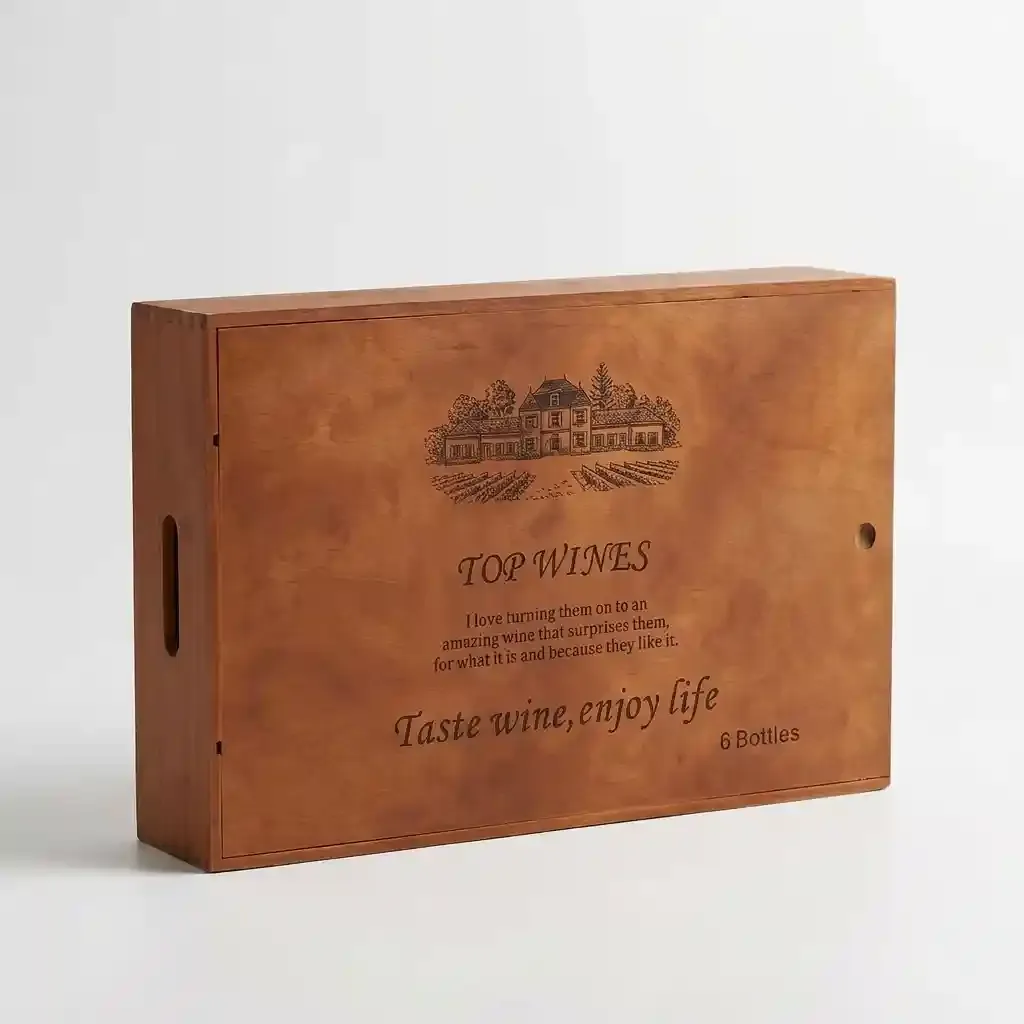
Stained Pine 6 Bottle Wine Box
Wholesale stained pine 6-bottle wine box with sliding lid, built for winery direct-to-consumer fulfillment and premium r
$2.50 - $5.80 / piece
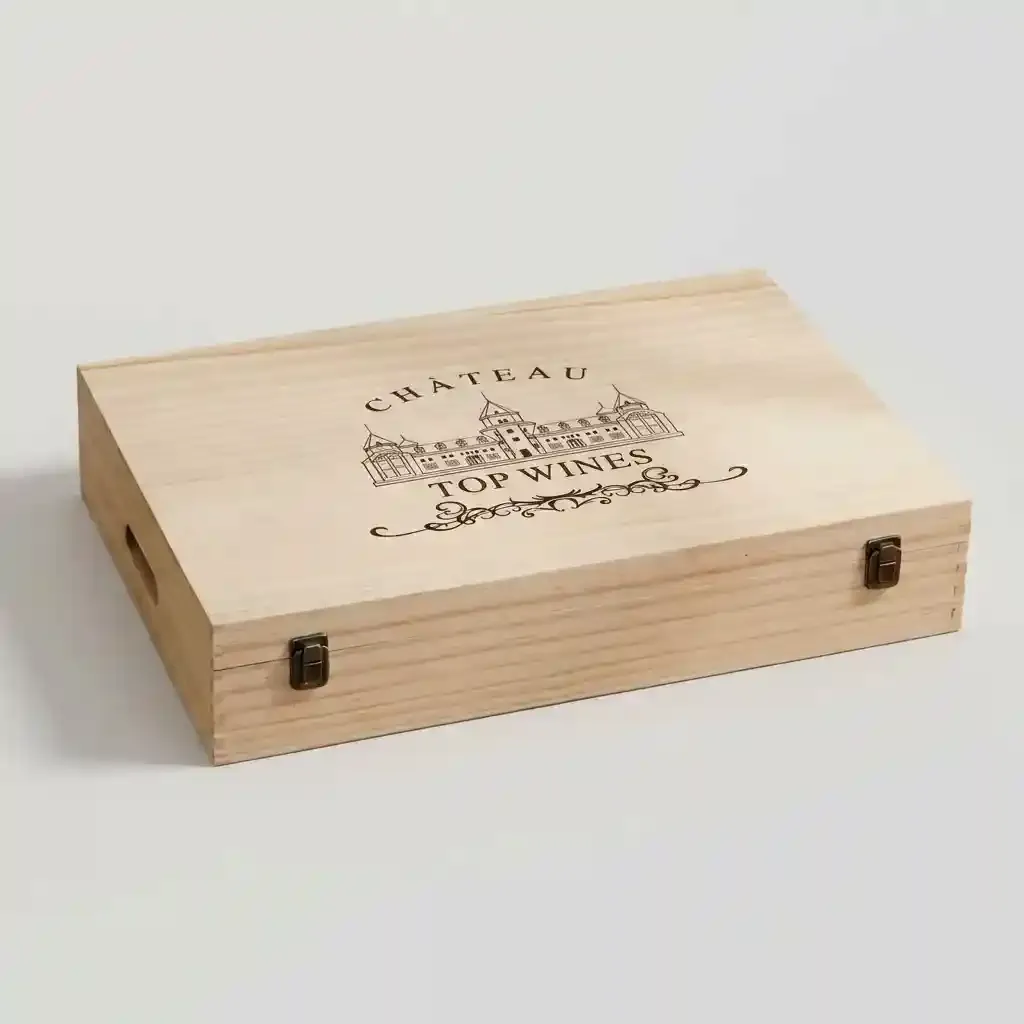
Custom Hinged 6 Bottle Wooden Wine Box with Metal Latches
Custom hinged 6-bottle wooden wine box with dual metal latches and finger-joint construction, built for winery tasting r
$2.30 - $5.80 / piece
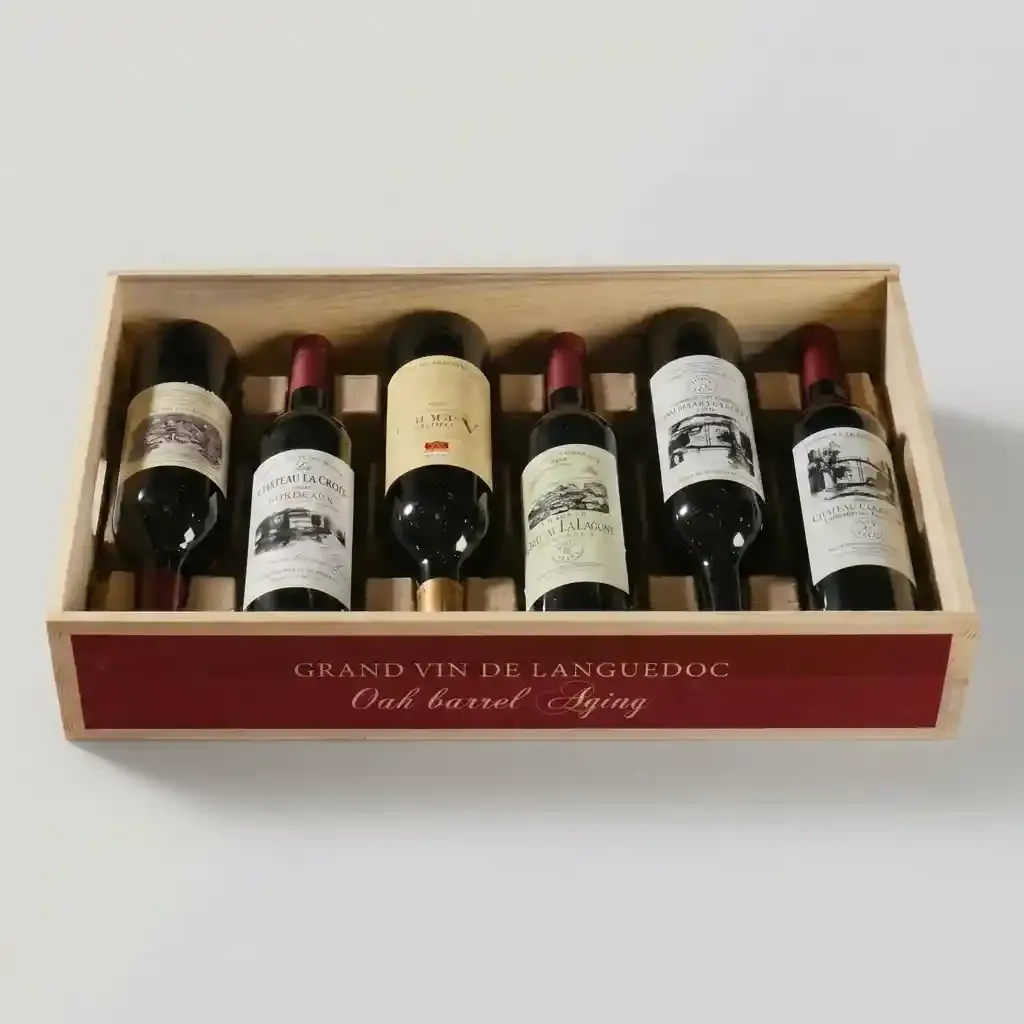
Custom Six-Bottle Pine Wood Wine Gift Box
Custom six-bottle pine wood wine gift box with full-color UV-printed sliding lid and molded pulp inserts, built for prem
$2.80 - $6.50 / piece
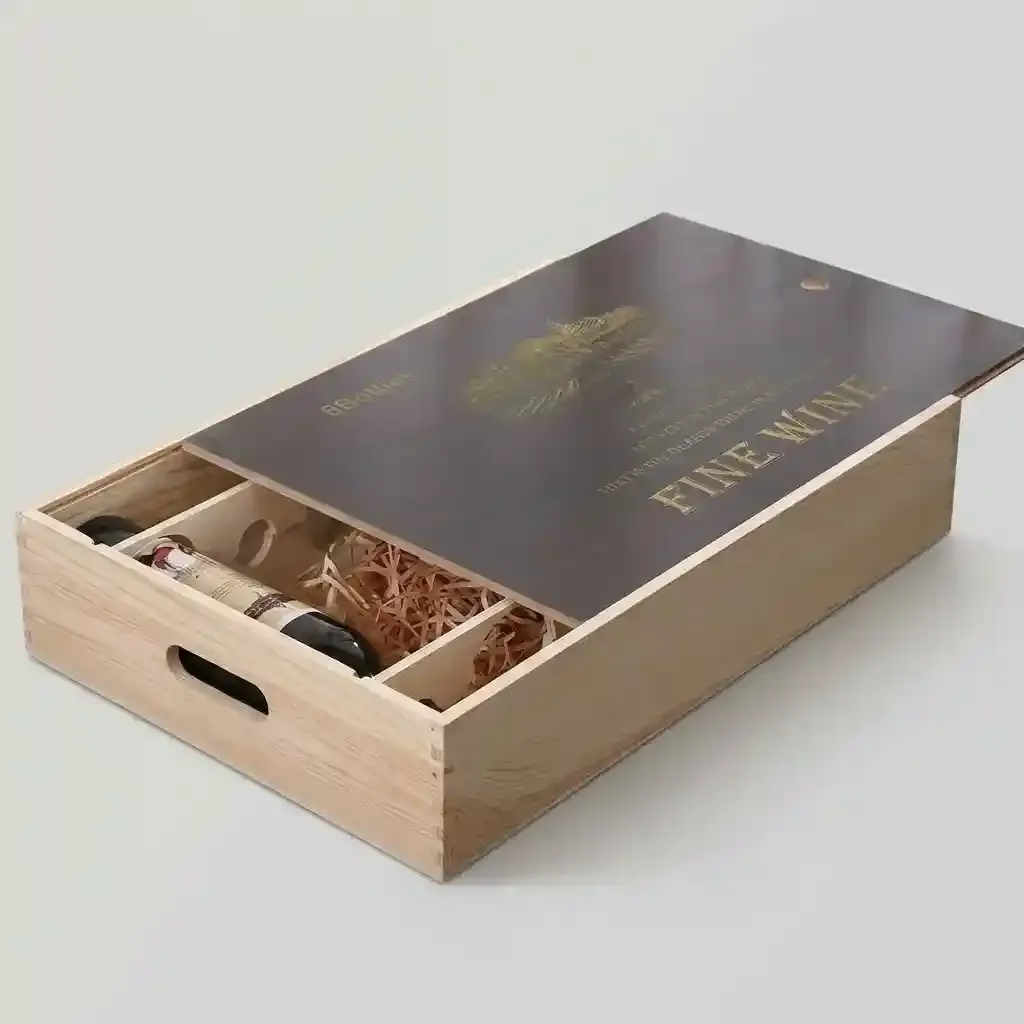
6 Bottle Wooden Wine Packaging Box Vintage Style Wood Wine Gift Box
Wholesale 6-bottle wooden wine packaging box with dark MDF sliding lid and gold silk-screen print, built for vintage-sty
$2.50 - $5.20 / piece
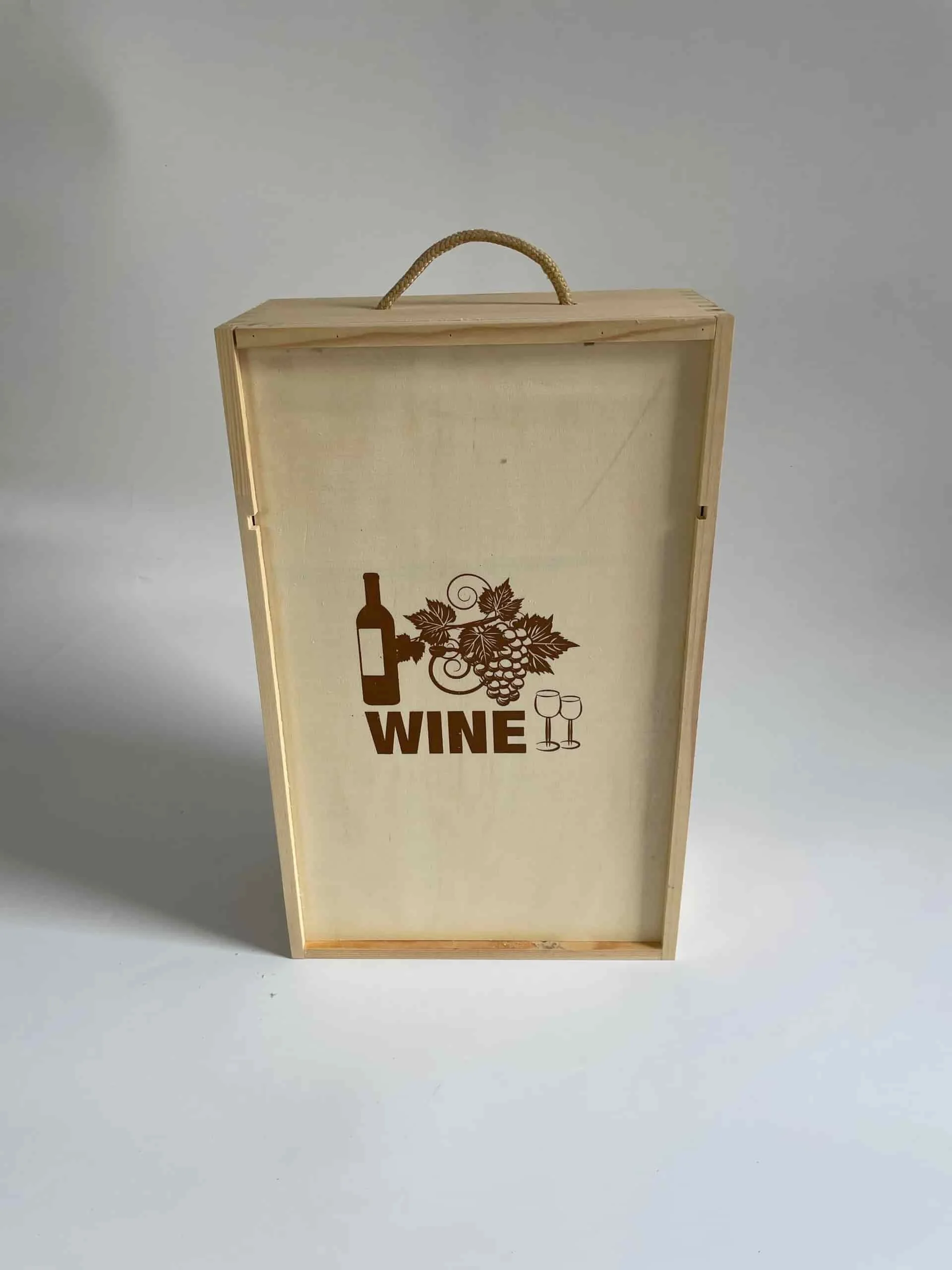
Custom Wooden Double Bottle Wine Box with Sliding Lid
Wholesale custom wooden double-bottle wine box with sliding lid and rope handle, built for portable gift presentation an
$1.00 - $2.50 / piece
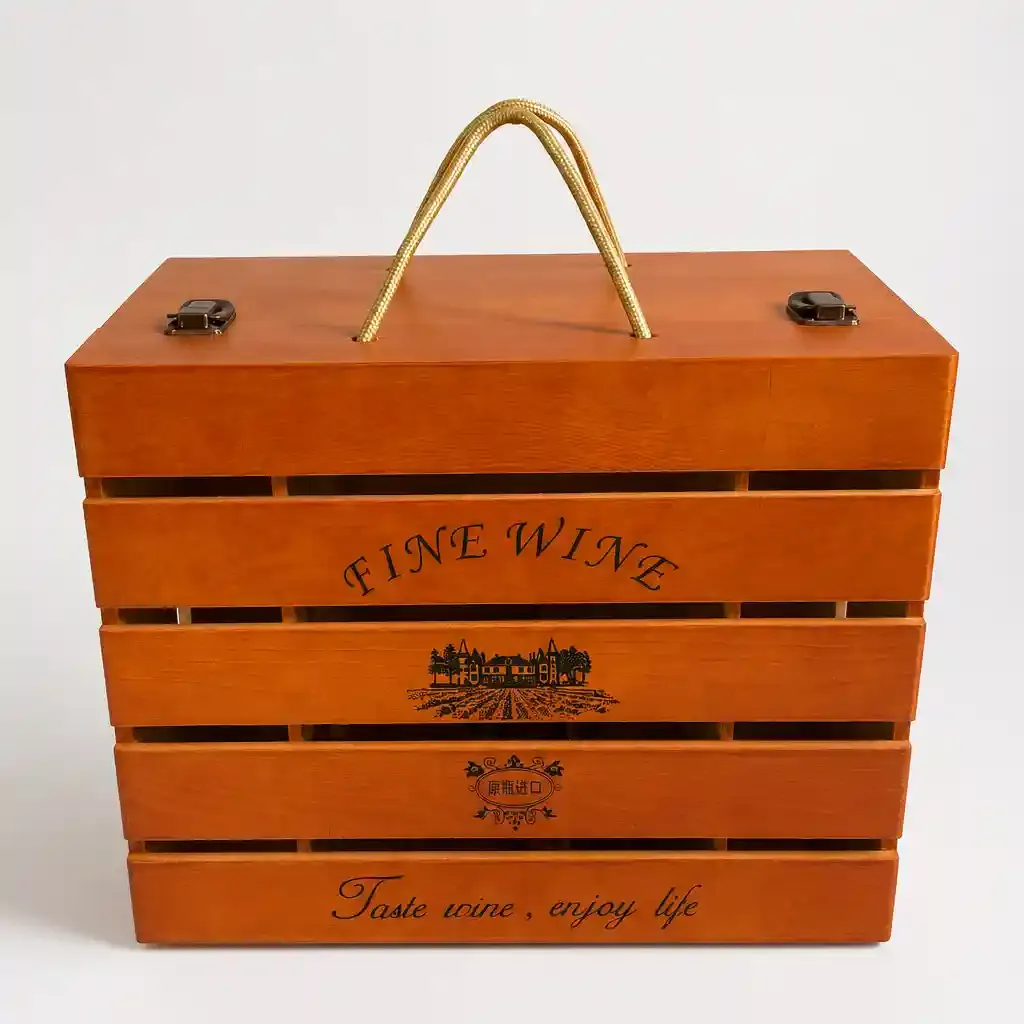
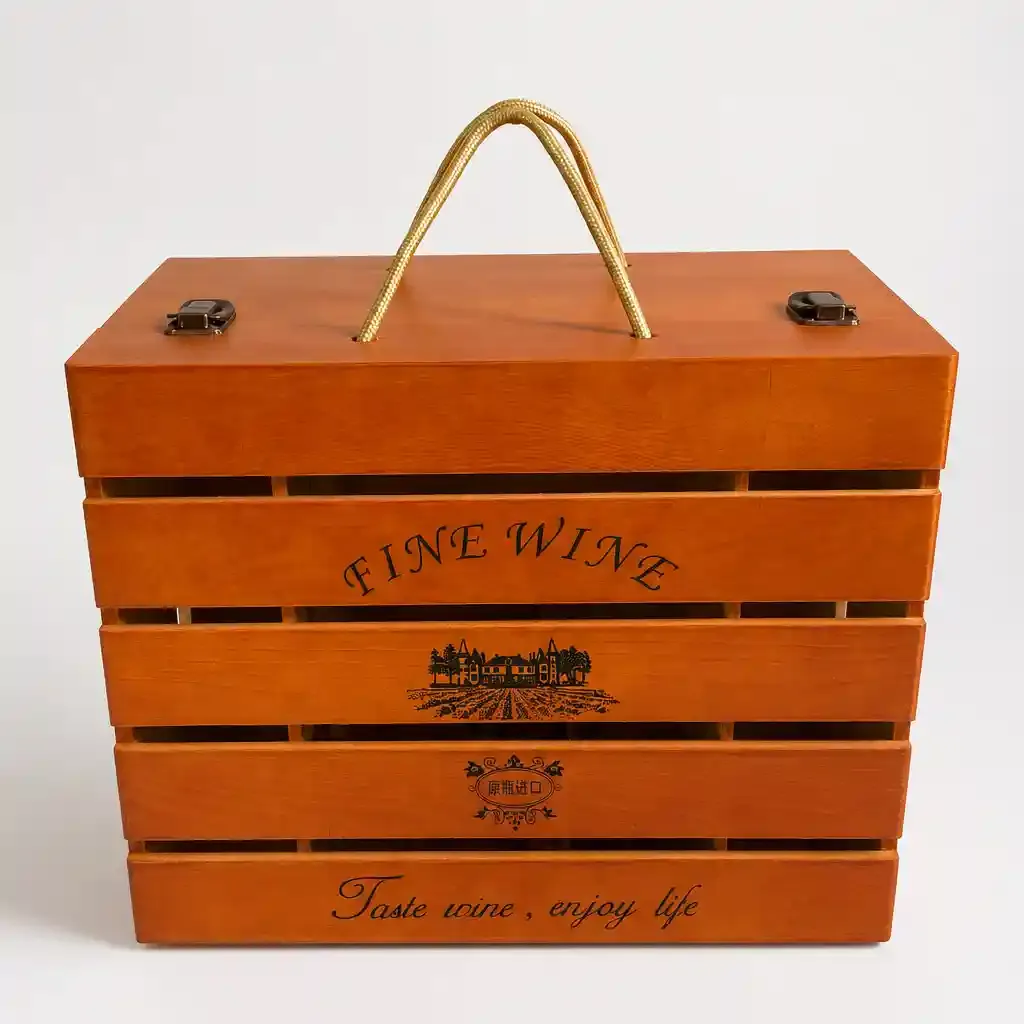
Slatted Wooden Wine Crate
Wholesale slatted wooden wine crate with hinged lid and open-slat front, built for retail display visibility and cellar
$2.50 - $5.50 / piece
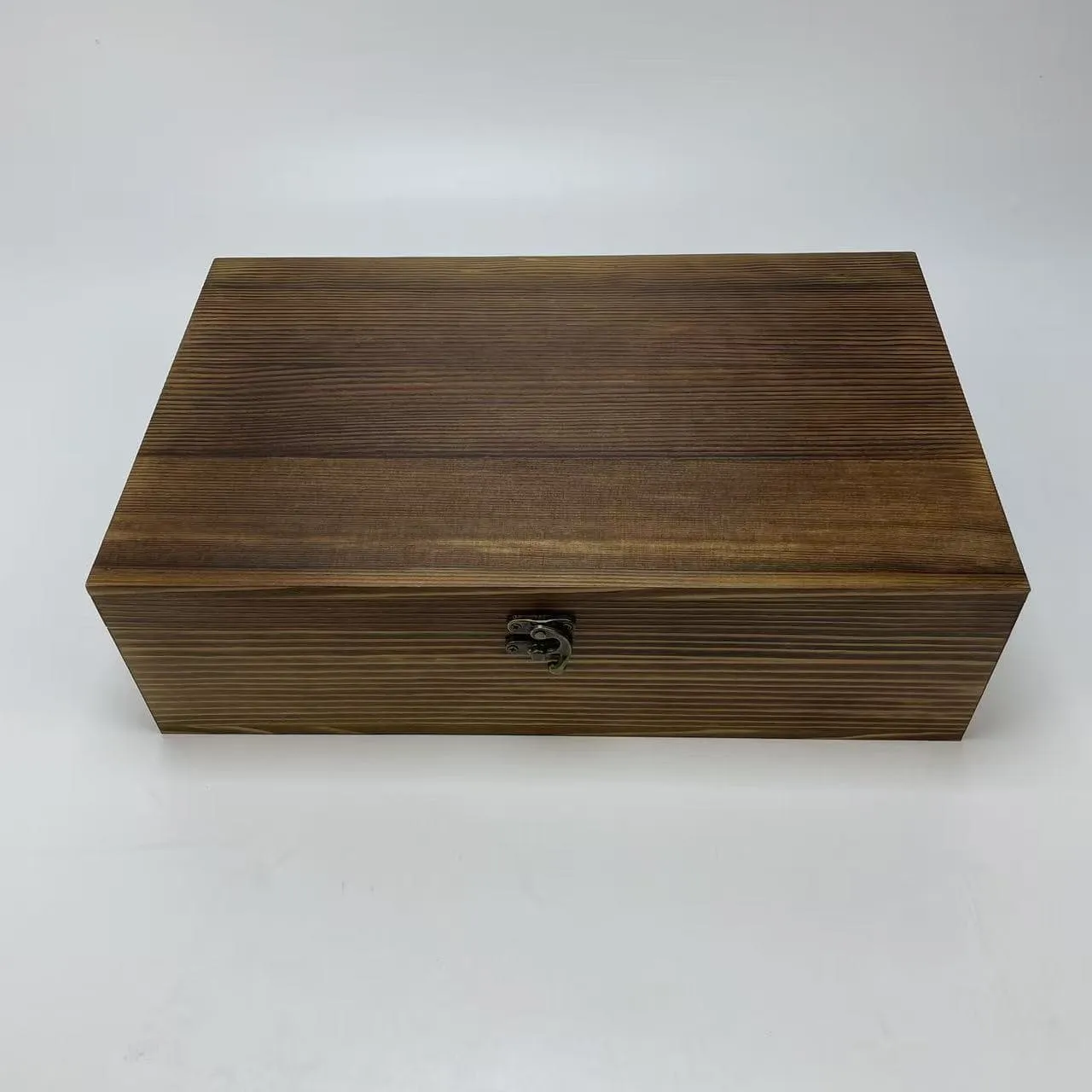
Custom Vintage Wooden Wine Box – 2 Bottle – Pine Wood
Custom vintage pine wood two-bottle wine box with charred burnt finish and removable dividers, built for rustic gift pre
$3.80 - $6.50 / piece
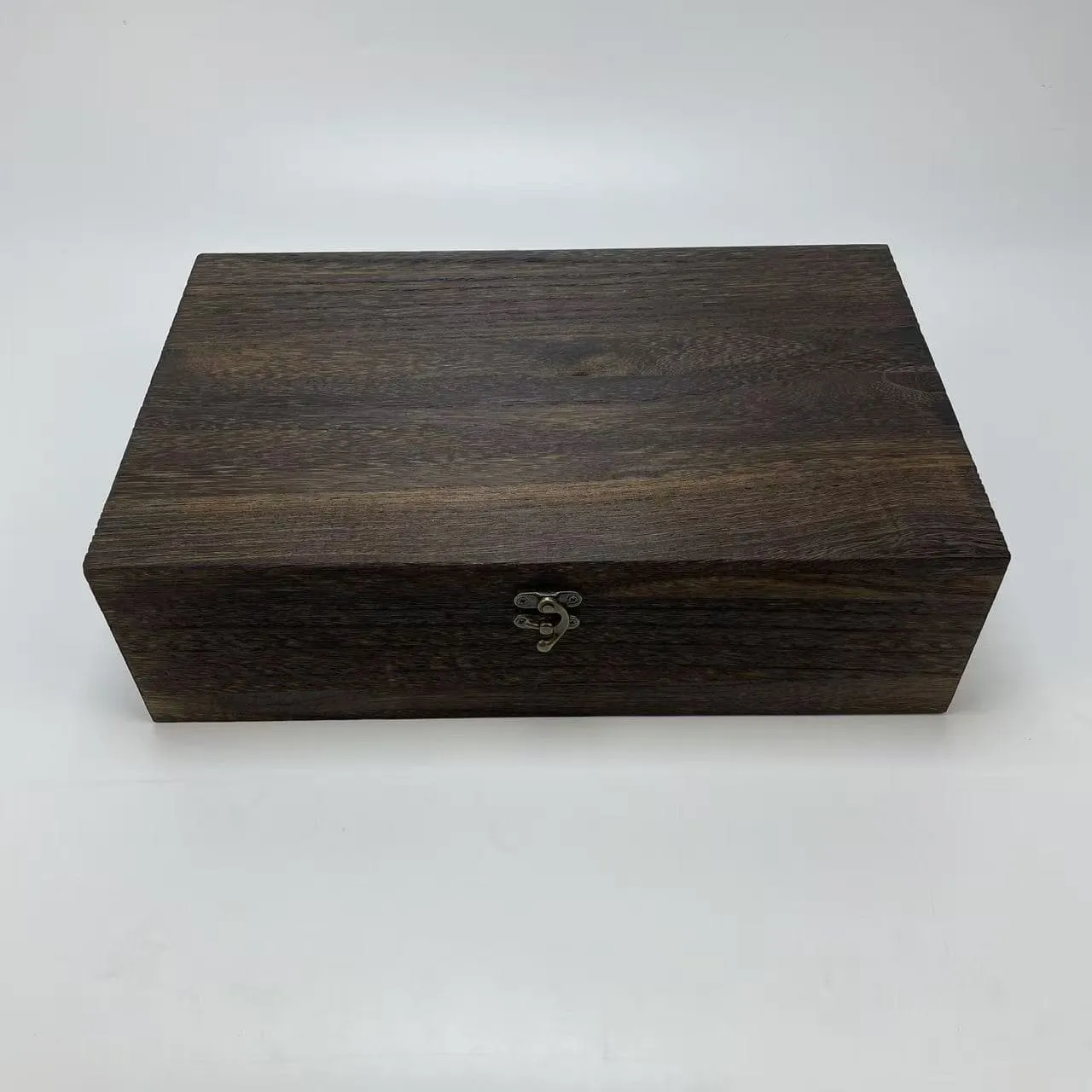
Custom Antique Wooden Wine Box – 2 Bottle – Paulownia Wood
Custom antique paulownia wood two-bottle wine box with burnt finish and removable dividers, built for lightweight vintag
$3.80 - $6.50 / piece
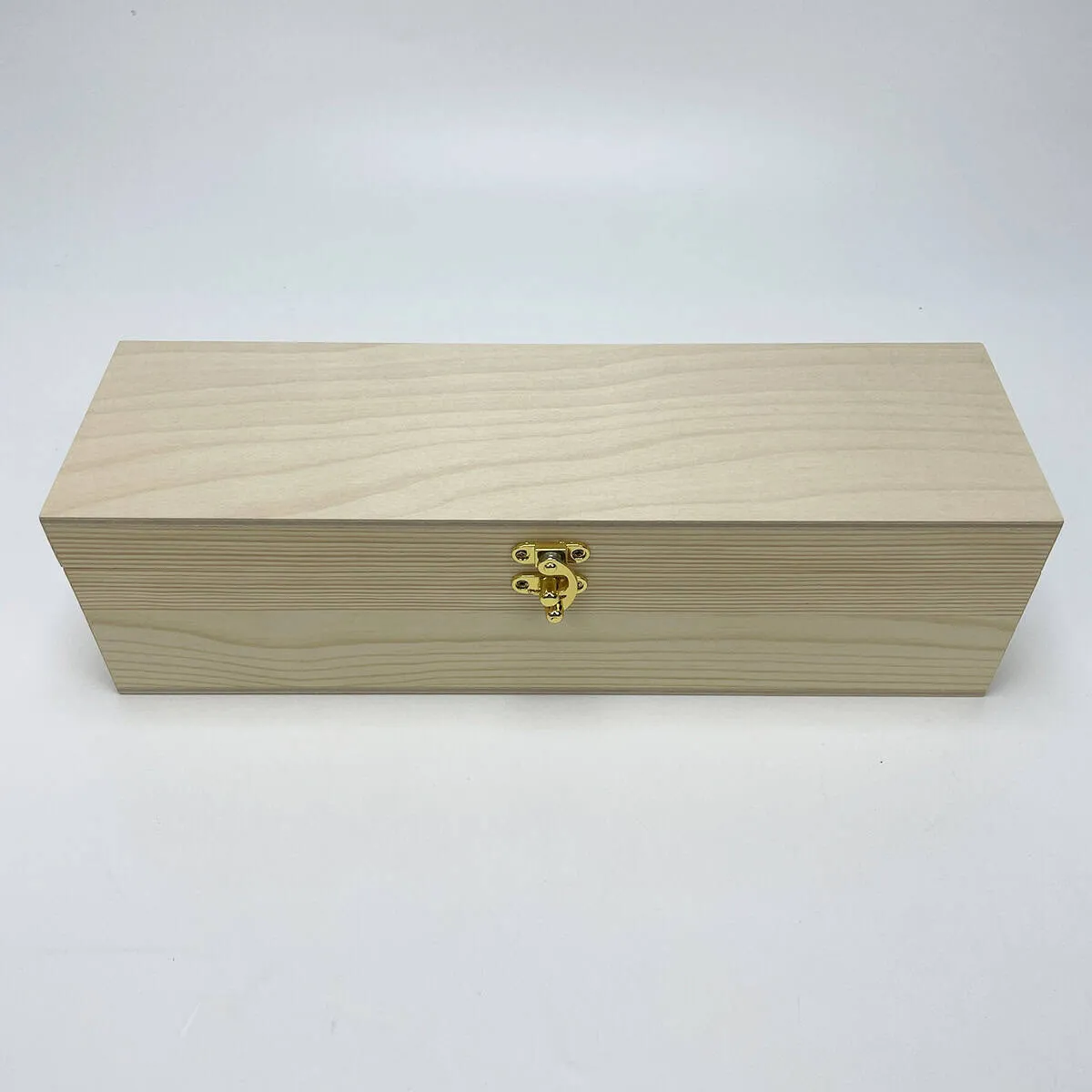
Custom Wine Gift Box for Single Bottle
Custom single-bottle pine wood wine gift box with birch plywood lid, built for corporate gifting, wedding favors, and bo
$1.80 - $8.00 / piece
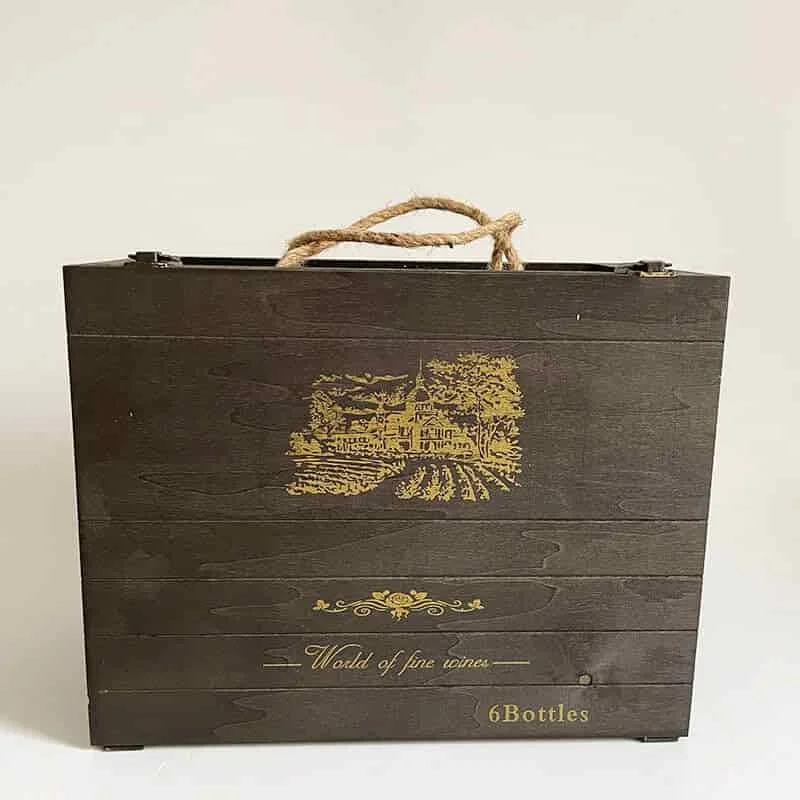
Custom 6 Bottle Wooden Wine Case with Custom Silk Screen Printing
Custom 6-bottle wooden wine case with hinged lid, rope handle, and gold silk-screen print on dark-stained pine, built fo
$3.20 - $6.50 / piece
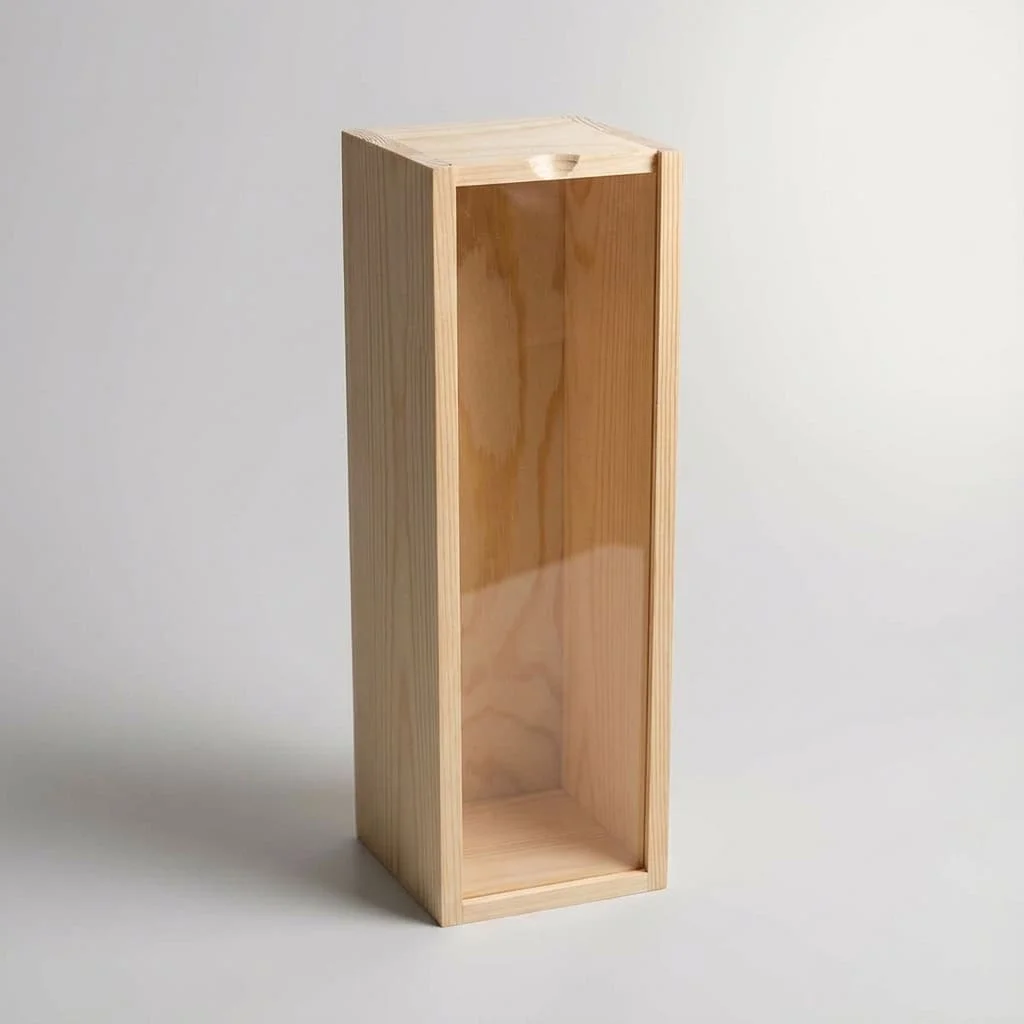
Custom Wooden Wine Gift Box Single Bottle with Acrylic Sliding Lid
Wholesale custom single-bottle wooden wine gift box with clear acrylic sliding lid, built for retail display where produ
$1.80 - $8.00 / piece
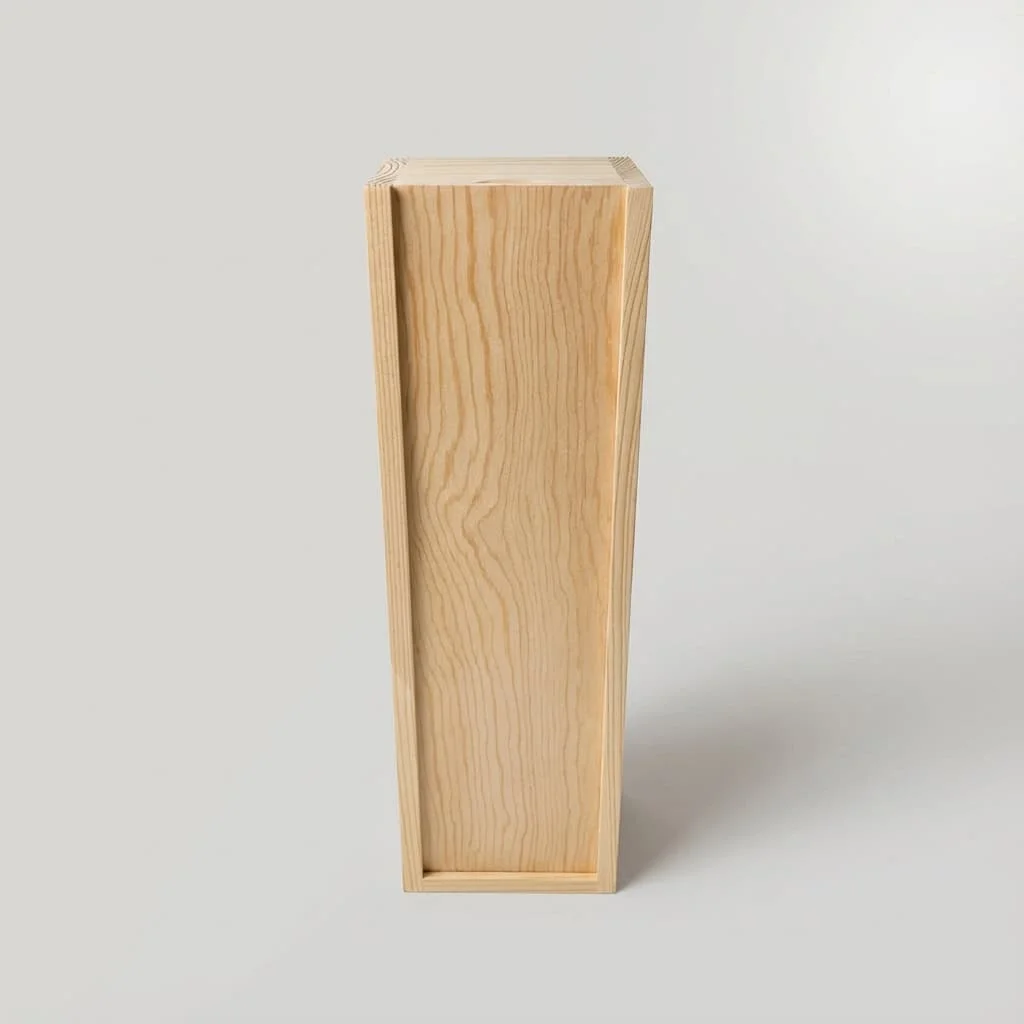
Custom Single Bottle Wooden Wine Box with Sliding Lid
Custom single-bottle wooden wine box with all-wood sliding lid and finger notch, built for winery retail shelves and pre
$1.80 - $8.00 / piece
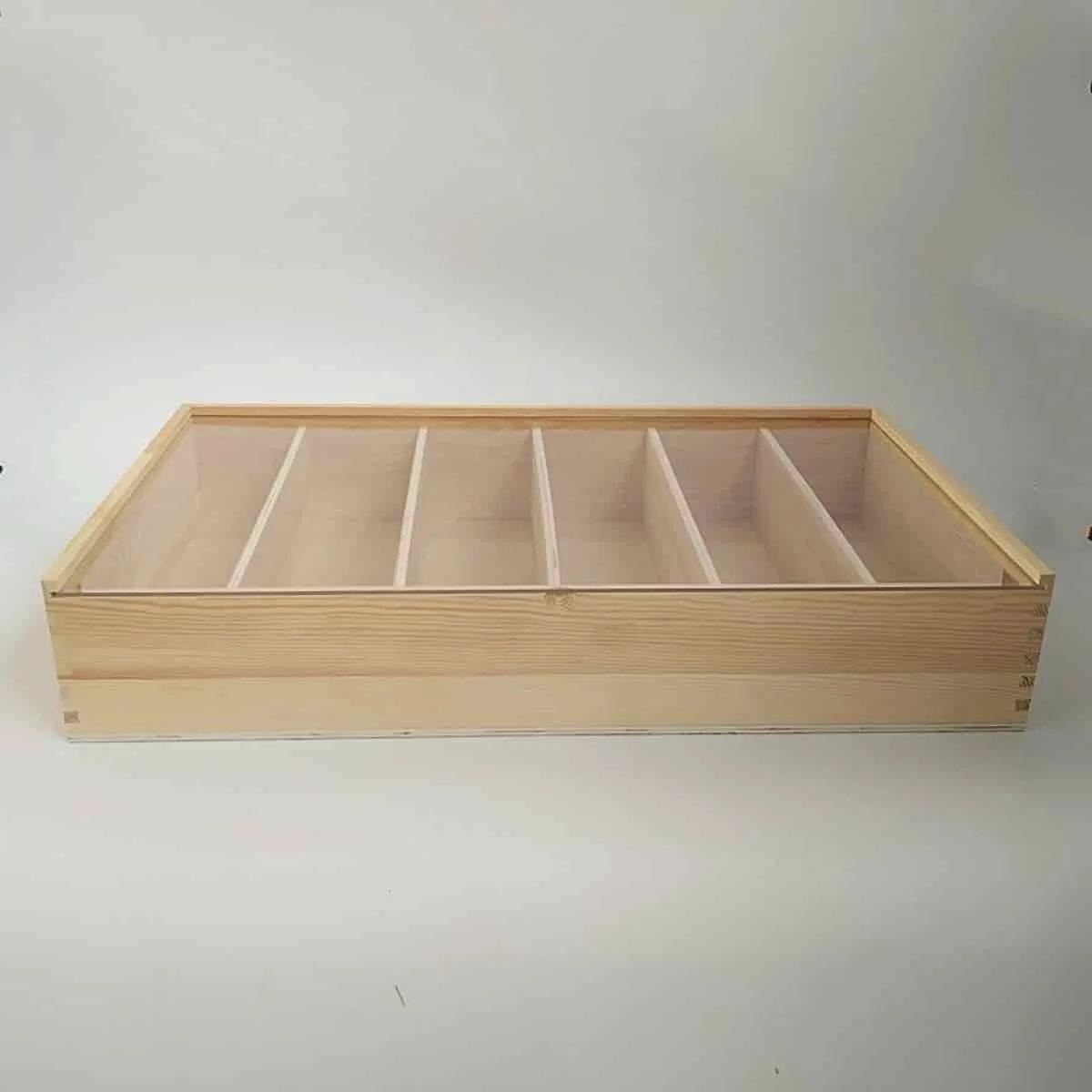
6 Bottle Wooden Wine Packaging Box with Acrylic Sliding Lid and Finger Joint Structure
Wholesale 6-bottle wooden wine packaging box with clear acrylic sliding lid and exposed finger joint construction, built
$2.40 - $5.50 / piece
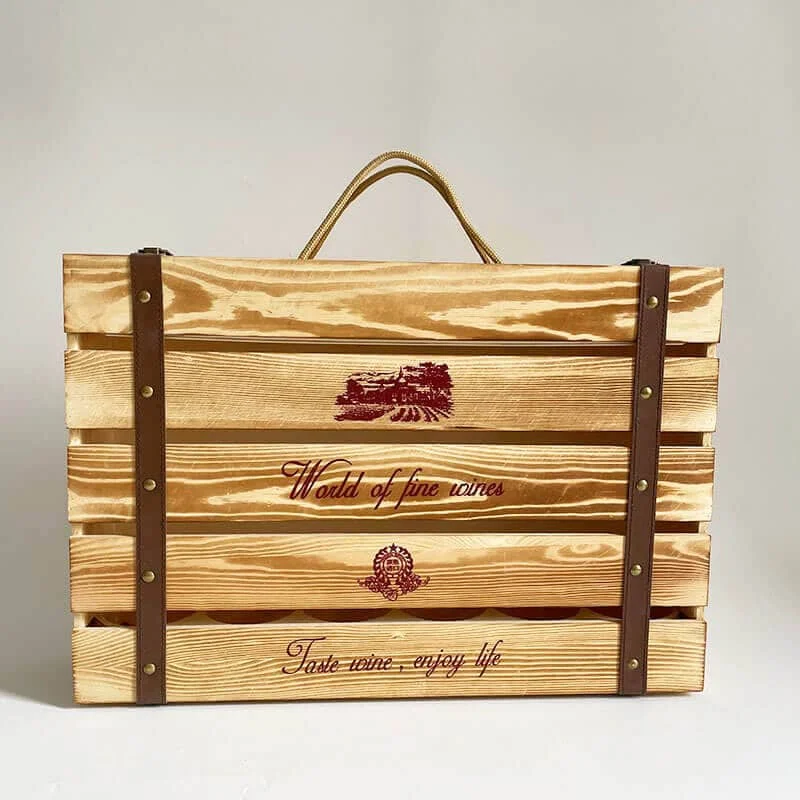
6-Bottle Wooden Wine Crate
6-bottle wooden wine crate with slatted pine construction, burnt scorched finish, and studded metal straps, built for di
$2.50 - $5.00 / piece
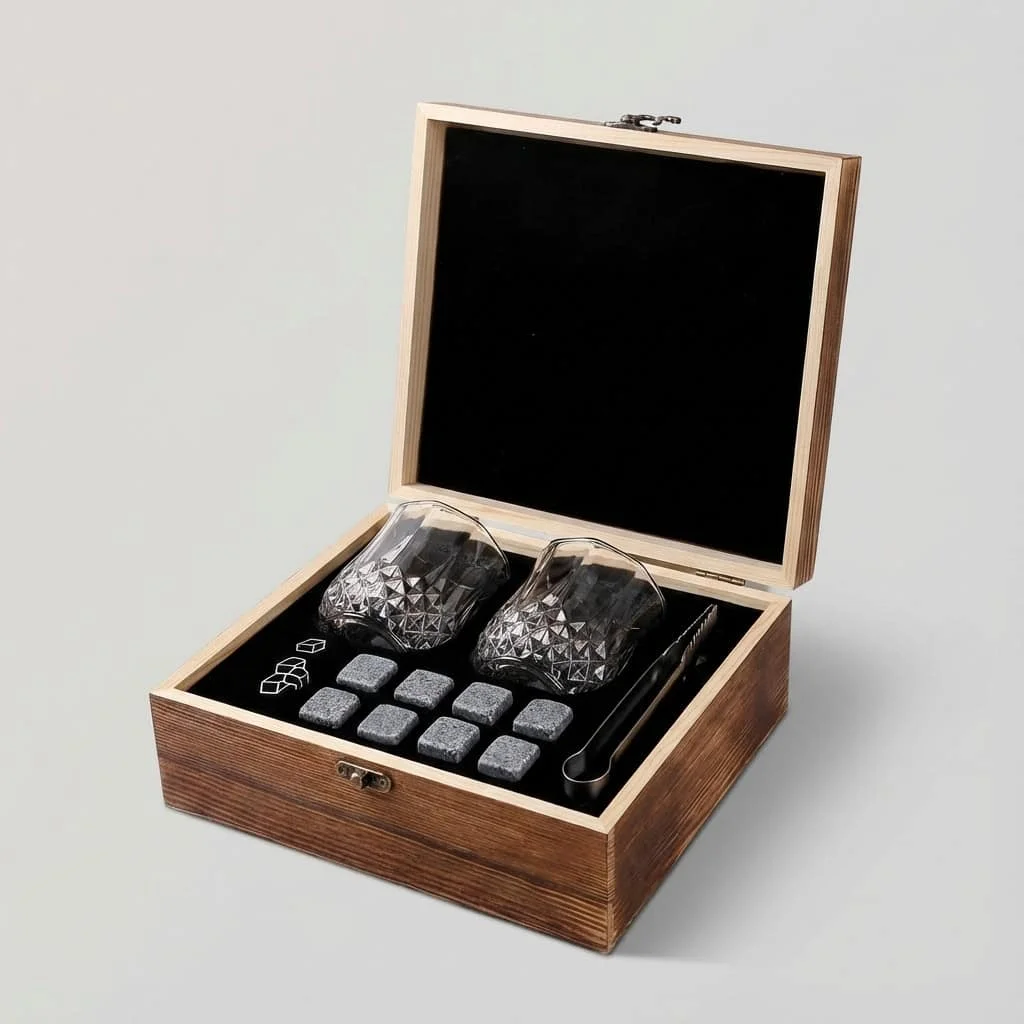
Pine Wood Vintage Whiskey Glass Box Set with Custom Branding Options
Pine wood vintage whiskey glass box set with carbonized burnt finish and CNC-cut foam interior — using the same visual l
$4.30 - $8.80 / piece
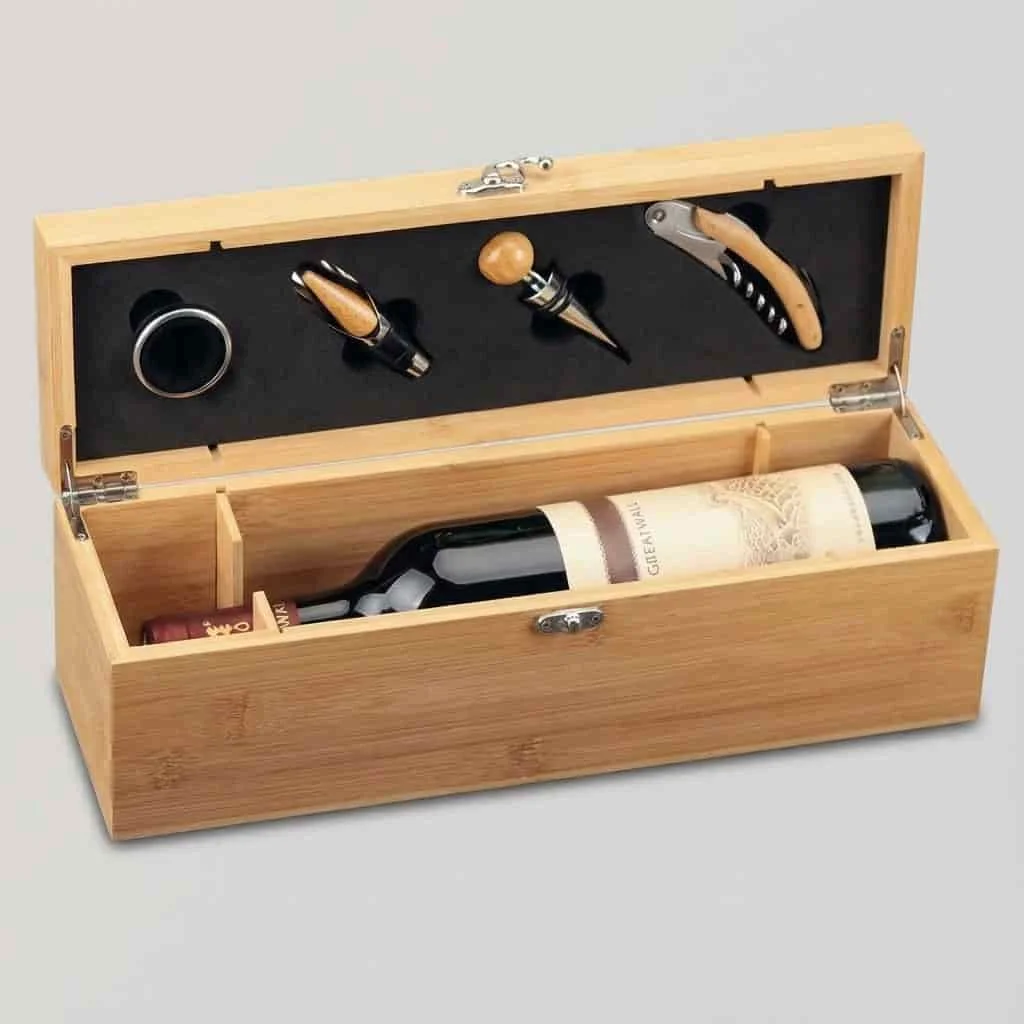
Single Bottle Bamboo Wine Box with Accessories for Wine Packaging
Wholesale single-bottle bamboo wine box with hinged lid and integrated accessory compartment, built for winery gift sets
$4.50 - $10.50 / piece
How to Choose the Right Wooden Wine Box
Six decisions every wine box buyer makes. The order matters — each choice constrains the next.
Choose Bottle Capacity
This is the starting point that determines everything else — box dimensions, material cost, and shipping weight. Don't just say "750ml." A Bordeaux 750ml is taller and narrower than a Burgundy 750ml. A Champagne bottle has a wider diameter with a pronounced shoulder. A Riesling or Alsace bottle is tall and slender. Send the actual bottle dimensions: height, base diameter, and shoulder diameter. Better yet, send a photo of the bottle next to a ruler. Most buyers know their bottle capacity — fewer know their bottle geometry, and that's where fit problems start.
Choose Wood Species
Pine is the workhorse — it's what 70% of our wine box orders use. Paulownia saves weight (280 kg/m³ vs pine's 420 kg/m³) and takes laser engraving with less grain interference, but it's softer and costs more per cubic meter. Birch plywood is neither a "wood species" in the traditional sense nor a downgrade — its cross-laminated construction eliminates the warping problem that plagues solid wood lids on single-bottle boxes. Oak and walnut are premium choices that more than double the per-unit material cost. The box isn't seen until the bottle is opened — so the value of premium wood depends on whether the box is a one-time gift or a retail display piece.
Choose Lid Style
Four lid styles account for nearly all wine box orders. Hinged lids give a traditional unboxing moment — lift the lid, see the bottle. Sliding lids pack flatter in shipping (lid nests into the box body, not alongside it) and work well for retail shelves where the lid movement path doesn't interfere with adjacent products. Acrylic sliding lids let the bottle be seen without opening — popular for tasting room displays. Magnetic lids give a luxury feel with no visible hardware, but magnets lose pull force at thinner plywood thicknesses. The choice affects tooling, assembly time, and per-unit cost.
Choose Finish
Natural sanded is the most common starting point — it gives you maximum flexibility to apply stain, paint, or clear coat after seeing the sample. If you want the box to arrive shelf-ready, specify your finish at order stage. Dark stains create contrast against metallic branding (gold foil on dark walnut stain reads as premium at shelf distance). Clear matte or satin coat protects the wood without changing its appearance. Paint covers wood grain entirely for solid brand colors, but note: pine and birch plywood take paint differently — the lid will look more uniform, the body more figured.
Choose Branding Method
Laser engraving burns directly into the wood — permanent, no ink to scratch or fade, best on birch plywood and paulownia where grain doesn't interfere. Screen printing gives wider color range at lower per-unit cost for large orders but sits on the surface and can wear. UV printing produces full-color photographic detail — the smooth birch plywood surface handles this better than any solid wood grain. Hot foil stamping gives a metallic finish that pops on dark stains. The method you choose depends on your logo: single-color logos work with laser, multi-color logos need screen or UV print, metallic effect needs foil stamping.
Approve the Pre-Production Sample
This is the step where most problems are caught. The sample arrives in 7–15 days — check bottle fit (does it slide in without forcing? Is there rattle room?), finish color under both daylight and indoor lighting (stains look different under different light), and branding quality at actual size (logos that look clean on a screen can lose detail in wood). Test the closure — does the latch catch securely? Does the lid stay open at the right angle? Photograph everything you check and send feedback with specific references. A sample revision is cheaper than finding 5,000 units with a problem at the receiving dock.
Which Wood Should You Choose?
The right wood depends on who you are and what the box needs to do. Here's what we see across real projects.
| Buyer Type | Recommended Wood | Why |
|---|---|---|
| Winery — tasting room retail | Pine with birch plywood lid | Clean branding surface on lid, cost-effective body. Box sits on shelf with logo facing customer. |
| Winery — premium tier | Walnut or oak solid wood | The box material communicates wine quality before the lid is lifted. Oak connects to barrel aging heritage. |
| Gift company — corporate | Walnut or stained pine | Dark wood reads as premium in a corporate setting. Walnut's natural color means no staining step needed. |
| Retailer — price-sensitive | Pine, natural finish | Lowest per-unit cost. Natural state gives end customer flexibility for DIY finishing or engraving. |
| Laser engraving business | Paulownia or birch plywood | Smooth, fine-grain surface produces crisp engraving with minimal grain interference. Paulownia is ligher to ship to end customers. |
| E-commerce brand | Bamboo or paulownia | Lightweight reduces DDP shipping cost. Bamboo carries a sustainability story. Both photograph well for online listings. |
| Wedding & event planners | Pine, custom paint finish | Low per-unit cost for multi-guest orders. Paint matches wedding colors. The box doubles as a keepsake. |
Real Projects
Every order teaches something. Here are three projects where the standard solution wasn't enough — and what we did about it.
3,000 Walnut Single-Bottle Boxes — The "750ml Standard" Trap
The Problem
The winery ordered 3,000 solid walnut boxes for a limited Shiraz release. During quoting, they gave us the bottle spec as "standard 750ml Bordeaux." We built the pre-production sample to Bordeaux dimensions and shipped it. When they received the sample and tested it with their actual bottle, the lid sat roughly 5mm proud of the box body — close, but the latch wouldn't reach its catch. Their Shiraz bottles had the same 750ml fill volume but a slightly different glass profile than the Bordeaux reference both sides had been working from. The box dimensions had already been approved based on a bottle geometry that wasn't theirs.
What We Did
We recut the internal cavity to fit the actual bottle the winery shipped to us, increasing cavity depth by 5mm. External proportions shifted less than 2% — invisible to the eye, but the lid now closed flush and the latch caught cleanly across all 3,000 units. The winery now includes a physical bottle with every purchase order. One bottle, shipped by courier, prevented 3,000 boxes from being wrong.
5,000 Pine Wine Boxes — The Hidden Cost of a Hinge
The Problem
The client came in with a hinged-lid design. For a cost-sensitive retail program at 5,000 units, the hinge was silently adding cost at four points: (1) the metal hinge hardware itself — two hinges per box, ~$0.50 total at bulk rate; (2) pilot-hole drilling on both the box body and lid, on a line where every second counts; (3) manual screw installation — aligning the lid to a consistent 2mm gap on all sides, adjusted by eye; (4) QC testing every box for smooth lid swing and latch catch alignment. These steps added roughly $0.80 to the FOB price per box — $4,000 across the order — for a component the end customer interacts with for two seconds. The client needed the FOB number down without changing the box look or the screen-printed logo.
What We Did
Switched to a sliding lid — same pine body, same screen-printed logo. The sliding lid needs no hinge hardware: the lid rides in a track CNC-milled into the inner face of the two side panels, one automated operation that takes under 10 seconds. Assembly is push-lid-in, done — no screwdriver, no gap alignment, no latch-catch testing. QC check is one step: does the lid slide? FOB price dropped by about $0.60 per unit. We also switched the lid wood from pine to paulownia — not for freight weight, but because paulownia machines cleaner on the CNC track cut with less fuzz than pine, reducing the sanding touch-up step. Same external box. Same screen-printed logo on the lid. $3,000 less in hardware and assembly labor across the order.
2,000 Branded Wine Boxes — Gold Foil Logo Failing on Grainy Pine
The Problem
The client wanted hot foil stamping on solid pine lid. The gold foil was stamped across pine grain — the earlywood (soft, absorbs more) and latewood (hard, resists) created inconsistent foil adhesion. Some letters had clean metallic edges; others looked patchy. The client described it as "looking cheap."
What We Did
We replaced the solid pine lid with birch plywood — uniform surface density, no grain rings to disrupt foil adhesion. The gold foil stamp came out clean and consistent across all 2,000 lids. We also suggested the client consider laser engraving as a backup if foil re-ordering caused delays — laser is tool-change-free for repeat orders, foil requires die storage and re-setup.
Common Mistakes When Ordering Wooden Wine Boxes
These cost buyers time, money, or both. Every one is from a real project.
Specifying "750ml" without the bottle type
750ml Bordeaux, Burgundy, Champagne, and Riesling bottles all have different heights, base diameters, and shoulder profiles. A box made for Bordeaux will not fit a Burgundy bottle properly. Always send actual bottle dimensions or, better, a physical sample.
Ignoring bottle shoulder dimensions
The internal cavity width at the shoulder matters as much as the base. A Champagne bottle's pronounced shoulder can catch on a box cavity designed for a sloped Bordeaux shoulder. The bottle fits at the base but jams at the shoulder — you won't see this until the box is in your hand.
Sending a JPEG logo for vector engraving
Laser engraving and screen printing need vector files (AI, EPS, SVG). A JPEG at 300 DPI looks fine on a screen but pixelates when the engraving machine traces the edges. Send AI or EPS files with outlined text. If you only have a JPEG, tell us early — we can manually trace it, but it adds time and cost.
Not planning for container loading
Wine boxes are hollow — the internal bottle cavity is air you're paying to ship. Flat-pack boxes (unassembled) can fit 2-3x more units per container than assembled boxes. If your destination warehouse can handle assembly, flat-packing can cut ocean freight cost by 30-50%. Ask about both options during inquiry.
Assuming the sample finish matches the production finish exactly
The sample is hand-finished by a single worker. Production uses batch staining and spraying — color can vary by 3-5% across batches. Accept this range or specify a tighter tolerance (requires color control panels and adds cost). Ask for a "range sample" showing the lightest and darkest acceptable finish.
Ordering without understanding HS code classification
Wooden wine boxes classified as packaging containers go under HS 4415.10. Those classified as gift/keepsake boxes go under HS 4420.90. Different codes can mean different duty rates depending on your destination country. Confirm the classification with your customs broker before placing the order — don't assume.
Design Library — Find Your Style
Browse by lid mechanism, material, and interior layout. Each category links to products in that style.
Hinged Lid
Traditional unboxing — lift the lid to reveal the bottle. Metal or magnetic closure.
Sliding Lid
Lid nests in the box body. Ships flatter, costs less to freight. Clean, modern look.
Acrylic Window
Bottle visible through a clear acrylic lid or window. Best for retail display.
Rope Handle
Carry case format with sisal or cotton rope threaded through the box body.
Burnt Wood Finish
Shou sugi ban technique — charred surface creates deep black texture. Dramatic and tactile.
Foam Insert Interior
Precision-cut EVA foam cradles the bottle. Secure fit, premium presentation.
Wooden Divider Interior
Solid wood dividers for multi-bottle boxes. No glass-on-glass contact during transit.
Custom Paint Finish
Opaque color in any Pantone. Covers wood grain entirely for pure brand color.
Lid Style Comparison
Pick the right closure for your application. This isn't about what looks good — it's about what works for your use case.
| Lid Style | Best For | Shipping Efficiency | Cost Impact |
|---|---|---|---|
| Hinged | Gift boxes, corporate gifting, premium retail | Lower — lid ships beside body, not nested | $0.30-0.80 extra for hinges and assembly |
| Sliding | Retail display, winery tasting rooms | Higher — lid nests in box body, compact flat-pack | Baseline — fewest hardware components |
| Magnetic | Luxury gifting, high-end corporate | Medium — magnets add weight, need protection | $0.50-1.20 extra for magnets and recessed mounting |
| Acrylic sliding | Retail display where bottle must stay visible | Medium — acrylic needs protective film for transit | $1.00-2.50 extra for acrylic panel + track routing |
Branding Method Comparison
| Method | Best For | Durability | Best Wood Surface | Relative Cost |
|---|---|---|---|---|
| Laser engraving | Single-color logos, text, permanent marks | Permanent — burns into wood | Birch plywood, paulownia | $-$$ (one-time file setup, no consumables) |
| Screen printing | Multi-color logos, larger print areas | Surface-level — can wear with handling | Smooth surfaces (sanded pine, birch ply) | $ (lowest per-unit at scale, higher setup) |
| UV printing | Full-color, photographic detail | Good — UV-cured ink bonds to surface | Birch plywood (smoothest) | $$$ (higher per-unit, grain-free surface needed) |
| Hot foil stamping | Metallic effects, luxury positioning | Good on smooth surfaces, inconsistent on grain | Birch plywood (no grain interference) | $$ (die cost + per-unit stamping) |
What Drives the Price of a Wooden Wine Box?
If you're wondering why one quote is $2 and another is $12, here's what's different.
Wood Species
↑ Up to 3xPine is the baseline. Paulownia costs ~30% more per m³ but saves freight weight. Oak costs 2x pine. Walnut costs 2.5x pine. The right species for your use case usually saves more in logistics or branding quality than it costs in materials.
Bottle Capacity
↑ LinearA double-bottle box uses roughly twice the wood of a single, plus dividers. A 6-bottle box is 5-6x the material. This is the biggest single cost driver — confirm you actually need 6-bottle capacity before quoting it.
Finish Complexity
↑ 10-40%Natural sanded is baseline. Clear coat adds 10%. Stain adds 15-20% (extra process + dry time). Paint adds 20-30% (primer + paint + dry between coats). Two-tone or multi-step finishing adds 30-40%.
Branding Method
↑ $0.30-2.50/unitLaser engraving has no per-unit consumable cost — the main cost is file setup, amortized across the order. Screen printing has screen setup cost but low per-unit ink cost — best above 1,000 units. UV printing has higher per-unit cost but handles full-color. Foil stamping needs a die.
Hardware & Inserts
↑ $0.50-5.00/unitBasic metal latch: $0.30-0.80. Magnetic closure: $0.50-1.20. Rope handle assembly: $1.00-3.00. Foam insert: $0.80-2.50. Dividers add material and assembly labor. Every hardware piece adds a quality check point.
Quantity
↓ SignificantAt 200 units, material is purchased at retail-market rates. At 2,000 units, material is bought in bulk at 15-20% lower cost. At 10,000 units, dedicated production line setup becomes cost-effective — fixed costs amortize over more units. The MOQ listed (200 pcs) represents the minimum where the factory can run efficiently. The per-unit cost at 500 pcs vs 2,000 pcs vs 10,000 pcs can vary by 20-40%.
How It Works — From Inquiry to Delivery
This is what happens after you click "Request a Quote." Every step exists because we've learned what happens when it doesn't.
Inquiry
Day 1-3You send bottle dimensions (height, base diameter, shoulder diameter — or better, the actual bottle), photos, preferred wood species, lid style, finish, branding method, and target quantity. We confirm we have everything we need and provide a rough estimate.
Quotation
Day 2-5Detailed quote with FOB price breakdown: per-unit cost at your quantity tier, tooling/setup costs (if any), sample cost, estimated freight, and production timeline. We flag any configurations that will cause issues — like hot foil stamping on grain-heavy pine.
Drawing & Spec Sheet
Day 3-7Technical drawing with all dimensions — external box dimensions, internal cavity, wall thickness, lid fit tolerance. Spec sheet lists wood species, finish code (we can match to a reference photo you provide), hardware finish, branding position and size.
Pre-Production Sample
7–15 daysOne sample produced to your specs. Check: bottle fit (should slide in without forcing, no more than 2mm rattle room), finish color under daylight and indoor light, branding quality at actual size, hardware function. You photograph and send feedback.
Sample Approval
Day 14-21You approve the sample, or we adjust and send a revised sample. Most samples are approved in one round. Complex finishes or multi-piece branding may need two rounds. Sample cost is typically credited against the bulk order.
Mass Production
30-45 working daysMaterial procurement (3-5 days), cutting & machining (5-7 days), assembly (7-10 days), finishing (5-7 days for stain/paint — dry time is the bottleneck), branding application (3-5 days), final QC inspection (2-3 days).
Quality Inspection
Day 45-52Pre-shipment inspection: random sampling per AQL 2.5. Check: dimensional accuracy, finish uniformity across samples, hardware function (every latch tested), branding alignment, packaging quality. Inspection report with photos sent to you before container loading.
Shipping
2-4 weeksContainer loading at factory. Ocean freight to major ports: Los Angeles ~14 days, Rotterdam ~28 days, Melbourne ~18 days. Add 3-7 days for customs clearance and inland trucking. We provide all export documentation including HS code classification for your customs broker.
Knowledge Center
Articles organized by what you need to know — not by publish date. Pick the section that matches where you are in your buying process.
Buying Guides
Design & Materials
Branding & Gifting
- OEM Wooden Wine Boxes for Wine Brands: A Guide to Packaging That Sells
- Why Wooden Wine Box for Corporate Gifting Makes a Lasting Impression
- Why Reusable Wooden Wine Boxes Build Long-Term Brand Value
- Why Blank Wooden Wine Boxes for Laser Engraving Fit Personalized Engraving Businesses
- Discover the Elegance of Custom Wood Wine Boxes for Every Occasion
- Custom Wooden Wine Boxes: How to Communicate Requirements Clearly
- Wooden Wine Gift Boxes Sourcing Guide: Materials, Designs, and Customization Options
Free Resources for Wine Box Buyers
Downloadable guides and checklists — what we send to buyers before they place their first order.
Wine Bottle Dimension Reference
Standard dimensions for Bordeaux, Burgundy, Champagne, Riesling, and specialty bottle profiles. Height, base diameter, shoulder diameter, and neck length for each type.
Read guideWood Species Comparison Chart
Density, hardness, grain pattern, staining behavior, and branding compatibility for pine, paulownia, birch plywood, oak, walnut, and bamboo.
Read guideLogo File Preparation Guide
Vector file requirements for laser engraving, screen printing, UV printing, and foil stamping. What formats work, what causes rejects, and how to convert raster logos.
Read guideMOQ & Pricing Guide
How quantity affects per-unit cost across 200, 500, 1,000, 5,000, and 10,000+ unit tiers. Includes the math behind bulk material purchasing and production line efficiency.
Read guidePackaging & Shipping Checklist
Flat-pack vs assembled shipping comparison. Carton dimensions, container loading counts, and destination-specific labeling requirements.
Read guideSample Review Checklist
What to check when you receive your pre-production sample — bottle fit, finish, hardware function, branding alignment, and packaging quality. Printable checklist.
Read guideWhere Our Wine Boxes Go
Wooden wine boxes manufactured in China, shipped to wine brands and importers worldwide. Each market has different preferences.
USA
Ports
West Coast & East Coast ports
Market Preference
Natural finish, laser engraving. Strong preference for FSC-certified wood on the West Coast. Pine and walnut are top sellers.
Typical HS Code
4415.10 or 4420.90
Australia
Ports
Melbourne, Sydney
Market Preference
Clean, minimalist designs. Birch plywood lids popular for branding clarity. Strong biosecurity requirements — ISPM-15 heat treatment standard.
Typical HS Code
4415.10
Germany
Ports
Hamburg, Bremerhaven
Market Preference
Sliding lid formats preferred for retail. Paulownia popular for weight savings. EUDR compliance documentation required for oak and other regulated woods.
Typical HS Code
4415.10
France
Ports
Le Havre, Marseille
Market Preference
Traditional hinged lids, dark stains, hot foil stamping. High expectations for finish quality — the box reflects the wine inside.
Typical HS Code
4420.90
Netherlands
Ports
Rotterdam
Market Preference
Sustainability-forward — FSC certification common, natural finishes, minimal hardware. Bamboo gaining traction as eco-friendly option.
Typical HS Code
4415.10
UK
Ports
Felixstowe, Southampton
Market Preference
Corporate gifting focus. Walnut and dark-stained pine popular. Often paired with branded accessories inside the box.
Typical HS Code
4420.90
Ready to Start Your Wine Box Project?
Send us your bottle dimensions, target quantity, and preferred style. We'll quote within 48 hours and ship a pre-production sample in 7–15 days.